
Rest dark roasts 1 to 3 days for filter and 3 to 7 for espresso. Medium roasts typically need several days of rest for filter brewing and up to about two weeks for espresso. Light roasts, especially air-roasted ones, often need 7 to 21 days or more before espresso shows its best side. The Specialty Coffee Association backs the science behind this, the 15-15-15 rule gives a rough freshness shorthand, and Tri Crow Coffee’s David P. still says the same thing every time: taste it, write it down, and let your palate set the real deadline.
TL;DR:
- Dark roasts typically require 1 to 3 days of rest, while light roasts, especially air-roasted ones, can need 7 to 21 days or more for optimal flavor.
- Resting time is critical for degassing CO2, which influences taste; too little resting results in gassy and sour brews, while too long leads to flatness and staleness.
- Roast level, roaster type, and brew method interact significantly, meaning no universal resting rule; espresso needs longer resting than filter coffee across all roast levels.
- Grinding coffee within 15 minutes of brewing maximizes freshness, since surface area affects CO2 release and flavor preservation.
- Tasting logs, proper storage, and staggered roasting or purchasing help determine each coffee’s ideal rest window, avoiding common mistakes like over-resting dark roasts or storing beans improperly.
Table of Contents
- Why Coffee Rest Time Matters More Than the Calendar Suggests
- Coffee Resting Time by Roast Level, Roaster Type, and Brew Method
- What Changes a Coffee’s Ideal Rest Window
- How to Rest, Store, and Taste Coffee to Find Its Peak
- How Tri Crow Coffee Tastes and Tracks Rest on Every Small Batch
- What Home Roasters Get Wrong About Resting Coffee
- Practice the Tasting Protocol With Small-Batch Coffee
- Sources
- FAQ
Why Coffee Rest Time Matters More Than the Calendar Suggests
Roasting coffee traps carbon dioxide inside the bean’s cell structure. That gas has to leave before the coffee brews cleanly, and the exit process is what everyone means when they say a coffee needs to “rest.” Skip it, and you get a brew that fights back: espresso shots that gush and go sour, pour overs that bloom like a science experiment and taste sharp instead of sweet.
The Specialty Coffee Association has documented that degassing runs fastest in the first 20 days after roasting, then slows to a crawl. It never fully stops. Time-resolved gravimetric studies have tracked measurable gas release extending past four weeks in some beans, with roast degree and roast speed both changing how fast that curve bends.
CO2 does double duty while it’s still in the bean. It’s a problem during extraction, but it’s also a shield. The SCA notes that trapped gas keeps oxygen away from the coffee’s oils and compounds, which slows staling. Once the CO2 clears out, oxygen moves in, and the clock on flavor decline starts ticking for real.
That trade-off explains the taste arc almost every home roaster eventually notices:
- Too fresh: gassy, sharp, sometimes sour, with foam that won’t settle in a pour-over bloom.
- Rested right: clean extraction, more visible sweetness, aromatics that actually show up in the cup.
- Too old: flat, papery, stale, oxidation dulling everything that made the coffee interesting.
Understanding what coffee degassing actually does to the bean is the difference between guessing at rest time and actually managing it.
Coffee Resting Time by Roast Level, Roaster Type, and Brew Method
Roast level changes degassing speed more than almost any other variable. Dark roasts have a more porous, broken-down cell structure, so gas escapes fast. Light roasts hold their structure longer and release CO2 more slowly, which is why they often need the longest coffee resting time, particularly for espresso.
Roaster type matters almost as much. Drum roasters run longer roast cycles at gentler heat curves, producing a bean structure that tends to degas a bit faster once out of the roaster. Air or fluid-bed roasters use fast, high-heat cycles, and the beans that come out often need extra patience before they’re ready. Coffee sourcing guides note there’s no single universal rest rule: roast level, roaster type, and brew method interact, and a rule that works for one roaster’s dark drum roast can badly undershoot a light air-roasted lot from someone else.
Espresso demands more patience than filter across every roast level. The pressure and short contact time of espresso extraction exaggerate any leftover CO2, so a coffee that pours a decent V60 at day 4 can still choke a portafilter with foam and channel unevenly. Scott Rao’s writing on resting points out that many coffees keep improving through weeks 2 to 4, and some light roasts don’t peak until week 3 to 6, especially for espresso.
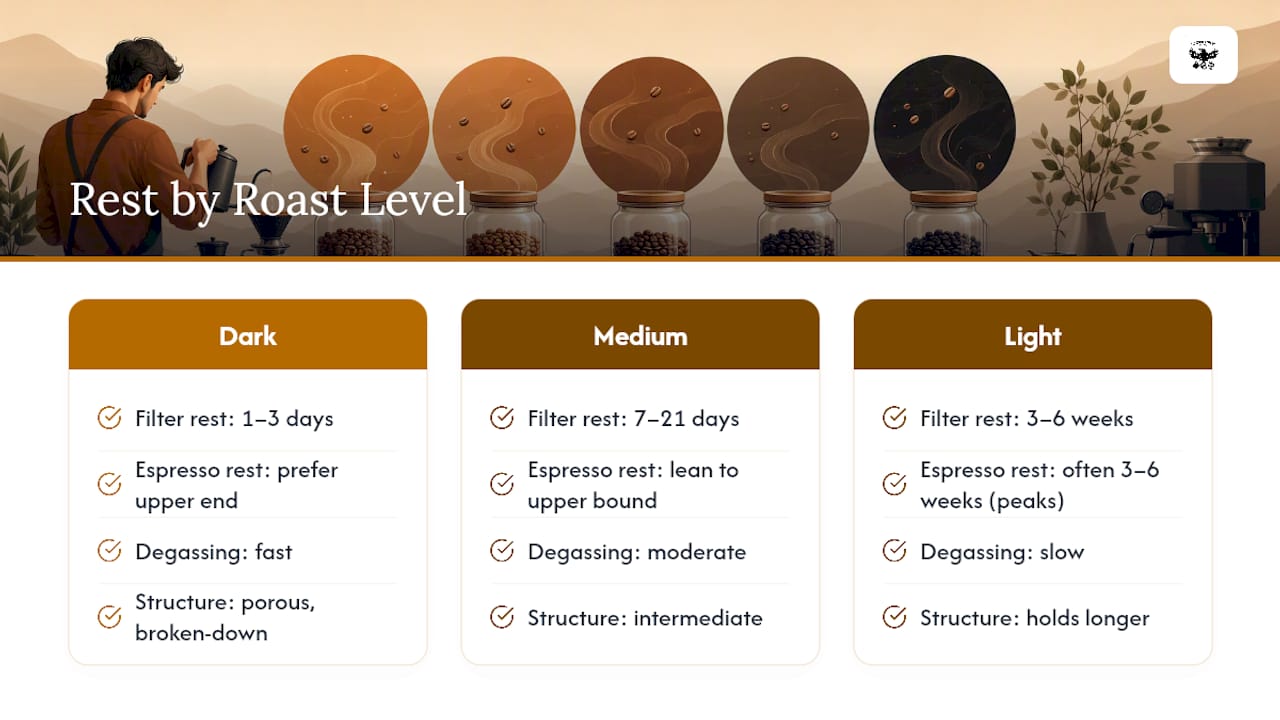
Pro Tip: If you’re brewing casual drip or pour-over, start tasting at the lower end of the range for your roast level. If you’re pulling espresso or working with a very light roast, don’t even bother pulling a dialing shot before the upper bound. You’ll waste beans chasing a shot that isn’t ready yet.
Understanding how different roast levels develop flavor helps explain why the same rest window produces such different cups depending on how dark the roast went.
What Changes a Coffee’s Ideal Rest Window
Roast degree is the biggest lever. A coffee taken to a light development level holds onto more of its original cell density, and that density slows CO2 escape. Push the same beans to a dark roast and the structure breaks down enough that gas finds its way out days faster.
Roaster type and roast speed compound that effect. A drum roaster running a slower, more gradual heat curve tends to produce beans that degas on a fairly predictable timeline. Fast, high-temperature roast profiles common on air and fluid-bed machines can leave more CO2 locked in relative to development level, sometimes requiring a longer rest to reach the same clarity a slower-roasted coffee hits sooner.
Grind size and grind timing matter just as much as roast profile. Whole beans hold gas far longer than ground coffee. The moment you grind, you multiply surface area and CO2 escapes rapidly. That’s the whole logic behind the 15-15-15 rule: grind coffee within about 15 minutes of brewing, not hours or days ahead. Grinding early and letting grounds sit undoes a big chunk of your careful resting.
Brew method sensitivity and storage conditions round out the list:
- Espresso amplifies leftover CO2 far more than filter brewing, so it needs longer rest at every roast level.
- Heat and humidity accelerate both degassing and staling, so a hot kitchen shrinks your usable window on both ends.
- One-way valve bags let CO2 vent without letting oxygen in, which is different from a sealed jar that traps gas and pressure inside.
How to Rest, Store, and Taste Coffee to Find Its Peak
- Cool and vent first. Leave the bag or jar lid loose for the first 12 to 24 hours after roasting so the bulk of the initial CO2 rush can escape without pressurizing your container.
- Move to proper storage. Transfer beans to an airtight container or a bag with a one-way degassing valve, kept in a cool, dark spot. Skip the fridge, since condensation cycles do more harm than good; only freeze in a vacuum-sealed setup meant for long-term storage.
- Set a tasting schedule. Brew the exact same recipe, grind setting, and ratio on day 3, day 7, day 14, and day 21. Log grind size, extraction time, and what you actually taste each round.
- Track the shift. Watch for the gassy sharpness to fade, sweetness and clarity to build, then flatness to creep in. That middle stretch is your peak window for that specific coffee.
- Troubleshoot a gassy brew. If a shot gush or a pour-over bloom won’t settle, extend the bloom time on filter or go slightly coarser on espresso until the coffee catches up, and give it a few more days before trying again.
Good storage practice is what makes this whole tasting log meaningful. Sloppy storage introduces so much variability that you can’t tell if a bad cup is the coffee’s age or just a leaky container.
Pro Tip: Keep a simple notebook or notes app entry per bag: roast date, roast level, first brew date, and a one-line taste note each session. After four or five coffees, you’ll start recognizing your own pattern faster than any chart could tell you.

How Tri Crow Coffee Tastes and Tracks Rest on Every Small Batch
Every small batch gets tasted on a rolling schedule before it ships, because roast level and roast method both shift the resting math for each lot. The tasting log is treated as a working document, not a formality. It’s used to decide whether a particular single-origin lot ships closer to day 5 or day 12.
When a bag arrives, treat the first day like the end of its rest, not the start of consuming it. Keep the bag sealed until you’re ready to brew, store it somewhere cool and out of direct light, and resist the urge to freeze it unless you know it’s vacuum-sealed. If you want the fuller picture on why freshly roasted coffee tastes different cup to cup, that breakdown covers the flavor chemistry in more depth than any rest chart can.
What Home Roasters Get Wrong About Resting Coffee
Most people treat rest time like a single number they can memorize once and apply forever. It isn’t. The roast level, the roaster that produced the beans, and how you plan to brew all move that number around, sometimes by a week or more in either direction.
Three things actually work. Taste before you trust a calendar. Store beans sealed the moment they cool, not “eventually.” And stagger your roasting or your purchases so you’re never brewing a coffee on its very first or very last usable day out of necessity.
Three mistakes keep showing up. People over-rest dark roasts, chasing sweetness that’s already gone flat by week three. People freeze beans in a regular bag instead of a vacuum seal, then wonder why the coffee tastes tired. And people ignore what their packaging is actually doing, brewing straight from a bag with a one-way valve as if it behaves the same as an airtight jar.
Run your own log for a month, and you’ll trust your palate over any rule after that.
— David P.
Practice the Tasting Protocol With Small-Batch Coffee
Reading about rest windows only gets you so far. The fastest way to actually feel the difference between day 3 and day 14 is to brew the same origin at different ages side by side, and Tri Crow Coffee builds a few products around exactly that kind of comparison.
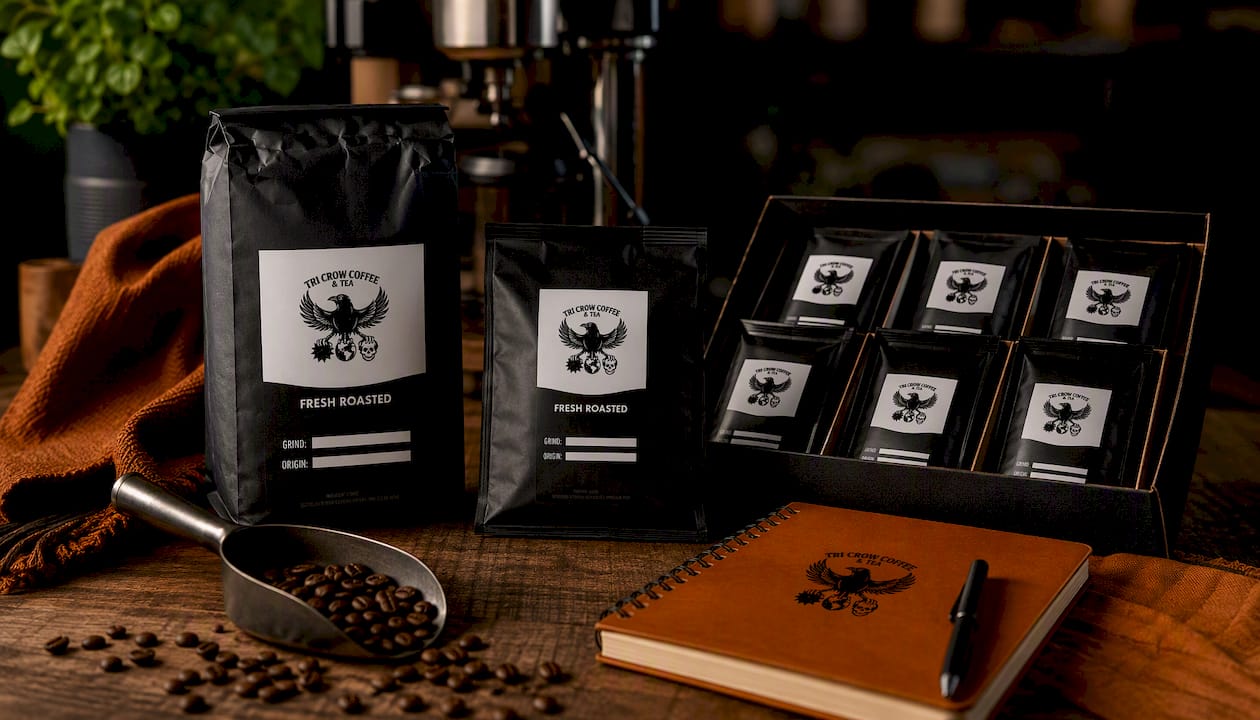
The Single Origin Favorites sample pack gives you six 2-ounce bags from different origins and roast levels, small enough that you can run a real tasting log across each one without committing to a full bag of a coffee you’re still getting to know. If you brew espresso and want repeatability while you dial in a rest window, the 60-pack of Original Roast capsules or the smaller 12-pack both pull a consistent shot every time, which removes grind and dose as variables so you can isolate rest time alone. For readers who want to compare flavored roasts across a rest schedule, the Flavored Coffee sample pack covers six varieties at once. Every small batch roasted gets tasted before it ships, and you can browse current lots and roast dates on the Single Source Coffee collection page now.
Sources
- Coffee Decoded: fresh coffee — Specialty Coffee Association
- 15-15-15 Coffee Rule - Roastopedia
- How Long to Rest Coffee After Roasting: A Practical Guide - Green Coffee Collective
- Time-Resolved Gravimetric Method To Assess
- RESTING ROASTS: IS FRESHER BETTER? - Scott Rao
FAQ
What Is the 15-15-15 Coffee Rule?
The 15-15-15 rule is a freshness shorthand: use green coffee within about 15 months of harvest, brew roasted coffee within about 15 days of the roast date, and brew ground coffee within about 15 minutes of grinding. It’s a rough guideline, not a strict cutoff, since roast level and roaster type shift the real numbers in both directions.
What Is the 2 Hour Coffee Rule?
This usually refers to drinking or brewing coffee within about two hours of grinding to catch peak aroma before volatile compounds fade. It applies to grind-to-brew timing, not to the longer resting period beans need right after roasting.
What Does Rest Time Mean for Coffee?
Rest time is the period after roasting during which trapped carbon dioxide escapes the bean before brewing. The Specialty Coffee Association notes degassing runs fastest in the first 20 days, and skipping this window usually produces sharp, gassy, unevenly extracted coffee.
Is 7:30 PM Too Late for Coffee?
That depends entirely on your own caffeine sensitivity and sleep schedule rather than anything about the coffee’s rest time. If evening coffee affects your sleep, choosing a decaf or a lower-caffeine option in the afternoon is a more reliable fix than adjusting how the beans were roasted or rested.
How Long Should You Rest Coffee Before Brewing Espresso?
Espresso generally needs longer rest than filter coffee at every roast level, commonly 3 to 7 days for dark roasts and up to 21 days or more for light roasts. Pressure extraction exaggerates any leftover CO2, so tasting on a schedule, as outlined earlier, is the most reliable way to find the right day for a specific batch.