
Yes, freezing whole coffee beans works, but only when you do it right. You need airtight, single-dose portions and one of two proven workflows: thaw a sealed pouch overnight, or grind straight from frozen. The one rule that ruins everything is refreezing a bag once it’s thawed, and ground coffee should never go in the freezer at all.
TL;DR:
- Freezing whole coffee beans preserves aroma and flavor the most when stored in vacuum-sealed, single-dose portions and kept at stable sub-zero temperatures.
- Thawing sealed pouches overnight in the refrigerator or grinding directly from frozen both work well, but refreezing thawed beans speeds up staling and should be avoided.
- Freezing benefits dark roasts more significantly due to their porous, oily structure, while light roasts are more stable at room temperature.
- Storage duration can extend up to a year with minimal quality loss, but beans should be discarded if they develop stale or rancid odors after thawing.
- Proper sealing and portioning are critical because condensation and repeated freeze-thaw cycles are the main risks that compromise coffee quality.
Table of Contents
- Why Freeze Coffee Beans in the First Place?
- What Gear Do You Actually Need?
- How Do You Freeze and Thaw Coffee Beans Correctly?
- What Happens to Extraction When You Brew From Frozen?
- How Long Can You Freeze Coffee Beans?
- What Mistakes Ruin Frozen Coffee Beans?
- How Tri Crow Coffee Handles Freezing In-House
- The Real Question Isn’t Whether to Freeze. It’s Whether You’ll Do It Right.
- Ready to Try It? Start With Beans Built to Hold Up
- Sources
- FAQ
Why Freeze Coffee Beans in the First Place?
Cold temperatures slow the chemistry that ruins coffee. Roasted beans continually degas and oxidize, and both processes strip away the aromatic compounds that make a cup taste alive. Penn State’s research found that frozen dark-roast samples smelled and tasted closer to freshly roasted coffee than room-temperature samples did after nine weeks. A Scientific Reports study backs this up: beans held between sub-zero freezer temperatures kept more volatile compounds and scored better in cupping tests than beans stored at room temperature over a period of months.
Dark roasts benefit the most since their more porous, oily structure loses aroma faster at room temperature. Light roasts are more stable to begin with, so freezing helps less dramatically over the same stretch.
Freezing whole coffee beans makes the most sense when:
- You bought in bulk and won’t finish the bag for weeks
- You’re holding onto a rare or limited harvest lot
- You received beans as a gift or travel souvenir you can’t drink right away
What Gear Do You Actually Need?
A vacuum sealer and freezer-grade bags are the two non-negotiables. Removing air headspace is what prevents moisture from creeping in and forming ice crystals on the beans, according to the Hoffmann and Gagné protocol. If you don’t own a vacuum sealer, a heavy-duty zip-top freezer bag with the air pressed out is a workable stand-in, though it won’t seal as tightly.
Before freezing, portion your beans into single-brew or one-to-two-week doses, and label each pouch with the roast date and freeze date. Timing matters too: let filter roasts rest about a short period after roasting, and espresso roasts rest somewhat longer, so degassing settles before the beans go cold.
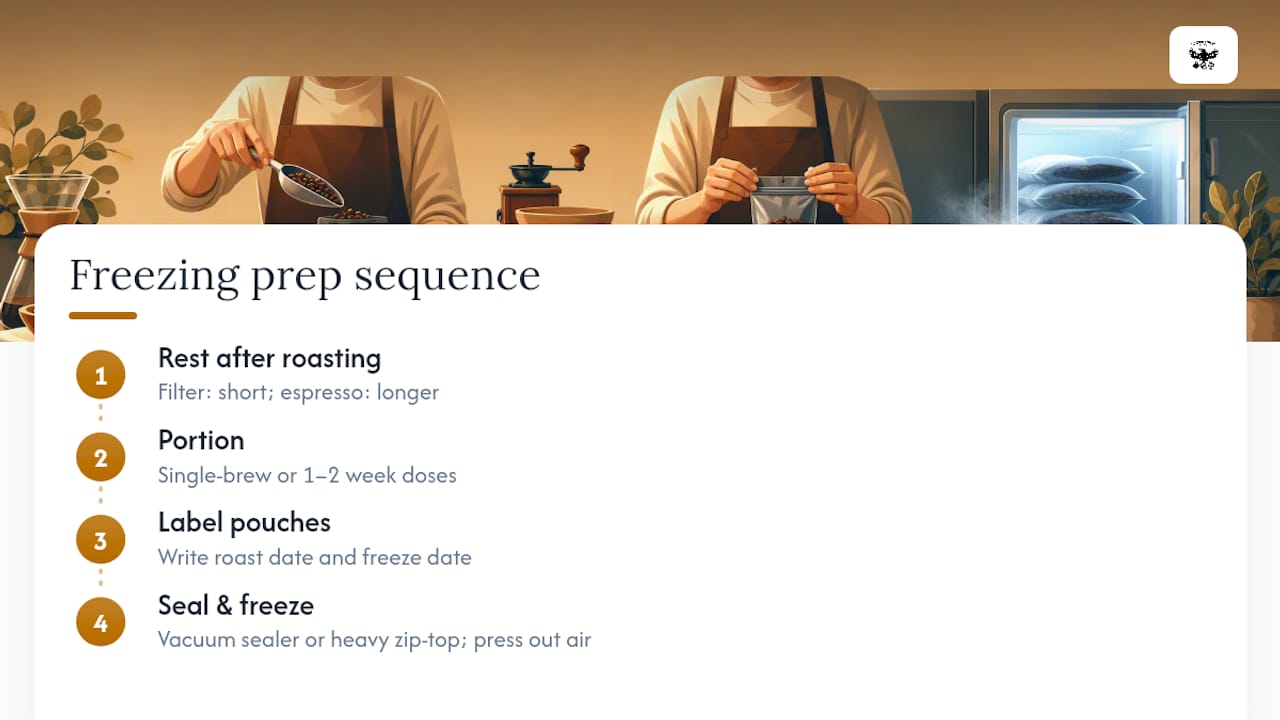
Pro Tip: If you’re freezing an unopened bag from a roaster, tape over the one-way valve first. It still lets gas escape, but it also lets in moisture, which you don’t want during a long freeze, per Serious Eats.
How Do You Freeze and Thaw Coffee Beans Correctly?
Two workflows dominate serious home practice, and both start the same way: rest the beans, portion them, then vacuum-seal each dose before freezing.
The thaw-sealed method (Hoffmann’s approach):
- Rest beans per roast type, then divide into vacuum-sealed single doses.
- Freeze pouches flat, ideally toward the back of a chest freezer or the rear of an upright unit where temperature swings are smallest.
- When you need coffee, pull one sealed pouch and let it thaw unopened overnight in the fridge or at room temperature.
- Only open and grind once the bag has fully warmed to room temperature, which avoids condensation forming on the beans.
The grind-from-frozen method (Gagné’s approach):
- Follow the same rest, portion, and vacuum-seal steps.
- Pull a frozen pouch and grind the beans directly, without thawing.
- Expect to dial in your grinder slightly, since frozen beans fracture differently than room-temperature ones.
- Brew immediately after grinding.
Pro Tip: Store pouches flat and stacked rather than tossed loosely into the freezer. Flat stacking freezes them faster and keeps them from getting crushed against other frozen items.
Label everything, and rotate older pouches to the front so you use them first.
What Happens to Extraction When You Brew From Frozen?
Frozen beans are more brittle than room-temperature ones, and that changes how they break apart in the grinder. Cold beans tend to fracture more evenly, producing a more uniform particle-size distribution with fewer stray fines. Research referenced by Perfect Daily Grind points to this as one of the more surprising perks of grinding cold: a more consistent grind can mean cleaner extraction and less muddiness in the cup.
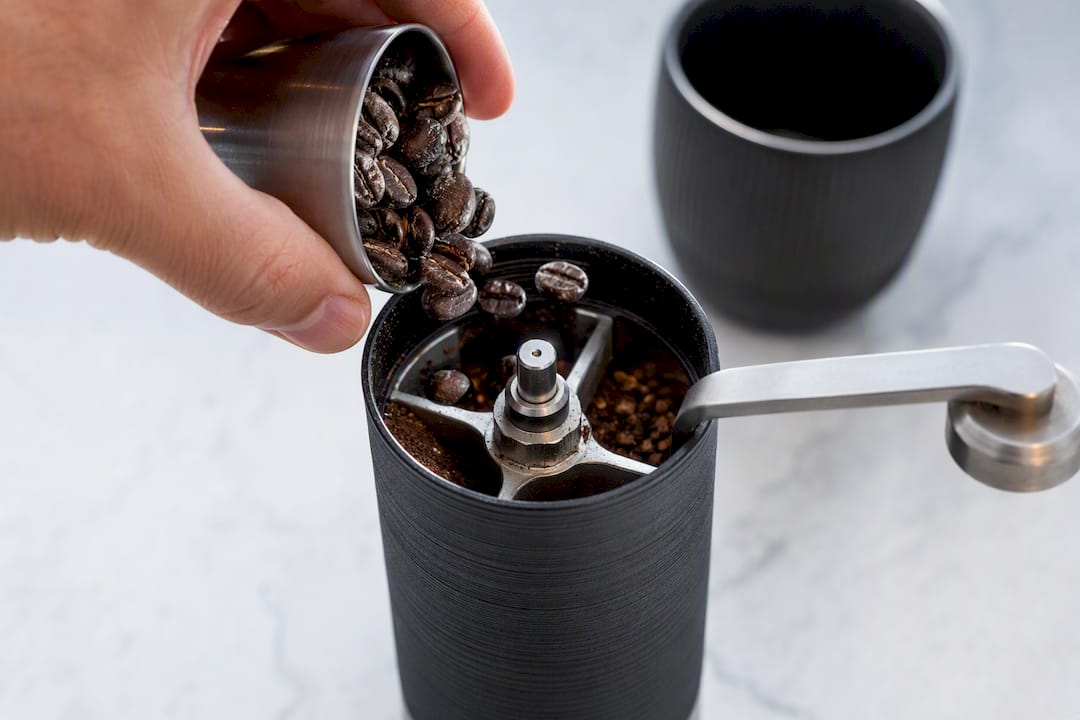
If you’re grinding straight from frozen, expect to make small adjustments to your burr gap. Run a test shot or brew, taste it, and nudge the grind size from there rather than assuming your usual setting still applies.
If you’re using the thaw-sealed method instead, brew exactly as you normally would once the beans reach room temperature. No recipe changes needed.
- Espresso benefits from the longer rest window before freezing, since concentrated brewing exposes underdeveloped degassing more harshly.
- Filter coffee tolerates a shorter rest and is more forgiving of small grind-distribution shifts.
- Either way, taste before you commit to a full batch, especially the first time you try grinding frozen beans.
How Long Can You Freeze Coffee Beans?
A standard home freezer at typical sub-zero temperatures dramatically slows staling compared to a pantry shelf. That’s cold enough to see real benefits without needing specialty equipment.
Single-dose, vacuum-sealed portions can hold near-peak quality for an extended duration, with some enthusiasts extending storage up to about a year with good results. Penn State’s testing showed frozen dark roast staying close to fresh-roasted quality across a nine-week window, and lab data from Scientific Reports suggests that advantage extends well beyond that when temperatures stay stable.
Realistic expectations:
- Weeks to a few months: minimal aroma loss, near-peak cups
- Up to about a year: still good, though aromatic complexity gradually softens
- Beyond a year: diminishing returns; taste before brewing a full pot
- Any point: discard beans that smell stale, musty, or rancid once thawed
Label every pouch with its freeze date so you’re rotating by age, not guessing.
What Mistakes Ruin Frozen Coffee Beans?
Condensation is the single biggest threat to frozen coffee. It happens when warm, moist air hits cold beans, which is exactly why thawing sealed or grinding straight from frozen both exist as workflows: they avoid exposing cold beans to open air until the moment you brew.
Refreezing is the second major mistake. Once a pouch has thawed and been opened, freeze it again and you’ll accelerate staling rather than slow it, since repeated freeze-thaw cycles cause structural damage to the beans. Treat every pouch as a one-way trip.
- Never freeze already-ground coffee; its increased surface area stales far faster in the freezer than whole beans do.
- Keep beans in a secondary sealed container if your freezer holds strong-smelling foods, since coffee absorbs odors easily.
- If beans smell flat, sour, or off after thawing, don’t brew them. Toss them.
Pro Tip: Keep a dedicated freezer bin just for coffee. It cuts down on odor transfer and makes rotation by date far easier to track.
How Tri Crow Coffee Handles Freezing In-House
Tri Crow Coffee treats freezing as part of a small-batch routine, not an emergency fix. We rest each batch according to roast profile, portion it into vacuum-sealed pouches sized for a week or two of brewing, and freeze those pouches toward the back of the freezer where temperature stays steady. Every pouch gets labeled with its roast date and the brew method it’s meant for, filter or espresso, so nothing gets guessed at later.
That same discipline shows up in discussions about storing coffee for maximum freshness and why degassing matters before beans ever reach a freezer.
- Rest before freezing, based on roast type
- Portion into single-brew or short-term doses before sealing
- Freeze flat, at the back of the unit, away from the door
- Label with roast date and intended brew method every single time
The Real Question Isn’t Whether to Freeze. It’s Whether You’ll Do It Right.
Most of the skepticism around freezing coffee comes from people who tried it once, badly, years ago. Somebody tossed a half-used bag into a chest freezer, thawed it on the counter, watched condensation bead up on the beans, and decided freezing “ruins coffee.” That failure mode is real, but it’s a technique problem, not a freezing problem. The Penn State research and the Scientific Reports data both point the same direction: cold slows the chemistry that kills flavor, full stop.
Where conventional advice falls short is treating “freeze your coffee” as one instruction instead of a system. Vacuum sealing matters more than the exact freezer temperature. Portioning matters more than whether you thaw sealed or grind frozen. People skip the portioning step because it feels fussy, then blame the freezer when the result disappoints them.
If you take one thing from this, prioritize the seal over everything else. A loosely closed bag in a freezer full of ice cream and frozen vegetables will absorb odors and moisture regardless of how carefully you time your thaw. Get the seal right first, then pick whichever workflow fits how you actually brew.
— David P.
Ready to Try It? Start With Beans Built to Hold Up
Not every bag of coffee is worth the vacuum sealer and freezer space, but a well-roasted batch is. Roasting in small batches can help each bag reach close to its peak, which can provide a head start before freezing.
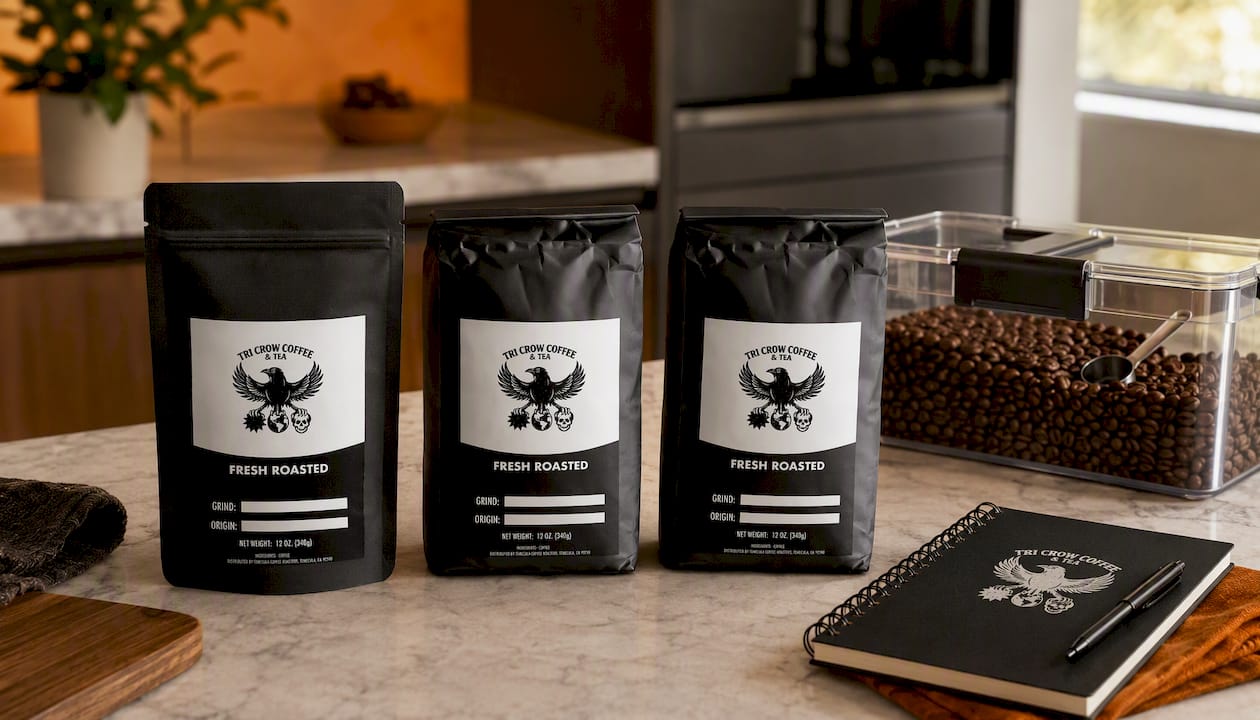
If you want the strongest aroma retention over time, our Cold Brew Coffee, Dark French Roast, Coarse Ground is a solid pick since dark roasts show the clearest benefit from freezing in the research. Prefer something gentler for daily filter brewing? The Medium Roast Cold Brew Coffee, with its chocolate and floral notes, holds up well whether you thaw sealed or grind straight from frozen. And if you want one bag that adapts to whatever brew method you’re in the mood for, the 6 Bean Dark Roast Coffee house blend was built for versatility.
The process is simple: buy whole bean, let it rest per roast type, then portion and vacuum-seal into doses before freezing. Browse the full shop to find your next batch and put this guide to work the same week it arrives.
Sources
- Wake up and smell the coffee: Research shows freezing beans can preserve aroma | Penn State University
- Effect of green and roasted coffee storage conditions on selected characteristic quality parameters | Scientific Reports
- Are we still freezing coffee? - Perfect Daily Grind
- How to Freeze Coffee Beans: The Hoffmann + Gagné Method | JayArr Coffee
- I Asked Coffee Experts How to Keep Beans Fresh—They … | Serious Eats
FAQ
Is Freezing Coffee Beans a Good Idea?
Yes, freezing whole coffee beans is a good idea when you vacuum-seal single-dose portions and avoid repeated freeze-thaw cycles, since research shows it slows the staling that causes aroma loss.
What Is the Best Way to Store Coffee Beans Long-Term?
For anything beyond a few weeks, vacuum-sealed single doses in the freezer beat pantry storage. For shorter windows, an airtight container in a cool, dark spot works fine.
Is It Better to Put Coffee Beans in the Fridge or Freezer?
The freezer, not the fridge. Fridges introduce frequent temperature swings and expose beans to moisture and food odors every time the door opens, while a stable freezer avoids both.
What Is the 15-15-15 Coffee Rule?
Definitions of this rule vary across sources, and it isn’t backed by the peer-reviewed research this guide relies on, so it’s better to follow the rest-and-freeze timelines outlined above instead of a rule of thumb without a clear origin.
Can You Freeze Already-Ground Coffee?
It’s best avoided. Ground coffee has far more surface area exposed to air, so it stales faster in the freezer than whole beans do, and it loses far more aroma before you ever get to brew it.