
TL;DR:
- Freshly roasted coffee is best enjoyed within 2 to 4 weeks after roasting, as volatile aromatic compounds degrade quickly. Storing beans properly and grinding immediately before brewing preserve flavor, aroma, and health benefits, which diminish rapidly with time and exposure to oxygen. The peak flavor window is typically between days 7 and 28, with freshness indicated by active bloom and CO2 retention during brewing.
Freshly roasted coffee is defined as coffee consumed within its optimal flavor window, typically 2–4 weeks after the roast date, before oxidation and gas loss strip away its complexity. Most grocery store bags carry a “best by” date that can sit 12–18 months out, which tells you almost nothing about when the beans were actually roasted. The roast date is the number that matters. Coffee contains over 800 volatile aromatic compounds that begin degrading the moment roasting ends. Understanding why freshly roasted coffee outperforms stale coffee means understanding what those compounds do, how carbon dioxide protects them, and what happens when both disappear.
Why freshly roasted coffee loses flavor so fast
The chemistry behind coffee freshness is more active than most people realize. Roasting transforms raw green beans into the aromatic, complex product you brew. That transformation also starts a countdown.
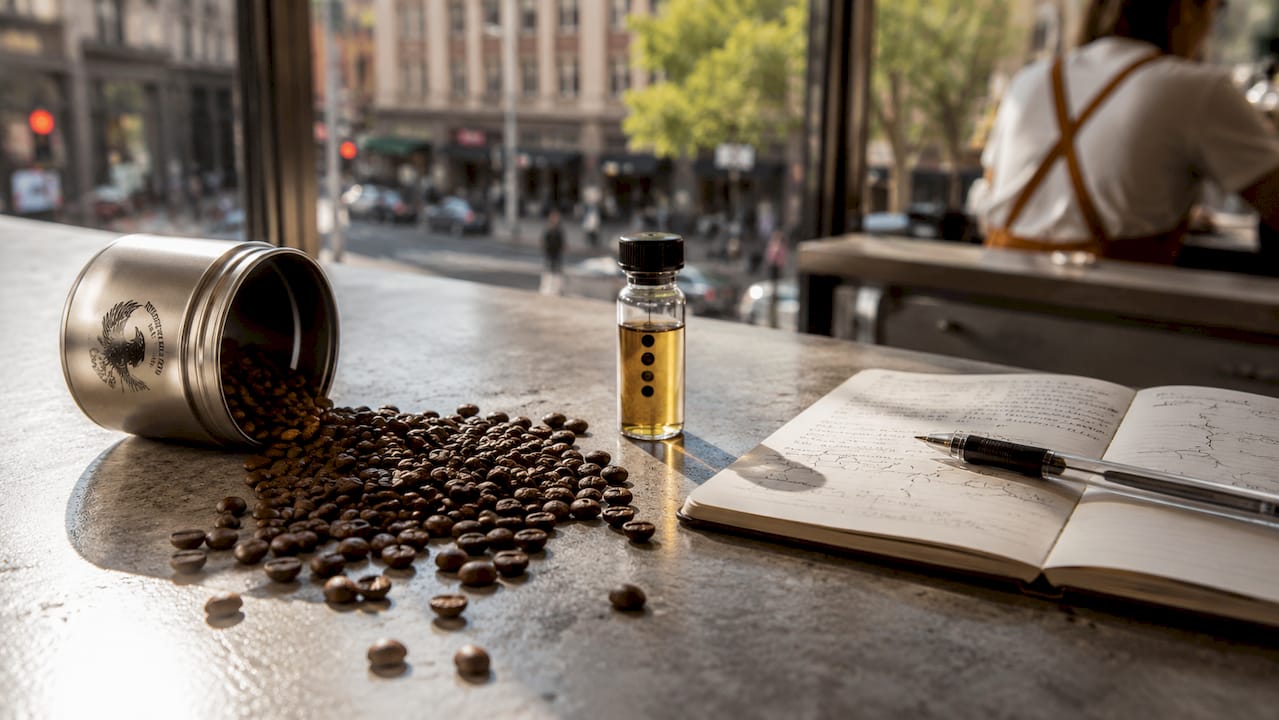
Coffee beans contain over 800 volatile aromatic compounds that produce the flavor notes you taste in every cup, from bright citrus and berry to deep chocolate and caramel. These compounds are fragile. Oxygen attacks them immediately after roasting, breaking down the molecular structures that create complexity and brightness. The result is a flat, papery, or even rancid taste in coffee that has sat too long.
Carbon dioxide plays a protective role that most casual drinkers never consider. Roasting creates CO2 inside the beans that acts as a natural barrier against oxygen. As long as CO2 is present, it slows oxidation and carries aromatic compounds into your cup during brewing. The problem is that CO2 escapes gradually over days and weeks, and once it’s gone, oxygen moves in freely.
Here is what happens to coffee after roasting:
- Days 1–3: CO2 releases rapidly. Brewing too soon produces uneven extraction and a grassy, sour taste.
- Days 4–14: CO2 stabilizes. Flavors begin to clarify and develop. This is the start of the usable window.
- Days 14–28: Peak flavor for most roast levels. Aromatic compounds are intact, CO2 supports extraction, and the cup is at its most complex.
- Days 28–60: Gradual decline. Lighter roasts hold longer; darker roasts fade faster.
- Beyond 60 days: Significant oxidation. Flavor becomes dull, stale, and one-dimensional.
“Coffee is not a pantry staple. It is a perishable product with a short peak window, and treating it otherwise is the single most common reason home brews disappoint.”
The fresh coffee flavor profile you experience in a specialty café is almost always the result of beans used within that 14–28 day window. Outside of it, no brewing technique fully compensates for the chemistry that has already been lost.
Does grinding fresh really make that big a difference?
Grinding right before brewing is not a preference. It is the single most impactful step you can take after sourcing fresh beans.
When you grind coffee, you increase surface area exponentially, exposing hundreds of internal cell walls to open air. Oxygen reaches compounds that were sealed inside the whole bean. The result is rapid evaporation and oxidation of the exact flavor molecules you want in your cup. Coffee oils responsible for rich flavor are protected inside whole beans but begin evaporating the moment grinding exposes them.
The speed of this loss is what surprises most people. Coffee can lose up to 60% of its volatile aromatic compounds within 15 minutes of grinding. That means a bag of pre-ground coffee sitting on a shelf for two weeks has lost the majority of what makes it worth drinking. Even grinding 30 minutes before brewing produces a noticeably flatter cup compared to grinding immediately before.
CO2 loss after grinding also affects how water moves through the grounds during brewing. Pre-ground coffee loses CO2 rapidly, which causes water to flow through too quickly and produces under-extraction. The resulting cup is watery, thin, and lacks body.
Here is a practical grinding sequence for the best results:
- Buy whole bean coffee with a visible roast date, ideally within the past 2–4 weeks.
- Store beans whole in an airtight container away from light and heat until you are ready to brew.
- Grind immediately before brewing, not the night before or even an hour before.
- Match grind size to your brew method: coarse for French press, medium for drip, fine for espresso.
- Use a burr grinder rather than a blade grinder. Burr grinders produce consistent particle sizes, which leads to even extraction and better flavor.
Pro Tip: If you only make one change to your home brewing routine, switch from pre-ground to whole bean and grind fresh each morning. The improvement in aroma alone is immediate and obvious.
How does freshness change what you taste in the cup?
Fresh coffee and stale coffee are not just different in degree. They are different in kind. The sensory gap between a cup brewed from beans roasted two weeks ago and one brewed from beans roasted six months ago is not subtle.
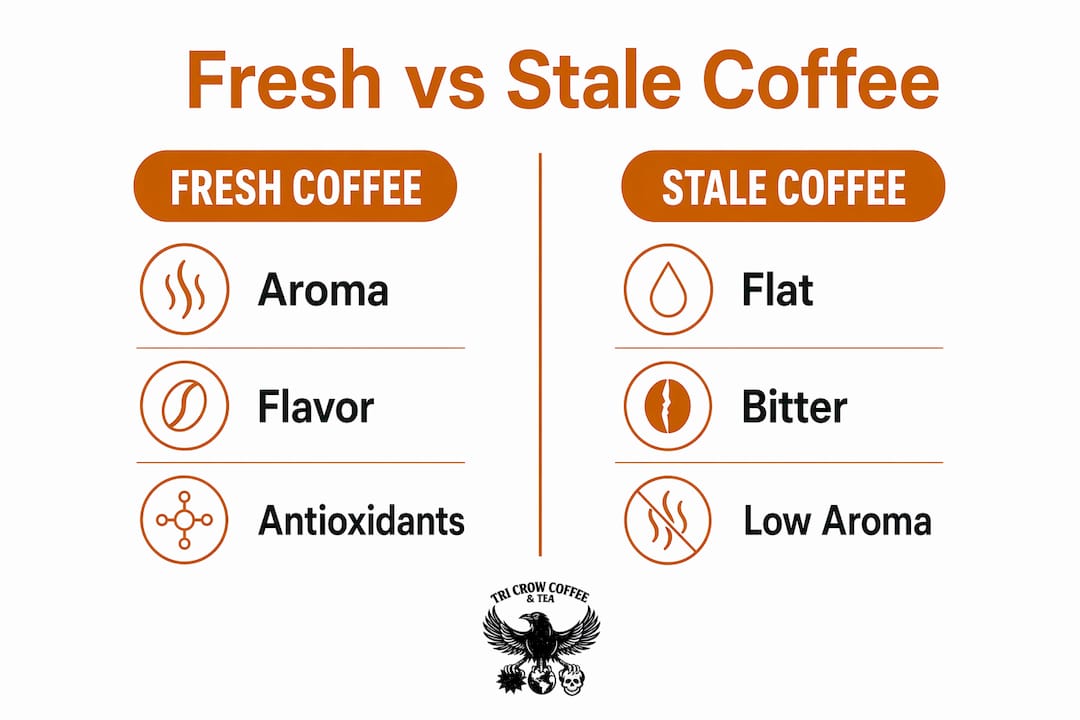
The bloom during brewing is one of the clearest freshness indicators you can observe at home. When you pour hot water over fresh grounds, CO2 escapes and causes the coffee bed to swell and bubble. This bloom is not decorative. It signals that CO2 is present, which means aromatic compounds are still intact and extraction will be even. A lack of bloom indicates CO2 loss and stale coffee. If your grounds sit flat when water hits them, the beans have already lost much of what made them worth buying.
The table below shows the sensory differences between fresh and stale coffee across key flavor dimensions:
| Sensory quality | Fresh coffee (within 2–4 weeks) | Stale coffee (beyond 60 days) |
|---|---|---|
| Aroma | Intense, complex, distinct origin notes | Faint, flat, or musty |
| Acidity | Bright, clean, and defined | Dull or sour without complexity |
| Body | Full, round, and coating | Thin and watery |
| Flavor complexity | Layered notes: fruit, chocolate, floral | One-dimensional, cardboard-like |
| Aftertaste | Long, pleasant finish | Short or bitter without depth |
| Bloom behavior | Active bubbling and expansion | Flat, no visible CO2 release |
Freshly roasted coffee also retains higher levels of antioxidants and beneficial compounds. Fresh coffee contains more antioxidants that degrade over time, meaning the health benefits you associate with coffee are most concentrated in the freshest cup. This is not a minor footnote. It is another reason why roast date matters beyond taste alone.
When should you brew freshly roasted coffee?
Timing is the part of coffee freshness that even enthusiasts get wrong. Fresh does not mean brew it the day it arrives.
Coffee requires a rest period of 2–4 weeks after roasting to allow excess CO2 to escape. Brewing too soon produces a cup that tastes sour, uneven, and grassy because the CO2 is still releasing aggressively and interfering with water absorption. This rest period is called degassing, and it is a critical part of the process that most consumers skip entirely.
The right storage approach during and after degassing makes a significant difference:
- Use an airtight container with a one-way valve if possible. One-way valves let CO2 escape without letting oxygen in.
- Keep beans away from light. UV exposure accelerates oxidation and degrades flavor compounds faster.
- Store at room temperature, not in the freezer unless you are storing for more than a month. Freezing and thawing repeatedly introduces moisture.
- Avoid the refrigerator entirely. Coffee absorbs odors readily, and a refrigerator is full of them.
- Buy in smaller quantities more often rather than a large bag you will use over three months.
Pro Tip: Write the roast date on your container with a marker when you transfer beans. It takes five seconds and removes all guesswork about when your coffee hits its peak window.
The best-use window for most roast levels is days 7–28 post-roast. Light roasts can extend to 35 days. Dark roasts often peak earlier, around days 7–14, because the more open cell structure from heavy roasting accelerates CO2 loss. Knowing your roast level helps you time your brewing for maximum flavor. You can explore whole bean storage and ritual in more depth to build a consistent routine around these windows.
Key takeaways
Freshly roasted coffee delivers superior flavor, aroma, and health benefits because its volatile aromatic compounds and protective CO2 are still intact, and both degrade rapidly with time, grinding, and improper storage.
| Point | Details |
|---|---|
| Roast date over best-by date | Always check the roast date; best-by dates can be 12–18 months out and tell you nothing about freshness. |
| Grind immediately before brewing | Coffee loses up to 60% of aromatic compounds within 15 minutes of grinding; whole bean storage is non-negotiable. |
| Rest beans 2–4 weeks post-roast | Brewing too soon causes uneven extraction; the peak flavor window is days 7–28 for most roast levels. |
| Watch for the bloom | Active bubbling when water hits grounds confirms CO2 is present and your coffee is still fresh. |
| Store airtight, cool, and dark | Oxygen, light, and moisture are the three forces that destroy coffee freshness fastest. |
What I’ve learned from making roast date a non-negotiable
I used to buy whatever coffee was on sale at the grocery store. The bag looked fine, the price was right, and I figured a good grinder would fix everything else. It did not.
The shift happened when I started paying attention to roast dates instead of brand names. The first time I brewed a cup from beans roasted 10 days prior, the difference was not subtle. The aroma hit before the cup even reached my mouth. The flavor had layers I had never tasted in my home brews before. I realized I had been drinking coffee that was already dead by the time I bought it.
The misconception I see most often is that people treat coffee like a spice rack item. They buy a large bag, store it in a cabinet for three months, and wonder why their expensive beans taste mediocre. Many consumers neglect the roast date entirely, treating coffee as a non-perishable. That single habit is responsible for more disappointing cups than any brewing mistake.
My practical advice: buy whole bean, check the roast date, grind fresh each morning, and experiment with resting periods. A bean roasted 10 days ago versus 21 days ago can taste noticeably different. That experimentation is part of what makes coffee interesting. You can also sharpen your technique with better home brew tips that build on freshness as the foundation.
— David
Taste the difference with Tri Crow Coffee
If you have never brewed from beans with a clear, recent roast date, Tri Crow Coffee is a direct way to experience that difference.
Tri Crow Coffee roasts in small batches specifically to control freshness and flavor consistency. Every bag ships with a roast date so you know exactly where you are in the flavor window. The Max Caf Blend, built from Tanzania and India Robusta beans, delivers bold, high-caffeine character that rewards fresh brewing. The Cowboy Blend brings cocoa, caramel, and vanilla notes that only show up fully when the beans are fresh. Both are roasted to order in limited quantities. That is not a marketing claim. It is the reason the flavor holds up.
FAQ
What is the freshness window for roasted coffee?
The optimal window for most roasted coffee is 7–28 days after the roast date. Light roasts can extend to around 35 days; dark roasts often peak earlier, between days 7 and 14.
Why does pre-ground coffee taste flat?
Pre-ground coffee loses up to 60% of its volatile aromatic compounds within 15 minutes of grinding. By the time it reaches your cup, most of the flavor complexity has already evaporated or oxidized.
What does the bloom tell you about coffee freshness?
The bloom is CO2 escaping from fresh grounds when hot water is added. Active bubbling means CO2 is still present and your coffee is fresh. No bloom means the CO2 is gone and the beans are stale.
Should you brew coffee immediately after roasting?
No. Coffee needs 2–4 weeks of degassing after roasting before it reaches peak flavor. Brewing too soon produces a sour, uneven cup because excess CO2 interferes with water absorption and extraction.
How should you store whole bean coffee to preserve freshness?
Store whole beans in an airtight container with a one-way valve, away from light and heat, at room temperature. Avoid the refrigerator, which introduces moisture and odors that degrade flavor.