
TL;DR:
- The coffee tasting process, called cupping, involves a standardized method for evaluating aroma, flavor, and body. Professionals follow strict protocols with specific tools to reveal coffee’s intrinsic qualities and develop sensory skills. Comparing different coffees side by side enhances understanding and improves palate sensitivity over time.
The coffee tasting process is a structured, repeatable method for evaluating the aroma, flavor, body, and finish of any coffee with consistency. Professionals call this method cupping, and the Specialty Coffee Association (SCA) has standardized it so tasters worldwide can compare results on equal footing. Understanding this process transforms coffee from a daily habit into a genuine sensory skill. You stop guessing why one cup tastes better than another and start knowing exactly why.
What tools and setup do you need for a proper coffee tasting?
The right equipment removes variables so the coffee itself does the talking. The SCA cupping protocol specifies 8.25g of coffee per 150ml of water, ground to medium-coarse with 70–75% of grounds passing through an 850μm sieve. Water temperature is set at 93°C (200°F). These numbers are not arbitrary. They represent the point where extraction is balanced and flavor compounds are most readable.
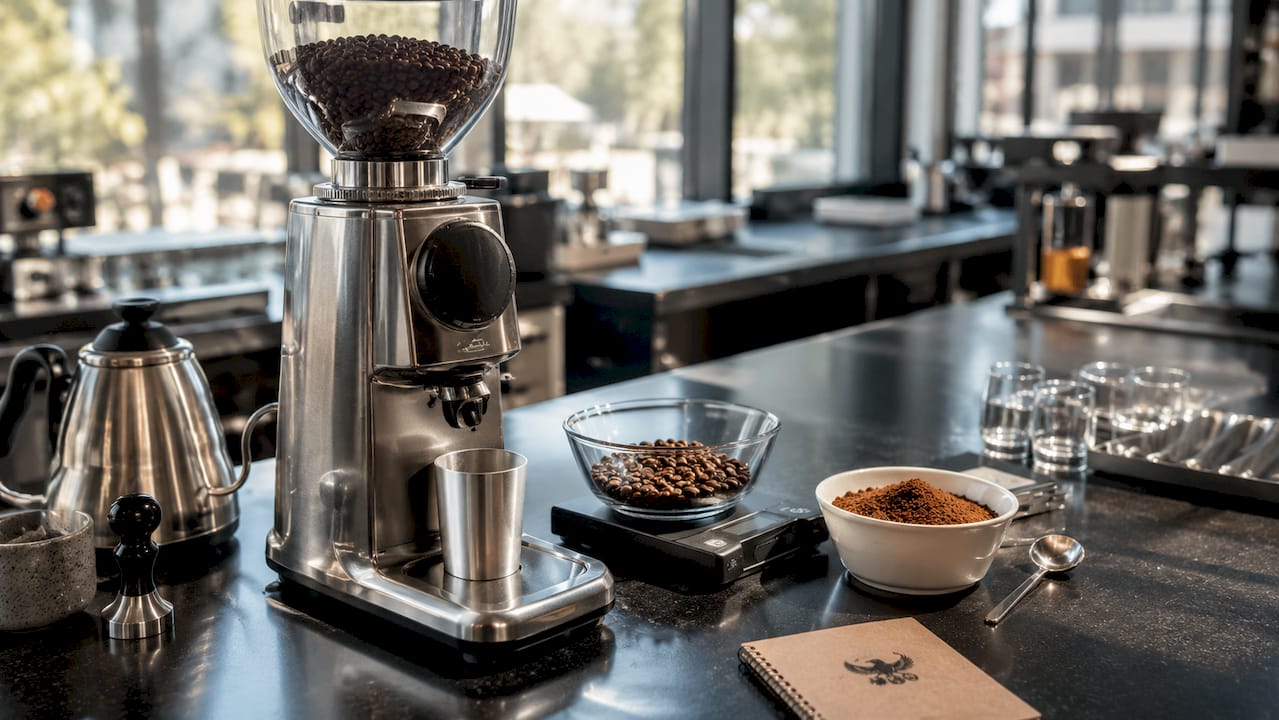
Essential equipment for a cupping session
| Tool | Role in tasting |
|---|---|
| Burr grinder | Produces consistent medium-coarse grounds for even extraction |
| Digital scale | Measures coffee and water to SCA ratios |
| Gooseneck kettle | Controls pour speed and water temperature |
| Cupping spoons | Deep, rounded bowls designed for slurping technique |
| Cupping bowls (6–8 oz) | Standard vessel for uniform steeping |
| Timer | Tracks the 4-minute steep and cooling phases |
You need at least two samples set up side by side. Tasting a single coffee in isolation gives you far less information than tasting two or three together. Differences in origin, roast level, or processing become obvious when cups sit next to each other.
Pro Tip: Label each cup on the bottom before you start. Blind tasting removes roast-name bias and forces you to evaluate what is actually in the cup.
Keep the room neutral. Strong kitchen smells, perfume, or even a scented candle will compete with the coffee’s fragrance and skew your perception. The cupping method controls variables like grind, time, and water temperature to isolate the coffee’s intrinsic flavor without brewing method bias. That control is the entire point of the setup.
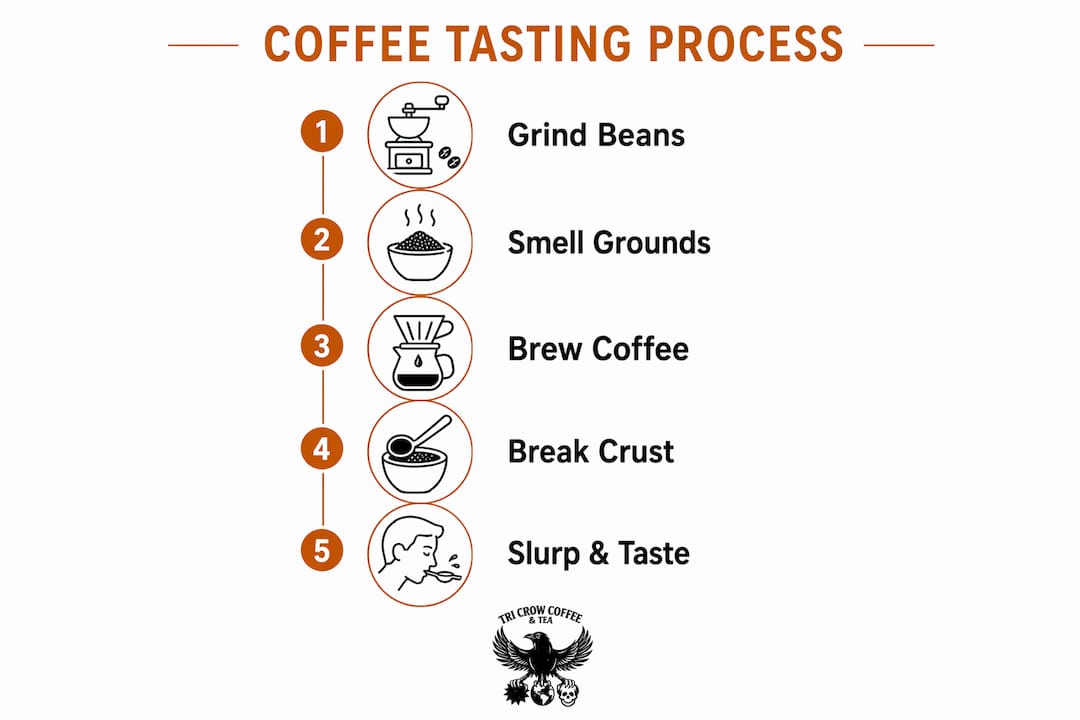
How do you conduct the coffee tasting process step by step?
A complete session runs 25–30 minutes, with about 10 minutes for grinding and brewing and 15–20 minutes for tasting as the coffee cools. Rushing any phase costs you information. Follow these steps in order.
- Grind and weigh. Grind each sample immediately before brewing. Stale grounds lose volatile aromatics fast. Weigh 8.25g per 150ml of water directly into each cupping bowl.
- Smell the dry grounds. Before adding water, put your nose close to the bowl and inhale. This is the fragrance phase. Write down what you notice, even if it is just “earthy” or “sweet.”
- Pour and steep. Pour 93°C water in a slow, even circle over the grounds. Start your timer. Let the coffee steep for exactly 4 minutes without stirring.
- Break the crust. Use a cupping spoon to gently push the floating grounds crust forward three times. Put your nose directly over the bowl as you break it. This releases a concentrated burst of aroma. This is the most information-rich moment in the entire session.
- Remove the grounds. Use two spoons to skim the floating grounds and foam from the surface. Work quickly so all cups are cleared at roughly the same time.
- Wait and let it cool. Do not taste yet. Let the coffee drop from around 160°F toward 140°F. Tasting too hot masks flavor complexity. Sweetness and subtle nuances become clearer as the cup cools below 140°F and eventually under 110°F.
- Slurp and evaluate. Load the cupping spoon and slurp forcefully. Slurping aerates the coffee across the entire palate, maximizing retronasal perception and surfacing aromas that normal sipping misses entirely. Taste each cup in rotation, not one cup repeatedly.
- Taste again as it cools. Return to each cup at warm and then cool temperatures. Flavors shift noticeably. A coffee that tasted sharp at 150°F may reveal stone fruit sweetness at 110°F.
Pro Tip: Keep a notepad beside you and write one or two words after each slurp. You do not need full sentences. Short notes taken in the moment are far more accurate than memory.
Cupping session timing at a glance
| Phase | Action | Approximate time |
|---|---|---|
| Prep | Grind, weigh, smell dry grounds | 5 minutes |
| Brew | Pour water, steep | 4 minutes |
| Break and skim | Break crust, remove grounds | 2 minutes |
| First tasting | Hot evaluation (160°F range) | 5 minutes |
| Second tasting | Warm evaluation (140°F range) | 8 minutes |
| Final tasting | Cool evaluation (under 110°F) | 5–7 minutes |
What flavor notes and vocabulary should you learn?
Tasting with a consistent method helps you distinguish five core attributes: fragrance and aroma, acidity, body, flavor, and finish. Each attribute is scored separately in professional cupping. That separation matters because a coffee can have brilliant acidity and a thin body, or a heavy body with a flat finish. Treating them as one blurry impression means you miss the detail.
One of the most common misconceptions about coffee tasting notes is that they describe added ingredients. Tasting notes describe chemical compounds developed during growth and processing. When a roaster writes “blueberry” on the bag, the bean was not soaked in blueberry juice. That flavor compound developed naturally in the fruit, the fermentation, or the roast. Knowing this frees you to trust what your palate actually detects.
Core coffee tasting vocabulary
- Fragrance: The dry aroma of ground coffee before water is added
- Aroma: The smell released after hot water contacts the grounds
- Acidity: Brightness or liveliness on the front of the palate, often described as citrus, malic (apple), or tartaric (grape)
- Body: The weight and texture of the coffee in your mouth, ranging from watery to syrupy
- Sweetness: Natural sugar perception, often caramel, brown sugar, or fruit-forward
- Flavor: The overall taste impression combining all compounds
- Finish (aftertaste): What lingers after swallowing, from clean and short to long and complex
- Balance: How well the attributes work together without one dominating
The SCA also publishes a Coffee Taster’s Flavor Wheel, which maps hundreds of specific descriptors from broad categories like “fruity” down to specific notes like “dried cherry” or “tamarind.” Using the Flavor Wheel as a reference during your first few sessions accelerates vocabulary building faster than any other method.
Pro Tip: Taste a natural-processed Ethiopian coffee next to a washed Colombian in the same session. Comparative tasting reveals processing impacts faster than tasting either coffee alone. The contrast makes the differences impossible to miss.
How do brewing methods and culture shape the tasting experience?
Cupping is the controlled baseline, but the brewing method you use every day changes what you taste. Pour over brewing, for example, uses a paper filter that strips most oils from the cup. The result is a cleaner, brighter expression of acidity and delicate floral notes. Espresso concentrates everything, amplifying body and sweetness while compressing the finish into seconds. French press leaves oils intact and produces a heavier, more textured cup. Understanding how each method affects extraction helps you choose the right brew for the flavor profile you want to experience. For a deeper look at how to apply this at home, the pour over workflow is a practical starting point.
Origin and processing shape flavor just as much as brewing does. A coffee’s bean type, origin, and processing method determine the flavor compounds available before roasting even begins. Key factors include:
- Origin: Ethiopian coffees often show jasmine and berry notes. Guatemalan coffees tend toward chocolate and walnut. Sumatran coffees carry earthy, cedar, and low-acid profiles.
- Varietal: Gesha (also spelled Geisha) produces intensely floral, tea-like cups. Bourbon and Typica varietals lean toward classic sweetness and balance.
- Processing: Natural (dry) processing ferments the bean inside the fruit, adding fruit-forward sweetness. Washed processing removes the fruit before drying, producing cleaner, more acidic cups.
- Roast level: Light roasts preserve origin character and acidity. Dark roasts develop roast-driven flavors like dark chocolate, smoke, and caramel at the expense of origin nuance.
Coffee tasting also carries deep cultural weight in many parts of the world. The Ethiopian coffee ceremony, for instance, involves three rounds of brewing from the same grounds, with each round representing a different spiritual intention. In Japan, the precision of hand-pour brewing is treated as a meditative practice. In Yemen, qishr (a spiced coffee husk drink) reflects a completely different relationship with the coffee plant than Western espresso culture does. These traditions remind you that tasting coffee is never just a technical act. It is a cultural one.
Key Takeaways
The coffee tasting process requires consistent tools, a structured workflow, and a working vocabulary to reveal the full complexity of any coffee.
| Point | Details |
|---|---|
| Use SCA standards | Brew at 93°C with 8.25g per 150ml for a repeatable, unbiased baseline. |
| Taste across temperatures | Sweetness and subtle notes appear as coffee cools from 160°F to under 110°F. |
| Slurp deliberately | Forceful slurping aerates coffee across the palate and surfaces aromas normal sipping misses. |
| Learn the five attributes | Evaluate fragrance, acidity, body, flavor, and finish as separate qualities, not one impression. |
| Taste comparatively | Side-by-side sessions with contrasting coffees build palate calibration faster than solo tastings. |
What I have learned from years of tasting side by side
The single biggest mistake I see new tasters make is rushing the first sip. You pour, you slurp once at full heat, you write “bitter” and move on. That is not tasting. That is reacting. The coffee has not had time to open up, and neither have you.
The second mistake is skipping the aroma phases entirely. Breaking the crust is the most dramatic sensory moment in a cupping session, and most beginners treat it like a chore. I have cupped coffees where the aroma at crust-break told me everything I needed to know about the roast quality before a single drop touched my tongue.
Comparative tasting changed how I understand coffee more than any other practice. Tasting a natural-processed Ethiopian next to a washed Kenyan in the same session is not just educational. It is genuinely surprising every time. The contrast forces your brain to name what it is detecting rather than accepting a vague impression.
Keep a tasting journal. Not a digital one. A physical notebook with dated entries, the coffee name, origin, roast date, and three to five words per attribute. After six months, you will have a personal flavor map that tells you exactly what you like and why. That is more useful than any app.
The goal is not to sound like a professional taster. The goal is to drink coffee with intention and remember what you tasted. Patience and repetition do the rest.
— David
Explore small-batch coffees built for tasting
Tri Crow Coffee roasts in limited batches specifically to give you the freshest, most expressive cup possible for each tasting session. The Best Sellers Sample Pack includes six different 2oz varieties, which makes it the ideal starting point for comparative cupping at home. You get contrasting origins and roast levels in one order, which is exactly what accelerates palate development.
For a single-origin experience with distinctive regional character, the Tanzania single origin showcases the bright acidity and fruit-forward notes that make East African coffees so rewarding to evaluate. Each Tri Crow Coffee roast is crafted with the kind of intentionality that makes every tasting session feel like a ritual worth repeating.
FAQ
What is coffee cupping?
Coffee cupping is the standardized method for evaluating coffee flavor, developed by the Specialty Coffee Association. It uses controlled ratios, water temperature, and timing to assess aroma, acidity, body, flavor, and finish.
How long does a coffee tasting session take?
A full cupping session runs 25–30 minutes, with about 10 minutes for brewing and 15–20 minutes for tasting as the coffee cools through multiple temperature stages.
Why do tasters slurp coffee?
Slurping forcefully aerates the coffee across the entire palate, which maximizes retronasal aroma perception and reveals flavor compounds that quiet sipping misses.
What does “tasting notes” mean on a coffee bag?
Tasting notes describe natural flavor compounds developed during the coffee’s growth and processing. They do not indicate added ingredients. “Blueberry” means the bean naturally produces that flavor compound, not that blueberry was added.
How do you build a better coffee palate?
Comparative tasting is the fastest method. Tasting two contrasting coffees side by side, such as a natural-processed and a washed coffee, reveals flavor differences that tasting one coffee alone cannot show.