
Storage is the single most controllable variable between a great cup and a disappointing one. From the moment coffee is roasted or harvested, oxygen, heat, moisture, and light begin breaking down the compounds responsible for aroma and flavor. Get the conditions right, and you preserve the sweetness, brightness, and complexity a roaster worked hard to create. Get them wrong, and you’re drinking a shadow of what the bean could have been.
The core factors that degrade coffee during storage:
- Oxygen triggers lipid oxidation, the primary chemical driver of stale flavor
- Heat above 20°C accelerates volatile compound loss and speeds up every degradation reaction
- Moisture above 12% opens the door to microbial growth and irreversible sensory defects
- Light degrades chlorogenic acids and promotes off-flavor development
Proper storage, meaning airtight, cool, and dark, slows all four of these processes simultaneously. The difference between beans stored carelessly on a countertop and beans kept in a sealed container at a stable cool temperature isn’t subtle. It’s the difference between a cup that tastes alive and one that tastes flat.
What do ideal storage conditions actually look like?
Temperature and humidity are the two levers with the most influence. Research confirms that temperature control is the dominant factor in long-term coffee preservation, overriding even packaging effectiveness when conditions are poor. For green beans, maintaining a stable cool environment with moderate humidity helps preserve chemical integrity over months.
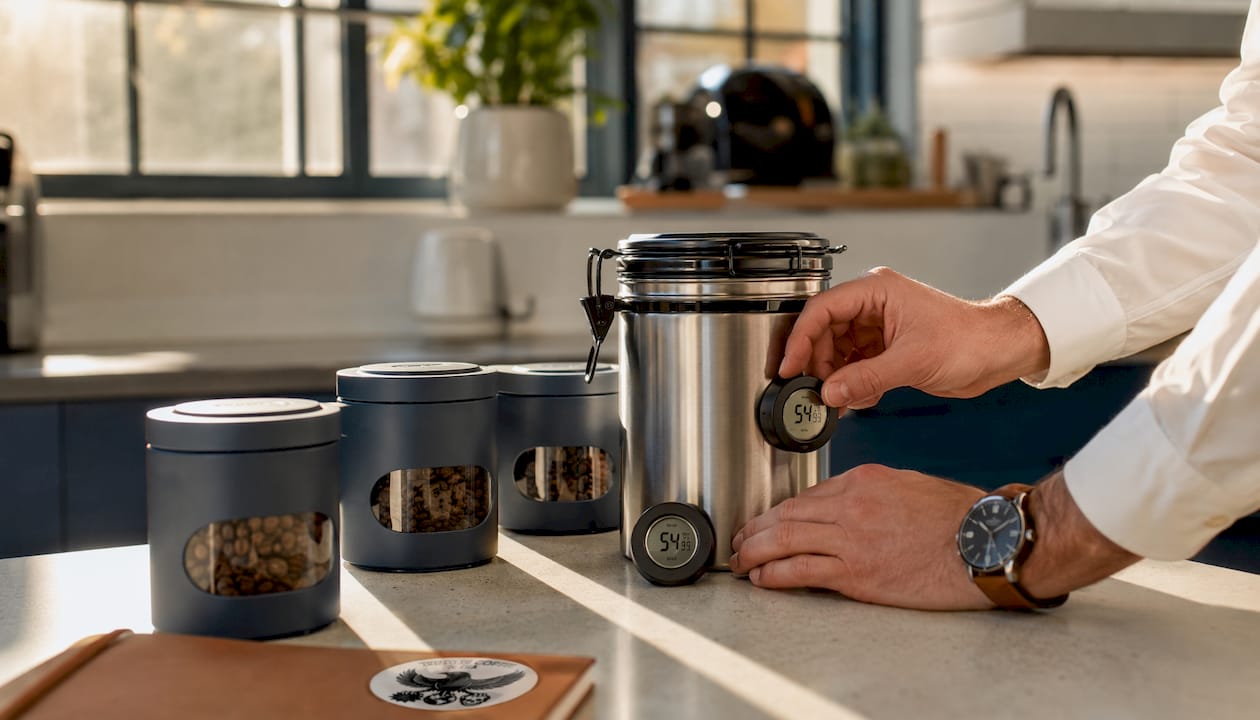
For roasted beans at home, the practical target is a cool, stable room temperature, ideally below 20°C, away from the stove, oven, or any heat source that fluctuates. Freezing is an option for long-term storage, but only if the beans are vacuum-sealed and you’re not repeatedly opening the container, since each thaw cycle introduces condensation.
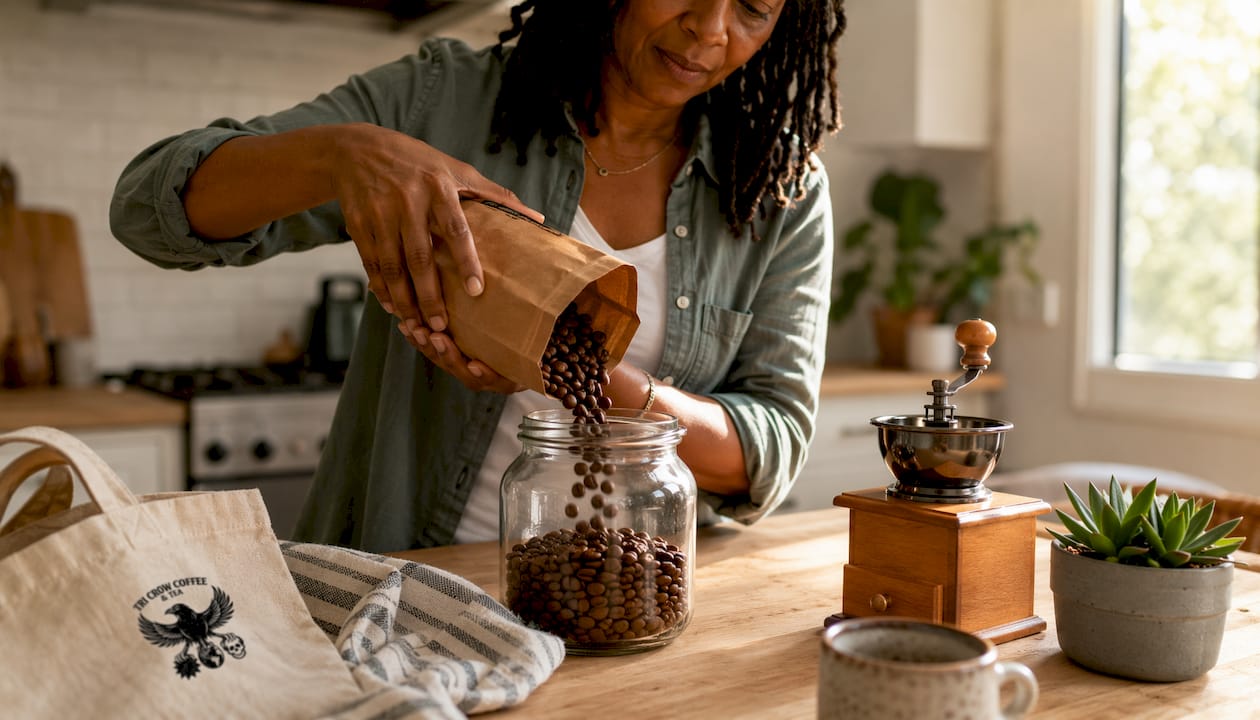
Packaging choices that actually matter
Not all containers are equal. Airtight containers with one-way degassing valves are the gold standard for roasted coffee at home, letting CO₂ escape without letting oxygen in. For green beans at a commercial or specialty scale, hermetic bags like GrainPro or PICS consistently outperform traditional jute bags in maintaining cup quality over extended periods. Polymeric packaging materials such as PE-EVOH and PE-PAV have also shown strong results in preserving sensory scores for up to 365 days when environmental conditions are controlled.
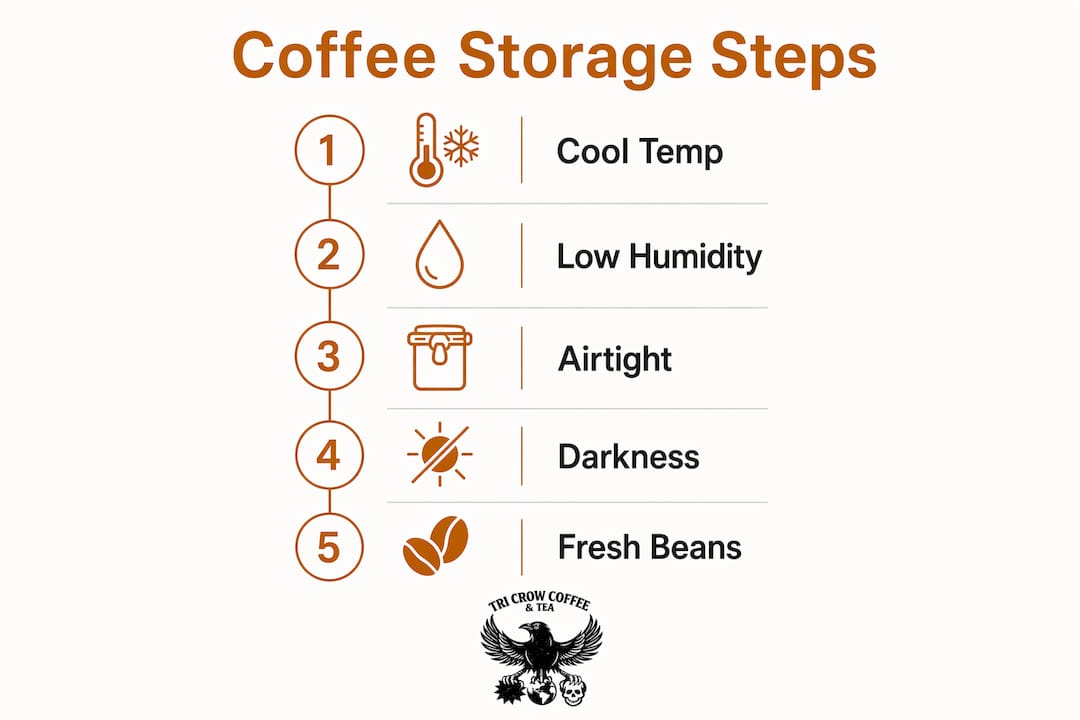
Modern coffee packaging options have expanded considerably, with multi-layer barrier films now offering protection against oxygen, moisture, and UV light in a single material.
Common storage mistakes to avoid:
- Storing beans in clear glass jars on a sunny counter
- Keeping coffee near a stove or coffee maker where heat fluctuates
- Leaving bags open between uses instead of resealing tightly
- Buying in bulk quantities that sit for months before finishing
- Ignoring the difference between green and roasted bean storage needs
Pro Tip: Natural processed coffees are more sensitive to moisture and temperature swings than washed coffees. If you’re storing a natural Ethiopian or Yemeni coffee, prioritize hermetic packaging and a cooler environment more aggressively than you would for a washed Colombian.
How does storage change the chemistry and flavor of coffee?
The flavor of coffee is built from hundreds of volatile compounds, and storage conditions determine how long those compounds survive. Lipid oxidation, accelerated by temperatures above 20°C, oxygen exposure, and humidity, is the primary chemical mechanism behind quality loss. As lipids oxidize, they produce off-flavor compounds while simultaneously destroying the aromatic molecules that make coffee smell and taste good.
Temperature has a particularly sharp effect on volatile preservation. Storing coffee at cooler temperatures slows the loss of key aroma compounds such as pyrazines and furans more than storage at typical room temperatures, even over short periods. Pyrazines contribute roasted, nutty notes; furans carry caramel and sweet characteristics. Lose those, and the cup flattens noticeably.
Freshness isn’t a switch that flips from good to bad. It’s a chemical gradient, a slow drift from desirable to off-flavors. The sensory shift typically moves from sweet and chocolatey notes toward earthy, smoky, and eventually ashy flavors as oxidation compounds accumulate. Cold brew prepared from beans stored at 5°C retains sweetness and fruity notes better than beans stored at room temperature, which shows how storage temperature follows the coffee all the way through to the final cup.
| Storage Condition | Key Chemical Change | Sensory Result |
|---|---|---|
| Above 20°C, open air | Rapid lipid oxidation, volatile loss | Stale, flat, ashy flavors |
| 20°C, hermetic bag | Slowed oxidation, some volatile retention | Moderate quality decline |
| 5°C–10°C, hermetic bag | Minimal oxidation, pyrazine/furan preservation | Fresh, complex, sweet |
| Below 0°C, vacuum-sealed | Near-arrested degradation | Near-original profile |
Natural processed coffees have higher oxidation rates than washed coffees during storage, which means they need tighter control over both moisture and temperature to maintain specialty-grade quality. A natural coffee stored in non-hermetic jute bags at typical room temperatures can suffer significant sensory quality loss within months, potentially falling below specialty classification.
Moisture content above 12% doesn’t just accelerate flavor loss. It triggers microbial contamination that causes irreversible sensory defects, regardless of how well the coffee was roasted.
Temperature effects on degradation are also nonlinear. The greatest quality decline in green coffee stored at elevated temperatures tends to occur within the first 90 days, making early-stage storage conditions the most critical window to control.
How long does coffee actually stay fresh?
Green coffee beans, when stored properly in hermetic packaging at stable cool temperatures, can maintain near-specialty grade quality over extended periods. Research on certain coffees shows that better packaging and cooler temperatures help retain premium quality compared to warmer and poorly packaged conditions.
Roasted coffee tells a different story. The roasting process opens up the bean’s cell structure, dramatically increasing surface area exposed to oxygen. Peak flavor for most roasted coffees falls within 2–4 weeks after roasting, though properly sealed bags with degassing valves can extend that window. Understanding coffee freshness at a chemical level helps you recognize when a bag is worth opening now versus saving.
Once you open a package, the clock speeds up considerably. Volatile compounds and aroma increase their rate of loss once the protective atmosphere inside the bag is broken. Resealing tightly after each use and consuming within 2–3 weeks of opening gives you the best sensory experience.
Signs your coffee has crossed into stale territory:
- The aroma is flat or smells like cardboard rather than roasted coffee
- The flavor is woody, papery, or has a heavy, dirty finish
- Acidity has dropped noticeably and the cup tastes dull
- Grounds clump less and feel drier than fresh beans
For home storage, the practical advice is to buy in smaller quantities more frequently rather than stockpiling. Knowing how to store coffee beans correctly extends freshness, but no storage method replaces buying fresh. Keep opened bags in an airtight container away from heat and light, and treat the two-week mark after opening as your quality checkpoint.
Start with coffee worth storing
All the right storage conditions in the world only matter if the coffee was fresh and well-roasted to begin with. Tri Crow Coffee roasts in small batches specifically to avoid the extended warehouse time that degrades quality before a bag even reaches you. The 6 Bean Dark Roast is built for depth and consistency, a blend where proper storage at home lets the full profile develop rather than fade. If you want to taste what fresh small-batch coffee actually offers, that’s the place to start.
FAQ
How important is coffee storage?
Storage directly determines how much of a coffee’s original flavor, aroma, and freshness survives to your cup. Poor conditions, particularly heat, oxygen, and excess moisture, accelerate chemical degradation that no brewing method can reverse.
What are the four main factors that affect coffee bean quality in storage?
Oxygen, temperature, humidity, and light are the four primary factors. Controlling all four, ideally through airtight containers, cool temperatures below 20°C, moisture below 12%, and dark storage, preserves both chemical and sensory quality.
What happens when coffee is exposed to too much air and light?
Oxygen triggers lipid oxidation, which shifts flavor from sweet and chocolatey toward stale, ashy, and smoky notes. Light degrades key aromatic compounds and chlorogenic acids, accelerating the same degradation process.
What are the best storage conditions for coffee?
For green beans, a stable cool environment in hermetic packaging like GrainPro bags is optimal. For roasted beans at home, an airtight container with a one-way valve kept below 20°C and away from light works best.
Key Takeaways
Proper storage conditions, especially temperature control and airtight packaging, are the most decisive factors in preserving coffee’s chemical and sensory quality from harvest to cup.
| Point | Details |
|---|---|
| Temperature is the top factor | Storing coffee above 20°C accelerates lipid oxidation and volatile loss faster than any other variable. |
| Moisture above 12% causes irreversible damage | Once moisture content crosses 12%, microbial growth triggers sensory defects that roasting quality cannot fix. |
| Hermetic packaging outperforms jute | GrainPro and polymeric barrier bags preserve specialty-grade quality significantly longer than traditional jute bags. |
| Natural coffees need tighter control | Natural processed coffees oxidize faster than washed coffees and require more careful moisture and temperature management. |
| Open bags lose freshness quickly | Volatile compounds escape rapidly once packaging is opened; consume within 2–3 weeks for peak sensory quality. |