
A storytelling coffee brand is a roaster that packages ritual and narrative into every bag, where origin, packaging, and serving cues matter as much as roast profile. Buyers get an emotional connection and a repeatable ritual, not just a caffeine fix. Small-batch roasters like Tri Crow Coffee build that experience through mythic identity, limited runs, and brewing cues meant to slow you down for five minutes each morning.
TL;DR:
- Authentic storytelling brands prioritize visible details like roast dates, batch numbers, and named origin or farm information over vague sourcing language.
- Visual consistency, mythic motifs, and intentional symbolism across packaging and content signal genuine narrative development beyond superficial design.
- Small-batch production control, transparent sourcing, and tasting notes connected to specific rituals or moods justify higher prices for narrative-focused coffees.
- Building rituals around specific brew methods, guided by detailed instructions and presentation, enhances customer loyalty and repeat purchases.
- Starting with a sample pack allows consumers to evaluate whether a brand’s story and ritual authenticity match their expectations before committing to larger purchases.
Table of Contents
- What Signals Show a Coffee Brand Is Genuinely Storytelling-Driven?
- How Do You Evaluate a Storytelling Coffee Brand Before You Buy?
- How Do You Turn a Bag of Storytelling Coffee Into a Real Ritual?
- How Does Storytelling Build Loyalty in the Coffee Market?
- What Storytelling Themes Do Successful Coffee Brands Use?
- How Should Coffee Brands Build Authentic Stories?
- Does Storytelling Justify Higher Coffee Prices?
- Why Ritual and Storytelling Actually Drive Loyalty
- Try the Ritual: A Small-Batch Coffee Lineup
- Sources
- FAQ
What Signals Show a Coffee Brand Is Genuinely Storytelling-Driven?
Marketing copy is cheap. Real narrative branding shows up in details that are expensive or slow to fake, which is exactly why they work as authenticity signals.
Start with what you can see. Cohesive photography, recurring mythic motifs, and artwork that changes with limited-edition drops tell you a brand thought about visual identity as part of the product, not an afterthought. Visual storytelling research on specialty coffee branding found that packaging, photography, and consistent visual tone help shoppers recognize a brand’s values and feel connected to it before they ever open the bag. That consistency is hard to fake at scale, which is why mass-market brands rarely bother.
Then look at what’s printed on the bag itself. A roast date and batch number tell you the brand tracks freshness deliberately, not incidentally. Single-origin or micro-lot labeling signals the roaster cares about terroir enough to source and price accordingly, and narrative-focused roasters often charge more per bag for exactly that reason. Tasting notes that connect to a mood or moment, rather than just “notes of cherry and dark chocolate,” suggest the brand designed the coffee around an experience.
Content is the third layer. Look for:
- Farmer or origin profiles that name real people and places, not stock photography
- Roasting videos or behind-the-scenes footage of the actual production run
- Founder stories that explain why the brand exists, not just what it sells
- Ritual guides that walk you through brewing as an experience, not a chore
None of these signals matter alone. A brand with gorgeous packaging and zero sourcing transparency is doing design, not storytelling. The combination is what separates a genuine narrative coffee brand from a label with a nice font.
How Do You Evaluate a Storytelling Coffee Brand Before You Buy?
You don’t need a spreadsheet to shop smart here. Five checkpoints will tell you almost everything worth knowing about whether a brand’s story holds up.
- Roast date and batch size. A printed roast date within the last few weeks and a stated batch number both suggest the brand actually controls small-batch production rather than just claiming to.
- Origin and producer transparency. Look for named farms, regions, or co-ops. Vague “sourced globally” language is a yellow flag. Learning about how coffee origin affects flavor and ethics helps you spot the difference between real sourcing detail and filler copy.
- Tasting notes tied to a ritual or mood. Does the description tell you when or how to drink this, or just what it tastes like?
- Packaging and symbolism. Materials, printed copy, and recurring visual motifs (a crest, a creature, a phrase) should feel intentional across the whole product line, not slapped on one flagship item.
- Sample packs or small sizes. Brands confident in their story usually offer a low-commitment way to try it.
How you weigh this depends on what you actually want. If ritual matters most to you, prioritize tasting notes and packaging cues. If flavor is the priority, weight origin transparency and roast batch size higher. If sustainability drives your choice, dig into the sourcing language before anything else.
Pro Tip: Before committing to a full bag of an unfamiliar blend, start with a sample pack. It’s the cheapest way to test whether a brand’s ritual claims match what actually happens in your cup.
How Do You Turn a Bag of Storytelling Coffee Into a Real Ritual?
The story printed on a bag is only half the product. The other half is what you do with it, and that’s where most people leave value on the table by brewing on autopilot.
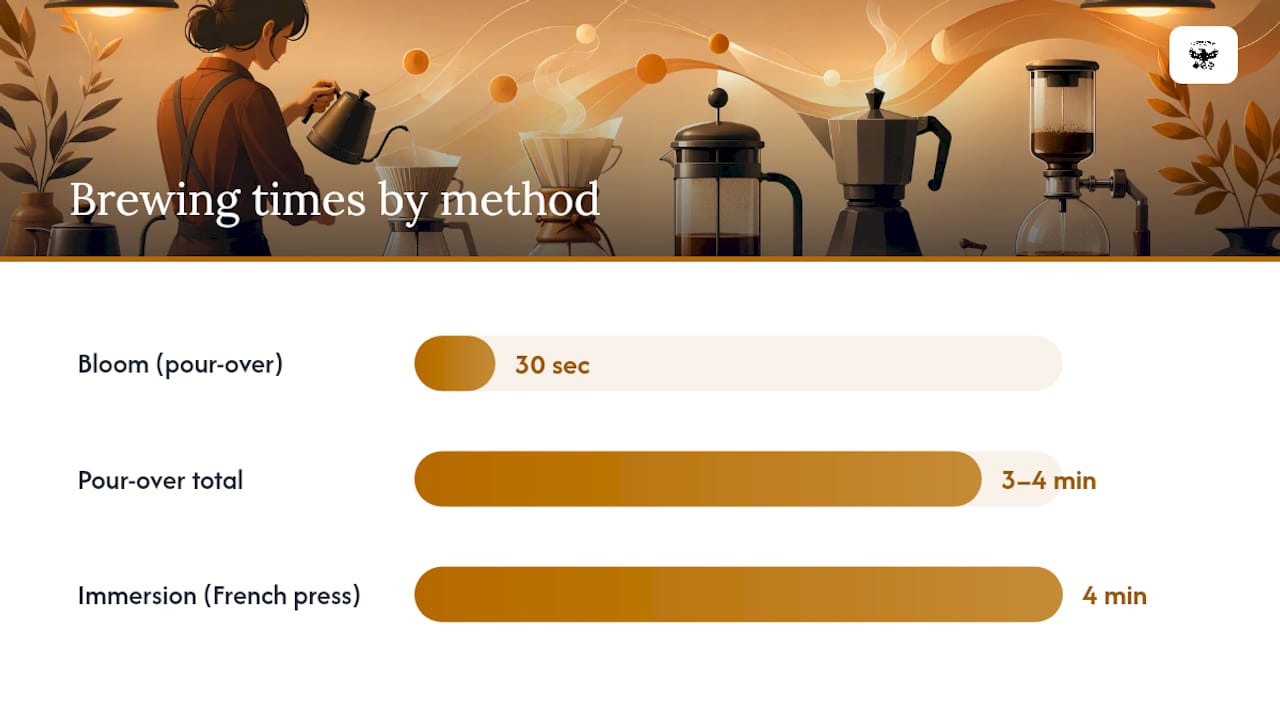
Morning mindful pour-over works best with a light or medium roast and about five uninterrupted minutes. Heat water to 195 to 205°F, bloom the grounds for 30 seconds with just enough water to saturate them, then pour in slow circles over three to four minutes. Use a medium grind, roughly the texture of coarse sand, and skip your phone until the last drop clears the filter.
Focused midday immersion suits a French press or a simple steep method when you need a shorter, more forgiving process. Coarse grind, four minutes of steep time, and one deliberate stir before you plunge. This is the ritual for a work-break reset rather than a quiet meditation.
Evening decaf ceremony calls for a lower water temperature, around 185 to 195°F, since decaf beans scorch more easily and lose sweetness at higher heat. Keep the grind slightly finer and the pour slower. This is less about caffeine and more about closing the day with something warm in your hands.
Presentation carries weight most people underestimate. A dedicated mug, a moment of quiet before the first sip, even a printed prompt on the bag (“pour slowly, breathe twice”) anchors the ritual so it repeats naturally. Guidance on pairing tasting notes with a brewing ritual suggests this pairing measurably increases the odds a buyer returns for a repeat purchase, because the narrative promise on the bag actually gets fulfilled in the cup. For a ready-made version of this approach, Tri Crow Coffee’s mindful morning ritual guide walks through a full sequence you can start tomorrow.
- Water temp for regular roasts: 195 to 205°F
- Water temp for decaf: 185 to 195°F
- Bloom time: 30 seconds
- Grind: coarse for immersion, medium for pour-over
How Does Storytelling Build Loyalty in the Coffee Market?
Repeat purchases in coffee rarely come down to flavor alone. Research on narrative-driven consumption found that shoppers buy story-forward coffee for emotional connection and ritual more than for novelty of taste, and brands that lean into that narrative tend to see stronger loyalty than those competing purely on flavor claims.
That makes sense once you think about how habits form. A cup of coffee you drink the same way every morning becomes part of your routine’s architecture. If the brand behind that cup gives you a reason to feel something (a myth, a symbol, a sense of provenance) the ritual and the brand fuse together. Switching to a cheaper bag starts to feel like breaking a small promise to yourself, not just buying a different product.
Coverage of the shift toward narrative branding points out that younger consumers in particular favor brands offering meaning and engagement over brands competing purely on price or convenience. That doesn’t mean older buyers are immune. It means the narrative layer has become a genuine differentiator across most demographics, not a niche appeal limited to one age group.
Engagement follows a similar pattern. A brand that shares farmer profiles or roasting footage gives you something to return to between purchases, not just at checkout. That keeps the relationship alive in the weeks you’re not buying.
What Storytelling Themes Do Successful Coffee Brands Use?
Most narrative coffee brands lean on a handful of recurring archetypes, and recognizing them helps you tell a thoughtfully built story from a recycled one.
The origin myth is the most common: a founder’s personal history, a specific farm, or a cultural tradition tied to how the coffee is grown or roasted. The craftsman archetype centers the roaster’s skill and small-batch discipline, emphasizing control over consistency rather than scale. The mythic or symbolic identity borrows folklore, creatures, or ritual language to give the brand a personality bigger than a logo, which is the approach Tri Crow Coffee takes with its three-legged crow motif tied to sun, earth, and spirit.
There’s also the ritual guardian theme, where the brand positions itself less as a product seller and more as a keeper of a daily practice, offering brewing guides and prompts rather than just tasting notes. And the transparency advocate theme puts sourcing ethics and farmer partnerships front and center, appealing to buyers who want their purchase to carry some weight beyond flavor.
None of these themes are mutually exclusive. The strongest storytelling brands typically combine two, usually pairing craftsmanship with either mythic identity or transparency, since a single archetype on its own can feel thin after a few purchases. What separates a good theme from a gimmick is consistency: the same motif showing up in packaging, product names, and content, not just a one-off marketing campaign.
How Should Coffee Brands Build Authentic Stories?
Authenticity in coffee storytelling isn’t about better copywriting. It’s about giving the story something real to stand on before you write a single word of marketing.
That starts with sourcing decisions made for their own sake, not for the story they’ll generate later. A brand that picks a micro-lot because the flavor and farmer relationship justify it, then tells that story honestly, reads differently than a brand reverse-engineering a narrative around a generic bean. Small-batch roasting itself becomes a storytelling asset when it’s disclosed plainly: batch size and roast date transparency gives buyers something concrete to point to, rather than a vague claim of “craft.”
One DTC roaster’s experience backs this up with numbers. D2C Times reported that rebuilding creative around ritual, slower content, packaging-first video, and creator briefs that required a genuine “ritual moment” rather than a generic unboxing, drove a significant lift in new subscriber conversion reported by the brand. The lesson isn’t the exact number so much as the mechanism: content that shows the ritual in action converts better than content that just describes the product.
Consistency matters more than volume. A founder story told once on an About page does less work than the same themes echoed across packaging copy, tasting notes, and social content. Brands that treat storytelling as a one-time asset rather than an ongoing practice tend to see the narrative fade fast.
Does Storytelling Justify Higher Coffee Prices?
Yes, within limits, and the mechanism is more concrete than “people pay for a good story.” Micro-lot and single-origin coffees tied to a specific farm or region typically carry higher per-bag prices than blended, anonymously sourced coffee, because the sourcing itself costs more. Storytelling doesn’t invent that price premium. It explains and justifies one that already exists on the sourcing side.
Where storytelling changes the equation is perceived value at the point of purchase. Two bags with similar sourcing costs can feel very differently priced to a shopper depending on whether one comes with a farmer’s name, a roast date, and a symbol-driven identity, while the other just says “medium roast.” The story doesn’t inflate the coffee’s actual quality. It closes the gap between what a bag costs and what a buyer feels comfortable paying for it.
That only works if the story is backed by something real. A brand charging a premium purely on packaging design, with no origin transparency or batch discipline behind it, tends to get called out fast in reviews. Buyers researching narrative coffee brands have gotten sharper at telling the difference between a justified premium and one built on empty language.
Why Ritual and Storytelling Actually Drive Loyalty
The shift I’ve watched happen over the past few years isn’t really about flavor preferences changing. It’s about what people want their morning coffee to do for them beyond delivering caffeine. Buyers increasingly want consistency they can count on and a small ritual that belongs to them, and a coffee brand with a real narrative behind it gives them both at once.
That’s the thinking behind how Tri Crow Coffee approaches every small-batch run. Limiting quantities isn’t a scarcity trick. It’s how you keep flavor and consistency tight enough that the ritual actually holds up morning after morning. The mythic identity, the three-legged crow tied to sun, earth, and spirit, exists because a ritual needs a symbol to anchor to, not just a logo.
If you want more on how we think about sourcing, craft, and ritual, our blog covers the craft and ethics behind artisan coffee in more depth than fits here.
— David P.
Try the Ritual: A Small-Batch Coffee Lineup
This brand is built for shoppers who want a bag with real sourcing behind it and a ritual that actually sticks. Every line below is roasted in limited runs, so freshness and flavor stay consistent instead of drifting batch to batch.
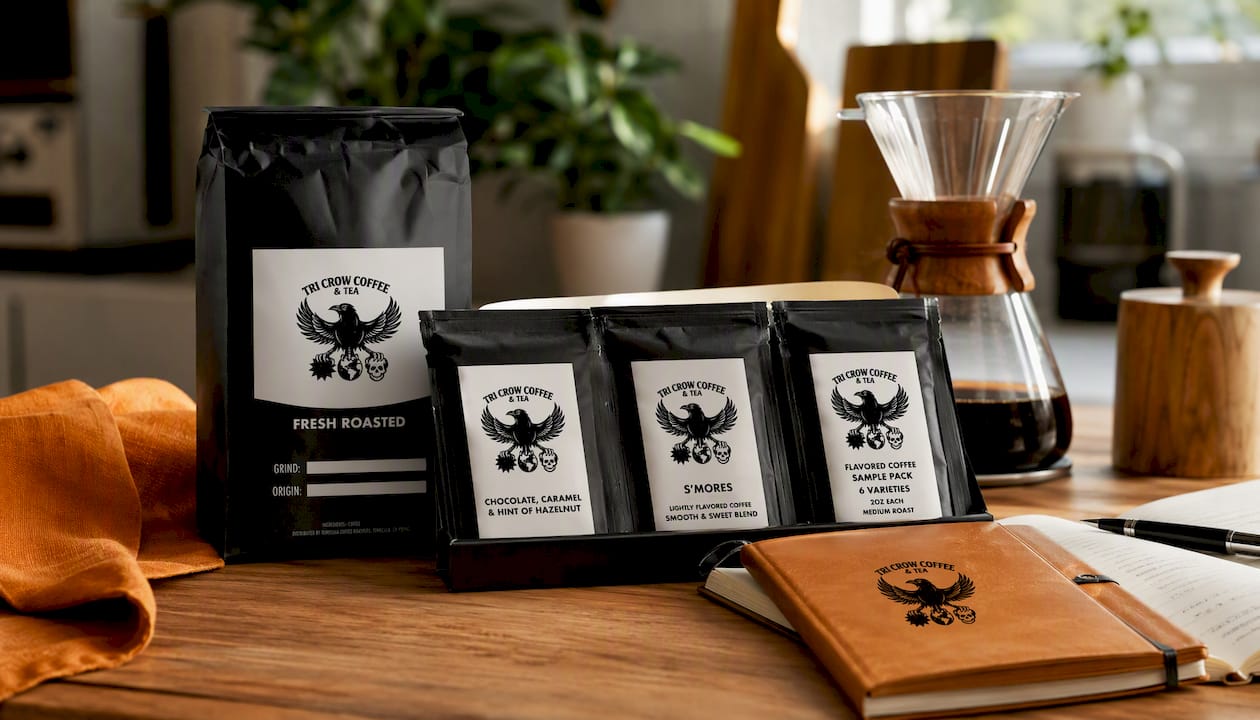
If you’re still deciding which story fits your morning, start with the Flavored Coffee Sample Pack, six 2oz varieties of a medium roast built for low-risk exploring before you commit to a full bag. For a dessert-like ritual that feels indulgent without leaving coffee territory, the Turtle flavored blend, chocolate, caramel, and a hint of hazelnut, works well as a mid-morning treat. And for something suited to slower, cozier moments, the S’mores blend delivers a smooth, sweet profile that fits an evening wind-down better than a jolt of morning energy.
If terroir matters more to you than flavored notes, the single-origin collection leans into origin transparency the way this article describes. Prefer capsules for a faster ritual, or tea for a caffeine-free version of the same practice? Check the pods and capsules line or the artisan tea collection. Pick the sample pack first if you’re unsure, then build your ritual from there.
Sources
- Spiral Imperial research on narrative-driven consumption
- The role of visual storytelling in specialty coffee branding — Studio Nfawa
- How storytelling is transforming the coffee industry — CoffeeTalk
- How Chamberlain Coffee rebuilt its creative identity around ritual — D2C Times
FAQ
What Is a Storytelling Coffee Brand?
It’s a roaster that builds narrative, ritual, and symbolism into the product itself, not just the marketing around it. Origin transparency, batch details, and ritual cues on the packaging are as central to the brand as the roast profile.
How Do I Know if a Coffee Brand’s Story Is Authentic?
Check for printed roast dates, batch numbers, and named origins or producers rather than vague sourcing language. Visual and content consistency across packaging, photography, and product descriptions is one of the clearest signals a brand’s narrative is genuine rather than a marketing overlay.
Is Storytelling Coffee More Expensive?
Often, yes, but the premium usually traces back to micro-lot or single-origin sourcing costs rather than the story itself. Narrative-focused roasters tend to charge more per bag because the sourcing behind those stories genuinely costs more to produce.
What’s the Best Way to Try a Narrative Coffee Brand for the First Time?
Start with a sample pack rather than committing to a full bag of one blend. Tri Crow Coffee’s Flavored Coffee Sample Pack offers six varieties in 2oz sizes, letting you compare ritual and flavor before choosing a favorite.
How Much Does Tri Crow Coffee Cost?
Pricing for Tri Crow Coffee’s single-origin beans, flavored blends, pods, and tea is listed directly on each product collection page, since current prices vary by product line and size.