
TL;DR:
- Replacing coffee with chicory root, rooibos, or matcha preserves ritual warmth while reducing caffeine intake. These alternatives support gut health, calm focus, and low-stress alertness, tailored to your specific goals. A hybrid routine of one coffee morning and caffeine-free cups later in the day optimizes benefits without sacrificing the ritual.
The best caffeine-free and low-caffeine alternatives for a daily ritual are chicory root, rooibos, roasted dandelion, adaptogenic mushroom blends, and matcha. Each one preserves the weight and ceremony of a morning cup while changing what happens in your body afterward.
- Coffee-like body: roasted chicory, roasted dandelion root, cacao blends
- Warming alertness: ginger, spiced chai-style blends, spiced rooibos
- Calm and grounding: plain rooibos, chamomile blends, ashwagandha adaptogens
- Low-caffeine bridge: matcha, high-quality green or black tea, yerba maté, guayusa
TL;DR: This week, try one morning swap. A single espresso plus an afternoon cup of chicory or rooibos is a practical starting point. Note your jitter level, sleep quality, and mood after seven days.
Stat to know: L-theanine in matcha smooths caffeine’s stimulating effects, producing calm focus rather than the anxious spike many drinkers want to avoid.
Table of Contents
- What caffeine alternatives fit your ritual goal?
- Why these swaps actually work: the science behind the ritual
- How to choose the right alternative for your ritual
- Three ritual templates you can brew this week
- A hybrid plan that actually works day-to-day
- Key Takeaways
- Why the ritual matters more than the caffeine count
- Tri Crow Coffee’s small-batch caffeine-free blends
- Useful sources
- FAQ
What caffeine alternatives fit your ritual goal?
The most useful way to approach a caffeine alternatives list is by the feeling you want to preserve, not just the flavor.
Coffee-like body
Roasted chicory root is the closest thing to a coffee-like cup without any caffeine. Chicory contains inulin, a prebiotic fiber that supports gut health, and when roasted it produces a caramelized, slightly bitter flavor that takes milk well. Best in the morning. Look for small-batch roasted chicory from traceable sources.
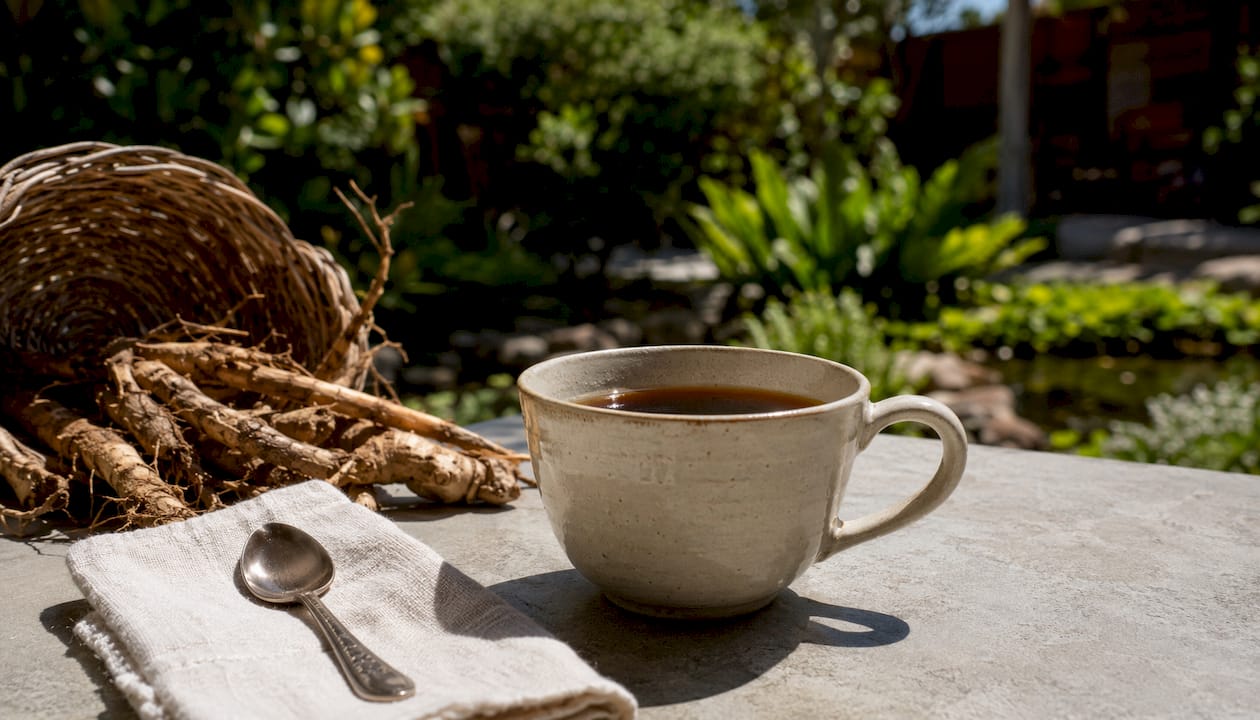
Roasted dandelion root brews into a deep, earthy decoction that mimics coffee’s psychological comfort without the acidity. Simmer it for 10–15 minutes for full extraction. Morning or early afternoon.
Cacao blends (unsweetened cacao powder or cacao husk tea) deliver a rich, chocolatey body with trace theobromine for mild warmth. No jitter. Pairs beautifully with oat milk.
Warming alertness
Spiced rooibos (think chai-style blends with cinnamon, cardamom, and ginger) gives you the warming ritual of a spiced latte without caffeine. Rooibos is naturally caffeine-free, low in tannins, and takes milk exceptionally well. Morning or mid-afternoon.
Ginger tea is one of the most underrated natural energy boosters. It improves circulation, clears mental fog, and delivers a sharp, warming sensation that reads as “alert” without touching your cortisol. Steep fresh ginger slices for 5–8 minutes.
Calm and grounding
Plain rooibos brewed without spices is sweet, slightly floral, and gentle on the stomach. It’s the go-to for an evening cup that still feels substantial. Chamomile blends and ashwagandha-based adaptogens fit here too, especially for readers managing anxiety or sleep disruption.
Low-caffeine bridge options
Matcha sits in its own category. It contains caffeine, with content varying widely depending on grade and quantity, but the L-theanine and caffeine combination produces calm, sustained focus rather than a spike. Yerba maté and guayusa deliver a moderate level of caffeine per cup and work well as a strategic first cup when you want stimulation but less than a double espresso.
Quick brew reference
| Alternative | Water Temp | Steep / Simmer Time | Takes Milk? |
|---|---|---|---|
| Roasted chicory | 200°F | 4–5 min (French press) | Yes |
| Roasted dandelion | 212°F | 10–15 min (simmer) | Yes |
| Rooibos | 212°F | 5–7 min | Yes |
| Matcha | 175°F | Whisk 30–60 sec | Yes |
| Ginger (fresh) | 212°F | 5–8 min | Optional |
| Cacao husk | 200°F | 5–10 min | Yes |
| Mushroom blend | 175–200°F | Dissolve per blend | Yes |
Pro Tip: Chicory, roasted cacao, and rooibos all create a full, substantial cup with oat or whole milk. If mouthfeel is your main concern when leaving coffee, start with one of these three.
Why these swaps actually work: the science behind the ritual
These alternatives don’t just taste different. They alter your stimulation profile and digestive response in ways that matter.
Chicory’s inulin feeds beneficial gut bacteria, which is a meaningful benefit for anyone who finds coffee irritates their digestion. Rooibos provides antioxidants without the tannins that interfere with iron absorption. Matcha’s L-theanine moderates the anxiety-like effects of caffeine, producing attention and calm simultaneously.
“Experts recommend matching an alternative to the specific goal — reducing jitters, managing reflux, or preserving ritual — rather than assuming all substitutes are inherently healthier.” — Nancy Oliveira, RD, as paraphrased by Harvard Health
A few grounding points:
- Polyphenols in tea differ from coffee’s chlorogenic acids; both have value, but they are not interchangeable
- Functional mushroom blends (lion’s mane, chaga, reishi) are caffeine-free and sold as powdered latte blends; adaptogenic claims vary and are not FDA-evaluated
- None of these alternatives are universally “healthier” — the right choice depends on your specific goal (anxiety, reflux, sleep, or ritual weight)
How to choose the right alternative for your ritual
Match the drink to your main objective first. Then evaluate flavor, mouthfeel, caffeine content, and sourcing.
- Reduce jitters or anxiety → matcha (L-theanine buffer), rooibos, chamomile blends
- Manage acid reflux → chicory, rooibos (both low-acid and gentle on the stomach)
- Preserve morning ritual weight → roasted chicory, roasted dandelion, cacao blends
- Keep some caffeine, reduce the spike → matcha, high-quality green tea, guayusa
- Evening wind-down cup → plain rooibos, chamomile, ashwagandha blends
Red flags to watch:
- Added sugars in pre-made blends (check labels on spiced or flavored options)
- Opaque sourcing with no origin information
- Chicory and inulin sensitivity (can cause bloating in some people)
- Blends with undisclosed stimulants added alongside adaptogenic claims
Sourcing matters more than most buyers expect. Small-batch, traceable herbs and roasted roots deliver more consistent flavor and mouthfeel than commodity products. For premium sourcing guidance, single-origin rooibos and wild-harvested roasted roots are worth the price difference.
Expected per-cup cost
| Format | Typical Per-Cup Cost |
|---|---|
| Loose-leaf herbal teas | $0.10 |
| Roasted roots (chicory, dandelion) | $0.25 |
| Small-batch rooibos blends | $0.50 |
| Powdered mushroom blends | $1.00 |
| Matcha (ceremonial grade) | $1.00 |
Three ritual templates you can brew this week
Morning grounding (chicory decoction)
Delivers: coffee-like body without jitter
- Measure 1.5 tbsp roasted chicory root per 8 oz water
- Bring water to 200°F; add chicory to a small French press
- Steep 4–5 minutes, then press slowly
- Add warm oat milk for body; no sweetener needed
- Drink in a heavy ceramic mug to reinforce the ritual weight
Equipment: small French press, kettle with temperature control, ceramic mug
Focused mid-morning (matcha whisk)
Delivers: calm alertness with L-theanine support
- Sift 1 tsp ceremonial-grade matcha into a warmed bowl
- Add 2 oz water at 175°F; whisk in a “W” motion for 30–60 seconds until frothy
- Add 4–6 oz steamed oat or whole milk
- Drink within 5 minutes for peak froth
Equipment: bamboo whisk (chasen), matcha bowl, small sieve
Calming afternoon (rooibos latte)
Delivers: full-bodied warmth with zero caffeine
- Steep 1.5 tsp loose rooibos in 6 oz water at 212°F for 6 minutes
- Remove leaves; froth 4 oz oat milk
- Pour milk over steeped rooibos; add a pinch of cinnamon
- Works equally well as a single cup or scaled to a 16 oz sharing pot (double all quantities)
Equipment: small teapot or mug infuser, milk frother
Pro Tip: All three templates scale to a small sharing pot by doubling quantities. The rooibos latte is particularly good shared — it holds its flavor longer than matcha.
A hybrid plan that actually works day-to-day
One coffee plus caffeine-free ritual cups throughout the day is the approach most practitioners recommend. It preserves cognitive benefits while reducing cortisol accumulation and sleep disruption. Here’s a sample schedule:
- 7:00 AM — Single espresso or small pour-over (your one coffee)
- 10:00 AM — Matcha or ginger tea (low-caffeine alertness bridge)
- 1:00 PM — Roasted chicory or rooibos latte (ritual body, zero caffeine)
- 4:00 PM — Plain rooibos or peppermint (no caffeine, no cortisol impact)
- 8:00 PM — Chamomile or ashwagandha blend (wind-down)
For coffee and tea pairing ideas that fit this kind of daily structure, the principle is simple: keep caffeine in the first half of the day and let the ritual continue caffeine-free after noon.
Track these for 7–14 days:
- Sleep quality (time to fall asleep, wake frequency)
- Jitter or anxiety level mid-morning
- Digestion (bloating, reflux, comfort)
- Mood and focus at 3:00 PM
Tapering tip: Replace your second coffee first, not your first. The morning cup carries the most ritual weight; swapping the afternoon cup is far easier and produces faster sleep improvements.
Key Takeaways
A hybrid approach — one coffee plus caffeine-free ritual cups — gives you cognitive benefits while protecting sleep and digestion better than full elimination.
| Point | Details |
|---|---|
| Match drink to goal | Chicory and rooibos for reflux; matcha for jitters; roasted roots for ritual body. |
| Mouthfeel drives habit | Chicory, rooibos, and cacao take milk well and create a substantial cup. |
| Trial period matters | Track sleep, jitter, digestion, and mood for 7–14 days before judging a swap. |
| Sourcing affects quality | Small-batch, traceable herbs deliver more consistent flavor than commodity blends. |
| Tri Crow Coffee entry point | The Apple Cider Rooibos blend is a low-friction way to start a caffeine-free ritual cup. |
Why the ritual matters more than the caffeine count
Most articles about caffeine substitutes treat this as a subtraction problem: remove caffeine, find something that tastes close enough, done. That framing misses what actually makes a morning cup work.
The ritual itself — the weight of the mug, the smell of something roasting or steeping, the five minutes of quiet — is doing real psychological work. When people abandon coffee and feel worse, it’s rarely pure withdrawal. Often it’s the loss of that grounded pause. The cup was a container for something.
That’s why mouthfeel and brew ceremony matter as much as the ingredient list. A thin, watery herbal tea drunk from a paper cup at a desk is not a ritual. A rooibos latte in a heavy ceramic mug, steeped deliberately, is. The difference in how you feel afterward has as much to do with the act as the liquid.
The alternatives in this article were chosen with that in mind. Chicory and roasted dandelion give you the decoction ritual. Matcha gives you the whisk ceremony. Rooibos gives you the latte moment. None of them require you to pretend you don’t miss coffee. They just give the ritual somewhere else to live.
Tri Crow Coffee’s small-batch caffeine-free blends
For readers who want to skip the sourcing research and start a caffeine-free ritual cup this week, Tri Crow Coffee’s Apple Cider Rooibos blend is the most direct path. It’s a small-batch, naturally caffeine-free rooibos with warm apple and spice notes that brews into a full, substantial cup. Steep it with oat milk for a latte-weight afternoon ritual, or drink it straight for something lighter and fruity.
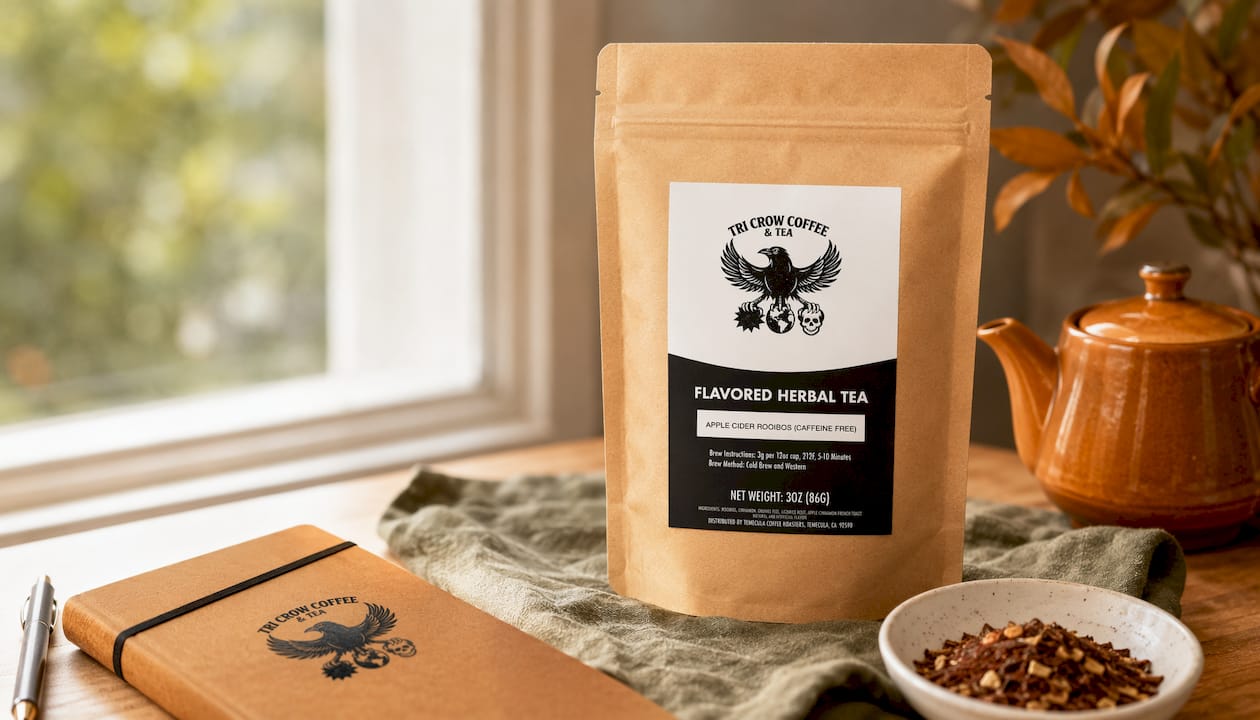
The Spiced Herbal Blend in the same line brings warming chai-adjacent spice to a caffeine-free base. Both are produced in limited quantities with eco-friendly packaging. A sampler pack gives you a seven-day trial across both blends without committing to a full bag of either. Pick up the sampler here and run the hybrid plan from the schedule above.
Useful sources
- Harvard Health: Energy-boosting coffee alternatives — Evidence on chicory’s inulin content, L-theanine’s effect on caffeine, and polyphenol context for tea vs. coffee.
- Healthline: 9 alternatives to coffee — Practical notes on rooibos flavor, tannin content, and milk compatibility.
- Roon: Best caffeine alternatives to coffee — Caffeine content data for yerba maté, guayusa, and mushroom blend formulations.
- Bon Appétit: Best coffee substitutes — Food-writing perspective on matching alternatives to specific complaints (reflux, anxiety, ritual).
- CoffeeExplore: Herbal tea morning ritual — Brewing notes for roasted dandelion root decoctions and morning ritual templates.
- OSF Healthcare: Caffeine alternatives — Clinical overview of matcha, herbal teas, chicory, and maca as caffeine-free energy sources.
FAQ
What is the best caffeine-free substitute for coffee’s body and mouthfeel?
Roasted chicory root and rooibos are the strongest options. Both take milk well and brew into a full, substantial cup that satisfies the ritual weight of a morning coffee.
Does matcha count as a caffeine-free alternative?
No. Matcha contains caffeine, but its L-theanine content smooths the stimulating effect, making it a low-jitter, low-anxiety option rather than a true caffeine-free drink.
How long should I trial a caffeine swap before judging it?
Seven to fourteen days is the standard window. Track sleep quality, jitter level, digestion, and afternoon mood to get a clear picture of what changed.
Can I keep one coffee and still benefit from these alternatives?
Yes. A hybrid approach — one morning coffee plus caffeine-free ritual cups for the rest of the day — is what most practitioners recommend. It preserves cognitive benefits while reducing cortisol accumulation and sleep disruption.
Is chicory safe for everyone?
Chicory contains inulin, which can cause bloating or digestive discomfort in people sensitive to prebiotic fibers. Anyone with a ragweed allergy should also check for cross-reactivity. This article is general information; consult a clinician if you have specific allergy or medication concerns.