
A coffee ritual is a short, repeatable sequence of intentional steps that turns a cup into a meaningful pause for presence, connection, or self-regulation. It works because the steps are chosen on purpose, not run on autopilot. The payoff shows up fast: sharper attention, a moment of real social contact, and a small structure your day can lean on. The rest of this guide shows you how to build one that actually sticks.
TL;DR:
- Building a meaningful coffee ritual involves deliberate steps, such as setting intention, using sensory cues, and maintaining consistency to reinforce the habit.
- Rituals centered on coffee can enhance focus, social connection, and self-regulation by shifting the experience from autopilot to attentive practice.
- Incorporating rituals into daily routines can alter behavior, as shown by experiments where structured sequences reduced calorie intake without relying on willpower alone.
- To sustain a ritual, choose a fixed sensory cue and adapt the sequence’s length based on available time, ensuring it remains resilient on busy or imperfect days.
- Starting with a simple, repeatable sequence for at least seven days helps establish the practice and discover its benefits before trying more elaborate variations.
Table of Contents
- What Coffee Ritual Meaning Actually Means: Ritual Versus Routine
- Cultural Coffee Practices That Show What Ritual Can Do
- Why Coffee Rituals Matter: What the Research Actually Shows
- How to Build a Personal Coffee Ritual That Actually Lasts
- Brewing, Setting, and Sensory Cues That Strengthen the Ritual
- Notes From Tri Crow Coffee on Building Ritual Into Every Cup
- A Short Take on Starting Small
- Bring Ritual Into Your Own Cup
- Sources
- FAQ
What Coffee Ritual Meaning Actually Means: Ritual Versus Routine
A routine runs on autopilot. You grind the beans, hit the button, drink while scrolling, and remember none of it by 9 a.m. A ritual is the same physical steps performed with attention, and that attention is what generates meaning. Conceptual research on coffee as a “cultural text” argues the drink itself carries no inherent significance. Meaning comes from context: who you’re with, where you’re standing, which tools you touch, and why you bothered in the first place. Change any of those and the same cup means something different.
That framing matters because it hands you control. Meaning isn’t something coffee has, it’s something you build into the act. A few markers separate ritual from habit:
- A defined start and end, not an open-ended sip that trails into other tasks
- At least one deliberate sensory beat: smell, sound, or the feel of a specific cup
- A stated (even silent) intention before the first pour
- Repeatability without needing perfect conditions every time
Cultural Coffee Practices That Show What Ritual Can Do
Two traditions make the case better than any theory. In Ethiopia, the jebena buna ceremony runs through three successive brews from the same grounds, each round weaker and each carrying its own name and social weight. The process is slow on purpose. Roasting, grinding, and brewing happen in front of guests, turning coffee preparation into the main event rather than a preamble to it, and the ceremony centers on hospitality and communal bonding as much as on caffeine.
Turkish coffee culture works differently but lands in the same place. Preparation and serving follow specific etiquette, from who is served first to the tiny cups themselves, and the practice is recognized as a ritualized communal tradition carrying symbolic weight well beyond the drink. Reading the leftover grounds afterward adds a layer of shared storytelling that has nothing to do with flavor.
You don’t need a ceremony that elaborate to borrow the logic. The office coffee klatch and the ten-minute break at a shared machine are secular, stripped-down versions of the same idea: gathering around coffee to mark a pause and signal connection.
Why Coffee Rituals Matter: What the Research Actually Shows
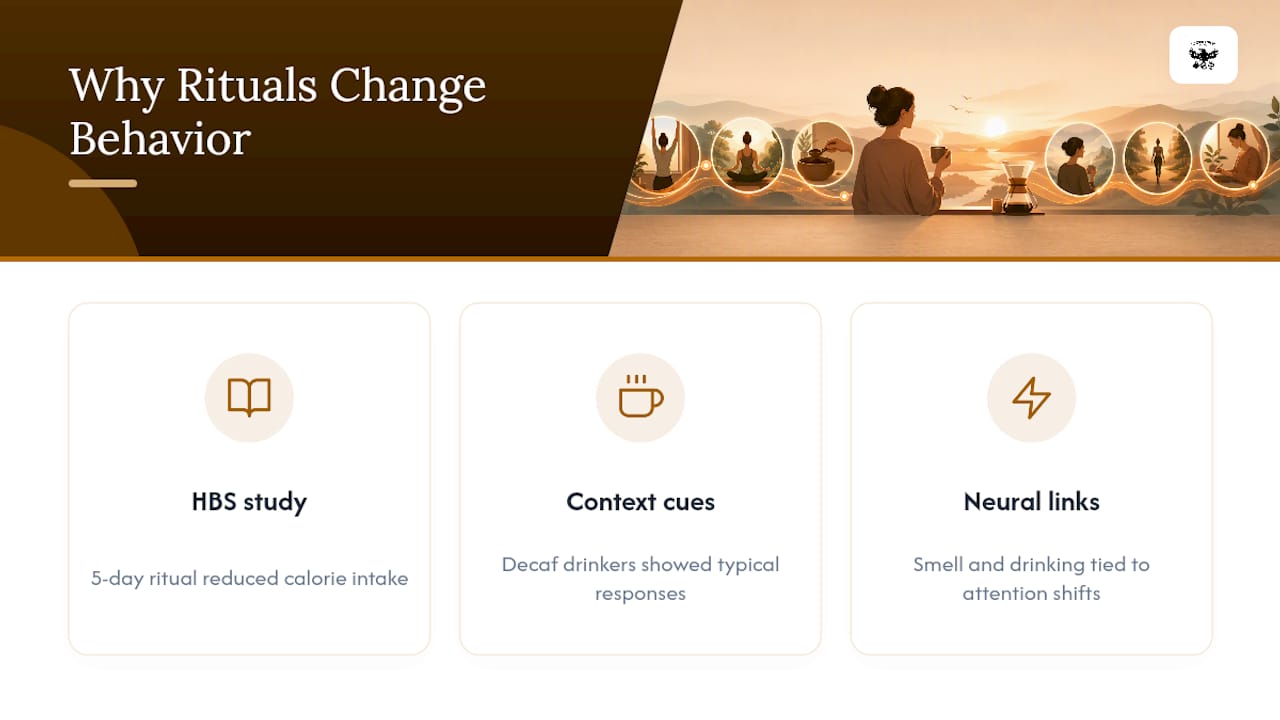
The behavioral case for ritual isn’t speculation. In a Harvard Business School field experiment on rituals and self-control, participants who performed a short, structured pre-eating ritual for five days reduced their calorie intake compared to a group that used a mindfulness-based approach instead. The ritual group didn’t try harder to resist temptation. They changed the sequence leading up to the moment of choice, and behavior followed.
Statistic Callout: The HBS field experiment found that a five-day pre-eating ritual reduced calorie intake more effectively than a mindfulness alternative, evidence that structured sequence, not willpower alone, changes behavior.
Context shapes coffee’s effects beyond caffeine content too. Some experiments on decaf found habitual drinkers reported cognitive and physiological responses similar to their usual cup, once the surrounding cues (the cup, the smell, the setting) stayed the same. That points toward the same conclusion the UNESCO recognition of Turkish coffee makes explicit: the communal gestures around the drink carry more meaning than the drink itself. Separate research on the smell and act of drinking coffee has also tied it to measurable shifts in cortical activity linked to attention, which helps explain why a ritual can sharpen focus before the caffeine even kicks in.
The practical takeaway: how you drink your coffee changes what it does to your attention and your day, not just what’s in the cup.
How to Build a Personal Coffee Ritual That Actually Lasts
Start with the outcome, not the steps. Decide what you want this cup to do for you today: focus, a genuine pause, or connection with someone else. HBS research on ritual design backs this up directly. A ritual aimed at focus should strip out social noise, while a ritual aimed at connection should build serving and sharing into the center of it, according to faculty notes on rituals and self-control.
Once you know the intention, build a short sequence and repeat it without much variation:
- Prepare. Set out your cup, grounds, and tools in the same spot each time.
- Smell. Pause over the grounds or the brewing coffee for a few seconds before pouring.
- Pour. Do this slowly, watching rather than multitasking.
- Pause. Sit with the cup for a moment before the first sip. No phone.
- Sip. Taste it deliberately for the first sip at least.
- Close. Mark the end, even with something as small as setting the cup down in a specific place.
Constraints keep the ritual alive past week one; for example, practical advice on how to maintain such consistent habits can be found in this flexible routine guide for new moms. A fixed time window, a capped number of steps, and a “stay with it” rule for the days you don’t feel like it all prevent the ritual from dissolving into decision fatigue. Smaller constraints make rituals more durable precisely because there’s less to negotiate every morning.
Match the length to your actual schedule instead of an aspirational one:
- Short (3 to 5 minutes): Prepare, smell, pour, one deliberate sip, done. Built for weekday mornings.
- Medium (10 minutes): The full six-step sequence above, done solo or with a partner.
- Long (20+ minutes): A slower brew method, a shared pour with someone else, maybe modeled loosely on the phased structure of a jebena buna ceremony.
If you want a ready-made starting point rather than building from scratch, a mindful morning ritual template lays out one version step by step.
Pro Tip: Pick one non-negotiable sensory cue, like a specific cup or a particular smell, and never skip it. That single fixed detail does more to anchor the ritual in memory than the rest of the sequence combined.

Brewing, Setting, and Sensory Cues That Strengthen the Ritual
The brewing method you choose should match the intention behind it. Pour-over demands slow attention and rewards a focus-oriented ritual. French press extends the process and suits a ritual built around presence rather than speed. Espresso, with its quick, social rhythm, fits a ritual meant to inject energy before a shared moment. Exploring different coffee drink varieties can help you match the format to the mood you’re actually chasing.
Setting does more work than most people expect. A dedicated cup, a cleared surface with nothing else on it, and either a few seconds of silence or one specific piece of music all act as signals that this moment is different from the next ten scrolling through email.
Life doesn’t always cooperate, so build in a fallback version:
- Travel kit: a compact pour-over cone or a few instant packets, kept solely for ritual use
- Rushed mornings: cut the sequence to prepare, smell, sip, close, and skip the rest without guilt
- No caffeine tolerance that day: a caffeine-free alternative keeps the ritual’s structure intact even when the drink changes
The goal isn’t a perfect ritual every day. It’s a ritual resilient enough to survive an imperfect one.
Notes From Tri Crow Coffee on Building Ritual Into Every Cup
Some coffee brands emphasize how small, repeatable practices shape the meaning people find in a daily cup, which can influence how their blends are approached. Small-batch roasting can serve as a way to keep each batch distinct enough that opening a new bag feels like a small event.
Some coffee brands use mythic identities and storytelling to give the act of brewing a sense of meaning beyond a task to finish, designing blends with grounding moments in mind.
A Short Take on Starting Small
Rituals are choices, shaped by culture but ultimately yours to design. Reading through Ethiopian ceremonies, Turkish serving customs, or Harvard’s self-control research can make ritual sound like it requires elaborate planning. It doesn’t. A small, repeatable sequence beats an ambitious one you abandon by Thursday. Pick one version, run it for seven days, and see what changes before you decide whether it’s worth keeping.
— David P.
Bring Ritual Into Your Own Cup
Some coffee companies build their blends around concepts like small batches, deliberate flavor profiles, and a mythic identity intended to offer a morning pause. Some small coffee roasters limit batch sizes intentionally to maintain quality and character in each batch.
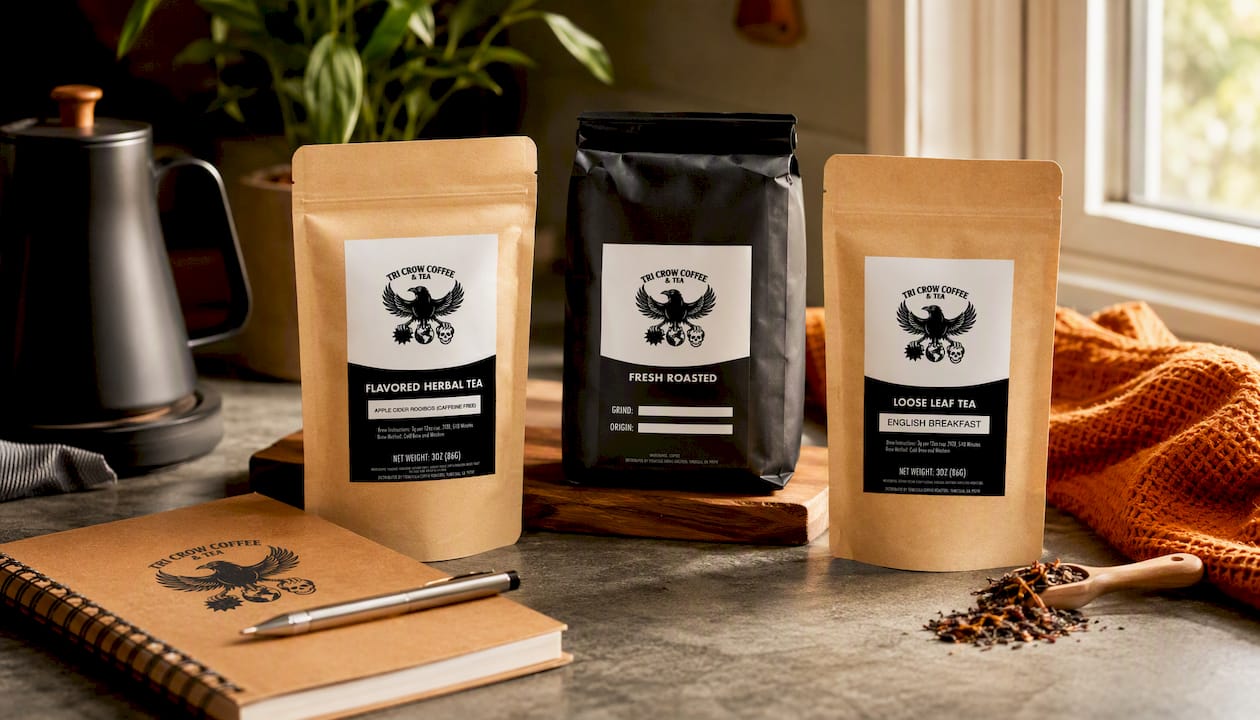
If focus is the goal, the Medium Roast Cold Brew Coffee, with its smooth chocolate and floral notes, suits a slow, unhurried ritual that doesn’t rush the first sip. If you’re building a caffeine-free version of the same practice, the Apple Cider Rooibos spiced herbal blend gives you the sensory cues without the stimulant. Prefer tea over coffee entirely? The English Breakfast Tea is strong enough to anchor a ritual on its own, especially with milk.
Not sure where to start? Browse the full single-origin coffee lineup, check out flavored coffee options if you want more variety in rotation, or look at pods and capsules for a faster version of the same ritual on busy mornings. The artisan tea collection and Tri Crow merch round out the rest. Pick one bag, commit to seven days, and see what a designed ritual does for your mornings.
Sources
- Enacting Rituals to Improve Self-Control (HBS research report)
- Turkish coffee, not just a drink but a culture | The UNESCO Courier
- The Coffee Ritual: Ethiopia’s Jebena Buna Ceremony
FAQ
What Is the Coffee Ritual?
A coffee ritual is a short, deliberate sequence built around brewing and drinking coffee, done with attention rather than on autopilot, often to create focus, connection, or a sense of hospitality.
What Does Coffee Mean Spiritually?
In traditions like the Ethiopian jebena buna ceremony, coffee functions as a vehicle for blessing, hospitality, and communal bonding rather than a purely spiritual symbol on its own, with meaning generated through the shared social act.
Why Was Coffee Called Satan’s Drink?
Coffee earned that nickname in parts of early modern Europe largely because of religious and political suspicion toward a new, foreign stimulant, not because of anything inherent to the drink itself.
Is There a Dark Side to Coffee Culture?
Coffee culture can tip into an unhealthy pattern when the ritual gets replaced by compulsive consumption or when the “ritual” framing is used to excuse excessive caffeine intake, so intention and moderation both matter.
How Do I Start a Coffee Ritual If I’m Not a Morning Person?
Start with a short version, under five minutes, using one fixed sensory cue like a specific cup or a particular smell, and give it seven days before deciding whether to expand it.