
Small-batch tea blends are limited-quantity, handcrafted mixes built in test sizes of 10 to 15 grams before ever reaching a working batch of 100 grams or more. This guide gives you a simple four-role blending framework, test-size recipes, and the measurement and safety steps that make a blend repeatable instead of a one-time accident. David P. put together the process below from years of test-brewing on a small scale.
TL;DR:
- Small-batch tea test sizes of 10 to 15 grams allow for quick, inexpensive experimentation and early detection of flavor issues before larger production.
- Maintaining precise weights, documenting each batch, and testing only one variable at a time ensures repeatability and consistent flavor profiles in small-scale blending.
- The four-role framework—primary, support, flavor, and accent—guides ingredient ratios to create balanced blends with three to five ingredients, preventing flavor clashes.
- Tough ingredients like roots and berries require decoction, simmering 15 to 30 minutes, while delicate components steep separately to avoid bitterness.
- Using a precision scale and resting blends 24 to 72 hours after mixing helps maintain accuracy and flavor integration before scaling to larger batches.
Table of Contents
- What “Small Batch” Actually Means for Tea
- The Four-Role Framework: Build a Blend Without Guessing
- Infusion vs. Decoction: When to Simmer and When to Steep
- 5 Small-Batch Starter Recipes You Can Test Tonight
- How I Scale a Test Batch to a Small Production Run
- Sourcing and Storing Your Ingredients in Small Quantities
- Brewing Parameters That Keep Your Test Brews Consistent
- Herbs to Use With Caution in Small-Batch Blends
- Ritual, Naming, and What Makes a Blend Worth Repeating
- Try Tri Crow Coffee’s Small-Batch Blends
- Further Reading and Primary Sources
- Sources
- FAQ
What “Small Batch” Actually Means for Tea
A test batch runs 10 to 15 grams, roughly 10 teaspoons of dried material. A working batch, once you’ve settled on a ratio you like, scales up to a larger quantity suitable for multiple cups. That’s the whole distinction: small enough to fail cheaply, big enough to actually brew and taste.
Working small has real upside. You catch a bitter or muddy blend before you’ve committed a pound of good ceylon black tea to it. You can chase seasonal ingredients, like fresh apple pieces or a specific harvest of chamomile, without worrying about using them up before they go stale. And freshness compounds: smaller batches get consumed faster, so the leaf at the bottom of the tin tastes like the leaf at the top.
The trade-off is precision. At this scale, a gram of error is a meaningful percentage of the whole blend, so:
- Weigh every component, don’t eyeball by spoon
- Log the exact grams and percentages for each batch
- Change one variable per test, never several at once
- Keep a written or photographed record of the dry blend and the brewed result
The Four-Role Framework: Build a Blend Without Guessing
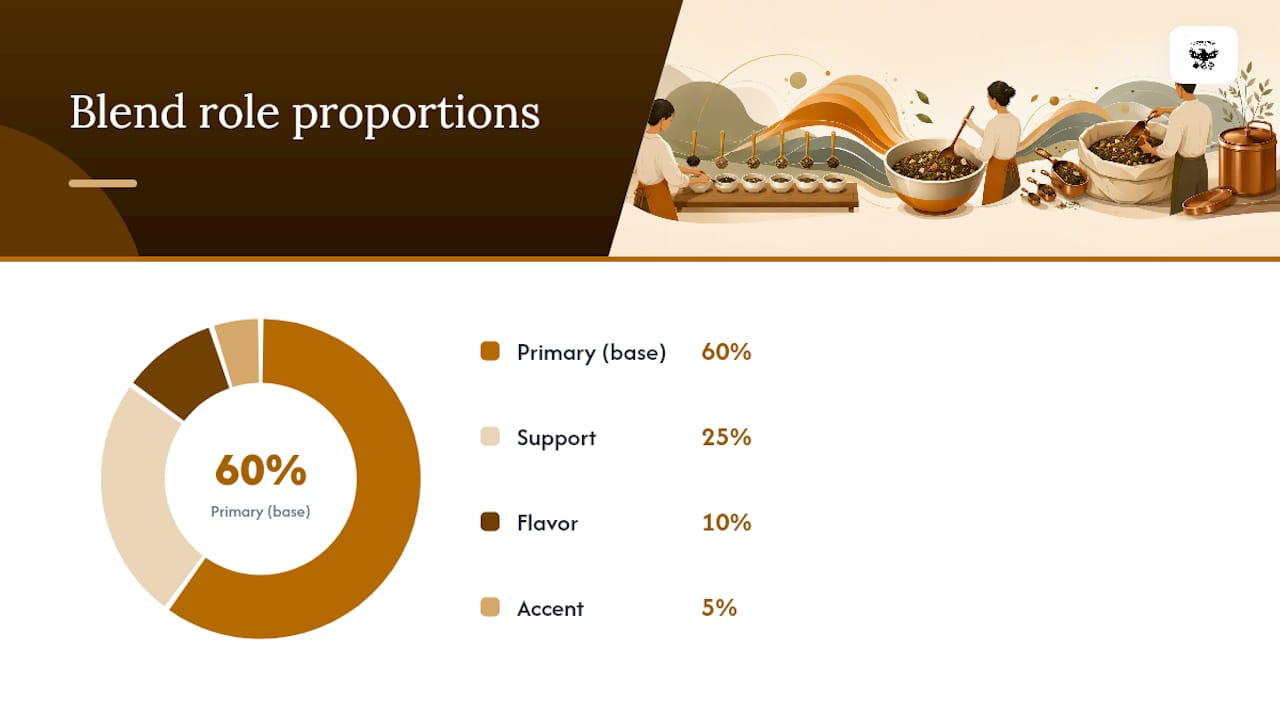
Most balanced blends break down into four roles, and this ratio structure (primary around 60%, support 25%, flavor 10%, accent 5%) comes straight from small-batch herbal blending guidance. It works because it forces a hierarchy instead of throwing five interesting ingredients together and hoping.
- Primary (about 60% by weight): your base tea or herb, the one doing most of the flavor and body work, like a black tea, rooibos, or chamomile.
- Support (about 25%): something that reinforces the primary without fighting it, such as a second herb in the same flavor family.
- Flavor (about 10%): the ingredient that gives the blend its identity, like dried orange peel, cardamom, or hibiscus.
- Accent (about 5%): a small hit of something potent, like licorice root or vanilla, that rounds the profile without dominating it.
Pick your primary first, then pair by flavor family. Floral pairs with citrus. Earthy pairs with spice. Most balanced blends use three to five total ingredients. More than that and flavors start canceling each other out rather than layering.
Pro Tip: Smell the dry blend, but don’t trust it. A dry mix can smell perfectly balanced and still brew flat or bitter, so a test brew is the only real check.
Infusion vs. Decoction: When to Simmer and When to Steep
Not every ingredient wants the same treatment, and blending them into one pot without adjusting your method is how you get a bitter, muddy cup. Tough materials like roots, bark, and dried berries need to be broken down by heat over time. Delicate leaves and flowers just need hot water and a few minutes.
The rule from small-batch herbal preparation guidance is straightforward: decoct the tough stuff for 15 to 30 minutes, then add the delicate stuff after you pull it off heat and let it steep 5 to 10 minutes.
For a small test batch:
- Simmer roots, bark, and dried berries in water for 15 to 30 minutes
- Remove from heat before adding flowers, soft leaves, or citrus peel
- Steep the combined mix for another 5 to 10 minutes, then strain
- Taste immediately and again once cooled, since flavor shifts as it drops in temperature
Run a second version where you steep everything together for comparison. The difference in bitterness alone will tell you whether your blend needs the two-stage treatment.
5 Small-Batch Starter Recipes You Can Test Tonight
Each recipe below is sized for a quick test brew, roughly one mug’s worth using the same role-based ratios covered above. Adjust the accent ingredient first if something feels off. It’s the smallest lever and the easiest to correct.
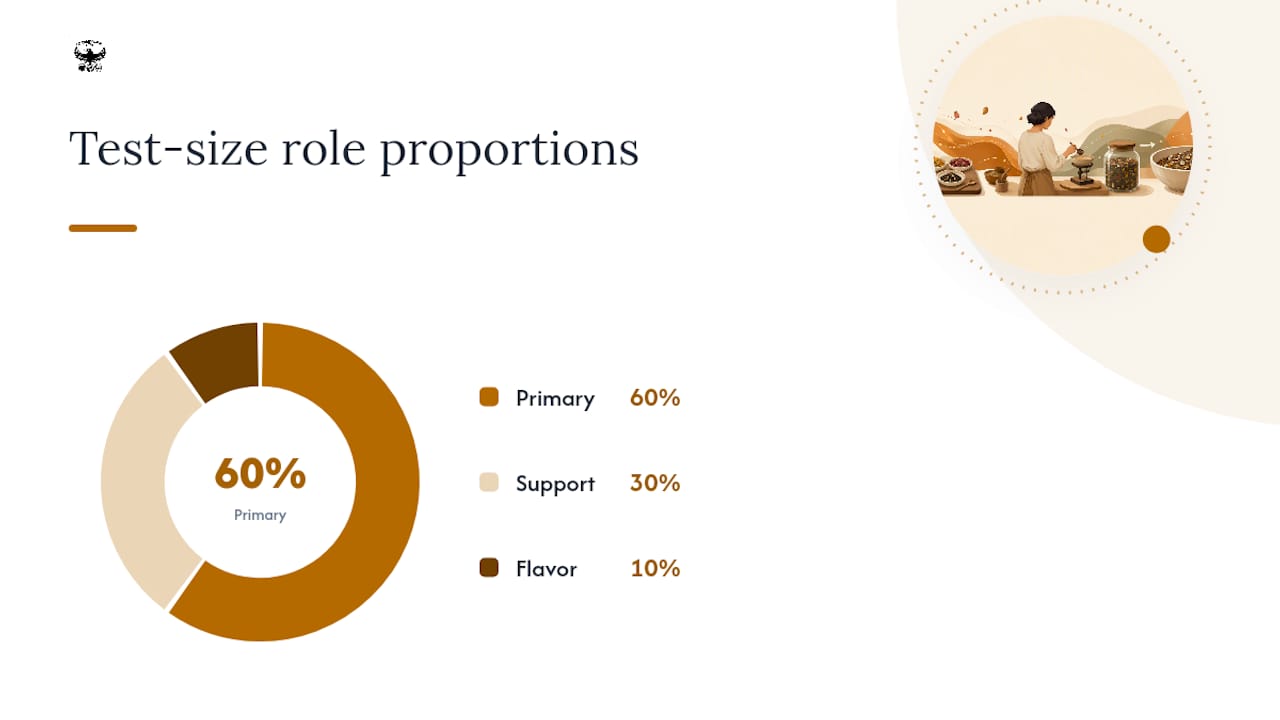
- Evening calm: chamomile (primary, 3 tsp), lemon balm (support, 1.5 tsp), lavender (flavor, 0.5 tsp), a pinch of dried rose petal (accent).
- Digestive: peppermint (primary, 3 tsp), fennel seed (support, 1.5 tsp), ginger (flavor, 0.5 tsp), a pinch of licorice root (accent, used sparingly).
- Immune support: rooibos (primary, 3 tsp), elderberry (support, 1.5 tsp), dried orange peel (flavor, 0.5 tsp), a pinch of clove (accent).
- Focus: green tea (primary, 3 tsp), gotu kola (support, 1.5 tsp), lemongrass (flavor, 0.5 tsp), a pinch of peppermint (accent).
- Summer iced blend: hibiscus (primary, 3 tsp), rooibos (support, 1.5 tsp), dried apple pieces (flavor, 0.5 tsp), a pinch of cinnamon (accent).
That comes to roughly 5 teaspoons total per test, small enough to brew in one sitting and cheap enough to throw out if it misses. Small-batch practitioners consistently point to test-size batches of 10 to 15 grams or about 10 teaspoons as the sweet spot for evaluating a blend before committing to more.
To scale any of these to a 50 to 100 gram working batch, multiply every ingredient by the same factor, say 10x for a 100 gram batch, and weigh the result rather than measuring by volume. Dried ingredients pack differently by density, so a teaspoon of rose petal and a teaspoon of dried orange peel do not weigh the same.
How I Scale a Test Batch to a Small Production Run
Once a test batch earns a second brew, it’s time to scale it, and this is where a lot of home blenders lose consistency. A precision scale accurate to 0.1 grams is the single biggest upgrade you can make, because volume measures fall apart once flower-heavy or root-heavy ingredients enter the mix.
- Weigh your successful test batch’s exact gram amounts and lock in the percentages.
- Multiply each component’s weight by the same factor to reach 100 to 200 grams total.
- Mix gently by hand or with a light shake rather than stirring hard, which crushes delicate leaves and flowers.
- Label the container with the date and the exact percentage breakdown of each ingredient.
- Let the blend rest 24 to 72 hours in a sealed container so the flavors marry before you brew or package it, a step small-batch producers rely on for consistency.
Pro Tip: Log every batch, even the ones that fail. A written record of what didn’t work saves you from repeating the same mistake three months later when you’ve forgotten why the last version tasted like wet grass.
Sourcing and Storing Your Ingredients in Small Quantities
Buy sample sizes or single-estate lots when you can, especially for the primary ingredient, since that’s where quality differences show up most in the cup. Check the label for a harvest date and look for whole-leaf grades rather than dust or fannings, which oxidize faster and lose aroma.
- Store each component in an airtight, opaque container away from light and heat
- Label every container with the ingredient name and purchase or harvest date
- Keep only what you’ll use in 2 to 3 months for delicate flowers and herbs
- Rotate stock so older ingredients get used first, especially anything floral or citrus-based
Refresh your inventory once color or aroma starts to fade. A dried herb that’s lost its scent has lost most of its flavor contribution too, and no ratio adjustment fixes that.
Brewing Parameters That Keep Your Test Brews Consistent
You can’t judge a blend fairly if your brewing method changes every time, so lock in a protocol before you start comparing recipes. For most black tea bases, use 1 teaspoon (about 2 to 3 grams) per 8-ounce cup, water at 200 to 212°F, steeped 3 to 5 minutes. Herbal and rooibos bases can take slightly hotter water and a longer steep, 5 to 7 minutes, without turning bitter.
- Weigh the leaf rather than eyeballing a teaspoon, especially for flower-heavy blends
- Time every steep with a timer, not a guess
- Write down aroma, color, and taste immediately after brewing
- For iced versions, brew double strength hot, then pour over ice to avoid a watered-down cup
Herbs to Use With Caution in Small-Batch Blends
A handful of common botanicals carry real caveats, and it’s worth knowing them before you build a “drink daily” blend.
- Comfrey and coltsfoot: both carry accumulation concerns with regular use and are best avoided in a daily-drinking blend.
- Licorice root: fine as a small accent, but high doses over time can affect blood pressure, so keep it at the 5% accent level, not higher.
- Rotate your herbs rather than drinking the same blend every single day, and check for interactions if you take prescription medication.
Pro Tip: If a blend is meant for regular, medicinal-style use rather than occasional enjoyment, cross-reference it against an authoritative herbal medicine resource or talk to a qualified herbalist first.
Ritual, Naming, and What Makes a Blend Worth Repeating
A blend earns its place in your rotation once it has a name. That sounds small, but naming a batch, even something as simple as “the one with the orange peel,” turns a recipe card into a ritual you return to. I’ve watched a test batch go from forgettable to a weekly pour the moment it got called something specific.
Don’t rush past the failures either. Some of the best small-batch tea blends started as a lopsided second attempt at something else entirely.
— David P.
Try Tri Crow Coffee’s Small-Batch Blends
Building your own blend from scratch is worth doing, but sometimes you want the result without the trial runs. This role-based framework and precision-weighed process can be applied to limited runs of tea blends, designed to be finished while fresh rather than stockpiled for long periods.
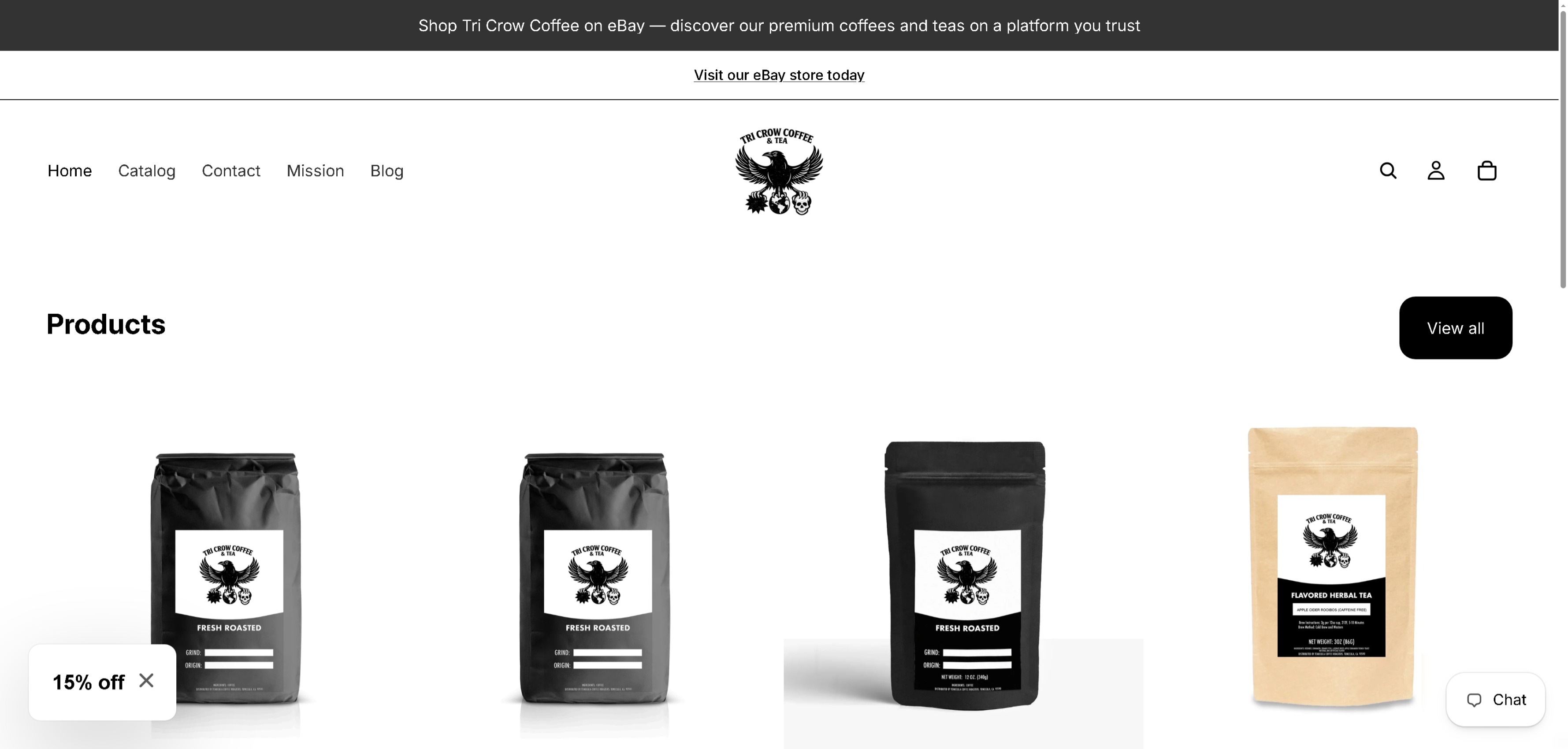
Our Earl Grey pairs Ceylon OP with bergamot oil and blue cornflowers, a textbook example of a support and flavor role working in tandem. The Apple Cider Rooibos is naturally caffeine-free and built around a spiced accent that mirrors the summer iced blend structure above, and our English Breakfast shows what a well-sourced primary base tastes like with nothing else competing for attention. If you’d rather sample several small-batch styles before committing to a full bag, the best sellers sample pack gives you six varieties at 2 ounces each, enough to run your own side-by-side test brews. Pick one and start there.
Further Reading and Primary Sources
The blending ratios, decoction rules, and scaling steps in this guide draw on the following resources, each worth a closer read for anyone building their own small-batch process:
- Herbal tea infusion and decoction techniques — Wild Faith Acres
- Herbal tea blending guide for beginners — The Forager’s Apothecary
- Tea Blending 101 — Tea Perfectionist
- Western herbalism and plant medicine — goholistic
Sources
- Herbal tea infusion & decoction deep dive — Wild Faith Acres
- Herbal tea blending guide for beginners — The Forager’s Apothecary
- Tea Blending 101: Create Your Perfect Tea Blends at Home — Tea Perfectionist
FAQ
What are some good tea combinations for beginners?
Pair a strong primary like black tea or rooibos with a complementary support herb in the same flavor family, then add a small flavor ingredient like citrus peel or spice. Citrus and floral pairings, or earthy and spiced pairings, tend to balance well.
What teas should you not mix together?
Avoid combining two dominant, competing flavors at high percentages, like heavy mint and heavy licorice, since they fight rather than layer. Also be cautious mixing high-dose licorice or comfrey into everyday blends meant for daily drinking.
What is the unhealthiest tea to drink, and are any herbs risky in blends?
No single tea is inherently unhealthy, but certain herbs like comfrey and coltsfoot carry accumulation concerns, and licorice root can affect blood pressure at high, regular doses. Keep those ingredients as small accents and rotate your blends rather than drinking the same one daily.
How small should a test batch be before I scale up?
Start with 10 to 15 grams, roughly 10 teaspoons, weighed on a precision scale before scaling to a 100 to 200 gram working batch. That size is small enough to test quickly and cheap enough to discard if the ratio needs work.
Do small-batch blends really taste different from mass-produced ones?
Smaller batches get finished faster, so the leaf stays fresher from the first cup to the last, and tighter quality control at small scale catches inconsistent ratios that larger production runs often miss.