
TL;DR:
- Popular tea blends combine a tea base with flavors, spices, or botanicals for a distinctive taste. Classic black blends like Earl Grey and Masala Chai remain popular for their consistent, bold, and warming profiles. Brewing at the correct temperature and resting home blends enhances flavor and complexity.
Popular tea blends are defined as combinations of a tea base and one or more complementary flavors, spices, or botanicals that create a distinctive, repeatable taste profile. The most recognized examples include Earl Grey, Masala Chai, and English Breakfast, each built on a specific formula that balances strength, aroma, and finish. Knowing what goes into these blends and how to brew them correctly separates a flat cup from a genuinely satisfying one. This guide covers the top traditional, fruity, floral, and spiced varieties, plus practical brewing and blending guidance for anyone ready to go deeper.
1. What are the most popular tea blends by flavor style?
Earl Grey, Masala Chai, and fruity or floral infusions are the most popular tea flavor styles as of mid-2026. Consumer demand consistently points to these profiles because they offer familiar flavor benchmarks while leaving room for variation. A tea drinker who loves Earl Grey can explore dozens of variations without ever feeling lost.
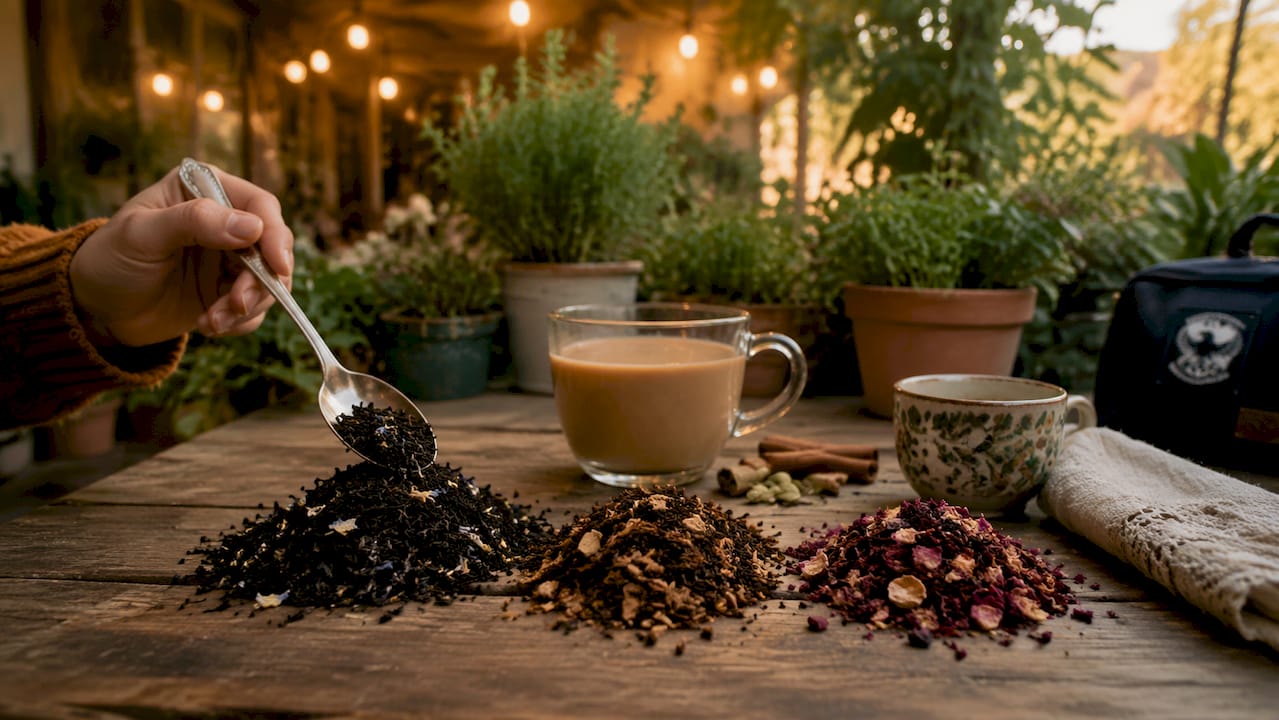
Traditional black tea blends dominate the category. They deliver bold, malty flavors that hold up well to milk and sweetener, making them approachable for new drinkers and satisfying for experienced ones. Spiced blends like Masala Chai add a warming complexity that no single ingredient can replicate alone. Fruit-forward and floral blends round out the category with lighter, more aromatic profiles that work equally well hot or cold.
2. Classic black tea blends and their flavor profiles
Traditional black tea blends are the foundation of the global tea market. Earl Grey, English Breakfast, and Darjeeling each occupy a distinct flavor position and attract loyal followings for good reason.
- Earl Grey is a black tea scented with bergamot oil, a citrus fruit grown primarily in Calabria, Italy. The result is a floral, slightly bitter cup with a bright citrus finish. Tri Crow Coffee’s Earl Grey follows this classic formula with small-batch precision.
- English Breakfast blends Assam, Ceylon, and Kenyan black teas for a full-bodied, malty cup. It is designed to hold up to milk and sugar without losing its character. This is the workhorse blend of the black tea world.
- Darjeeling comes from the foothills of the Himalayas and carries a lighter, more muscatel flavor. It is often called the “Champagne of teas” because of its delicate, wine-like finish. It is best enjoyed without milk to preserve its nuance.
- Lapsang Souchong is a Chinese black tea dried over pine smoke, producing a bold, campfire-like flavor. It is polarizing but deeply loved by those who appreciate savory, smoky profiles.
What makes these blends enduringly popular is their consistency. Each one delivers a predictable experience that drinkers can rely on, while still offering enough variation across origins and processing methods to stay interesting.
3. Which fruit-forward and floral tea blends are favored worldwide?
Fruity tea blends featuring peach, mango, berries, lemon, raspberry, and watermelon hold strong appeal both hot and cold. These flavors work because they complement the natural brightness of green or white tea bases without overwhelming them. The result is a cup that feels refreshing rather than heavy.
- Peach tea delivers warm, honeyed sweetness that pairs naturally with green or white tea bases.
- Mango tea adds tropical richness and a thick, almost juicy quality to the cup.
- Berry blends (strawberry, blueberry, blackcurrant) bring bright tartness that balances well against malty black tea.
- Lemon and raspberry are classic iced tea flavors. They are sharp, clean, and highly versatile.
- Hibiscus blends produce a deep ruby color and a tart, cranberry-like flavor. They are naturally caffeine-free and visually striking.
- Lavender and chamomile offer soft floral notes that calm the palate. Tri Crow Coffee’s Jasmine Green Tea demonstrates how a single floral ingredient can define an entire cup.
Floral blends work particularly well as cold brews. The lower extraction temperature pulls out sweetness and aroma without the bitterness that hot water can introduce. A hibiscus or lavender blend steeped cold overnight produces a cup that is cleaner and more nuanced than its hot-brewed counterpart.
Pro Tip: For cold-brewed floral teas, use filtered water and steep in the refrigerator for 8–12 hours. The result is a cleaner, sweeter cup with no bitterness.
4. What are the top spiced and herbal tea blends?
Spiced blends are built on layered flavor. Each spice contributes a specific note: cinnamon adds sweetness and warmth, cardamom brings floral and citrusy complexity, clove delivers intensity, vanilla provides creamy sweetness, and caramel adds buttery depth. Together, these elements create the rich, warming profiles that define top chai blends.
- Masala Chai is the most recognized spiced blend worldwide. It combines black tea with cardamom, cinnamon, ginger, cloves, and black pepper, then is typically brewed with milk. Tri Crow Coffee’s Masala Chai captures this layered warmth in a small-batch format.
- Cinnamon spice blends pair cinnamon with black or rooibos tea for a straightforward, warming cup. They are approachable for anyone new to spiced teas.
- Ginger lemon blends combine the sharp heat of ginger with citrus brightness. They are popular as a digestive aid and a cold-weather staple.
- Peppermint tea is one of the most widely consumed caffeine-free herbal blends. It is clean, cooling, and forgiving to brew.
- Chamomile blends are mild, slightly sweet, and reliably calming. They are often combined with lavender or honey flavoring for added depth.
Herbal blends like peppermint and chamomile are the best entry point for drinkers who want to reduce caffeine without sacrificing flavor. They are also the most forgiving to brew, since oversteeping rarely produces bitterness the way black or green teas do.
5. How to brew popular tea blends for the best flavor
Steeping temperature is the single most important factor in flavor clarity. Different tea types require specific temperatures to avoid bitterness or loss of aroma. Getting this right takes less than a minute of attention and makes a measurable difference in the cup.
- Black tea blends (Earl Grey, English Breakfast, Masala Chai): brew at 200–212°F for 3–5 minutes. These teas are built for high heat and produce their best flavor at a full rolling boil.
- Green tea blends (Jasmine Green, Sencha blends): brew at 160–180°F for 2–3 minutes. Green tea brewed above 180°F turns bitter quickly. Let boiling water rest for 2 minutes before pouring.
- Herbal and floral blends (chamomile, hibiscus, peppermint): brew at 200–212°F for 5–7 minutes. These caffeine-free blends are more forgiving and benefit from a longer steep to develop full flavor.
- White tea blends: brew at 160–185°F for 2–4 minutes. White teas are delicate and lose their floral notes at higher temperatures.
- Cold brew: use room-temperature or cold filtered water, 1.5 teaspoons of loose leaf per 8 oz, and steep in the refrigerator for 8–12 hours. This method works especially well for fruity and floral blends.
The correct leaf-to-water ratio starts at 1 teaspoon of loose leaf per 8 oz of water. Adjust up for stronger flavor, but start here to calibrate your palate before experimenting.
Pro Tip: Use a kitchen thermometer or an electric kettle with temperature control for the first few brews. Once you know what 175°F looks and feels like, you will not need it again.
6. How to blend your own tea at home
Home blending follows a simple three-part formula: base, star, and accent. The base makes up the majority of the blend and provides body. The star ingredient delivers the primary flavor. The accent adds nuance, aroma, or a finishing note. Too many star ingredients muddy the flavor and make the blend taste unfocused.
The table below shows how this formula applies to common home blends.
| Base (70–80%) | Star ingredient (15–20%) | Accent (5–10%) | Resulting profile |
|---|---|---|---|
| Black tea | Dried orange peel | Clove | Spiced citrus |
| Rooibos | Cinnamon | Vanilla | Warm, sweet, caffeine-free |
| Chamomile | Lavender | Lemon peel | Floral and calming |
| Green tea | Jasmine flowers | Mint | Fresh and aromatic |
| Black tea | Cardamom | Ginger | Simplified chai |
Common bases for blending include black tea, green tea, rooibos, and chamomile. Starting proportions of 70–80% base to 20–30% other ingredients give beginners a reliable framework. After mixing, let the blend rest in a sealed container for 24–48 hours. This resting period allows the flavors to meld and gives you a more accurate read on the final taste before you brew a full pot.
The most common beginner mistake is adding too many star ingredients at once. Pick one primary flavor, nail the ratio, then add an accent. You can always add more complexity in the next batch.
Key takeaways
The best tea blends are built on a clear formula: a strong base, a defined star flavor, and a light accent that ties the cup together.
| Point | Details |
|---|---|
| Temperature controls flavor | Black teas need 200–212°F; green teas need 160–180°F to avoid bitterness. |
| Base + star + accent formula | Use 70–80% base, 15–20% star, and 5–10% accent for balanced home blends. |
| Cold brew suits floral blends | Steep floral or fruity blends cold for 8–12 hours to maximize sweetness and clarity. |
| Classic blends stay popular for a reason | Earl Grey, Masala Chai, and English Breakfast deliver consistent, reliable flavor profiles. |
| Resting time improves home blends | Let a freshly mixed blend rest 24–48 hours before brewing for the best flavor read. |
What I have learned from years of exploring tea blends
Most tea guides tell you to start with the classics and work outward. That advice is correct, but it misses the more interesting point: the classics are classics because their formulas are nearly impossible to get wrong. Earl Grey works because bergamot and black tea are almost perfectly matched in intensity. Masala Chai works because each spice fills a gap the others leave open. These are not accidents.
What I have found more useful is paying attention to why a blend works rather than just what it tastes like. Once you understand that cardamom provides the floral lift in chai while ginger provides the heat, you can start substituting. Swap ginger for black pepper and the blend gets sharper. Add vanilla and it softens. That kind of thinking turns you from a consumer into someone who actually understands the cup in front of you.
The other thing most guides skip is the value of restraint. I have blended teas with six or seven ingredients and they almost always taste like nothing in particular. The blends I keep coming back to have three ingredients, maybe four. The base and star formula is not a beginner’s shortcut. It is the actual principle behind every great blend, commercial or homemade.
My current favorite is a rooibos base with cinnamon as the star and a small amount of dried orange peel as the accent. It is caffeine-free, warming, and complex enough to hold my attention through a full mug. Start simple. The complexity comes naturally once you know what you are building toward.
— David
Tri Crow Coffee’s artisan tea collection
Tri Crow Coffee crafts its teas with the same small-batch discipline it applies to coffee. Every blend is produced in limited quantities to keep flavor consistent from batch to batch. If you want to sample a range of profiles without committing to a full bag of each, the artisan tea collection is the right place to start.
The collection includes traditional black tea blends, spiced chai, and floral loose leaf options, all sourced and blended with the same attention to balance that defines the Tri Crow Coffee approach. For those who enjoy both coffee and tea, the best sellers sample pack offers a practical way to compare flavor profiles across the full range. Each batch is small enough that you are always getting a fresh product.
FAQ
What is the most popular tea blend worldwide?
Earl Grey is consistently ranked among the most popular tea blends globally, prized for its bergamot-scented black tea base and versatile flavor profile. Masala Chai follows closely, particularly in South Asia and among spiced tea fans worldwide.
What temperature should I use for different tea blends?
Black tea blends brew best at 200–212°F for 3–5 minutes, while green tea blends need 160–180°F to avoid bitterness. Herbal and floral blends tolerate full boiling water and benefit from a longer steep of 5–7 minutes.
What are the best herbal tea mixes for beginners?
Peppermint and chamomile are the most forgiving herbal blends for beginners. Both are caffeine-free, mild, and difficult to overbrew, making them reliable starting points for anyone new to loose leaf teas.
How do I start blending my own tea at home?
Use the base, star, and accent formula: 70–80% base (black tea, rooibos, or chamomile), 15–20% star ingredient (cinnamon, lavender, or dried fruit), and 5–10% accent (clove, lemon peel, or vanilla). Let the blend rest 24–48 hours before brewing.
Are popular loose leaf teas better than bagged teas?
Loose leaf teas generally deliver more complex flavor because the leaves have room to expand fully during steeping. Bagged teas use smaller, more processed leaf fragments that extract faster but with less nuance.