
TL;DR:
- Tea blends combine multiple herbs, spices, or teas to create specific flavors or effects. Proper ratios and freshness are key to successful blending, with smaller batches ensuring better ingredient quality.
Tea blend varieties are defined as combinations of two or more teas, herbs, spices, or botanicals crafted to produce a specific flavor profile or functional effect. The category spans everything from classic black tea blends like Earl Grey to herbal tea combinations built around chamomile, ginger, and tulsi. Whether you drink tea for pleasure, ritual, or health, understanding how different types of tea blends work gives you real control over your cup. Tri Crow Coffee approaches this craft as a deliberate practice, producing small-batch blends designed to connect flavor with intention.
1. What are the most popular tea blend varieties?
The most recognized tea blend varieties fall into four base categories: black, green, white, and herbal. Each base carries a distinct flavor character that shapes the entire blend.
Black tea blends are the most widely consumed. Earl Grey, built on Ceylon or Assam black tea scented with bergamot oil, is the defining example of a flavored black tea blend. English Breakfast is a full-bodied blend of Assam, Ceylon, and Kenyan black teas designed to hold up to milk. Both blends share a malty, brisk quality that makes them morning staples.
Green tea blends tend toward lighter, grassy, or floral notes. Jasmine green tea, one of the oldest blended teas in recorded history, layers jasmine flowers over green tea leaves through a scenting process repeated multiple times. Mint green tea combines the grassy character of green tea with the cooling sharpness of peppermint.
White tea blends use the most delicate base. White tea pairs well with subtle florals like rose or light citrus, since its flavor is easily overwhelmed by strong spices or heavy herbs.
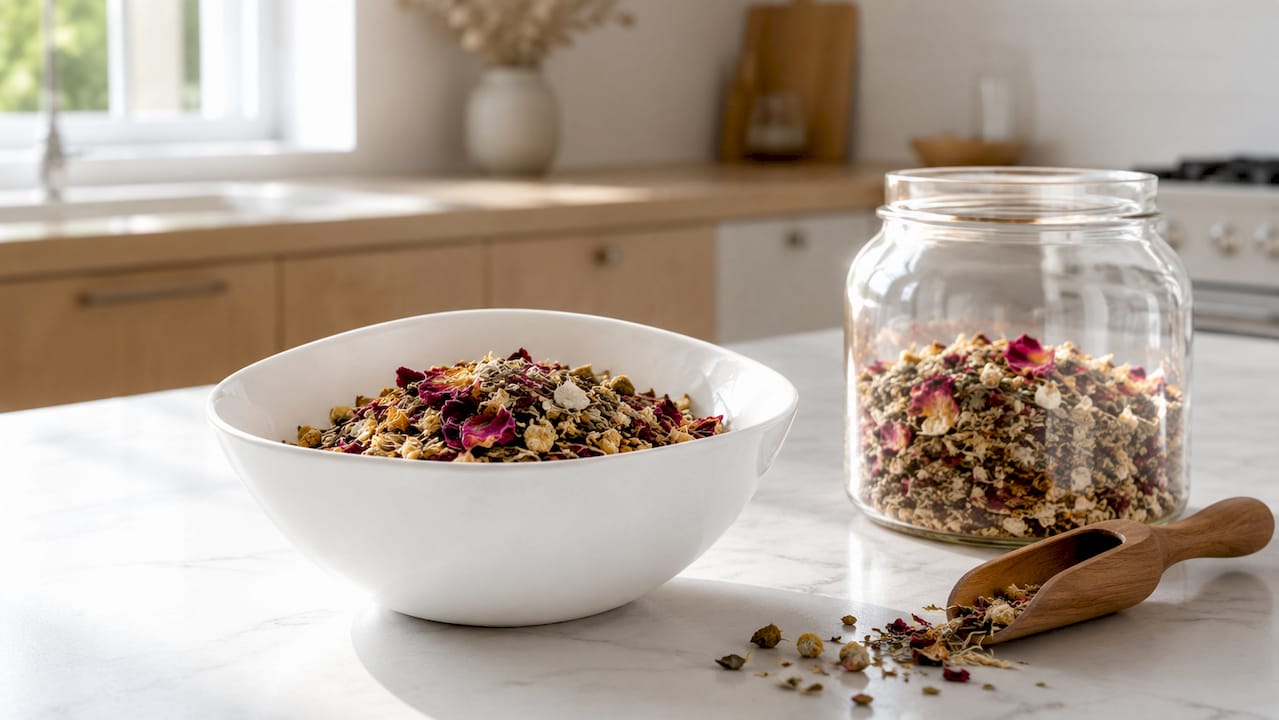
Herbal blends, technically called tisanes, contain no Camellia sinensis leaves at all. They rely entirely on herbs, flowers, roots, and spices. Chamomile lavender, hibiscus berry, and rooibos vanilla are common examples. Herbal blends are naturally caffeine-free, which makes them the preferred choice for evening drinking.
| Base Type | Common Blends | Flavor Profile |
|---|---|---|
| Black tea | Earl Grey, English Breakfast | Malty, bold, brisk |
| Green tea | Jasmine green, mint green | Grassy, floral, cooling |
| White tea | Rose white, citrus white | Delicate, sweet, light |
| Herbal (tisane) | Chamomile lavender, hibiscus berry | Floral, fruity, earthy |
Pro Tip: Brew black tea blends at 200–212°F and green tea blends at 160–180°F. Using boiling water on green tea scorches the leaves and turns the cup bitter.
2. Which tea blends support specific health goals?
The best tea blends for health fall into three functional categories: calming, digestive, and energy-focused. Each category relies on specific active compounds rather than a long ingredient list.
Calming blends center on chamomile, lavender, lemon balm, and valerian root. Chamomile contains apigenin, a compound that binds to receptors in the brain associated with relaxation. Lavender adds a mild sedative effect through its aromatic compounds. Drink calming blends 60–90 minutes before bedtime for the strongest sleep benefit.
Digestive blends use peppermint and ginger as their primary herbs. Peppermint relaxes the muscles of the gastrointestinal tract, which eases bloating and cramping. Ginger stimulates digestive enzymes and reduces nausea. Drink digestive blends after meals for best results.
Energy and focus blends rely on herbs like ginseng, tulsi (holy basil), and green tea. Ginseng supports mental clarity without the sharp caffeine spike of coffee. Tulsi acts as an adaptogen, helping the body manage stress while maintaining alertness. For stress management, 2–3 cups daily spread throughout the day produces more consistent results than a single large dose.
- Calming: chamomile, lavender, lemon balm, valerian
- Digestive: peppermint, ginger, fennel, licorice root
- Energy and focus: ginseng, tulsi, green tea, peppermint
- Immune support: elderberry, echinacea, rosehip, ginger
Pro Tip: For immune blends, start drinking at the first sign of symptoms rather than waiting. Early consumption gives the active compounds more time to work.
3. How to create tea blends at home using proven ratios
Home blending gives you control over ingredient purity and lets you avoid the artificial flavors and fillers common in mass-market teas. The 70-20-10 blending ratio is the most reliable framework for building a functional and flavorful blend.
The ratio works as follows:
- Base herb (70%): This is the foundation of the blend. It carries the primary flavor and, in functional blends, the main active compound. Examples include chamomile for calming blends, peppermint for digestive blends, or black tea for a classic morning cup.
- Support herbs (20%): These herbs reinforce the base or add a secondary benefit. Lavender supports chamomile’s calming effect. Ginger amplifies peppermint’s digestive action. Support herbs should complement, not compete.
- Accent herbs (10%): Accents add complexity and aroma without taking over. Rose petals, lemon peel, or a small amount of cinnamon work well here. Keep this layer light.
Most well-built blends use 3–7 herbs total. Going beyond seven ingredients rarely improves the blend and often muddies both flavor and function.
Infusions vs. decoctions is the other key decision. Infusions work for delicate leaves, flowers, and soft herbs. You pour hot water over the ingredients and steep for 5–10 minutes. Decoctions work for roots, bark, and hard seeds that need direct simmering for 15–20 minutes to release their compounds. Ginger root and cinnamon sticks benefit from decoction.
| Method | Best For | Steep Time |
|---|---|---|
| Infusion | Leaves, flowers, soft herbs | 5–10 minutes |
| Decoction | Roots, bark, hard seeds | 15–20 minutes |
Pro Tip: Smell your dry blend before brewing. Dry aroma predicts about 80% of the brewed flavor. If the dry mix smells off-balance, adjust before you commit to a full batch.
4. What flavor families work best in tea blending?
Effective blending balances flavor profiles so no single ingredient dominates the cup. Flavor families give you a map for building that balance.
The five main flavor families in tea blending are:
- Citrus: Lemon peel, orange peel, bergamot. Citrus notes brighten dark or earthy bases and add perceived sweetness without sugar.
- Floral: Rose, jasmine, lavender, hibiscus. Floral notes soften bold teas and add elegance to light green or white bases.
- Spice: Cinnamon, cardamom, clove, ginger. Spice notes add warmth and depth but require careful measurement.
- Herbal: Mint, lemon balm, tulsi, sage. Herbal notes add freshness and can shift the functional character of a blend.
- Fruity: Hibiscus, rosehip, dried berry, apple. Fruity notes add tartness or sweetness and pair well with both black and herbal bases.
Pairing strategy works by contrast and complement. Citrus contrasts well with earthy or malty black teas, cutting through heaviness. Floral notes complement the grassy character of green tea without clashing. Spice and fruity notes both pair with herbal bases, though they pull the blend in opposite directions: spice adds warmth, fruit adds brightness.
Test brews are not optional. Dry aroma accounts for about 80% of what you expect from a blend, but heat changes everything. Brew a small test batch before scaling up. Adjust one ingredient at a time so you can track what each change does to the final cup.
5. What should you know about mixing different tea types safely?
Mixing teas can enhance flavor complexity and create synergistic health effects, but a few practical rules keep the experience safe and enjoyable.
Caffeine stacking is the most common issue. Black tea contains roughly 40–70mg of caffeine per cup. Green tea contains 20–45mg. Combining multiple caffeinated teas in one blend raises the total caffeine load quickly. Drinkers sensitive to caffeine should mix caffeinated teas with herbal bases to dilute the effect.
Ingredient interactions matter for people on medication. St. John’s Wort, commonly found in mood-support blends, interacts with antidepressants and blood thinners. Licorice root raises blood pressure with extended use. Anyone managing a health condition should consult a healthcare professional before using functional herbal blends regularly.
- Keep spices under 15% of total blend weight. Spices intensify during brewing and can overpower the entire cup if used too freely.
- Avoid mixing more than two caffeinated teas in a single blend.
- Use uniform particle sizes across ingredients for even extraction.
- Store blends in airtight, opaque containers away from heat and light.
Green tea and ginger is one of the most studied combinations, pairing green tea catechins with ginger’s anti-inflammatory compounds for a synergistic effect. That said, even beneficial combinations deserve moderation.
Key Takeaways
The most effective tea blends follow the 70-20-10 ratio, limit spices to under 15% of blend weight, and match ingredients to a clear flavor family or functional goal.
| Point | Details |
|---|---|
| Use the 70-20-10 ratio | Build every blend with 70% base, 20% support, and 10% accent herbs for balance. |
| Match blends to health goals | Choose calming, digestive, or energy herbs based on the specific benefit you want. |
| Test brew before scaling | Dry aroma predicts 80% of flavor; always brew a small test batch before finalizing. |
| Control spice levels | Keep spices under 15% of blend weight to prevent them from overpowering the cup. |
| Watch caffeine stacking | Mixing multiple caffeinated teas raises total caffeine; dilute with herbal bases when needed. |
The part of tea blending most guides skip
Most blending guides focus on ratios and ingredients. What they rarely address is the role of freshness in determining whether a blend actually works.
I’ve tasted blends built on technically correct ratios that still fell flat. The culprit was almost always old herbs. Dried chamomile that has sat in a bag for 18 months loses most of its apigenin content and much of its aroma. The blend looks right on paper but tastes like warm water with a faint floral suggestion.
The fix is simple but requires discipline. Buy herbs in small quantities from suppliers with visible harvest dates. Smell everything before it goes into the blend. If a dried herb smells like cardboard, it will taste like cardboard in the cup. Custom blends at home give you full control over ingredient freshness in a way that commercial products cannot match.
The other thing worth saying: blending is a practice, not a formula. The 70-20-10 ratio is a starting point, not a law. Some of the best blends I’ve worked with break the ratio deliberately. A chamomile and rose blend with equal parts of each, finished with a whisper of cardamom, works beautifully even though it ignores the standard structure. The ratio teaches you to think in proportions. Once you understand that, you can break it with intention.
Treat each blend as a small experiment. Keep notes. Adjust one variable at a time. The process itself becomes part of the ritual, and that is where the real enjoyment lives.
— David
Crafted blends worth starting with at Tri Crow Coffee
Building a personal blend library starts with quality base teas and herbal foundations you can trust.

Tri Crow Coffee’s Earl Grey with bergamot oil and blue cornflowers is a strong starting point for anyone exploring flavored black tea blends. The bergamot is applied with restraint, which means the Ceylon base still comes through clearly. The English Breakfast blend offers a full-bodied black tea foundation that holds up well when you add milk, spices, or a secondary herb. For herbal and cold brew experiments, the Sweet Hibiscus Berry Tea delivers bright, tart fruit notes that pair naturally with rose, lemon peel, or mint. All three are produced in small batches, which means the ingredients arrive fresh and ready to blend.
FAQ
What is a tea blend?
A tea blend is a mixture of two or more teas, herbs, spices, or botanicals combined to create a specific flavor or functional effect. Blends can include Camellia sinensis leaves, herbal ingredients, or both.
How many herbs should a tea blend contain?
Most effective blends use 3–7 herbs. Using more than seven ingredients rarely improves flavor or function and often creates a muddled, unfocused cup.
What is the best tea blend for sleep?
Chamomile and lavender blends are the most widely supported for sleep. Drink them 60–90 minutes before bedtime for the strongest effect.
Can you mix black tea and herbal tea in one blend?
Yes. Mixing black tea with herbal ingredients like peppermint or ginger is common and safe for most people. Watch total caffeine levels if you are sensitive to stimulants.
How do you keep homemade tea blends fresh?
Store blends in airtight, opaque containers away from heat, light, and moisture. Buy herbs in small quantities and check for a visible harvest date to confirm freshness before blending.