
Aim for 195–205°F (90–96°C) when brewing pour-over. Start at 200°F (93°C) as your baseline, then adjust from there: raise the temperature if your cup tastes sour, lower it if it tastes bitter, and lean hotter for light roasts, cooler for dark ones.
TL;DR:
- Water temperature’s influence is minimal compared to grind size and brew ratio, but a two- or three-degree adjustment can fine-tune flavor once parameters are dialed in.
- Use a variable-temperature kettle or an instant-read thermometer to reliably maintain 197–205°F, adapting slightly based on roast level and brewing conditions.
- For light roasts, aim for 200–205°F due to higher density, while dark roasts require 195–200°F to prevent extracting bitter or ashy notes.
- The optimal temperature ranges are more forgiving if you control grind size, ratio, and pour technique first; temperature adjustments are best for fine-tuning.
- Match your brew temperature to the roast level and bean characteristics; darker roasts perform better around 195–200°F, while lighter roasts need closer to 200–205°F for best extraction.
Table of Contents
- What Is the Ideal Pour Over Water Temperature?
- Does Water Temperature Actually Matter That Much?
- How Do You Measure and Hold the Right Brew Temperature?
- Quick Pour Over Recipes and Temperature Reference
- Where This Advice Comes From
- When Temperature Deserves Your Attention (and When It Doesn’t)
- Match Your Beans to the Right Brew Temperature
- Sources
- FAQ
What Is the Ideal Pour Over Water Temperature?
The Specialty Coffee Association recommends 92–96°C (198–205°F) for brewed coffee, and that band is where most serious pour-over practice lives. Translated into a workable home range, that is 195–205°F (90–96°C), with many good cups landing in a range near the middle of that band.
Roast level narrows that band further. A bean’s density and cellular structure change dramatically during roasting, and those changes affect how easily hot water pulls flavor out of the grounds.
- Light roast: 200–205°F. Dense, less-broken-down cell structure resists extraction, so you need more heat to pull out sweetness and the bright, fruity acids that define light roasts.
- Medium roast: 197–202°F. A middle-ground bean with moderate porosity; this is where the 200°F baseline earns its reputation as a safe universal starting point.
- Dark roast: 195–200°F. The roasting process breaks down cell walls and increases solubility, so dark roasts release flavor fast. Too much heat here pulls out burnt, ashy, papery notes before anything pleasant shows up.
Get it wrong in either direction and the cup tells you immediately. Brew a light roast too cool and you get a sharp, sour, underdeveloped cup that tastes like it never finished becoming coffee. Brew a dark roast too hot and you get an acrid, smoky bitterness that overwhelms whatever chocolate or caramel notes the roaster was going for. The mismatch is often more damaging than being a few degrees off within the right roast category.
Does Water Temperature Actually Matter That Much?
Less than most coffee forums would have you believe. A peer-reviewed study out of UC Davis tested drip coffee brewed at 87°C, 90°C, and 93°C and found that once researchers controlled for total dissolved solids (TDS) and extraction yield, temperature itself had minimal effect on the sensory profile of the coffee.
That is a meaningful finding, because it means grind size and brew ratio, the two variables that actually drive TDS and extraction yield, do more heavy lifting than the thermometer reading. Temperature still matters. It just matters less in isolation than it does in combination with everything else you are already controlling.
So why does the specialty coffee world still hold tight to the 92–96°C range? Partly tradition, partly certification standards, and partly a very practical reason: heat loss. Water cools the moment it leaves the kettle, drops further during the pour, and drops again once it hits room-temperature grounds and a dripper. Starting near the top of the range compensates for that loss so the coffee bed actually experiences something close to your target temperature.
Here’s the real takeaway: if your cup tastes off, check your grind and your ratio before you touch the kettle setting. Temperature is a fine-tuning tool, not the main lever. Once your extraction and ratio are dialed in, a two or three degree shift in water temperature can sharpen or soften the cup exactly where you want it.
How Do You Measure and Hold the Right Brew Temperature?
You have three realistic paths to a consistent target temperature, depending on your gear.
- Use a variable-temperature kettle. Set it to your target, whether that is 202°F for a light roast or 197°F for a dark one, and let the kettle do the math. This is the most reliable method if you brew often enough to justify the equipment.
- Check with an instant-read thermometer. Drop one into the kettle right before pouring, or check the water during your bloom pour. This works with any kettle, including a basic stovetop one, and it removes the guesswork entirely.
- Time your wait off the boil. Bring water to a full boil, then wait. Roughly 30 to 45 seconds off boil gets you into the 200 to 205°F range for most kettles, with longer waits needed for darker roasts or smaller kettle volumes. If you live at altitude, remember water boils at a lower temperature there, so adjust your wait time down accordingly.
Heat loss is not just a kettle problem. Pour speed, kettle material (stainless steel loses heat faster than double-walled or ceramic), and whether you preheated your dripper and cup all shift the temperature that actually reaches the grounds. Practitioners consistently note that preheating equipment and controlling pour speed reduce heat loss, which keeps your extraction more predictable cup after cup.
Pro Tip: Pour a splash of hot water through your empty dripper and into your cup before you brew, then dump it out. It takes five seconds and stops your ceramic or glass dripper from stealing several degrees off your brew water during the pour.
Quick Pour Over Recipes and Temperature Reference
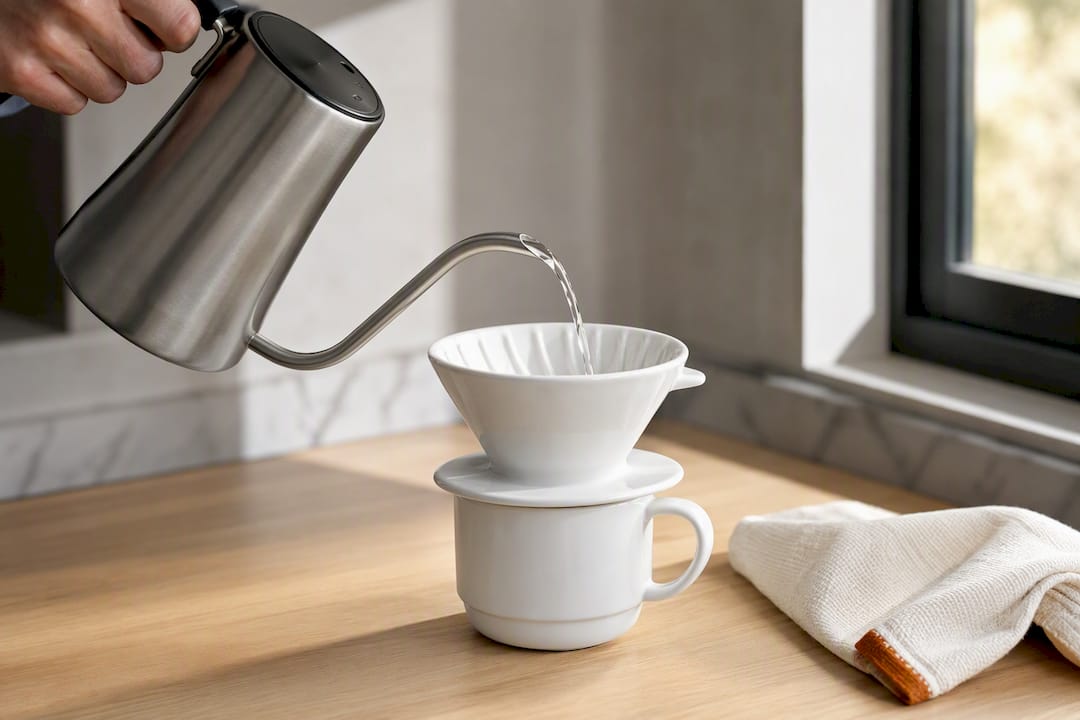
Here’s a starting recipe you can copy directly: for a medium roast, use an 18g dose to 288g water (a 1:16 ratio), grind medium-fine, and target 200°F. Bloom with about 40g of water for 30 to 45 seconds before finishing your pour.
For quick reference, here is how roast level maps to wait time and target temperature:
| Roast Level | Wait After Boil | Approximate Temp |
|---|---|---|
| Light | 15–20 seconds | 200–205°F |
| Medium | 30–45 seconds | 197–202°F |
| Dark | 45 seconds | 195–200°F |
When the cup misses the mark, adjust in small steps. If it tastes sour or thin, raise the temperature by 3 to 5°F; if it tastes bitter or harsh, lower it by the same amount. Change one variable at a time so you know what actually fixed it. That said, if the sourness or bitterness is extreme rather than subtle, look at your grind size first. A grind that is too coarse or too fine will overwhelm any temperature fix you throw at it.
Where This Advice Comes From
This guide leans on published research rather than kitchen folklore, starting with the UC Davis study on brew temperature and sensory perception and the Specialty Coffee Association’s water temperature standards. It also draws on Tri Crow Coffee’s own practical brewing guides, including our breakdown of what happens during coffee extraction and our detailed pour-over workflow, both written for home brewers trying to move past guesswork.
As a small-batch roastery, Tri Crow Coffee builds its roast profiles with these exact temperature interactions in mind. Every batch we roast gets tasted against a temperature band before we call it finished, because a roast that only tastes good at one narrow temperature isn’t a roast we’re comfortable shipping.
- Related reading: How Water Shapes Coffee Brewing
- Related reading: 5 Pour Over Mistakes That Ruin Your Coffee
When Temperature Deserves Your Attention (and When It Doesn’t)
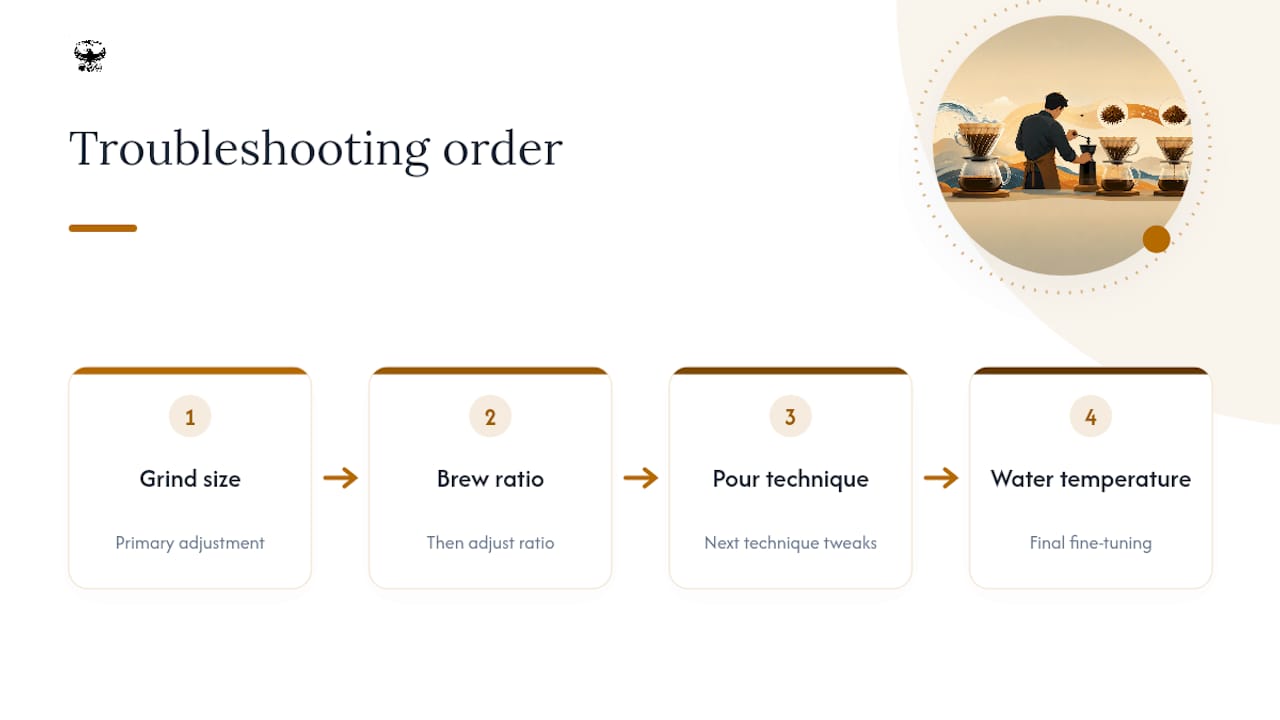
Most brewing problems get fixed in this order: grind size first, then ratio, then pour technique, and only then temperature. Chase temperature before you’ve nailed the first three and you’re just moving deck chairs.
Temperature experiments earn their keep when you’re dialing in a new single-origin bean or trying to find the ceiling of a particular light roast’s brightness. That’s when a two-degree shift genuinely changes what’s in the cup.
For your everyday morning brew, once you’ve found a temperature that works for your usual bag of coffee, stop touching it. Consistency beats chasing the last half-degree of theoretical perfection.
— David P.
Match Your Beans to the Right Brew Temperature
Once you know your target temperature, the next variable that matters just as much is the coffee itself. Some small batch roasters roast their blends to perform predictably at known temperature bands, instead of guessing at what a mass-produced bag might do.
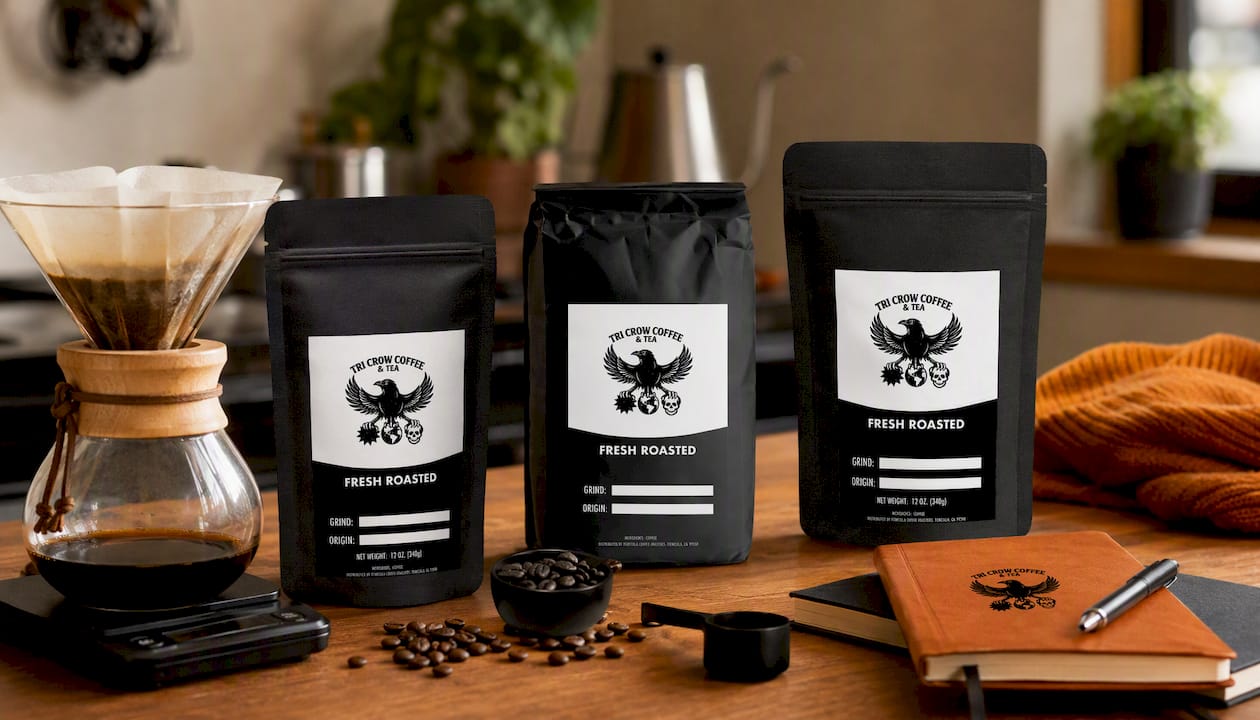
Our Cold Brew Coffee, Dark French Roast, Coarse Ground is built for the lower end of the range, around 195–198°F, with a coarser grind that keeps its deep, smoky character from tipping into bitterness. If you want something brighter, our Medium Roast Cold Brew Coffee with chocolate and floral notes brews best closer to 200°F with a medium-fine grind, giving you the balance this guide’s baseline recipe is built around. Order either bag today and brew your next cup at the exact temperature that suits it.
Sources
- Brew temperature, at fixed brew strength and extraction, has little impact on the sensory profile of drip brew coffee
- Best Water Temperature for Coffee — Coffee Studies
- Pour Over Water Temperature: The Complete Guide — CoffeeGearHub
FAQ
Can I Use Cold Water for a Pour Over?
No. Pour-over relies on hot water, ideally 195–205°F (90–96°C), to dissolve and extract soluble compounds from the grounds. Cold water produces a weak, under-extracted cup regardless of grind or ratio.
Is 200 Degrees Too Hot for Coffee?
No, 200°F (93°C) sits comfortably inside the SCA’s recommended 92–96°C range and works as a reliable baseline for medium roasts. It may run slightly hot for dark roasts and slightly cool for light roasts.
What Is the 15-15-15 Rule for Coffee?
Definitions of this rule vary across brewing communities, and it isn’t a standard this guide’s sources cover in detail, so treat any specific version you encounter with some caution rather than as an established brewing law.
What Is the Golden Ratio for Pour Over?
The most commonly cited starting ratio is 1:16, meaning 1 gram of coffee for every 16 grams of water, such as 18g of coffee to 288g of water. Adjust toward 1:15 for a stronger cup or higher for a lighter one.
How Hot Should Pour Over Water Be for Dark Roast?
Target 195–200°F for dark roasts, since the broken-down cell structure from extended roasting releases flavor faster and hotter water risks pulling out bitter, ashy notes.