
TL;DR:
- Coffee grinding controls flavor extraction by adjusting particle size, which must match brew time for optimal taste. Regularly dialing in your grind for each new coffee bag improves consistency and flavor clarity. Burr grinders outperform blade options due to their ability to produce uniform particles essential for balanced extraction.
Coffee grinding is the process of reducing roasted beans to particles of a specific size and consistency to control how flavor compounds extract during brewing. Grind size is the single most impactful variable on coffee flavor once your beans, water, and temperature are consistent. Most home baristas spend time chasing better beans or fancier equipment, but the grind is where flavor is actually won or lost. This coffee grinding guide covers extraction science, grind size matching, grinder types, and a practical dialing-in process so you can brew with confidence every time.
How does grind size affect coffee flavor and extraction?
Extraction is the process of water pulling soluble compounds out of coffee particles. The finer you grind, the more surface area you expose, and the faster water extracts those compounds. That relationship between surface area and contact time is the core mechanic behind every brewing decision you make.
Under-extracted coffee tastes sour and weak; over-extracted coffee tastes bitter and astringent. Both problems trace back to a mismatch between grind size and brew time. A French press left to steep for five minutes with an espresso-fine grind will pull bitter, harsh flavors. The same beans at a coarse grind in the same press will taste balanced and clean.
Brew contact time and grind size must move together. Short brew methods need fine grinds because water has less time to extract. Long brew methods need coarse grinds because water has more time, and a fine grind would over-extract before the brew is done. Think of it as a dial: finer moves extraction faster, coarser slows it down.
Flavor problems in coffee are almost always a grind problem first. Before you blame the beans, adjust the grind.
Here is how extraction flavor reads on the palate:
- Sour or sharp: Under-extracted. Grind finer or extend brew time.
- Flat or thin: Under-extracted. Increase grind contact or dose.
- Balanced, sweet, complex: Correct extraction. Do not change anything.
- Bitter or dry: Over-extracted. Grind coarser or shorten brew time.
- Astringent or chalky: Severely over-extracted. Grind significantly coarser.
What grind sizes are best for common brewing methods?
Grind size is described by texture because particle size scales vary by grinder. Texture references give you a consistent mental anchor regardless of what equipment you use.
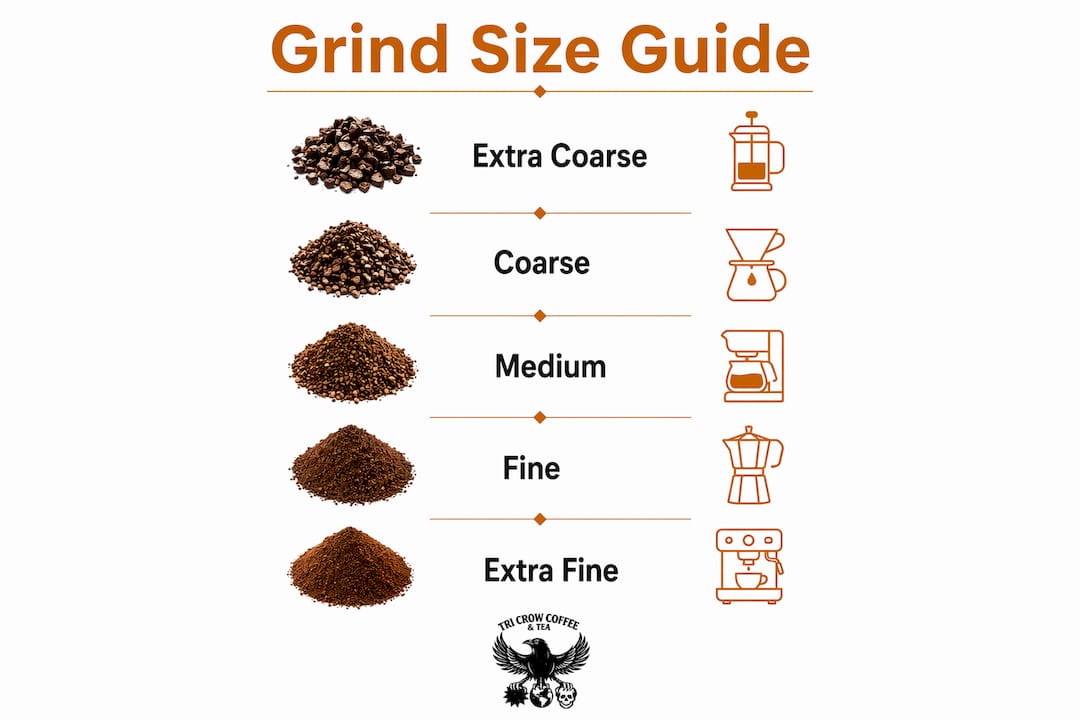
| Grind Level | Texture Reference | Brew Method | Brew Time |
|---|---|---|---|
| Extra coarse | Cracked peppercorn | Cold brew | 12–24 hours |
| Coarse | Sea salt | French press | 4–6 minutes |
| Medium coarse | Rough sand | Chemex, percolator | 4–6 minutes |
| Medium | Table sand | Drip machine, pour-over | 3–4 minutes |
| Medium fine | Fine sand | AeroPress, Moka pot | 2–3 minutes |
| Fine | Table salt | Espresso | 25–35 seconds |
| Extra fine | Flour | Turkish coffee | Immediate boil |
Cold brew steeping for 12–24 hours requires an extra coarse grind to extract balanced flavor without bitterness. Going finer creates murky, bitter results because the long contact time over-extracts at smaller particle sizes. Espresso extraction runs optimally between 25–30 seconds at a fine, table-salt texture under pressure. A grind that is too fine chokes the shot and creates bitterness; too coarse and the shot pulls fast and sour.
Filter type also changes your grind target. Metal filters allow fine particles through, which is why French press requires a coarse grind to reduce sludge. Paper filters trap those fines, so pour-over and drip methods can use a finer grind without murkiness in the cup.
Pro Tip: When switching between brewing methods, always reset your grind size. A medium grind dialed in for drip will produce flat, weak results in a French press and bitter results in an AeroPress.
What types of coffee grinders produce the best results?
Blade grinders chop beans unevenly, producing a mix of fine dust and large chunks in the same batch. That inconsistency means some particles over-extract while others under-extract simultaneously, creating a muddled, unpredictable cup. Blade grinders are cheap, but they work against you at every grind setting.
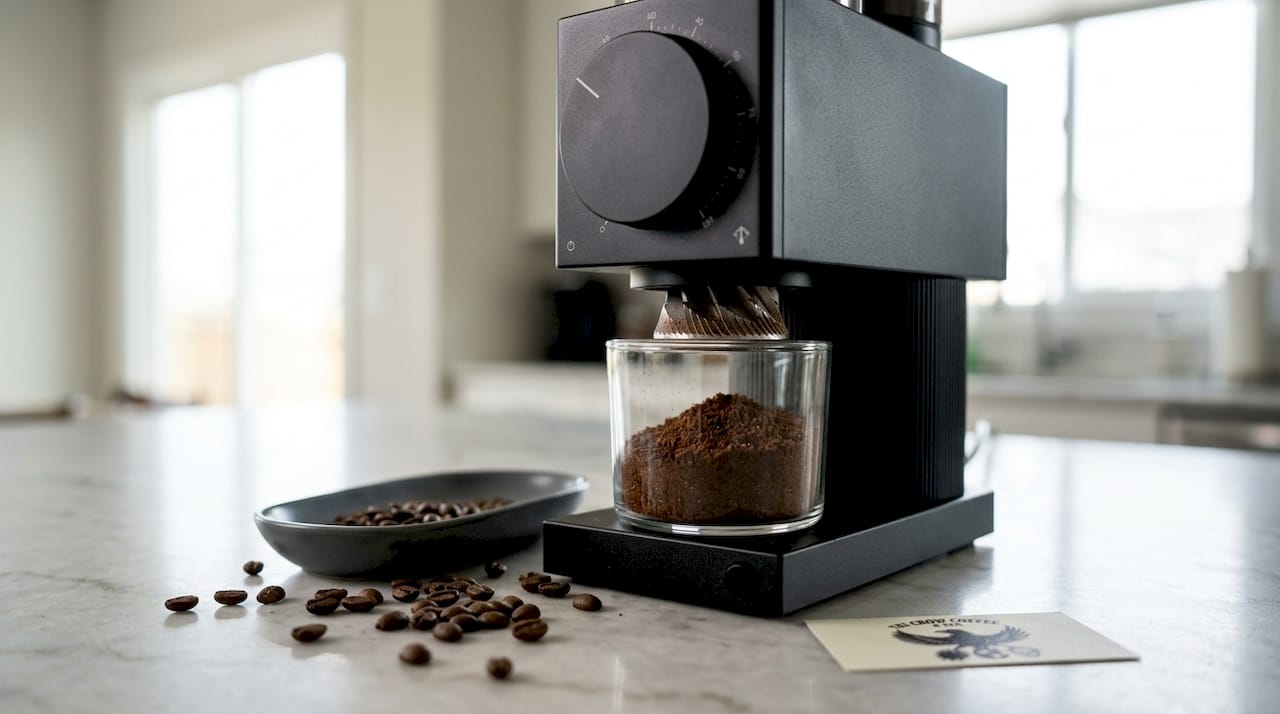
Burr grinders crush beans between two abrasive surfaces set at a fixed distance, producing uniform particles. That uniformity is what makes flavor clarity possible. Two types of burr grinders exist: conical and flat.
Conical burr grinders produce quieter, cooler grinds with a bimodal particle size distribution, meaning two dominant particle sizes. That bimodal profile adds body and sweetness to the cup. Flat burr grinders produce a unimodal distribution, one dominant particle size, which yields a cleaner, more defined flavor. Flat burrs are preferred in professional espresso settings for that clarity.
Choosing between them comes down to your brewing style:
- Conical burr: Better for French press, pour-over, and filter methods where body and sweetness matter. Quieter and more forgiving on heat.
- Flat burr: Better for espresso and methods where clarity and separation of flavor notes is the goal. Requires more dialing in.
- Blade grinder: Avoid for any method where grind consistency matters, which is every method.
Pro Tip: Entry-level burr grinders from brands like Baratza and Hario outperform even premium blade grinders. A $60–$80 burr grinder produces more consistent results than a $200 blade model.
How do you dial in your coffee grind for perfect taste?
Dialing in is the process of adjusting grind size incrementally until your coffee tastes balanced. No universal perfect grind size exists. The right setting depends on your specific beans, your specific grinder, and your specific brewing method. Dialing in is how you find it.
You need four tools: a grinder with numbered settings, a kitchen scale, a timer, and your brewer of choice. Brew ratios and timing give you repeatable data so you can isolate the grind variable.
- Set your starting grind. Use the texture reference table above to find the right grind level for your brew method. Set your grinder to that range.
- Brew and taste black. Do not add milk or sugar. You need to taste the coffee clearly to identify extraction problems.
- Identify the flavor signal. Sour or sharp means under-extracted. Bitter or dry means over-extracted. Balanced and sweet means you are close.
- Adjust one click at a time. Grind adjustment should be incremental, one click finer or coarser per brew. Large jumps make it impossible to identify the sweet spot.
- Repeat until balanced. Brew, taste, adjust. Most home baristas find their target within three to five brews.
A useful technique from experienced baristas: dial fine until you taste astringency, then back off one notch coarser. That boundary tells you exactly where over-extraction begins, and one step back puts you in the sweet spot.
| Flavor | Diagnosis | Fix |
|---|---|---|
| Sour, sharp | Under-extracted | Grind one click finer |
| Flat, thin | Under-extracted | Grind finer or increase dose |
| Balanced, sweet | Correct extraction | Hold this setting |
| Bitter, dry | Over-extracted | Grind one click coarser |
| Astringent, chalky | Severely over-extracted | Grind significantly coarser |
Pro Tip: Write down your grind setting, dose, and brew time every session. After a week, you will have a personal reference chart that makes dialing in a new bag of beans take minutes instead of multiple wasted brews.
For more on building a home brew routine, Tri Crow Coffee has practical guidance on consistency and technique. If espresso is your focus, the home espresso guide from Tri Crow Coffee covers grind timing and shot dialing in detail.
Key takeaways
Grind size is the primary lever for coffee flavor, and matching it to your brew method and contact time produces consistently better results than any other single adjustment.
| Point | Details |
|---|---|
| Grind size drives flavor | Finer grinds extract faster; coarser grinds extract slower. Match grind to brew time. |
| Taste signals tell you what to fix | Sour means under-extracted; bitter means over-extracted. Adjust one click at a time. |
| Burr grinders outperform blade grinders | Burr grinders produce uniform particles that make consistent extraction possible. |
| Filter type changes your grind target | Metal filters need coarser grinds; paper filters allow finer grinds without murkiness. |
| Dial in by tasting, not guessing | No single perfect grind exists. Find your setting by brewing, tasting, and adjusting incrementally. |
What I have learned from years of adjusting the grind
Most home baristas I talk to treat grind size as a one-time setup decision. They dial in once when they buy a new grinder and never touch it again. That is the single biggest mistake I see, and it costs people years of mediocre cups.
Every new bag of beans needs a fresh dial-in. Roast level, origin, and freshness all change how a bean extracts. A light Ethiopian roast and a dark Sumatra will behave completely differently at the same grind setting, even in the same brewer. The grind that made your last bag sing will make the new one taste flat or bitter.
The other thing I have found is that people underestimate how much a grinder upgrade changes the experience. I brewed with a blade grinder for two years thinking my beans were the problem. Switching to a conical burr grinder was the first time I tasted what my coffee was actually supposed to taste like. The clarity was immediate and obvious.
My honest advice: buy the best burr grinder your budget allows, keep a brew journal, and taste your coffee black at least once per new bag. The process of dialing in is not a chore. It is the most direct way to understand what is actually in your cup.
— David
Tri Crow Coffee and the art of the well-ground brew
Grinding well is only half the equation. The beans you start with set the ceiling for what any grind can achieve.
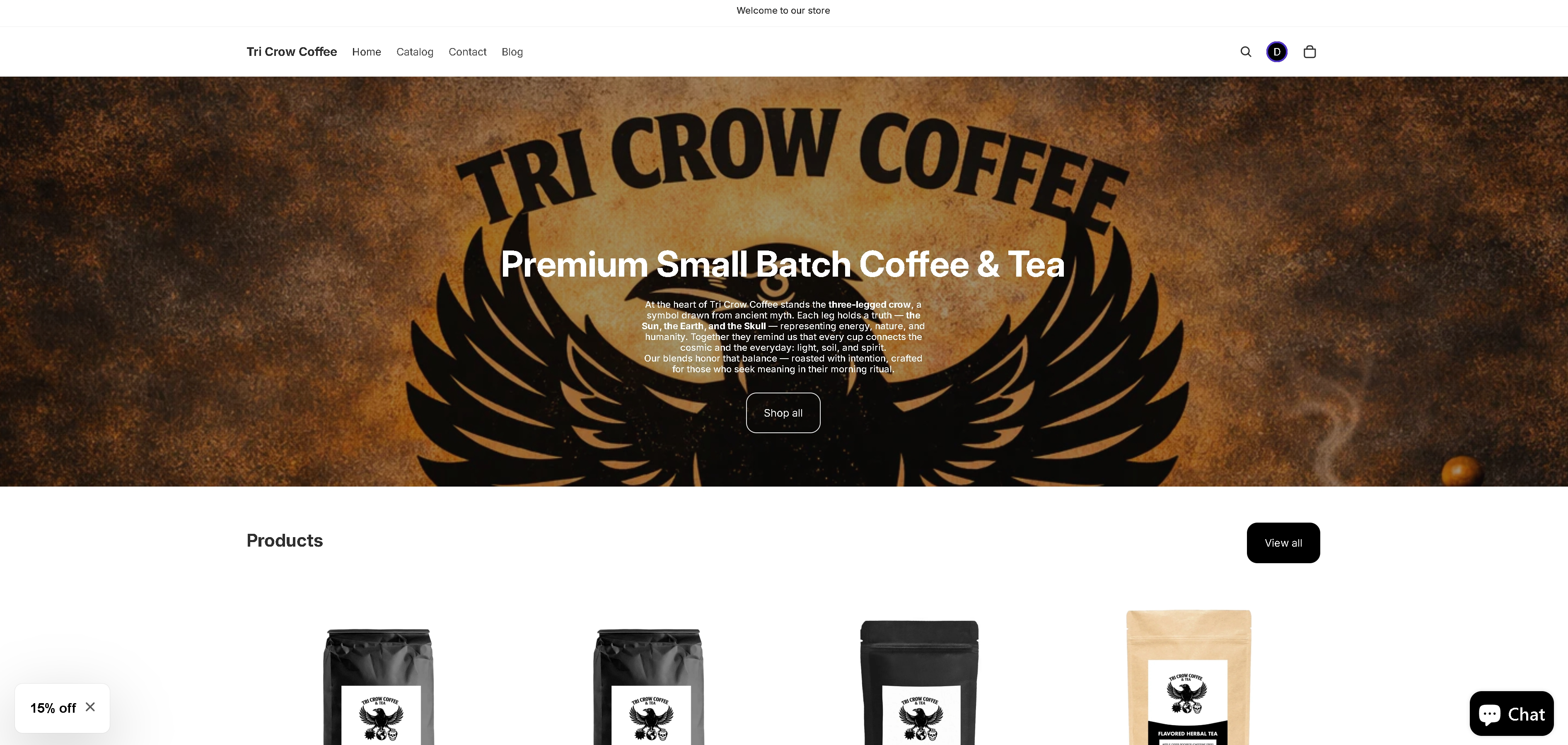
Tri Crow Coffee roasts in small batches specifically to give home baristas beans that respond clearly to grind adjustments. The Medium Roast Cold Brew is ground extra coarse and ready for a 12–24 hour steep, with chocolate and floral notes that come through cleanly at the right extraction. The Dark French Roast Cold Brew offers a coarse ground option for home brewers who want a bolder, deeper cup without the bitterness that comes from incorrect grind size. Each batch is crafted with the kind of consistency that makes your dialing-in process faster and more rewarding.
FAQ
What is the best grind size for a French press?
French press uses a coarse grind, roughly the texture of sea salt, with a brew time of 4–6 minutes. Metal filters in a French press allow fine particles through, so a coarser grind reduces sludge and bitterness.
How do I know if my grind is too fine or too coarse?
Taste your coffee black. Sour or sharp flavors signal under-extraction, meaning your grind is too coarse for your brew time. Bitter or astringent flavors signal over-extraction, meaning your grind is too fine.
Does grind size matter more than bean quality?
Grind size is the most impactful variable on flavor once beans, water, and temperature are consistent. Good beans ground poorly will always underperform good beans ground correctly.
What is the difference between a burr grinder and a blade grinder?
Burr grinders crush beans between two surfaces at a fixed distance, producing uniform particles. Blade grinders chop unevenly, creating a mix of sizes that extract at different rates and muddle the flavor.
How often should I adjust my grind setting?
Adjust your grind setting every time you open a new bag of beans. Roast level, origin, and freshness all affect extraction behavior, so the same setting will not produce the same results across different coffees.