
Water is not a neutral carrier in coffee brewing. It is the active ingredient, the solvent that pulls hundreds of flavor compounds out of roasted grounds and the chemical buffer that determines whether your cup tastes bright, balanced, or flat. Get the water right, and even a modest bean shines. Get it wrong, and the finest single-origin in the world tastes dull.
The role of water in coffee brewing touches every variable you already track: grind size, dose, brew time. But water chemistry sits underneath all of them. The Specialty Coffee Association has codified this with specific targets for total dissolved solids, hardness, alkalinity, and pH, because the science is clear that small shifts in water composition produce measurable changes in the cup.
Here is what every serious brewer needs to know.
Table of Contents
- How water acts as solvent and buffer in coffee extraction
- How water temperature controls what ends up in your cup
- How water hardness shapes the taste of your brew
- Why alkalinity matters more than pH in brewing chemistry
- What minerals actually do to coffee flavor at the molecular level
- How to test and improve your brewing water
- How the water-to-coffee ratio affects extraction
- How water solubility drives what gets extracted
- What happens when water meets coffee grounds
- How dissolved gases in water affect your brew
- How water flow rate shapes extraction evenness
- Tri Crow Coffee brews with water quality in mind
- FAQ
- Key takeaways
How water acts as solvent and buffer in coffee extraction
Water does two jobs simultaneously during brewing. First, it dissolves flavor compounds from the coffee grounds, pulling out sugars, organic acids, caffeine, and aromatic molecules. Second, it buffers the acidity of the resulting brew, either preserving or neutralizing the natural acids that give coffee its brightness.
- Solvent function: Water extracts polar compounds (sugars, organic acids) rapidly in the early stages of contact, then slower-dissolving compounds like phenylindanes and chlorogenic acid lactones as contact time extends.
- Buffer function: Bicarbonate ions in water neutralize caffeic acids. Too much bicarbonate and the cup goes flat; too little and the acidity becomes sharp and unpleasant.
- Temperature: Higher temperatures accelerate extraction kinetics across all compound classes.
- Mineral content: Calcium and magnesium ions interact with nucleophilic sites in coffee molecules, influencing which compounds move into solution and how they are perceived.
- pH and alkalinity: pH measures the current acidity of the water; alkalinity measures its capacity to resist pH change during brewing.
- Dissolved solids targets: The SCA water standard sets a target TDS of 150 mg/L, with an acceptable range of 75–250 mg/L for superior extraction.
Understanding coffee extraction principles makes these parameters far easier to apply in practice.
How water temperature controls what ends up in your cup
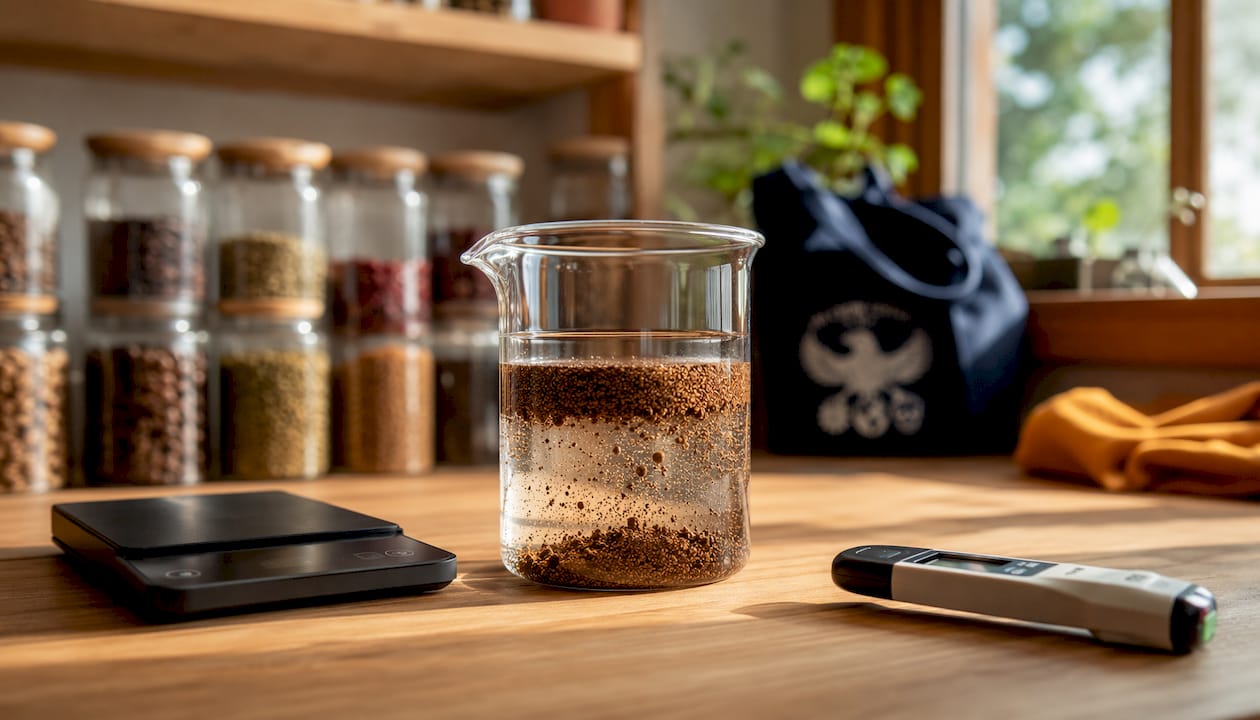
Temperature is the most direct lever you have over extraction rate. The SCA recommends 195–205°F as the optimal range for balancing acidity, bitterness, and aroma extraction in filter brewing. That 10-degree window is not arbitrary.
Below 195°F, water lacks the energy to dissolve slower-releasing compounds efficiently. The result is under-extraction: a weak, sour, or thin cup where the pleasant acids dominate because the balancing bitter compounds never fully developed. Above 205°F, extraction accelerates past the sweet spot and pulls harsh, astringent molecules that should stay in the grounds.
- Under-extraction (too cool): sour, thin, underdeveloped flavor
- Over-extraction (too hot): bitter, harsh, astringent
- Optimal range: 195–205°F for most filter and pour-over methods
- Espresso: typically brewed at the lower end of this range, around 195–200°F, to control the concentrated extraction
- Cold brew: uses time rather than heat, requiring 12–24 hours at room temperature or refrigerator temperature to achieve comparable extraction
Pro Tip: If you do not have a temperature-controlled kettle, bring water to a full boil and let it rest for 30–45 seconds before pouring. That drop typically lands you near 200°F without any equipment.
Temperature also interacts with grind size and ratio. A coarser grind at 205°F can extract comparably to a finer grind at 195°F, which is why adjusting one variable without accounting for the others produces inconsistent results.
How water hardness shapes the taste of your brew
Water hardness refers to the concentration of dissolved calcium and magnesium ions. These two minerals are the primary drivers of what brewers call “hard” or “soft” water, and they affect both flavor and equipment longevity.
| Parameter | SCA Target | SCA Acceptable Range |
|---|---|---|
| Total Dissolved Solids (TDS) | 150 mg/L | 75–250 mg/L |
| Calcium Hardness | 68 mg/L | 17–85 mg/L |
| Total Alkalinity | 40 mg/L | Near 40 mg/L |
| pH | 7.0 | 6.5–7.5 |
| Sodium | 10 mg/L | At or near 10 mg/L |
| Total Chlorine | 0 mg/L | 0 mg/L |
- Too hard (above 250 ppm CaCO3): Tends toward over-extracted, flat, or bitter cups; accelerates scale buildup in boilers and group heads.
- Too soft (below 40 ppm CaCO3): Tends toward under-extracted, sour, or thin cups; may also corrode metal components over time.
- Optimal zone: The SCA target is 68 mg/L calcium hardness, within an acceptable range of 17–85 mg/L, where extraction is efficient and flavor is balanced.
- Scale risk: Hard water deposits calcium carbonate on heating elements, reducing efficiency and eventually damaging equipment.
- Sodium softening: Replacing calcium and magnesium with sodium reduces scale but also prolongs brewing time, since the cationic species that aid extraction are removed.
Carbonate hardness (also called KH) is the portion of hardness caused by bicarbonate ions paired with calcium and magnesium. It overlaps with alkalinity and is the main culprit when coffee tastes flat or bitter without obvious cause.
Why alkalinity matters more than pH in brewing chemistry
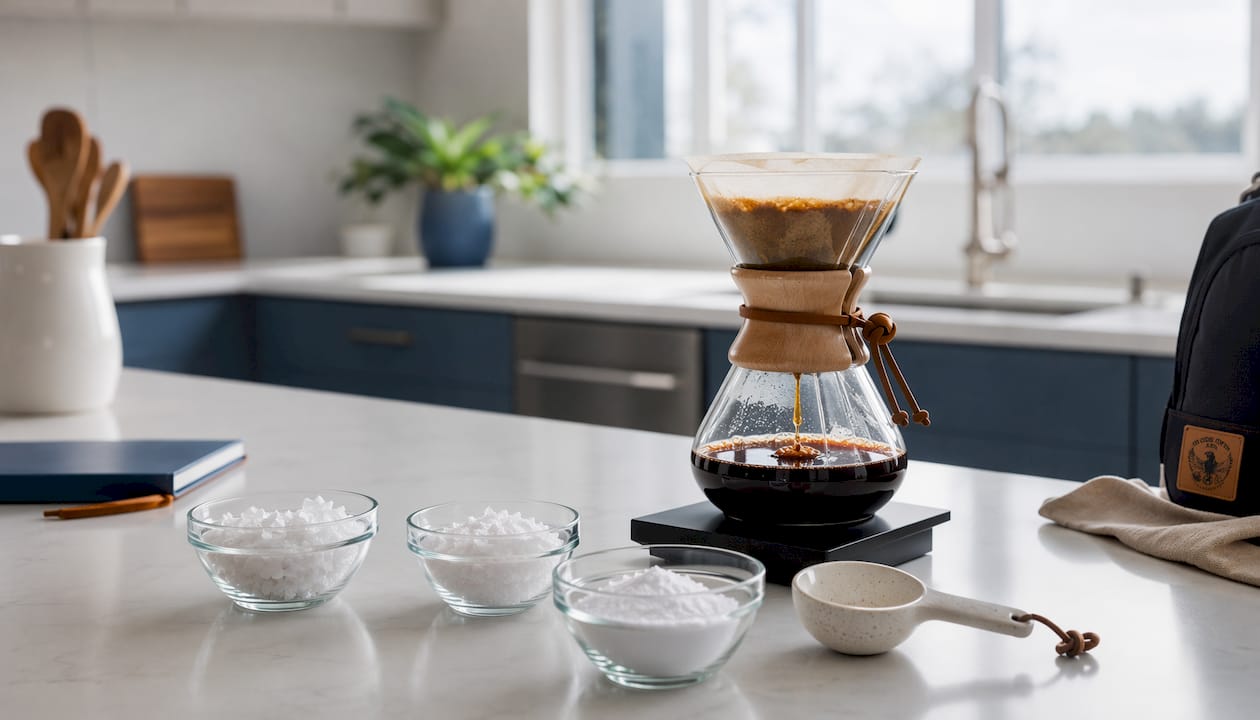
Most brewers focus on pH. The SCA and researchers at ZHAW argue that alkalinity is the more critical metric, and the reasoning is straightforward once you see it.
pH tells you the current acidity of your water. Alkalinity tells you how much acid the water can absorb before its pH shifts. During brewing, coffee releases acids into the water. If alkalinity is high, those acids get neutralized and the cup tastes flat. If alkalinity is near zero, the acids remain fully intact and the cup tastes sharp or harsh.
- High alkalinity: Neutralizes coffee’s natural acids, producing a dull, flat cup with muted brightness.
- Low alkalinity: Leaves acids unmoderated, producing sharp or sour perception.
- Target alkalinity: At or near 40 mg/L for filter brewing, per SCA standards.
- Espresso adjustment: Because espresso uses roughly one-tenth the water of filter coffee per gram of grounds, the alkalinity available to buffer acids is proportionally smaller. Research at ZHAW suggests scaling filter-coffee alkalinity recommendations by a factor of 7.3 for espresso preparations, though this must be balanced against scale formation risk.
- pH range: 6.5–7.5 is acceptable, with 7.0 as the SCA target. But pH within this neutral range has far less impact on cup acidity than alkalinity does.
The practical takeaway: if your espresso tastes too acidic and you have already dialed in grind and dose, raising water alkalinity is often more effective than adjusting pH.
What minerals actually do to coffee flavor at the molecular level
The chemistry here is more contested than most brewing guides admit. Computational research published in the Journal of Agricultural and Food Chemistry found that magnesium ions bind more strongly to coffee flavor compounds than calcium ions do, suggesting Mg2±rich water should extract more desirable flavor molecules. That finding became widely cited in specialty coffee circles.
A 2024 study from the ZHAW Institute challenged that picture. At typical drinking water concentrations, magnesium and calcium chloride salts produced limited variation in the organic acid content of brewed coffee. The researchers concluded that extraction of acids proceeds largely independent of water composition at normal mineral levels, and that post-extraction interactions with taste receptors may explain the flavor differences brewers actually perceive.
- Calcium (Ca2+): Binds to flavor compounds but with lower energy than magnesium; contributes to scale formation.
- Magnesium (Mg2+): Highest binding energy to coffee flavor compounds in computational models; may aid extraction of less-soluble compounds like chlorogenic acid lactones.
- Bicarbonate (HCO3-): Neutralizes acids and, at high concentrations, releases CO2 during brewing, which slows water flow and can cause over-extraction.
- Sodium (Na+): Binds weakly to most coffee compounds; sodium-rich water offers no extraction benefit beyond reducing scale.
- Sensory threshold: The concentrations at which calcium and magnesium become directly perceptible in coffee (around 300 ppm Ca2+ and 200 ppm Mg2+) are rarely reached in tap water.
The honest position is that minerals matter, but the mechanism is not fully settled. What is clear is that mineral balance in brew water affects the cup, whether through extraction chemistry, post-brew interactions, or direct effects on taste receptors.
How to test and improve your brewing water
Testing your water takes about ten minutes and costs very little, making email loyalty programs for coffee shops a practical way to engage and retain customers through quality-focused marketing. The parameters worth measuring are TDS, total hardness, alkalinity, and pH. You can get a reliable TDS meter for home use, and hardness and alkalinity test kits are available at aquarium supply stores or online.
- TDS meter: Measures total dissolved solids in mg/L or ppm. Target 150 mg/L, with an acceptable range of 75–250 mg/L.
- Hardness test strips or titration kits: Measure calcium and magnesium concentration. Target 68 mg/L calcium hardness, with a range of 17–85 mg/L.
- Alkalinity test: Measures bicarbonate buffering capacity. Target 40 mg/L for filter brewing.
- pH strips or meter: Confirm water is at pH 7.0, within the 6.5–7.5 range.
- Chlorine: Chlorine and organic contaminants negatively affect coffee aroma and taste even at low concentrations. Use a carbon block filter or let water sit uncovered for 30 minutes to off-gas chlorine before brewing.
- Softening cartridges: Lower total hardness without removing alkalinity, useful for espresso machines prone to scale.
- Mineral addition: Some brewers build water from scratch using reverse osmosis water plus measured additions of magnesium sulfate and calcium chloride, following published water recipes.
- Seasonal monitoring: Municipal water composition shifts seasonally. Retesting every few months catches changes before they affect your cup.
Pro Tip: If your tap water is heavily chlorinated, a simple activated carbon pitcher filter removes chlorine effectively and costs far less than bottled water over time. Check your filter’s TDS output to confirm it is not stripping minerals below the SCA minimum.
For a deeper look at how water quality connects to coffee acidity, the interaction between alkalinity and perceived brightness is worth understanding before adjusting your water recipe.
How the water-to-coffee ratio affects extraction
The ratio of water to coffee is one of the most direct controls over brew strength and extraction yield. The SCA’s Golden Cup Standard targets a brew strength of 11.5–13.5 grams of dissolved solids per liter, corresponding to a solubles extraction yield of 18–22%.
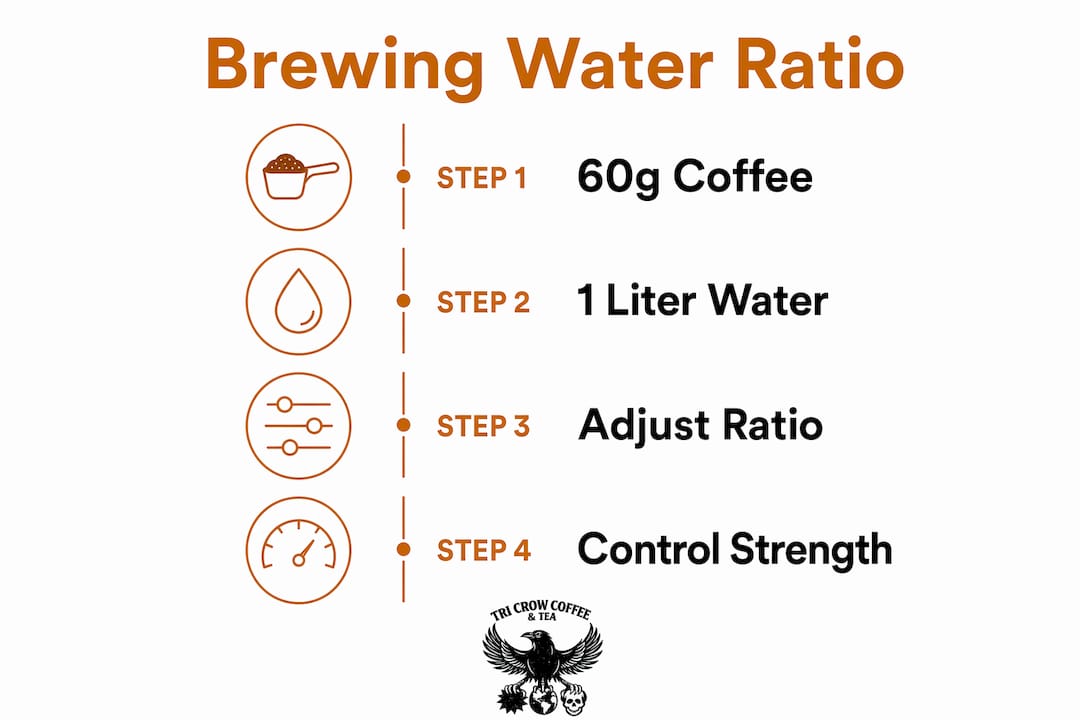
For filter brewing, a common starting point is 60 grams of ground coffee per liter of water, which gives a beverage ratio of about 16.7. Espresso sits at a beverage ratio of roughly 2, meaning the same mass of coffee faces ten times less water. That compression is why espresso alkalinity management is so different from filter brewing. Less water means less buffering capacity, more concentrated acids, and a much narrower margin for error on every water parameter.
Adjusting the ratio changes extraction in a predictable direction: more water per gram of coffee dilutes the brew and can mask under-extraction; less water concentrates it and amplifies any over-extraction notes. The ratio and water chemistry work together, not independently.
How water solubility drives what gets extracted
Coffee contains hundreds of compounds with widely different solubility profiles. Highly polar molecules like sugars and organic acids dissolve rapidly in water and are extracted in the first seconds of contact. Less polar compounds, including certain bitter phenylindanes and chlorogenic acid lactones, require longer contact time and benefit more from mineral-rich water.
This solubility gradient is why grind size, contact time, and water chemistry must be calibrated together. A fine grind increases surface area and speeds up extraction of all compounds, including the slow-dissolving bitter ones. Water with higher mineral content may aid extraction of those less-soluble compounds specifically, which is where the magnesium research becomes practically relevant even if its mechanism remains debated.
What happens when water meets coffee grounds
The moment hot water contacts coffee grounds, several things happen at once. Water wets the particle surface, begins dissolving soluble compounds, and displaces CO2 trapped in the grounds from the roasting process. That CO2 release is what you see during the bloom stage of a pour-over: the grounds swell and bubble as gas escapes.
The CO2 degassing during bloom is not just visual. CO2 creates a physical barrier that slows water penetration into the grounds. Allowing the bloom to complete before continuing the pour gives water better access to the interior of each particle, producing more even extraction. Freshly roasted coffee releases more CO2, which is why very fresh beans can produce uneven extraction if the bloom is rushed.
How dissolved gases in water affect your brew
Water straight from the tap contains dissolved gases, primarily oxygen and carbon dioxide. CO2 dissolved in water forms carbonic acid, which is why tap water often has a slightly lower pH than pure H2O. When water is heated, dissolved gases escape, which is one reason water temperature affects extraction chemistry beyond simple kinetics.
Excess bicarbonate in brewing water releases CO2 during extraction as the water’s pH drops from around 7 to roughly 5 through contact with coffee. That CO2 liberation increases resistance in the coffee bed, slowing water flow and extending contact time. At extreme bicarbonate levels, this effect can push espresso extraction time up substantially and destroy crema quality. At moderate levels, it is a subtler contributor to over-extraction in both espresso and drip brewing.
How water flow rate shapes extraction evenness
Flow rate determines how long water stays in contact with each part of the coffee bed. In pour-over brewing, a slow, controlled pour keeps water in contact longer and extracts more from each pass. A fast, uncontrolled pour channels through the grounds unevenly, leaving some areas under-extracted and others over-extracted.
In espresso, flow rate is controlled by grind size, dose, and pump pressure. A grind that is too fine restricts flow and extends contact time past the optimal window. A grind that is too coarse allows water to rush through before adequate extraction occurs. Water chemistry intersects here because high bicarbonate content increases CO2 liberation, which adds resistance to the bed and effectively slows flow rate independent of grind. Brewers troubleshooting slow espresso shots should check bicarbonate levels alongside grind and dose.
Tri Crow Coffee brews with water quality in mind
Every variable covered in this article, from mineral balance to extraction temperature, shapes the flavor that reaches your cup. Tri Crow Coffee roasts in small batches specifically to give you a coffee that responds well to careful brewing. When you control your water, you hear what the roast is actually saying.
The Medium Roast Cold Brew is coarse-ground and designed for cold extraction, where water temperature is replaced by time and mineral balance becomes the primary extraction driver. The Max Caf Blend, built from Tanzania and India Robusta, rewards precise water chemistry with a clean, high-caffeine cup that does not turn harsh. The Dark French Roast Cold Brew is coarse-ground for immersion brewing, where soft water with moderate alkalinity keeps the roast’s deep chocolate notes intact without amplifying bitterness. For tea drinkers, the English Breakfast, Sweet Hibiscus Berry Tea, and Earl Grey with bergamot oil and blue cornflowers all respond to the same water quality principles: clean, filtered water in the right mineral range brings out what the blend was crafted to deliver. Browse the full range and put your water knowledge to work.
FAQ
Why does water quality matter so much for coffee?
Water makes up the majority of a brewed cup, so its mineral content, alkalinity, and purity directly determine which flavor compounds are extracted and how they are perceived. Even small shifts in bicarbonate or hardness levels produce noticeable changes in cup acidity and balance.
Does water make a real difference in coffee taste?
Yes. Research confirms that water composition substantially affects perceived flavor, whether through extraction chemistry or post-brew interactions with taste receptors. Chlorine alone can alter aroma profiles even at concentrations too low to taste in the water itself.
What is the golden rule for coffee brewing water?
The SCA Golden Cup Standard targets a brew strength of 11.5–13.5 grams of dissolved solids per liter, from a solubles extraction yield of 18–22%, using water with a TDS of 75–250 mg/L, alkalinity near 40 mg/L, and pH between 6.5 and 7.5.
Is alkalinity or pH more important for brewing?
Alkalinity. SCA research shows that alkalinity’s buffering capacity has a far greater impact on perceived cup acidity than pH does, provided pH stays in the neutral range of 6–8.
What water works best for cold brew coffee?
Soft to moderately hard water with low bicarbonate content works well for cold brew. Since cold extraction relies entirely on time rather than heat, high bicarbonate levels can slow extraction and produce flat results. Tri Crow Coffee’s cold brew offerings are coarse-ground to work with clean, filtered water in the SCA’s recommended mineral range.
Key takeaways
Water is the most underestimated variable in coffee brewing, and alkalinity, mineral balance, and temperature together determine whether a well-sourced bean reaches its full flavor potential.
| Point | Details |
|---|---|
| Alkalinity over pH | Alkalinity’s buffering capacity drives perceived cup acidity far more than pH does within the neutral range. |
| SCA mineral targets | Optimal brewing water sits at 150 mg/L TDS, 68 mg/L calcium hardness, 40 mg/L alkalinity, and pH 7.0. |
| Temperature window | Brewing at 195–205°F balances acidity, bitterness, and aroma extraction across most filter methods. |
| Minerals and perception | At typical tap water concentrations, calcium and magnesium likely influence flavor through taste receptor interactions, not extraction yield alone. |
| Tri Crow Coffee | Small-batch roasts from Tri Crow Coffee are crafted to reward precise water control, from cold brew to high-caffeine blends. |