
Brew fresh leaf at the right temperature, in the right leaf-to-water ratio, for the exact steep time your tea type needs, then pull the leaves out. That combination, not a fancy teapot or exotic origin, is what separates a flat cup from a genuinely good one. Get those four controls right and the rest is preference.
TL;DR:
- Temperature is the most critical factor, with hotter water increasing caffeine, polyphenols, and color in black teas, while delicate teas need cooler water to avoid bitterness.
- For green and white teas, brewing at 160–180°F for 2–3 minutes prevents astringency, whereas black and pu-erh teas require near-boiling water for 3–5 minutes to develop full flavor.
- Using a precise leaf-to-water ratio, measured in grams, yields consistent strength; broken leaves extract faster, requiring shorter steep times than whole leaves.
- Cold brewing with a high leaf-to-water ratio and steeping for 6–12 hours produces a smoother, sweeter tea with less tannin than hot brewing.
- Most quality brewing practices involve removing leaves immediately after the correct steep time to prevent over-extraction and bitterness.
Table of Contents
- The Quick Recipe: How to Brew the Perfect Cup of Tea Today
- Time and Temperature: How to Control Bitterness, Body, and Aroma
- Brewing Methods: Western, Gongfu, Cold Brew, and Teapot Adjustments
- Leaf Form and Dosing: Converting Teaspoons to Grams
- Water and Equipment: Why What You Pour Matters
- Troubleshooting: Quick Fixes for Bitterness, Flatness, and Off-Flavors
- Tri Crow Coffee’s Craft Tips for a Better Daily Ritual
- Why Most Tea Advice Skips the One Variable That Actually Matters
- Recommended Tri Crow Blends to Brew Tonight
- Sources
- FAQ
The Quick Recipe: How to Brew the Perfect Cup of Tea Today
You don’t need to memorize a chemistry textbook to make a great cup tonight. Use this as your default, then adjust once you know your palate.
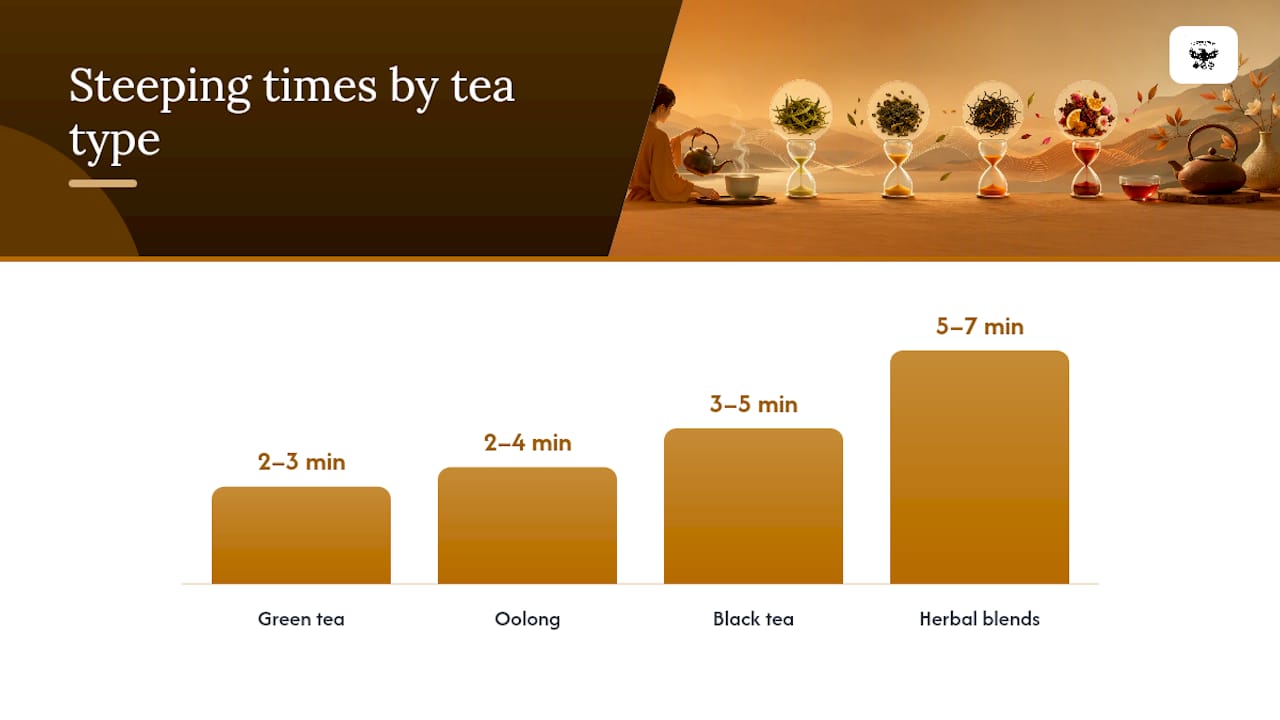
- Green tea: 2–3 g (about 1 level teaspoon) per 8 fl oz, water at 160–175°F (70–80°C), steep 2–3 minutes.
- Oolong: 3–4 g per 8 fl oz, water at 185–195°F (85–90°C), steep 2–4 minutes depending on how tightly rolled the leaf is.
- Black tea: 3–5 g (roughly 1 heaping teaspoon) per 8 fl oz, water at 200–212°F (93–100°C), steep 3–5 minutes.
- Herbal blends: 1 full tablespoon per 8 fl oz, full boil, steep 5–7 minutes since there’s no tannin bitterness to worry about.
Using a tea bag instead of loose leaf? One bag per 8 oz cup at similar temperature and time guidelines works well, as bagged tea is often cut finer and extracts more quickly. For loose leaf, using a mesh infuser that allows leaves room to unfurl gives better flavor than cramped containers.
Pro Tip: Start a timer when adding leaves to water to prevent over-steeping and bitterness.
Time and Temperature: How to Control Bitterness, Body, and Aroma
Temperature is the single biggest lever you have over flavor. A study on Turkish black tea found that brewing at 90–95°C versus 75°C significantly increased total phenolic content, caffeine, and color intensity, meaning hotter water doesn’t just make tea “stronger,” it fundamentally changes its chemistry.
That’s exactly why the same rule doesn’t apply across tea types. Green and white teas carry delicate, often grassy compounds that turn astringent and bitter when scalded, so they need cooler water. Black and pu-erh teas are sturdier and built for heat closer to boiling.
- Green/white: 160–180°F, 2–3 minutes. Extracts sweetness without cooking the leaf.
- Oolong: 185–195°F, 2–4 minutes. Balances floral aroma against body.
- Black/pu-erh: 195–212°F, 3–5 minutes. Pulls full color and malt.
- Herbal: Full boil, 5–7 minutes. No tannins to overextract.
If you’re unsure which way to adjust, lower the temperature before you shorten the steep time on anything delicate. Cutting time to fix bitterness in a green tea often leaves it weak and grassy instead; dropping the water 10 to 15 degrees usually solves the real problem.
Brewing Methods: Western, Gongfu, Cold Brew, and Teapot Adjustments
The recipe above assumes a standard Western-style single cup or pot, but three other approaches change the math entirely.
- Western style: Measure your dose, heat water to the target temperature, steep on a timer, then remove the leaves completely. Leaving leaf in the cup after time is up is the single most common cause of bitter tea.
- Gongfu style: Use a much higher leaf-to-water ratio, often filling a fifth of the vessel with leaf, and run quick 10 to 30 second infusions instead of one long steep. Rinse the leaf briefly first to open it up, then increase each infusion by a few seconds as the leaf gradually gives up less. Gongfu brewing lets you taste how a single tea evolves across five or six rounds rather than flattening it into one extraction.
- Cold brew: Use a 1:20 to 1:40 leaf-to-water ratio and steep in the refrigerator for 6 to 12+ hours. Cold water pulls far less tannin, which is why cold-brewed tea tastes noticeably smoother and sweeter than the same leaf brewed hot.
Vessel material matters too. Porcelain and glass hold heat evenly and are forgiving for beginners; unglazed clay like yixing retains heat longer and can intensify aroma over repeated Gongfu infusions, but it also absorbs flavor, so dedicate one pot per tea category.
Leaf Form and Dosing: Converting Teaspoons to Grams
A kitchen scale is the most useful $15 tool a tea drinker can own, but you can get close without one. As a working rule, 1 level teaspoon of whole-leaf tea equals roughly 2 to 3 grams; broken leaf or fannings pack tighter into the same spoon and often weigh closer to 3 to 4 grams for that same teaspoon.
- No scale? Fill a teaspoon level, not mounded, and adjust by taste over a few brews.
- Broken leaves expose more surface area, so they extract faster. Research on tea aroma extraction found leaf-size effects show up in the aroma profile within 30 seconds of steeping, which is why cut or broken leaf needs shorter steep times than whole leaf of the same tea.
- Cup too weak? Add more leaf, don’t extend the steep.
- Cup too bitter? Lower the water temperature or shorten the steep before you touch the dose.
Water and Equipment: Why What You Pour Matters
A review of tea brewing science notes that lightly fermented teas like green and white do best with lower-mineral water, while more fermented teas such as black and pu-erh tolerate higher-mineral water without losing character. Hard water tends to mute aroma and can leave a filmy residue on the surface of black tea.
- Taste your tap water plain first. If it tastes chalky or heavily chlorinated, filter it or switch to bottled.
- Warm the teapot or cup with hot water before brewing so the leaf doesn’t lose heat the second it touches the vessel.
- Rinse infusers after every use and never leave wet leaf sitting, since stale residue turns the next brew musty.
Troubleshooting: Quick Fixes for Bitterness, Flatness, and Off-Flavors
Something tastes off, and you need to know whether it’s the leaf, the water, or your timing. Here’s the fast diagnostic.
- Bitter cup: Dilute with hot water first to save it, then next time drop temperature 10°F or cut steep time by 30 seconds.
- Flat, weak cup: Add more leaf rather than steeping longer, per the leaf-to-water ratio principle that ratio, not time, is the real strength dial.
- Musty or stale flavor: Check the tea’s age. Green and white teas fade within 6 to 12 months; black and pu-erh hold up longer, but any tea kept in a clear jar near light or heat will taste dull regardless of type.
- Can’t tell if it’s the leaf or the water: Brew two cups side by side, one with your usual leaf and tap water, one with the same leaf and filtered or bottled water. If the filtered cup tastes cleaner, your water is the culprit.
Tri Crow Coffee’s Craft Tips for a Better Daily Ritual
Small adjustments separate a rushed cup from a deliberate one. At Tri Crow Coffee, we weigh leaf rather than eyeball it, pre-warm every vessel before the leaf goes in, and taste each infusion separately during multi-steep sessions instead of judging a blend on the first pour alone.
- Weigh leaf to the gram when testing a new blend; taste changes are easier to track than by spoon alone.
- Pre-warm your cup or pot with hot water and dump it before adding leaf.
- Taste after each infusion in a Gongfu session; flavor shifts round to round, and the second steep is often the best one.
For a milk-forward morning cup, our English Breakfast wants 3 to 5 grams per 8 fl oz at a near-boil 200 to 212°F for 3 to 4 minutes, poured over milk rather than milk added after. For an aroma-forward afternoon pour, our Earl Grey does best at 195 to 200°F for 3 minutes, no longer, since the bergamot oil turns soapy if oversteeped. Readers who want to build their own signature cup should look at our guide to blending teas for custom flavor.
Why Most Tea Advice Skips the One Variable That Actually Matters
Most brewing guides treat temperature, time, and dose as three equally weighted dials. They aren’t. Temperature does the heavy lifting, and the research backs that up: the same black tea brewed at 95°C versus 75°C showed a measurable jump in polyphenols and caffeine, not a subtle one. Time and dose are fine-tuning tools you reach for after temperature is already right.
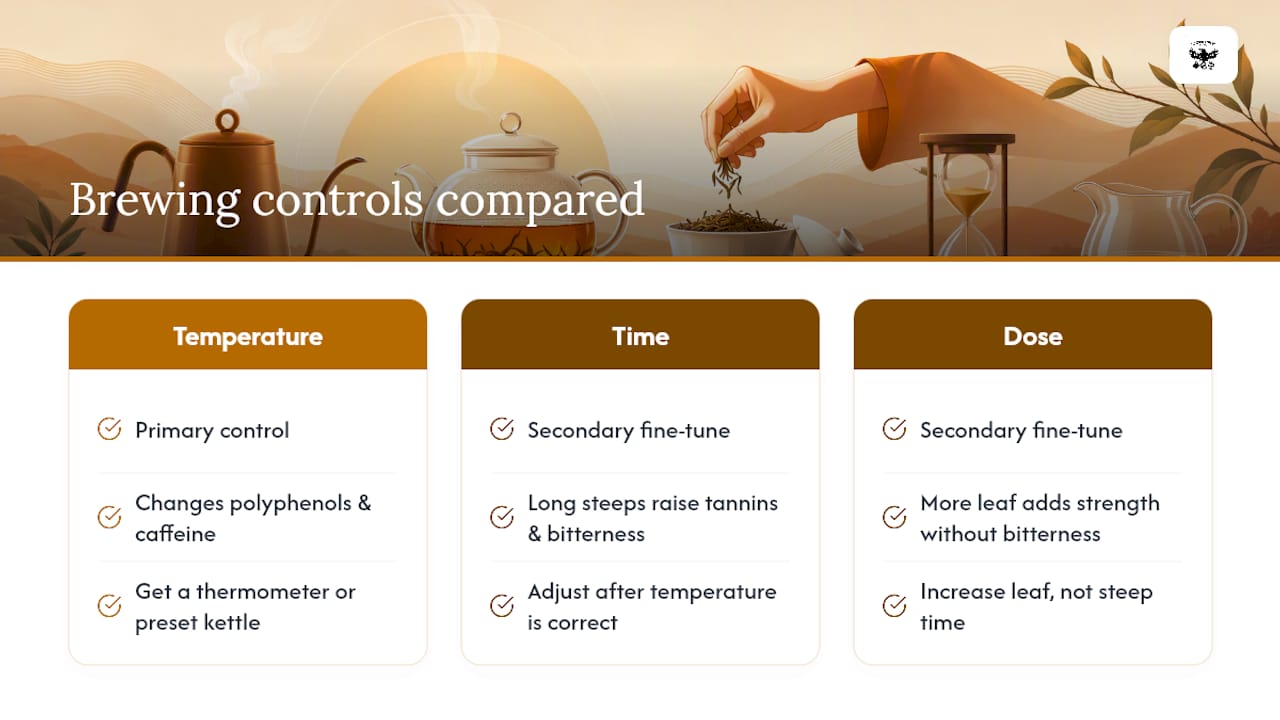
The conventional wisdom that “steep longer for stronger tea” is the most common mistake I see repeated in casual brewing advice, and it’s backwards. Longer steeps pull tannins and bitterness disproportionately compared to flavor compounds. Adding leaf gives you strength without the punishment.
If you take one thing from this article, prioritize getting a thermometer or an electric kettle with temperature presets before you buy a fancier teapot. Vessel material and ritual matter for enjoyment, but they don’t fix a cup brewed 30 degrees too hot. Get the water right first, then worry about the ceremony around it.
— David
Recommended Tri Crow Blends to Brew Tonight
If you want to put everything above into practice without guessing on a new leaf, start with a blend built for the parameters that suit it best. Each of our teas is roasted and blended in small batches specifically so the dose and temperature numbers stay consistent cup to cup.
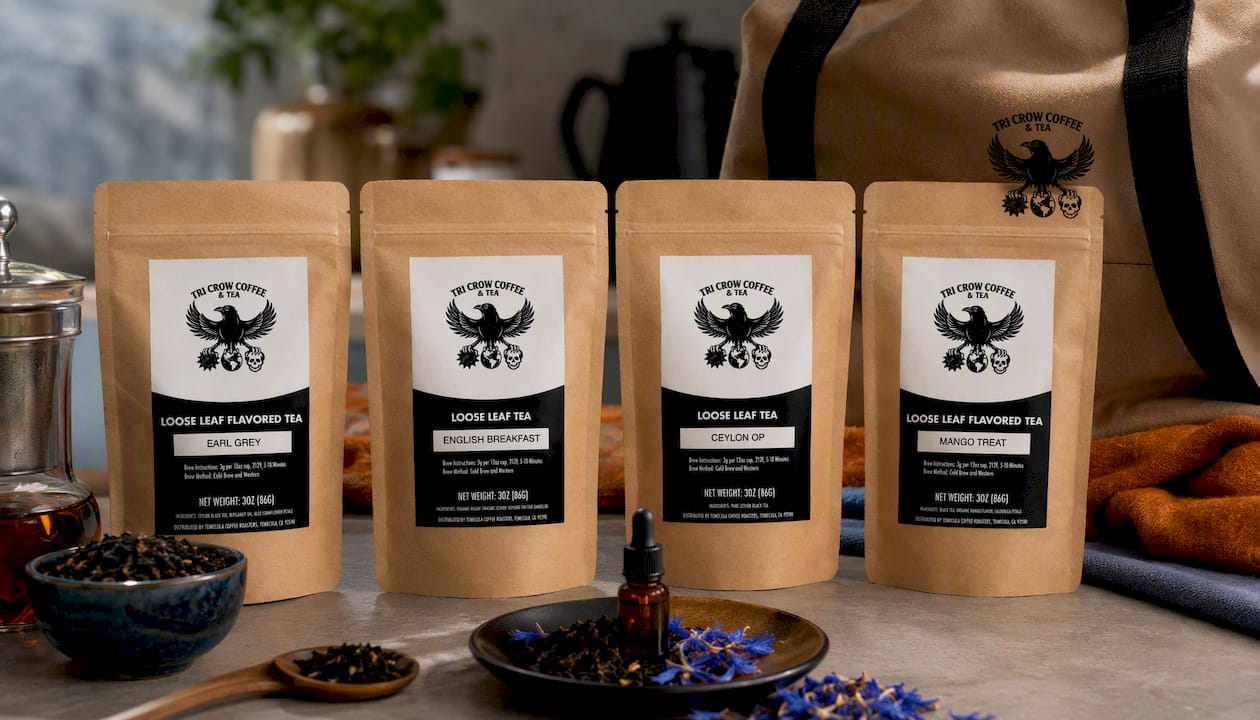
Our Earl Grey, a Ceylon OP base with bergamot oil and blue cornflowers, brews best at 195 to 200°F for 3 minutes at 3 grams per 8 fl oz. Push past 4 minutes and the bergamot turns bitter fast, so pull the leaf on time. Our English Breakfast is a strong, smooth black tea meant for milk. Brew it near-boil at 200 to 212°F for 4 minutes at 4 to 5 grams per 8 fl oz, and it holds its body even with cream added. Our Mango Treat Herbal is sweet and smooth hot or iced. Steep it at full boil for 6 minutes for a hot cup, or double the leaf and cold brew 8 hours in the fridge for a refreshing iced glass. Pick a blend, weigh your leaf, and brew it exactly on spec tonight.
Sources
- Effects of brewing conditions on the sensory and chemical properties of Turkish black tea and their interrelationships | Scientific Reports
- Extraction kinetics of tea aroma compounds as a function brewing temperature, leaf size and water hardness
- Advancement and challenges in tea brewing: The dynamic principles, influencing factors, innovative processing technologies and pollutants
FAQ
What Are the Most Common Tea Steeping Mistakes?
Leaving leaves in the water after the steep time ends is the biggest one, since it keeps extracting tannins and turns even a well-brewed tea bitter. Using boiling water on delicate green or white tea is a close second.
What Are the Golden Rules of Making Tea?
Use fresh, filtered water if your tap tastes off, match temperature to the tea type, measure your dose instead of eyeballing it, and always time the steep and remove the leaf when it ends.
How Do the British Make a Proper Cup of Tea?
The traditional British method uses freshly boiled water poured directly over black tea, usually English Breakfast, steeped 3 to 5 minutes, with milk added after brewing rather than before.
How Can I Brew Tea Perfectly Every Time?
Control the same four variables every time: fresh water, correct temperature for your tea type, an accurate leaf-to-water ratio, and a timer for steeping, then remove the leaves the moment time is up.
How Long Should I Steep Loose Leaf Tea Versus a Tea Bag?
Both follow the same time and temperature guidelines for their tea type, since bagged tea is usually cut finer and can extract slightly faster, so start checking a bag a minute earlier than you would loose leaf.