
The easiest, most authentic chai comes from a stovetop masala chai: toast and crack whole spices, boil them in water, add strong black tea, then finish with whole milk in a 1:1 ratio and simmer briefly. That method takes about 10 minutes and beats any shortcut for flavor. If you need chai faster, a tea bag with a store-bought spice blend, or a batch-brewed concentrate gets you there in half the time.
TL;DR:
- Toasting and cracking whole spices before boiling enhances aroma and flavor, making stovetop chai significantly richer than shortcuts.
- Adding milk last after spice and tea extraction ensures a bolder, less bitter cup, preventing curdling and unwanted flavors.
- Using cracked whole spices and brewing tea for 2 to 4 minutes optimizes flavor and prevents the tannins from turning sharp.
- Replacing dairy with full-fat oat milk maintains creaminess, and thick spice ratios can be adjusted for spicier or sweeter versions.
- Making a large batch of spice and tea decoction allows convenient chai preparation within three to four days, ideal for busy mornings.
Table of Contents
- Ingredients and Tools You Need Before You Start
- Stovetop Masala Chai: The Exact Recipe
- Faster Chai: Tea Bags, One-Pot Shortcuts, and Concentrate
- Common Chai Mistakes and How to Fix Them
- Variations, Substitutes, and Adjusting the Spice Mix
- Make-Ahead Chai: Batching the Decoction Safely
- Serving Chai Hot, Iced, or With a Snack
- Why Stovetop Chai Is Worth the Extra Ten Minutes
- Brew It Faster With Tri Crow Coffee’s Masala Chai
- Sources
- FAQ
Ingredients and Tools You Need Before You Start
Real chai doesn’t need a long shopping list, but it does need the right ratios. For two servings, gather these whole spices, crack them lightly with a mortar and pestle or the flat side of a knife, and measure your liquids before the pot ever touches the stove.
- Spices: 3 to 4 green cardamom pods, one 1-inch cinnamon stick, 2 whole cloves, 3 to 4 black peppercorns, and 1 teaspoon grated fresh ginger (or a half-inch knob, smashed).
- Tea: 2 teaspoons loose CTC Assam, or 2 black tea bags if that’s what’s on hand. Cracked whole spices paired with a robust black tea like CTC Assam extract more evenly than powdered masala and hold up better once milk enters the pot.
- Liquid: 1 cup water plus 1 cup whole milk, which yields two full servings at a balanced 1:1 ratio. Full-fat oat milk works as a substitute if you’re avoiding dairy.
- Tools: a small saucepan, a fine-mesh strainer, and something to crack spices with. A ladle for pouring the chai between cups adds froth, but it’s optional.
Stovetop Masala Chai: The Exact Recipe
This is the version worth memorizing. It follows a strict order: spices in water first, then tea, then milk last. Skip that order and the chai either tastes flat or turns bitter.
- Crack the spices. Smash the cardamom pods, cinnamon stick, cloves, and peppercorns until they split open. Add them to a dry saucepan over medium heat and toast for 30 to 45 seconds, swirling constantly. Briefly dry-heating whole spices releases their essential oils and aroma, which is the single biggest difference between chai that tastes like spiced water and chai that actually smells like a chai stall.
- Add water and ginger. Pour in 1 cup water and the grated ginger. Bring to a boil and let it run for 2 to 3 minutes. This builds your spice decoction, the flavor base for everything that follows.
- Add the tea. Drop in the Assam or tea bags and boil for another 2 to 4 minutes, until the water turns a deep reddish brown. The extraction window for tea in a milk-based chai is narrow: under 2 minutes and the color stays thin, over 4 and the tannins turn sharp.
- Add the milk. Pour in 1 cup whole milk, matching the water 1:1. Bring the pot back to a boil once or twice, then drop to a simmer for about a minute.
- Rest, strain, and sweeten. Turn off the heat, let it sit for 1 to 2 minutes so the flavors settle, then pour through a fine-mesh strainer into cups. Stir in sugar, honey, or jaggery now, off the heat, since sweetening early can darken the tea and dull the extraction.
Why does the order matter so much? Adding milk too early limits how much flavor the spices and tea can release into the water, which is why a two-stage extraction, water first and milk last, consistently produces a bolder cup than dumping everything into the pot at once.
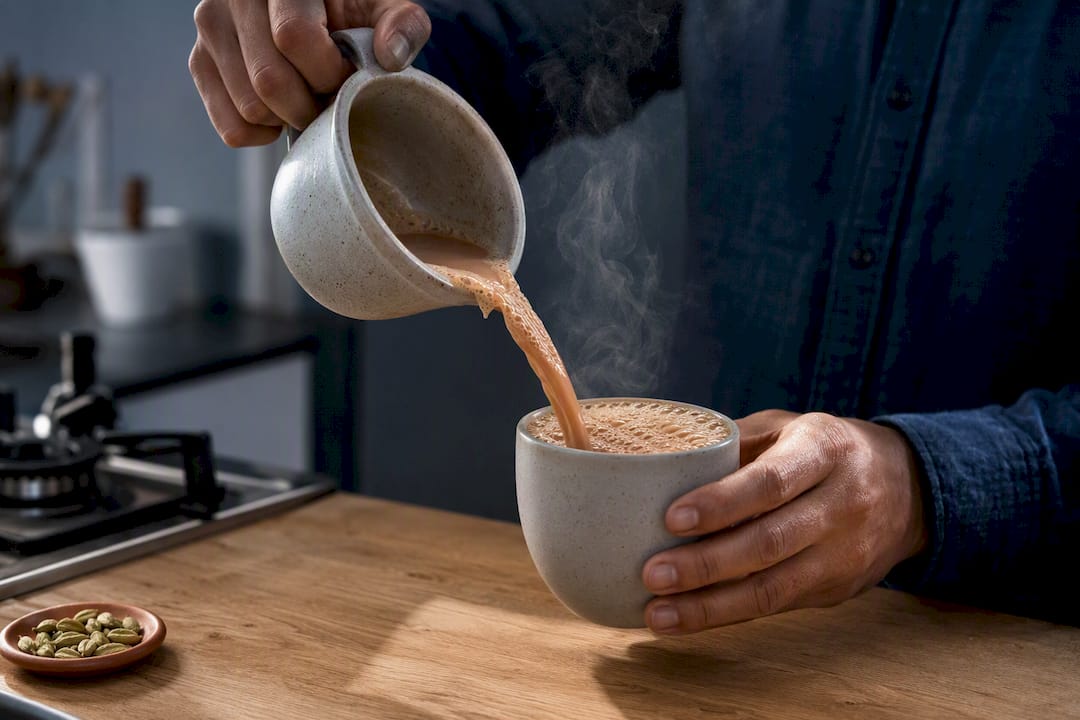
Pro Tip: For extra froth, pour the finished chai back and forth between two vessels from about 10 to 12 inches up, four or five times. That aeration emulsifies the milk fat and gives you the creamy top layer you’d get from a chai stall.
Faster Chai: Tea Bags, One-Pot Shortcuts, and Concentrate
Not every morning has 10 spare minutes. These three shortcuts trade a little authenticity for speed, and each one still produces a genuinely good cup.
- Tea-bag method (2 minutes): Steep one black tea bag plus a chai spice sachet or a pinch of pre-ground masala directly in simmering milk and water. It skips the decoction step but still delivers real spice flavor.
- One-pot microwave shortcut: Heat water, milk, tea, and spice powder together in a microwave-safe mug for 90 seconds, stir, and strain. Expect a flatter, less aromatic cup since there’s no separate bloom step.
- Concentrate for batch mornings: Brew a larger batch of spices and tea in water only, no milk, then refrigerate the decoction for 3 to 4 days. Combine it with fresh milk cup by cup so you’re never reheating dairy that’s already been through the pot once.
Common Chai Mistakes and How to Fix Them
Most chai disasters trace back to one of five fixable errors. According to one breakdown of common masala chai mistakes, stale tea, overboiling, wrong milk ratios, and rushed spice prep account for nearly every bad batch home cooks run into.
- Bitter chai: Usually means the tea boiled too long after being added. Pull it at the 2 to 4 minute mark, not longer.
- Watery, weak chai: Almost always a ratio problem. Stick to the 1:1 water-to-milk split and let the spice decoction run its full 2 to 3 minutes before adding tea.
- Curdled milk: Happens when cold milk hits hot ginger and acid compounds directly, or when milk boils too hard for too long. Boil the ginger and spices in water first, and add milk once it’s already warm, not cold from the fridge.
- Gritty texture: A sign you used powdered masala instead of cracked whole spices, or skipped the strainer. Cracked whole spices avoid the muddy mouthfeel of powders, and a fine-mesh strainer catches the rest.
- Off, mineral flavor: Often hard water. Filtered water fixes this instantly and costs nothing but a pitcher.
Variations, Substitutes, and Adjusting the Spice Mix
Chai is forgiving once you understand the base technique, and the spice ratio bends easily to taste. A few reliable adjustments:
- Dairy-free version: Full-fat oat milk holds up best under direct heat and mimics the body of whole milk better than almond or soy, which tend to separate.
- Pepper-forward chai: Double the peppercorns to 6 or 8 for a spicier, warming cup, popular in colder months.
- Fennel or star anise chai: Swap in a half teaspoon of fennel seeds or one small piece of star anise for a sweeter, licorice-toned variation.
- Kadak (strong) chai: Add an extra teaspoon of loose tea, or a third tea bag, and extend the tea-boiling step by a minute.
- Sweeteners: Sugar and honey both work fine added at the end. If using jaggery, break it into small pieces first so it dissolves fully off the heat, since it clumps more than granulated sugar.
For a deeper look at building your own spice ratios from scratch, Tri Crow Coffee’s guide on tea blending step by step walks through balancing warm spices against tea strength.
Make-Ahead Chai: Batching the Decoction Safely
A pot of concentrate turns a 10-minute recipe into a 60-second one on busy mornings.
- Multiply the spice and tea quantities to make roughly 1 quart of decoction, using water only, no milk.
- Bring to a boil, then simmer 8 to 10 minutes total, tasting at the 6-minute mark so the tea doesn’t over-extract in a larger pot.
- Strain, cool to room temperature, and store in an airtight container in the fridge for up to 3 to 4 days.
- To serve, heat equal parts decoction and fresh milk in a small saucepan. Never reheat chai that already has milk mixed in. It curdles and turns bitter fast.
- For a crowd, finish each cup with fresh milk individually rather than boiling a huge pot of milk and decoction together, which is nearly impossible to manage without scorching or boiling over.
Serving Chai Hot, Iced, or With a Snack
Hot chai gets poured straight from the strainer into cups, ideally with a light layer of froth on top from the aeration pour, plus a light dusting of crushed cardamom seed for garnish.
- Iced chai: Use one part chilled concentrate to one part cold milk over a full glass of ice, and sweeten slightly more than usual since the ice will dilute it as it melts.
- Malai finish: If you used whole milk, a thin skin of cream often forms on top. Traditionally, that’s not skimmed off.
- Pairings: Serve alongside something with a little crunch, like a spiced biscuit or samosa. Chai is meant to be drunk immediately rather than left to sit or reheated.
Why Stovetop Chai Is Worth the Extra Ten Minutes
I’ve watched plenty of people default to the tea-bag shortcut and wonder why it never quite tastes like what they remember from a trip abroad or a friend’s kitchen. The missing piece is almost always the bloom: those 30 seconds of toasting whole spices before water ever hits the pot. It’s a small ritual, but it’s the difference between chai that smells like an afterthought and chai that fills the room. A Masala Chai blend can be built around that same principle, small-batch spiced black tea meant to reward the extra few minutes at the stove.
— David P.
Brew It Faster With Tri Crow Coffee’s Masala Chai
If you’d rather skip measuring six spices every morning, Tri Crow Coffee’s Masala Chai is built to slot straight into the stovetop method above, already balanced with cracked whole spices and a robust black tea base so you just add water and milk.
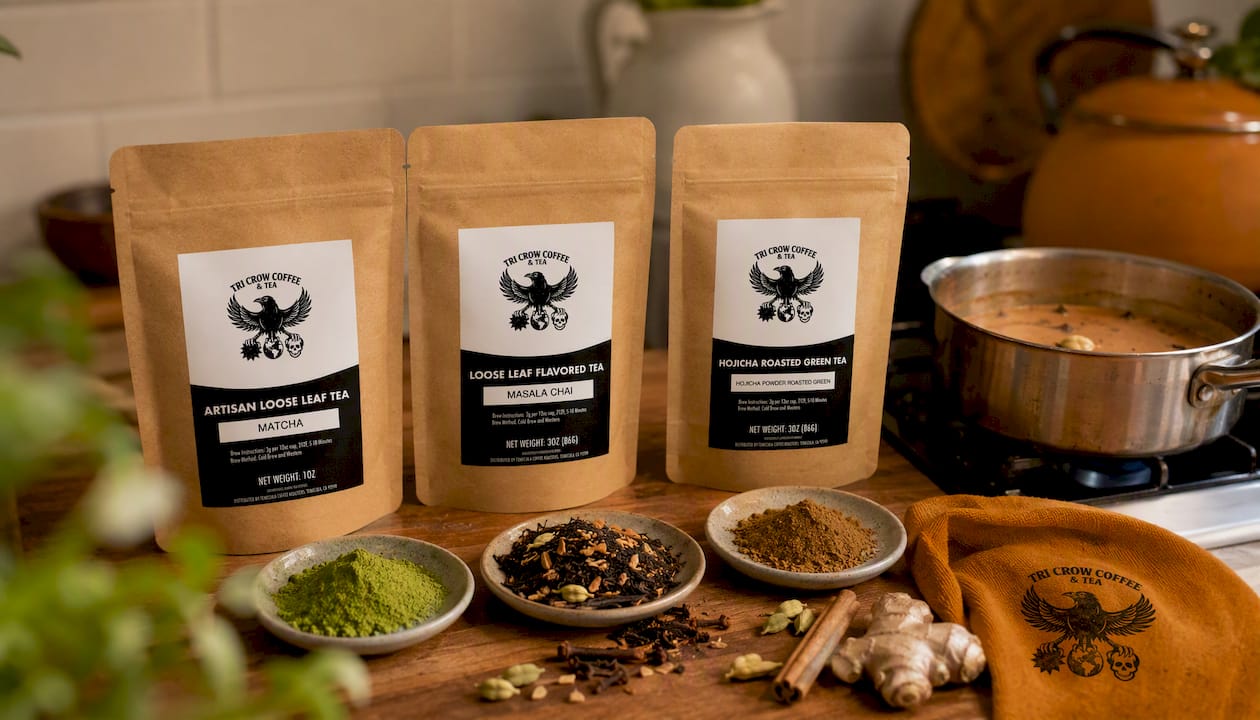
Use it two ways. Brew it exactly like the stovetop recipe for a single cup, or simmer a larger pot to make a concentrate you refrigerate and finish with fresh milk throughout the week. It’s a small-batch blend, roasted and packed in limited runs to keep the spice ratio consistent cup to cup. If your mornings run more toward matcha or a roasted, toasty cup, Tri Crow Coffee’s loose leaf matcha and stone-milled hojicha powder are worth exploring too. Order the Masala Chai blend and have your next pot brewing tonight.
Sources
- Masala chai (Gimme Some Oven)
- Masterclass in chai (MasalaMonk)
- Authentic masala chai (Naomy’s Kitchen)
- Masala chai (ChefEdit)
FAQ
What Are the Most Common Mistakes When Making Chai?
The biggest culprits are overboiling the tea, using powdered masala instead of cracked whole spices, and adding milk before the spices and tea have fully extracted into the water.
Is It Okay to Drink Chai Tea Every Day?
Chai made with real tea contains caffeine, so most people can enjoy one or two cups daily without issue, though anyone sensitive to caffeine should watch total intake across the day.
What Is Chai Tea Made Of?
Traditional masala chai is black tea (CTC Assam works best) simmered with whole spices like cardamom, cinnamon, cloves, peppercorns, and ginger, then finished with milk and a sweetener.
Do You Just Add Milk to Chai Tea?
No. Milk goes in last, after the spices have simmered in water and the tea has had time to extract; adding it too early limits flavor and can cause curdling.