
Folklore-inspired coffee branding means a small-batch roaster builds its blend names, packaging, and flavor story around myth, ritual, or cultural symbolism rather than generic descriptors like “breakfast blend.” For a buyer, that translates into concrete product traits worth prioritizing: a visible roast date, single-origin or named-farm sourcing, and a roast level matched honestly to its flavor claims. Skip the vague mythology on the bag and check those three things first.
TL;DR:
Check the roast date on small-batch folklore-inspired coffees, as “best by” dates can be misleading about freshness.
Prioritize traceability by verifying specific farm or cooperative sourcing details rather than vague regional claims.
Match the roast level to the flavor story; light or medium roasts preserve origin character, while dark roasts may mask nuances.
Vague ingredient descriptions like “adaptogenic blend” should specify species and dosage to confirm functional claims.
Expect mid-range prices for quality small-batch coffee, with very cheap options warranting closer inspection of sourcing and roast freshness.
Table of Contents
What Folklore-Inspired Coffee Branding Means for Shoppers
Mythology coffee branding isn’t a marketing gimmick layered on top of ordinary beans. At its best, it’s a roaster using story and symbolism to communicate something real about ritual, origin, or craft, then backing that story with product attributes you can actually verify. The trouble is that storytelling in coffee packaging varies wildly in substance. Some brands print a legend on the bag and stop there. Others build the entire product around it: a name tied to a myth, a roast level chosen to match the story’s mood, ingredients sourced with enough transparency that the tale holds up under scrutiny.
That distinction matters more than most shoppers realize. Cultural coffee design borrows from folklore because ritual and coffee have always been linked. Morning coffee is a ritual for millions of people regardless of what’s printed on the label. Traditional folklore coffee branding just makes that connection explicit, naming a blend after a crow, a spirit, a myth of grounding, or a seasonal legend instead of calling it “medium roast #4.”
Here’s the part that separates a good folklore-branded coffee from a shallow one: the narrative should point you toward real product decisions, not distract from them. A blend named for a firelight ritual should probably lean into warm, toasted, dessert-adjacent notes. A blend invoking a forest spirit might reasonably include mushroom-based functional ingredients. When the story and the cup actually line up, that’s narrative coffee marketing working as intended. When they don’t, the folklore is decorative wrapping paper on an unremarkable bag of beans.
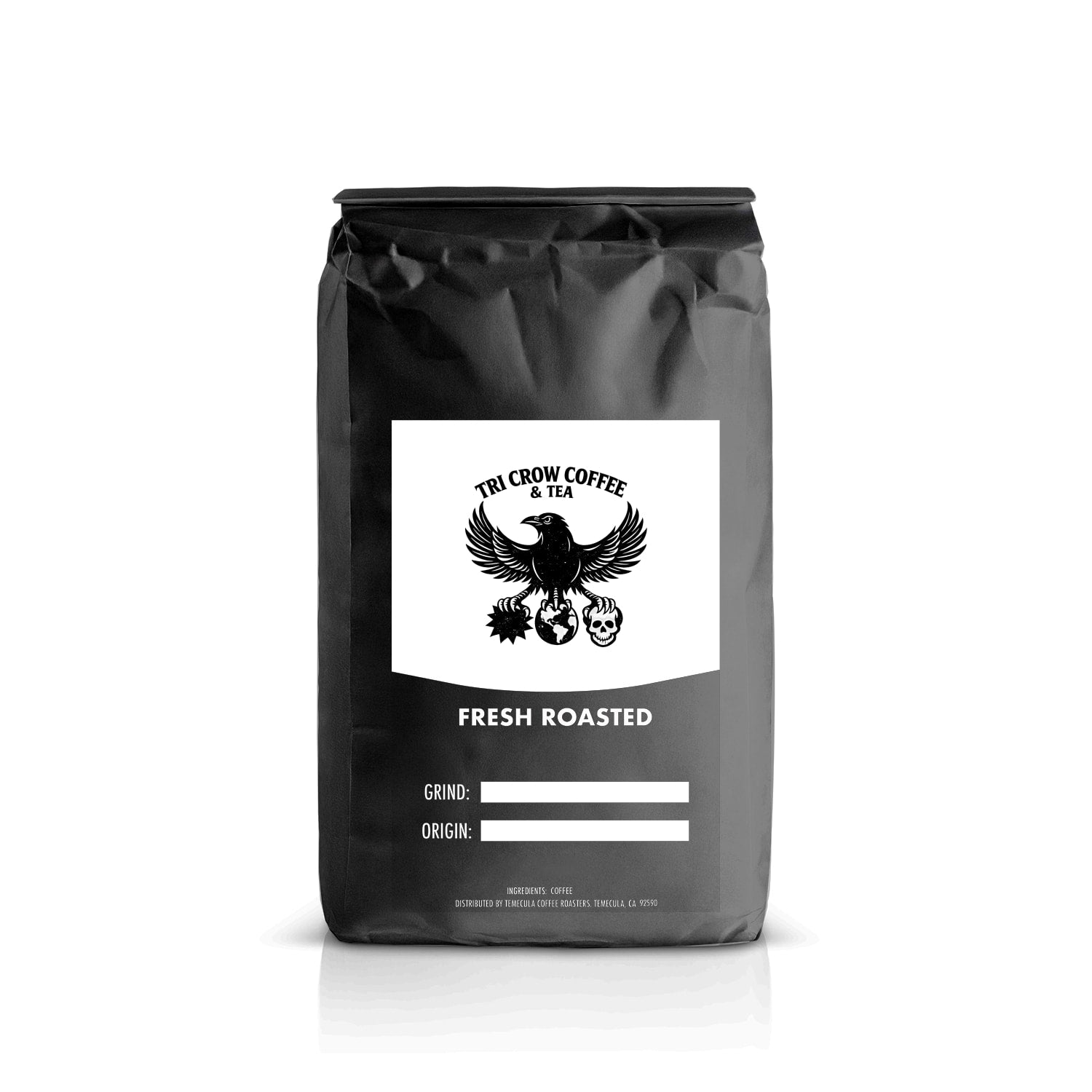
For shoppers, the practical takeaway is simple: treat the myth as flavor and functional context, not as a substitute for the fundamentals every coffee bag should disclose.
How to Choose a Folklore-Themed Coffee or Tea
Before you let a good story sell you a bag, run it through a short checklist. The story can be memorable and the coffee can still be mediocre if the fundamentals aren’t there.
-
Roast date, not just “best by.” A “best by” date can sit a year or more out and tells you almost nothing about actual freshness. The roast date is the number that matters, since coffee starts losing aromatic compounds within weeks of roasting. If a bag only shows “best by,” that’s a signal to look elsewhere or ask the roaster directly.
-
Traceability over vague geography. “Sourced from South America” says almost nothing. A named farm, producer, or cooperative signals a roaster with a real sourcing relationship, and research on coffee traceability ties that kind of named-origin transparency to deeper quality commitment upstream.
-
Roast level matched to the flavor promise. A blend marketed as bright and fruity should be a lighter roast; a blend marketed as rich and smoky should run darker. If the roast level contradicts the tasting notes on the bag, the story and the cup are disconnected.
-
Special ingredients need specifics. Mushroom coffee blends should list the exact species (lion’s mane, cordyceps, reishi) and some indication of dosage, not just “adaptogenic blend.” Vague ingredient language is the functional-coffee version of vague geography.
-
Price as a rough guide, not gospel. Very cheap specialty-labeled coffee is worth double-checking for roast date and origin, mid-range pricing is typical for genuine small-batch specialty coffee, and unusually high prices often point to rare or experimental lots. Price-versus-quality guidance from BeanBench backs this pattern up.
Specialty-grade beans retain distinct origin character, floral notes, citrus brightness, fruit complexity, that commodity-grade coffee typically masks under a darker roast. If a folklore-branded bag claims “notes of stone fruit and honey” but the roast level reads as a dark roast with no origin listed, be skeptical.
Pro Tip: Cross-check the tasting notes against the roast level before you buy. Light and medium roasts preserve origin character; very dark roasts flatten most nuanced flavor into bittersweet and smoky notes regardless of what the bag promises.
Tri Crow Coffee’s Folklore-Inspired Blends, Explained
This roaster builds blends around a three-legged crow mythology that anchors the brand identity: grounding, ritual, connection to sun and earth. Three products carry that identity into different corners of a coffee drinker’s week.
-
S’mores Lightly Flavored Coffee takes the campfire dessert and turns it into a smooth, sweet cup. It’s a medium roast built for anyone who wants a treat-forward coffee without reaching for actual dessert. Best brewed drip or pour-over so the toasted marshmallow and chocolate notes stay balanced rather than muddled.
-
Coffee with Mushrooms, Dark Roast pairs lion’s mane, cordyceps, and reishi with a bold, body-forward roast. This is the evening-ritual cup, or the one you reach for when you want weight and intensity along with the functional mushroom trio. A French press or espresso pull suits the darker roast better than a light filter method.
-
Coffee with Mushrooms, Medium Roast carries the same three mushrooms, lion’s mane, cordyceps, reishi, in a gentler, everyday cup. It’s built for a daily ritual rather than an occasion, with enough roundness for drip brewing without the intensity of the dark roast version.
Every one of these is a limited small-batch run, which means availability shifts and freshness windows matter more than with mass-produced coffee. Roast-date visibility on the product page is the fastest way to confirm you’re buying a fresh batch rather than one that’s been sitting in inventory. Since small-batch roasting means limited runs by design, checking that date before you buy is worth the ten seconds it takes.
How to Brew and Pair These Mythic Blends
Getting the ritual right at home comes down to matching brew method to roast, then leaning into pairings that echo the blend’s flavor story.
-
Pour-over or drip for lighter, flavored blends. The S’mores blend’s toasted-sweet notes come through clean with a paper filter, which won’t add the extra body that a metal filter or press would.
-
French press or espresso for dark roasts. The mushroom dark roast wants full extraction and body. A press pulls out the roast’s richness; espresso concentrates it further if you want an intense, ritual-style shot.
-
Medium ground, standard ratio, as a starting point. A roughly 1:16 coffee-to-water ratio and a medium grind work as a baseline for most of these blends; adjust toward more coffee if you want a bolder cup, less if you want it gentler.
-
Let mushroom blends bloom slightly longer. Functional ingredients change texture and mouthfeel compared to straight coffee, so a slightly longer bloom before the main pour helps everything extract evenly.
Pairing-wise, the S’mores blend sits naturally alongside spiced pastries, dark chocolate, or anything toasted and sweet, since it’s already dessert-adjacent. The mushroom blends pair better with something grounding and simple: buttered toast, a citrus-based sweet to cut the earthiness, or nothing at all if you’re treating the cup itself as the ritual.
Pro Tip: If a blend’s tasting notes don’t match what you taste in the cup, that’s useful information. Trust your palate over the packaging copy, since the story should describe the coffee, not the other way around.
Design Principles Behind Folklore-Inspired Coffee Packaging
Good folklore packaging design starts with restraint, not spectacle. The strongest examples use one central symbol, a crow, a mountain spirit, a harvest legend, rather than crowding the label with competing imagery. That single motif then repeats across the product line with variation (different colors, different poses, different supporting icons) so the whole catalog reads as one coherent mythology rather than a grab bag of unrelated designs.
Typography carries more narrative weight than most shoppers notice consciously. A hand-lettered or woodcut-style typeface signals “old story, told carefully.” A slick sans-serif signals “modern product wearing folklore as a costume.” Neither is wrong, but they send different signals about whether the brand takes the mythology seriously or is using it as decoration.
Color also does real work here. Earthy, muted palettes, ochre, deep green, charcoal, tend to read as grounded and ritual-minded. Bright, saturated colors read as playful or novelty-driven. The best folklore-inspired packaging picks a palette that matches the blend’s actual flavor profile and intended moment, not just what looks striking on a shelf.
Finally, the roast date, origin, and ingredient information need visual priority, not an afterthought crammed into six-point font on the back panel. A package can commit fully to its mythology on the front while still putting freshness and sourcing information somewhere legible. The two goals aren’t in tension. The best folklore-branded coffee treats transparency as part of the story, not an interruption to it.
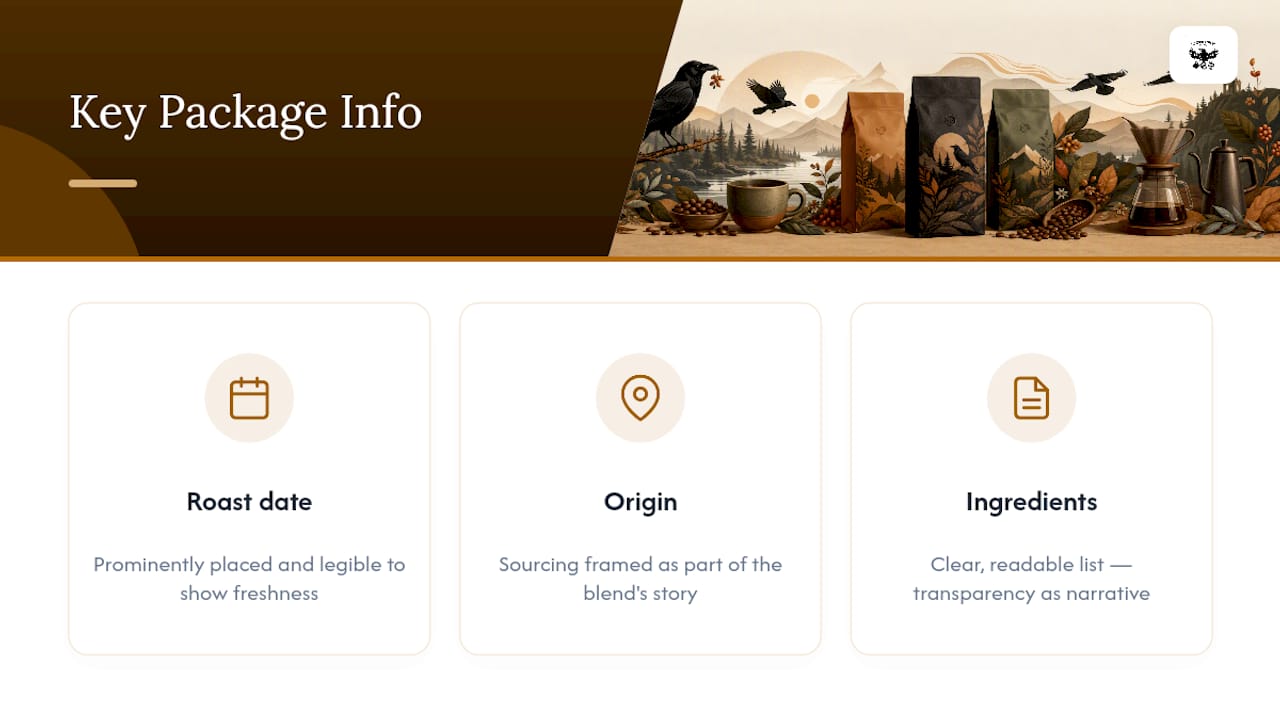
Marketing Strategies for Folklore-Inspired Coffee Brands
The marketing that works for mythology-driven coffee brands leans on consistency and specificity rather than volume. A folklore brand earns trust by returning to the same core symbol across every touchpoint, blend names, packaging, social content, so the mythology accumulates meaning over repeated exposure instead of resetting with each new product drop.
Storytelling in coffee marketing works best in small, specific doses tied to something the customer can verify: a named farm, a specific roast date, a real ingredient list. Vague mythic language (“ancient ritual,” “sacred blend”) without any concrete backing tends to read as filler once a customer has seen it a few times. The brands that hold attention long-term pair the myth with a real detail every time: this blend, this roast, this origin, this reason it exists.
Seasonal and ritual framing also does heavier lifting than most one-off promotions. Tying a blend to a recurring moment, a solstice, a harvest season, a specific daily ritual, gives customers a reason to return rather than a single reason to try it once. That recurring structure is part of what separates a folklore brand with staying power from one that burns through novelty in a single launch cycle.
An Editorial Perspective on Ritual, Myth, and What Packaging Should Promise
The gap between folklore-as-decoration and folklore-as-substance is the whole story here. A crow on a bag means nothing if the roast date is missing and the origin is unnamed. It means something when the mythology sits alongside real sourcing information you can check yourself. Coffee rituals have always been about consistency and intention, not spectacle, and packaging that respects that tends to prioritize transparency over embellishment.
My advice to anyone drawn in by a good origin story: read the back of the bag before you read the front. If the roast date, roast level, and origin hold up, the mythology is a bonus. If they don’t, the story is doing work the coffee should be doing itself.
— David P.
Where to Buy Tri Crow Coffee’s Folklore-Inspired Blends
A small-batch approach means the mythology on the bag, such as the three-legged crow and ritual framing, is ideally backed by roast dates and sourcing details you can check before checkout, not vague storytelling standing in for substance.
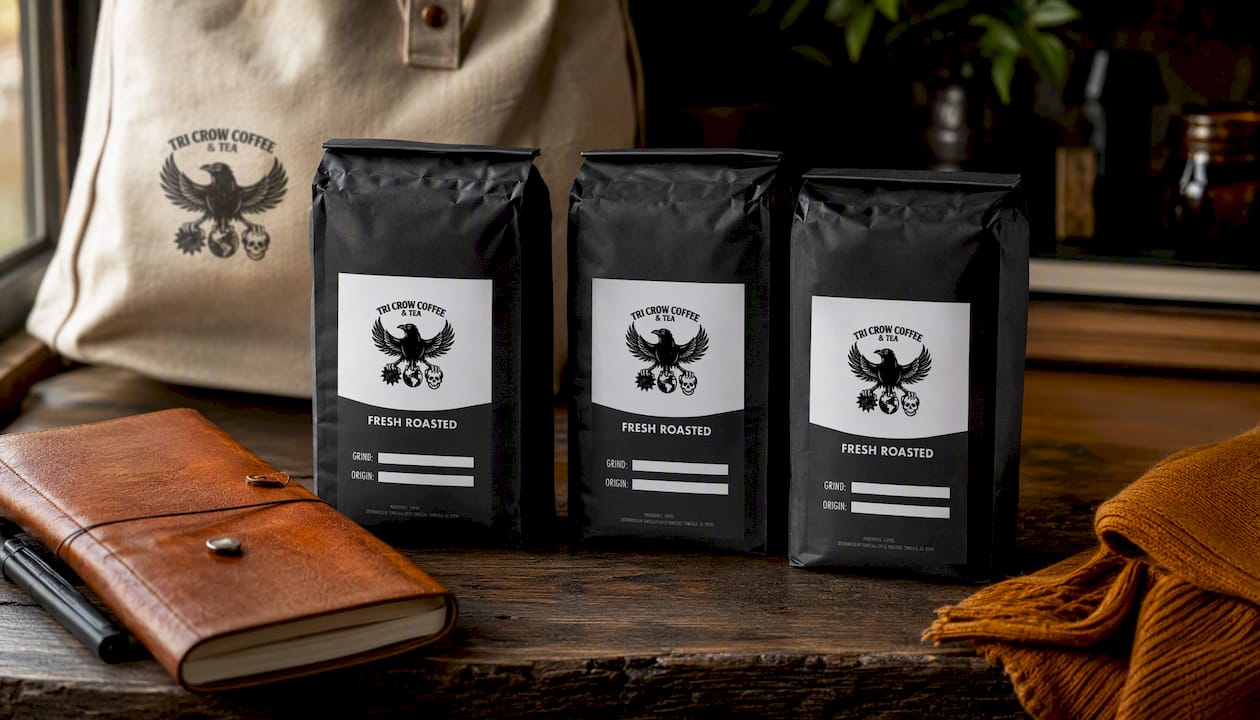
Ready to try one? The S’mores Lightly Flavored Coffee is the easiest entry point if you want a dessert-style cup, while the Dark Roast Mushroom Coffee and Medium Roast Mushroom Coffee cover the functional, ritual-driven end of the lineup. If traceable, single-origin beans are more your priority, the Single Source Coffee collection is worth a look, and the Flavored Coffee collection covers more themed options beyond S’mores. Tea drinkers can browse the Artisan Tea collection for the same mythic framing in a different format.
Because every batch is limited, check the roast date listed on each product page before you order, and don’t wait too long once you find a blend you like, since small-batch runs don’t restock on a fixed schedule.
Sources
FAQ
What Does “Folklore-Inspired” Mean on a Coffee Bag?
It means the roaster names and brands the coffee around myth, ritual, or cultural storytelling rather than generic descriptors. The strongest examples back that story with real details: roast date, origin, and ingredient specifics, so the mythology and the product actually align.
How Do I Know if a Folklore-Branded Coffee Is Actually Fresh?
Look for a visible roast date on the package, not just a “best by” date, since roast date reflects when the beans were actually roasted. If a roaster doesn’t list one clearly, that’s worth asking about directly before you buy.
Does Tri Crow Coffee Sell Mushroom Coffee Blends?
Yes. Tri Crow Coffee offers both a dark roast and a medium roast mushroom coffee, each with lion’s mane, cordyceps, and reishi. The dark roast suits a bolder, body-forward cup, while the medium roast fits an everyday ritual.
Is Single-Origin Coffee Worth the Extra Attention?
Single-origin and named-farm coffee tends to carry more distinct, traceable flavor character than generic blends, and traceability research links named sourcing to stronger quality relationships upstream. It’s a meaningful signal, though not the only one worth checking.
How Much Should I Expect to Pay for Small-Batch Specialty Coffee?
Mid-range pricing is typical for genuine small-batch specialty coffee, while unusually cheap bags warrant a second look at roast date and origin, and very high prices often reflect rare or experimental lots. Current pricing for Tri Crow Coffee’s blends is listed on each individual product page.