
TL;DR:
- Supporting local coffee roasters keeps money in the community and promotes ethical sourcing. They offer fresher beans and closer relationships with farmers for better quality and sustainability. Supporting these businesses fosters stronger communities, healthier ecosystems, and higher-quality coffee experiences.
Supporting local coffee roasters is defined as choosing independent, community-owned businesses over mass-market coffee brands for your daily cup. As of april 2026, over 2,700 verified independent roasters operate nationwide, a scale that signals genuine consumer demand for something more personal than a corporate blend. The reasons to choose local roasters span economic impact, coffee freshness, ethical sourcing, and environmental responsibility. Each cup you buy from an independent roaster is a direct vote for the kind of food system and community you want to live in.
Why support local coffee roasters for your community’s economy
The most direct benefit of supporting small coffee businesses is economic: money stays local. When you buy from an independent roaster, revenue pays local employees, covers rent to local landlords, and flows to nearby suppliers. That cycle repeats itself through the neighborhood in what economists call the multiplier effect. Local ownership keeps decision-making in the hands of people who live in the community, not in a distant corporate office optimizing for shareholder returns.
Independent roasters also define independence by control, not size. A roaster with multiple locations can still be fully independent if it is locally owned and founder-controlled. That distinction matters because it means the sourcing, roasting, and pricing decisions all reflect local values rather than corporate margin targets. The community benefits from that accountability in ways a franchise model simply cannot replicate.
Here is what local economic circulation looks like in practice:
- Local wages: Roasters hire baristas, roasters, and delivery staff from the neighborhood.
- Local rent: Storefronts and roastery spaces support local property owners.
- Local suppliers: Packaging, equipment repair, and delivery often come from nearby businesses.
- Local reinvestment: Profits fund community sponsorships, events, and charitable giving.
Pro Tip: When you buy a bag of coffee directly from a local roaster instead of a grocery chain, a significantly larger share of that purchase price stays within your zip code.
Does freshness really differ between local and commercial coffee?
Small-batch roasting produces fresher beans with more nuanced flavor profiles than mass-produced coffee. Local roasters roast on demand in small quantities, which means the coffee sitting on your counter was likely roasted within days, not months. Oxidation is the enemy of coffee flavor. The longer beans sit after roasting, the more aromatic compounds they lose. Commercial supply chains, by contrast, can involve weeks of transit and warehouse storage before a bag reaches a shelf.
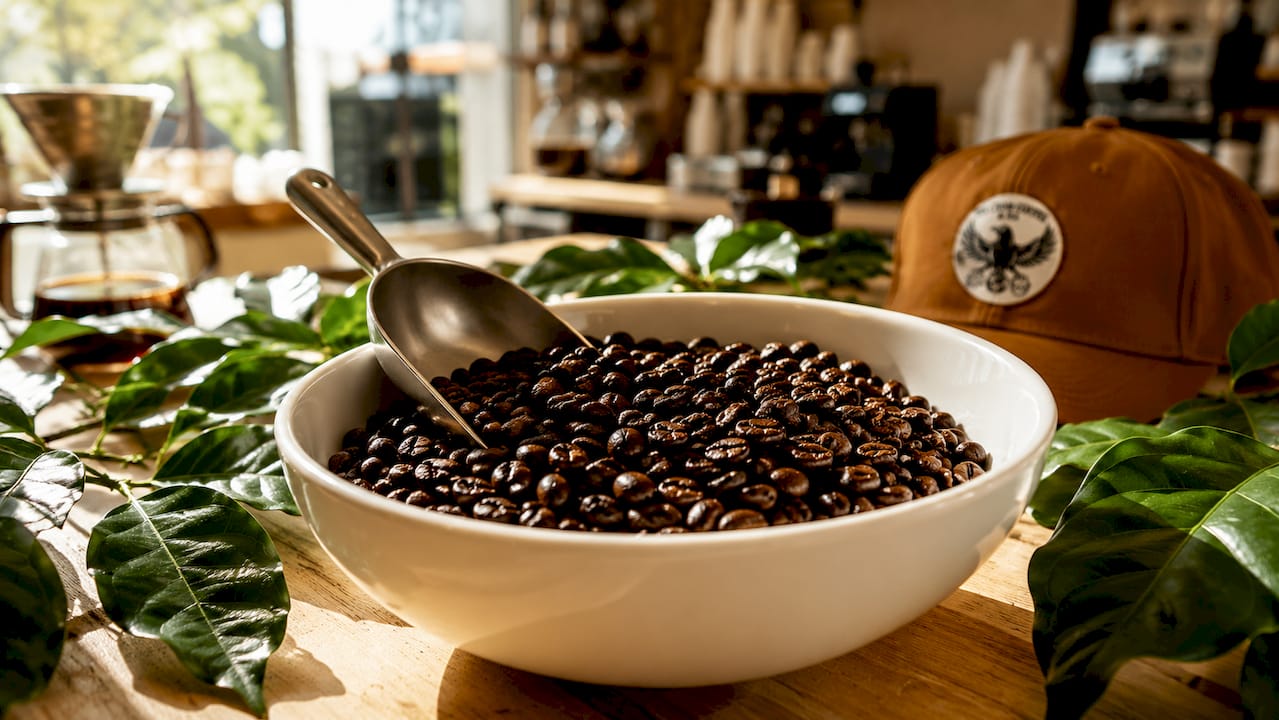
The smaller scale of independent roasters also enables creativity. Local roasters’ smaller scale allows experimentation with roast profiles that industrial operations cannot attempt. A roaster working with 20-pound batches can dial in a specific origin bean with precision that a 2,000-pound drum simply does not allow. That agility produces flavor complexity you will not find in commodity blends.
Here is how the freshness advantage compounds from farm to cup:
- Roast to order: Many local roasters roast only after receiving your order, cutting days off the time between roast and brew.
- Short distribution: Beans travel from roastery to customer without a regional warehouse stop.
- Transparent roast dates: Independent roasters typically print roast dates on bags, so you know exactly what you are buying.
- Seasonal offerings: Local roasters rotate offerings based on harvest cycles, meaning you get peak-season beans rather than year-round commodity lots.
Pro Tip: Look for a roast date on the bag rather than a “best by” date. A roast date tells you when the coffee was made; a best-by date tells you almost nothing about freshness.
For a deeper look at how roast level affects flavor, the guide to coffee roasts from Tri Crow Coffee breaks down the differences clearly.
How do local roasters practice ethical sourcing?
Independent roasters build long-term relationships with coffee farmers rather than buying anonymously through commodity exchanges. Farmers value direct buyers who visit their farms and pay premiums above commodity prices. Those premiums fund better wages, improved farming infrastructure, and sustainable land practices. The difference between transactional bulk buying and relationship-based sourcing is the difference between a farmer surviving a bad harvest and thriving through it.
Direct relationships also improve coffee quality at the source. Local roasters often visit farms and communicate regularly with growers, which allows them to monitor harvests, give feedback on processing, and share the farmer’s story with customers. That transparency creates accountability on both sides of the transaction.
The ethical sourcing model that independent roasters practice rests on a few core commitments:
- Fair premiums: Paying above commodity price gives farmers financial stability.
- Long-term contracts: Multi-year agreements let farmers plan investments in their land.
- Sustainable harvesting: Roasters who visit farms can advocate directly for shade-grown and low-chemical practices.
- Traceability: Customers can often learn the name of the farm and the farmer behind their coffee.
“Local status hinges on control and relationships, meaning local roasters champion sustainable sourcing by choosing green coffee suppliers with whom they sustain long-term partnerships.” — Roast Local
Understanding why coffee origin matters is the first step toward making sourcing decisions that align with your values.
How local roasters build community culture and reduce environmental impact
Local roasters serve as cultural hubs that go well beyond selling coffee. Community involvement includes sponsoring neighborhood events, hosting cupping sessions, and actively seeking customer feedback to shape their offerings. That engagement creates a sense of shared ownership between the roaster and the people who drink their coffee. A roastery that hosts a monthly open cupping is not just selling beans. It is building a ritual that connects people.
The environmental case for choosing local is equally strong. Local coffee habits decrease transportation emissions and promote eco-friendly packaging choices. Shorter supply chains mean fewer miles traveled, fewer refrigerated containers, and less plastic wrap. Mindful consumption of local coffee also encourages reusable cups and reduced packaging waste, habits that compound over time into meaningful environmental gains.
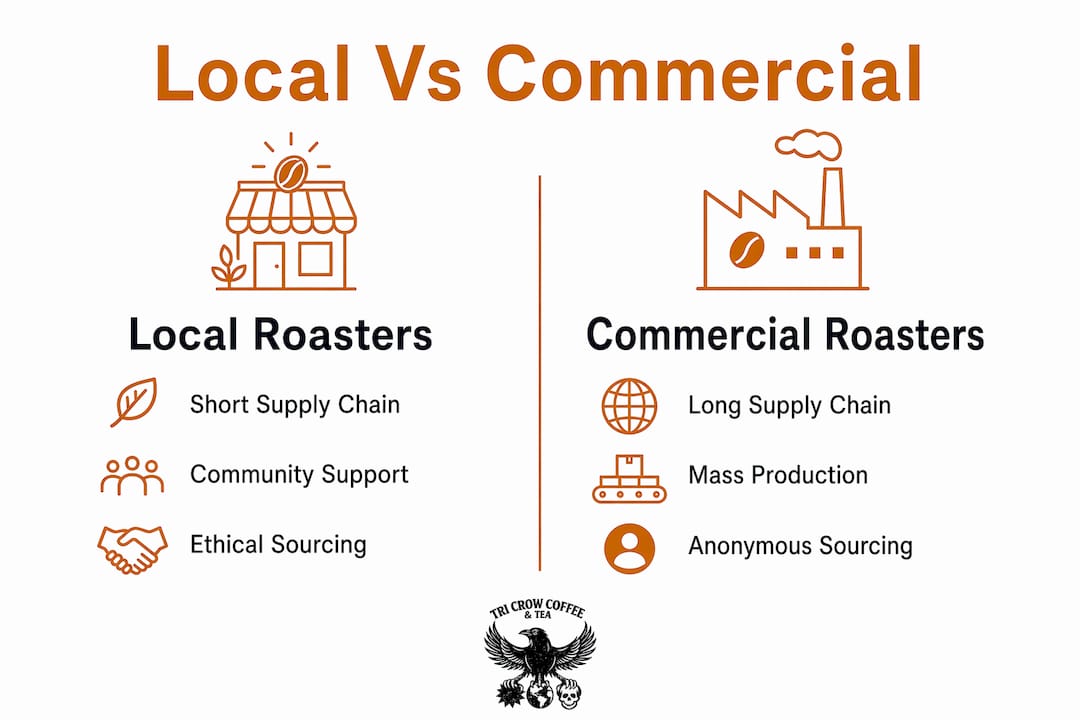
| Factor | Local roasters | Large-scale commercial |
|---|---|---|
| Supply chain length | Short, often regional | Global, multi-stage |
| Packaging waste | Often minimal, eco-focused | High-volume, standardized |
| Community events | Regular, relationship-driven | Rare or marketing-driven |
| Carbon footprint | Lower per bag | Higher per bag |
| Consumer transparency | High, farm-level detail | Low, blend-level only |
Practical ways to support local coffee roasters starting today
Supporting independent roasters does not require a dramatic lifestyle change. The most effective steps are simple and repeatable.
- Visit your local roastery in person. Many roasters offer tours, tastings, and direct sales that are not available online. Buying in person puts the most money directly into the business.
- Attend a cupping event. Cuppings are structured coffee tastings where roasters walk you through flavor notes and origins. They are free or low-cost and give you a direct education in coffee quality.
- Subscribe to a small-batch coffee service. A monthly subscription from a local roaster guarantees fresh beans and gives the roaster predictable revenue to plan their purchases.
- Choose seasonal and limited offerings. Seasonal blends reflect peak harvest quality. Buying them signals to the roaster that quality-focused offerings are worth producing.
- Share what you drink. Recommending a local roaster to a friend is the most cost-free form of support available. Word of mouth remains the primary growth channel for small coffee businesses.
Pro Tip: Ask your local roaster which origin they are most excited about right now. That question opens a conversation that often leads to your best cup yet, and it tells the roaster that their sourcing decisions matter to customers.
Understanding the advantages of small-batch coffee gives you the vocabulary to explain to others why the choice matters.
Key takeaways
Choosing local coffee roasters delivers fresher coffee, stronger communities, and more ethical supply chains than commercial alternatives can match.
| Point | Details |
|---|---|
| Economic impact | Local purchases keep revenue circulating through wages, rent, and neighborhood suppliers. |
| Freshness advantage | Small-batch, on-demand roasting cuts oxidation time and delivers more complex flavor. |
| Ethical sourcing | Direct farm relationships fund fair premiums and sustainable harvesting practices. |
| Environmental benefit | Shorter supply chains reduce transportation emissions and packaging waste. |
| Community engagement | Local roasters host events and build rituals that connect people beyond the cup. |
What I have learned from years of watching local roasters work
The conventional wisdom says local coffee is just a lifestyle choice. I think that framing undersells what is actually happening. Every time a local roaster survives another year, it means a farmer somewhere got paid fairly, a neighborhood kept a gathering place, and a customer got a cup that was genuinely better than what a warehouse shelf could offer.
What strikes me most is the feedback loop that large-scale commercial operations cannot replicate. A local roaster who hears that a particular Ethiopian natural tasted muddy last month will call the farm, adjust the processing spec, and fix it before the next harvest. That level of responsiveness is structurally impossible at industrial scale. The quality improvement is not accidental. It is the direct result of relationships that commercial buyers simply do not have time to build.
The broader point is this: supporting independent businesses is not nostalgia. It is a rational choice for anyone who cares about where their money goes and what it does when it gets there. The coffee in your cup is either funding a system you believe in or one you do not. Local roasters make the choice easy.
— David
Tri Crow Coffee: small-batch craft with the same values
Tri Crow Coffee was built on the same principles that make local roasters worth supporting: limited batches, careful sourcing, and a commitment to flavor that does not cut corners. Every blend Tri Crow Coffee produces is roasted in small quantities to preserve the freshness and character that mass production erases.
If you are ready to put those values into your cup, the artisan tea collection is a strong place to start. Tri Crow Coffee also offers a rotating selection of small-batch roasts, including the House Blend, crafted for customers who want intention in every brew. Each product reflects the same relationship-driven, quality-first approach this article describes.
FAQ
What makes a coffee roaster truly independent?
Independence is defined by ownership and control, not size. A roaster is independent when it is locally owned and founder-controlled, with no corporate mandates over sourcing or roasting decisions.
Why does freshly roasted local coffee taste better?
Local roasters roast in small batches on demand, which reduces the time between roast and cup. Less time means less oxidation and more preserved aromatic compounds, which directly improves flavor.
How do local roasters support coffee farmers?
Independent roasters build direct relationships with farmers, pay premiums above commodity prices, and often visit farms to monitor harvests and advocate for sustainable practices.
Does buying local coffee reduce environmental impact?
Shorter supply chains mean fewer transportation miles and less packaging waste. Local coffee habits also encourage reusable cups and reduced single-use materials.
How can I find and support local coffee roasters near me?
Visit local roasteries in person, attend cupping events, subscribe to small-batch services, and ask roasters directly about their sourcing. Word of mouth is the most effective way to help them grow.