
A signature blend is a coffee (or tea) recipe that a roaster or shop designs from scratch to express their brand’s personality and deliver the same flavor every single time. It is not a generic house coffee. It is a deliberate formula: specific origins, specific ratios, a defined roast profile, and a name that belongs to you alone. The payoff is threefold:
- Consistency — customers get the same cup on Monday and Friday, in January and July.
- Brand differentiation — your house espresso or breakfast blend becomes a reason to return, not just a menu item.
- Merchandising leverage — a named, packaged blend sells bags, pods, and sample packs in a way that “medium roast” never will.
Think of it as the difference between a chef’s house vinaigrette and a bottle of store-brand dressing. One tells a story.
Table of Contents
- How do signature blends differ from single-origin coffee?
- What actually makes a blend “signature”?
- How to create a signature blend, step by step
- Roasting choices that shape your blend’s final cup
- Turning your blend into a product customers recognize
- How to brew and describe your signature blend
- How Tri Crow Coffee builds its signature blends
- Key Takeaways
- Why signature blends are worth the effort
- Tri Crow Coffee’s small-batch blends are ready to try
- Useful sources
- FAQ
How do signature blends differ from single-origin coffee?
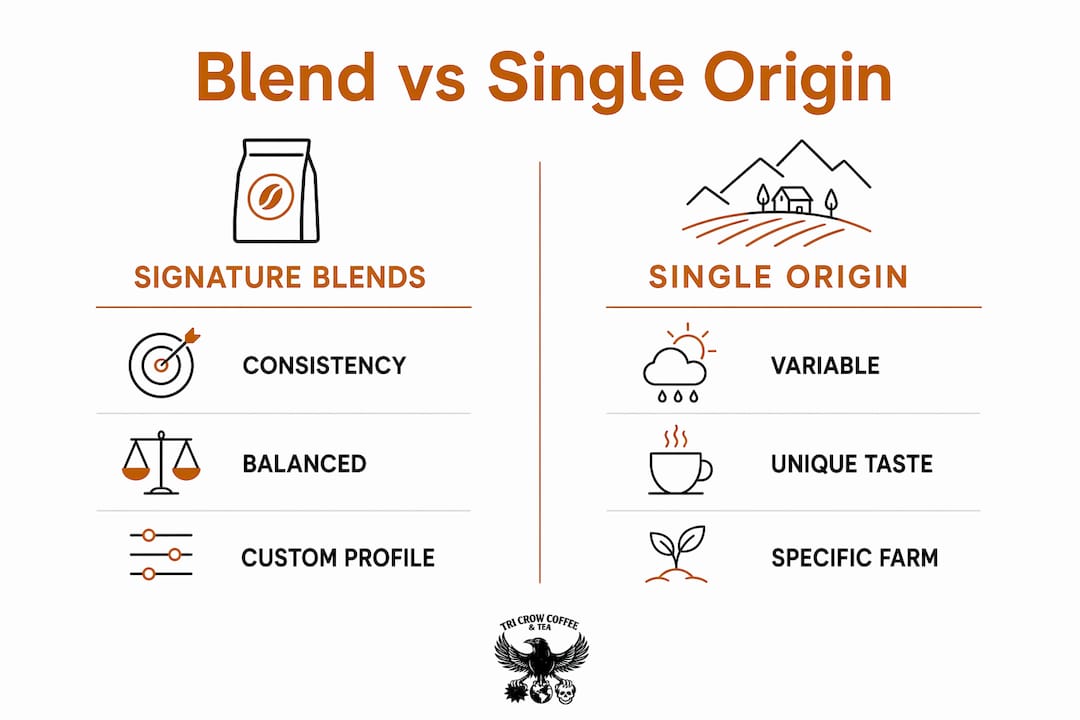
Single-origin coffee highlights terroir: the specific farm, region, or processing lot that shaped the bean. A Tanzania medium-light, for example, will taste different from last year’s harvest because the crop changed. That variability is part of the appeal for pour-over enthusiasts who want to taste a place.
Blends work the opposite way. Roasters use blends for espresso and milk drinks precisely because balance and consistency are critical there. When a harvest shifts, the roaster adjusts the blend’s ratios to hold the same cup profile rather than letting the flavor drift.
| Attribute | Signature Blend | Single Origin |
|---|---|---|
| Consistency | High — recipe-controlled | Variable by harvest |
| Seasonal variability | Managed through ratio adjustment | Part of the product |
| Cost stability | More predictable | Tied to one crop |
| Best menu placement | Espresso, milk drinks, drip house | Pour-over, filter, tasting flights |
| Flavor focus | Balance, body, repeatability | Terroir, complexity, distinctiveness |
The practical takeaway: if you need a reliable house espresso or a breakfast drip that works for every customer, a blend is the right tool. If you want to showcase a specific origin, let it stand alone.
What actually makes a blend “signature”?
Not every blend earns the label. A signature blend has a defined identity that connects to the brand selling it. Here is what separates a true signature from a generic mix:
- Repeatability. The recipe is documented: exact origins, lot codes, ratios by weight, and roast profile. You can reproduce it six months from now.
- Brand alignment. The flavor profile matches the shop’s identity. A bright, fruit-forward espresso fits a light-roast specialty bar; a deep, chocolatey blend fits a traditional neighborhood café.
- Defined brew target. You know whether it is optimized for espresso, drip, or both, and you have dialed in the recipe for that method.
- Sensory goals. Body, sweetness, acidity, and finish are all specified before blending begins, not discovered afterward.
- Commercial role. Is it the house espresso, the breakfast blend, or a seasonal signature? Each role has different consistency demands.
Sample sensory descriptors to aim for: dark chocolate and brown sugar with a smooth, low-acid finish (classic house espresso); bright citrus and stone fruit with a clean, tea-like body (light breakfast blend); caramel, toasted almond, and a lingering sweetness (milk-drink anchor). These are targets you write down before you pull a single shot.
How to create a signature blend, step by step
The process is iterative, not linear. Expect three to five cupping rounds before you lock a recipe.

Step 1: Define your goal. Write down the target audience, the primary brew method, and two or three flavor descriptors you want the finished cup to hit. A vague goal produces a vague blend.
Step 2: Choose your components. A three-component framework works well for most blends. Assign each origin a role:
- Base — provides body and sweetness. Brazilian naturals and Central American washed coffees are common choices.
- Mid — adds acidity, complexity, and balance. Colombian or Peruvian origins often fill this role.
- Accent — the signature touch: a bright Ethiopian, a processed Yemeni, or a honey-processed Costa Rican that lifts the top notes.
Step 3: Choose a roast strategy. Roast-before-blend or post-roast blending (covered in the next section).
Step 4: Build starting recipes. Use these as your first cupping targets:
| Recipe | Base | Mid | Accent | Profile Target |
|---|---|---|---|---|
| Classic House Espresso | Brazil 60% | Colombia 30% | Ethiopia 10% | Chocolate, caramel, soft fruit |
| Breakfast Drip | Central America | Peru 25% | Natural process 10% | Clean, sweet, low bitterness |
| Dark Roast House Blend | Central America | Brazil 20% | Robusta 10% | Heavy body, deep roast, low acidity |
Step 5: Cup and iterate. Brew each recipe using SCA cupping protocol: 8.25 grams per 150 ml, water at 200°F, four-minute steep. Score aroma, flavor, acidity, body, and aftertaste. Change only one variable per round so you know what moved the cup.
Step 6: Lock the recipe. After three to five rounds, document the winning ratios, lot codes, and roast profile. That document is your recipe card.
Pro Tip: Keep a tasting log from round one. Note the date, the exact ratios, and one sentence on what changed. After five rounds, patterns become obvious and you stop second-guessing yourself.
Roasting choices that shape your blend’s final cup
The single biggest technical decision in blend design is when to combine the beans: before or after roasting.
Roast-before-blend (pre-blending): All components go into the roaster together. It is simpler and faster, but denser beans from one origin may under-develop while lighter beans over-roast. This approach works when your components have similar densities and moisture levels.
Post-roast blending: Each origin is roasted separately to its optimal development, then combined. Post-roast blending lets you tailor roast levels to bean density and origin, which improves the final cup. It is the preferred method for small-batch roasters who want precision. The tradeoff is more roasting sessions and tighter inventory management.
To keep batches reproducible, log every variable:
- Date and lot code for each component
- Green weight in and roasted weight out (calculate weight loss %)
- Development time ratio (DTR) and total roast time
- First crack temperature and time
- Cupping score for that batch
Pro Tip: Weigh your finished components before blending, not by volume. A 10-gram error in a 500-gram batch shifts your ratios by 2%, which is audible in the cup.
Scaling from a 200-gram test batch to a 5-kilogram production run changes drum dynamics. Expect to adjust charge temperature and airflow. Cup the first production batch against your test-batch reference before releasing it.
Turning your blend into a product customers recognize
A great recipe is only half the work. The other half is making customers want to buy it by name.
Launch checklist:
| Task | What to decide |
|---|---|
| Name | Evocative, brand-aligned, memorable (not “House Blend #3”) |
| Packaging copy | Two tasting notes, brew method, roast level |
| Price point | Positioned relative to your single origins |
| Sample strategy | Small-format bags or a sample pack for first-time buyers |
| Staff training | One-sentence description every barista can say confidently |
For consumer testing, run a simple in-store protocol: offer a free 2-oz sample with purchase, attach a three-question card (flavor impression, would you buy it, what would you pay), and collect at least 30 responses before making recipe changes. Sample packs are particularly effective for direct-to-consumer brands because they lower the commitment barrier while generating real feedback across multiple profiles.
How to brew and describe your signature blend
Espresso: 18–20 grams in, 36–40 grams out, 25–30 seconds. A well-designed house blend should pull sweet and balanced with minimal channeling. If it tastes sharp, check your accent component ratio first.
Drip (batch brew): 60 grams per liter, water at 200°F, 5–6 minute brew time. A breakfast blend should taste clean and sweet black, with enough body to hold up with milk.
French press: 75 grams per liter, 4-minute steep, coarse grind. This method amplifies body and sweetness, so a blend with a strong base component shines here.
Tasting checklist (use this at every cupping round):
- Aroma dry and wet — what do you smell before and after adding water?
- Acidity — is it bright, mild, or flat? Does it feel clean or harsh?
- Body — light and tea-like, medium, or full and syrupy?
- Sweetness — where does it land: fruity, caramel, chocolate, or neutral?
- Finish — how long does the flavor linger, and what note does it end on?
For front-of-house, keep descriptions to one sentence: “It’s a smooth, chocolatey espresso with a caramel finish — works great black or with milk.” Customers do not need a lecture; they need a reason to order it.
- Avoid jargon like “terroir” or “Maillard reaction” with general customers.
- Lead with the most recognizable flavor note (chocolate, fruit, nuts).
- Always mention the best brew method or milk pairing.
How Tri Crow Coffee builds its signature blends
Tri Crow Coffee operates on a small-batch model where every roast run is a deliberate decision, not a production default. The 6 Bean Dark Roast House Blend is a direct example of the three-component framework in action: six origins are combined to build a deep, heavy flavor profile that stays consistent from bag to bag. The brand’s Italian Roast shows how roast level becomes a design choice, not just a setting.
The mythic identity behind Tri Crow Coffee means each blend is named and packaged as a ritual object, not a commodity. That framing does real commercial work: it gives customers a reason to remember the blend’s name and come back for it.
How to adapt Tri Crow’s approach to your own practice:
- Start with a clear sensory target before you source a single bean.
- Keep batch sizes small enough that you can cup every production run.
- Name your blend something that connects to your shop’s identity, not just the roast level.
- Use a coffee flavor profile guide to build your sensory vocabulary before your first cupping session.
- Offer a sample-pack format at launch to gather real customer feedback fast.
Pro Tip: Tri Crow’s limited-batch model means each run is small enough to catch a flavor drift before it ships. If you are scaling up, cup a sample from every production batch against your reference card — not just the first run.
Key Takeaways
A signature blend is a documented, repeatable recipe that expresses your brand’s flavor identity and holds that profile across every batch and season.
| Point | Details |
|---|---|
| Definition | A signature blend is a brand-specific recipe with fixed origins, ratios, and a roast profile designed for repeatability. |
| Blend vs. single origin | Use a blend for espresso and daily drip; use single origin for pour-over and flavor exploration. |
| Three-component structure | Assign base, mid, and accent roles before sourcing beans. |
| Roast strategy | Post-roast blending gives more flavor precision; pre-blending is simpler but less flexible. |
| Tri Crow Coffee | Tri Crow’s small-batch house blends demonstrate how limited-run production keeps flavor consistent and brand identity sharp. |
Why signature blends are worth the effort
Most coffee programs treat their house blend as an afterthought — a generic medium roast that fills the espresso machine without embarrassing anyone. That is a missed opportunity. A signature blend is the one product on your menu that cannot be replicated by the shop down the street, because it is yours by design.
The ritual dimension matters too. When a customer orders “the house blend” by name, they are not just ordering coffee. They are ordering a familiar experience they trust. That is the kind of loyalty a single-origin rotation, however excellent, rarely builds on its own.
- Small-batch control means you can catch a flavor drift before it reaches the customer.
- Mindful sourcing at the component level gives you a story to tell on the bag and at the counter.
- A named, packaged blend turns a daily beverage into a product with shelf life, gifting potential, and repeat purchase behavior.
Tri Crow Coffee’s small-batch blends are ready to try
Small-batch production is not a marketing phrase at Tri Crow Coffee. It is the mechanism that keeps every bag consistent. The 6 Bean Dark Roast House Blend is the clearest example of the signature blend principles in this article: six origins, one deliberate profile, roasted in limited runs so nothing drifts.
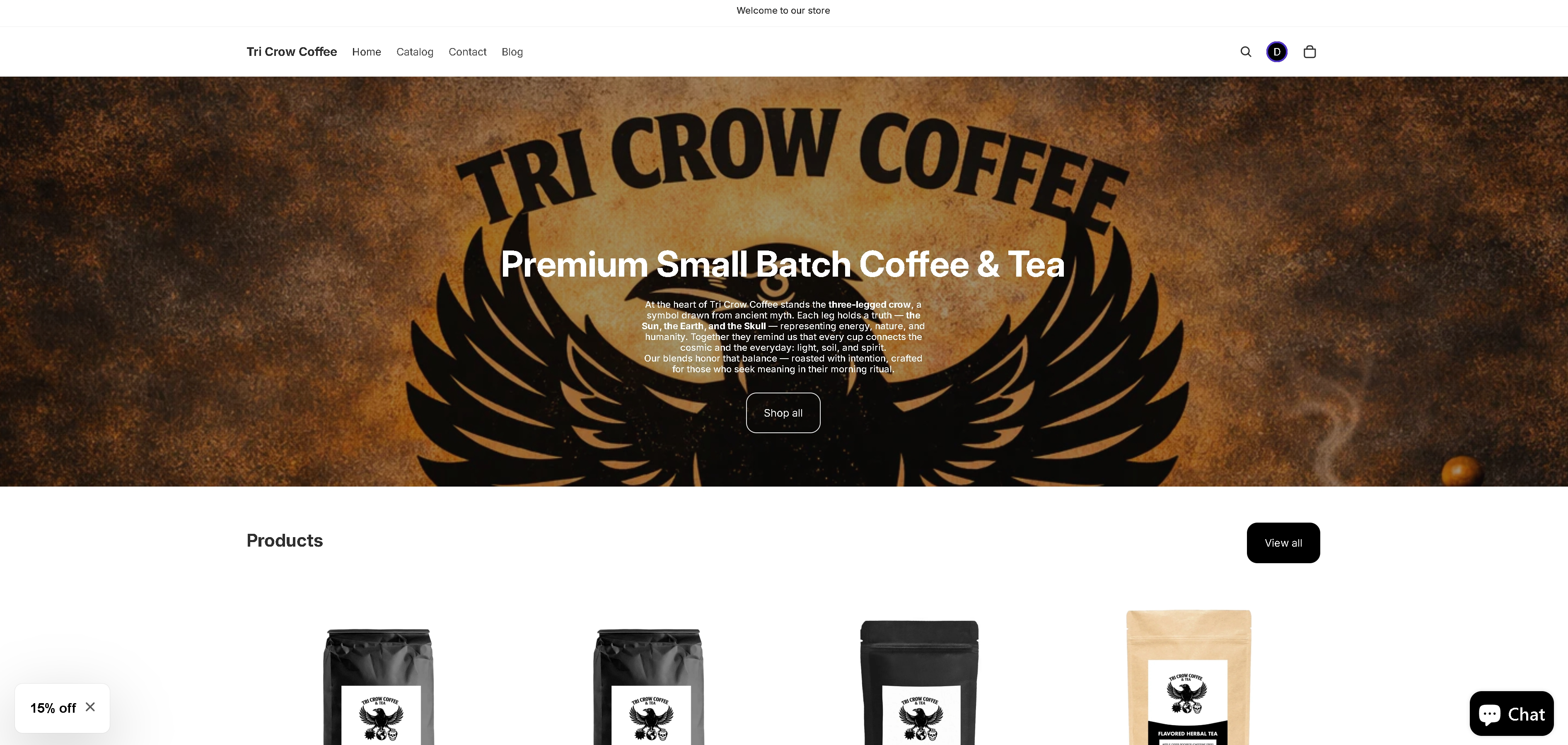
If you want to taste the range before committing to a full bag, the Best Sellers Sample Pack covers six varieties in 2-oz portions — the exact low-commitment testing format the launch section recommends. Tri Crow also carries tea blends built on the same principles: the Apple Cider Rooibos and Earl Grey show how signature blend logic translates directly to herbal and black tea.
- Six coffee varieties in one pack for side-by-side comparison
- Guided tasting notes included so you can practice the cupping checklist
- Eco-friendly packaging, direct-to-consumer shipping
Browse the full lineup at Tri Crow Coffee and order the sample pack to start tasting.
Useful sources
- Creating a signature blend for your coffee shop — Perfect Daily Grind: The most practical overview of why roasters build signature blends and how to align a recipe with a shop’s brand identity.
- What is a blend of coffee? — Royal Coffee: A roaster-focused guide to blend construction, post-roast blending technique, and component roles.
- Coffee origins: single origin vs blends — Pulled Coffee: Clear explanation of when to choose a blend over single origin, with practical menu-placement guidance.
- How to Create the Perfect Coffee Blend — Swab Dealers: Wholesale roaster guide covering component ratios, recipe frameworks, and the three-role blending structure.
- A Roaster’s Guide to Creating a Private Coffee Blend — Bridge Coffee Roasters: Practical walkthrough for private-label and small-batch roasters on post-roast blending and consistency methods.
FAQ
What does “signature blend” mean in coffee?
A signature blend is a uniquely crafted recipe developed by a roaster or shop to express their brand’s personality and deliver a consistent, repeatable flavor profile across every batch.
How is a blend different from a single-origin coffee?
A blend combines beans from two or more origins to achieve balance and consistency; a single origin comes from one defined place and highlights that location’s seasonal character and terroir.
Which blend of coffee is generally considered the best?
There is no single answer — the best blend is the one designed for your brew method and flavor preference. For espresso and milk drinks, a balanced blend with a Brazilian or Colombian base tends to perform well; for drip, a lighter Central American blend often works best.
How many cupping rounds does it take to finalize a signature blend recipe?
Most roasters need three to five cupping rounds to lock a recipe, changing one variable per round and scoring aroma, body, acidity, sweetness, and finish at each session.
Can signature blend principles apply to tea as well as coffee?
Yes. The same logic of defined ratios, repeatable sourcing, and brand-aligned flavor targets applies directly to tea. Tri Crow Coffee’s English Breakfast Tea and Apple Cider Rooibos are built on the same small-batch, intentional-blend approach as its coffee offerings.