
Flavored coffee is roasted coffee with a taste added after roasting, usually through a flavor oil coating, an extract, or a syrup, rather than a flavor the bean grew with naturally. That’s the whole distinction: origin and roast level create their own flavor notes, while “flavored coffee” means something was applied on top of that. If you grind your own beans at home, buy pre-ground flavored coffee when possible or add flavoring after grinding, since the coating can gum up burr grinders over time.
TL;DR:
- Flavored coffee typically involves coating beans with flavor oils while still warm to enhance absorption, especially on medium and dark roasts with porous surfaces.
- Encapsulated or powdered flavor additives are less oily but may result in less potent or more uneven flavor profiles compared to oil coatings.
- The main aroma chemicals in flavored coffee include furans, pyrazines, vanillin, and maltol, which must be balanced carefully to avoid a syrupy taste.
- Label terms like natural and artificial flavor differ mainly in sourcing and cost, but both can be chemically similar; check the ingredient list for transparency.
- Home flavoring options include syrups, extracts, and spices, with brewing method choice affecting intensity; start with half the recommended dosage.
Table of Contents
- How Is Flavored Coffee Made? Roaster Methods Explained
- What Aroma Chemicals Give Flavored Coffee Its Taste?
- Natural vs. Artificial Flavored Coffee: What the Label Means
- Which Flavors Pair Best With Which Roast Levels?
- How Do You Make Flavored Coffee at Home?
- Buying, Grinding, and Storing Flavored Coffee
- The Case for Tasting Before You Commit
- Try Tri Crow Coffee’s Flavored Lineup Before You Commit to a Bag
- Sources
- FAQ
How Is Flavored Coffee Made? Roaster Methods Explained
Most flavored coffee starts with a coating process. Roasters apply concentrated flavor oils to beans while they’re still warm from roasting, then tumble them in a drum to spread the oil evenly across every bean’s surface, according to a breakdown from Tasting Table. The warmth matters. Warm beans have slightly open pores, so the oil actually absorbs into the surface instead of just sitting on top and flaking off in the bag.
Some producers skip the oil-coating step entirely and go with encapsulated or powdered flavor blends mixed directly into ground coffee, which distributes flavor differently and often tastes less oily but also less potent cup to cup. A smaller category flavors the coffee after brewing, through flavored creamers, syrups stirred into the finished cup, or flavored pods designed to release flavoring during extraction. These post-brew methods tend to taste more separate from the coffee itself, since the flavor never touched the bean.
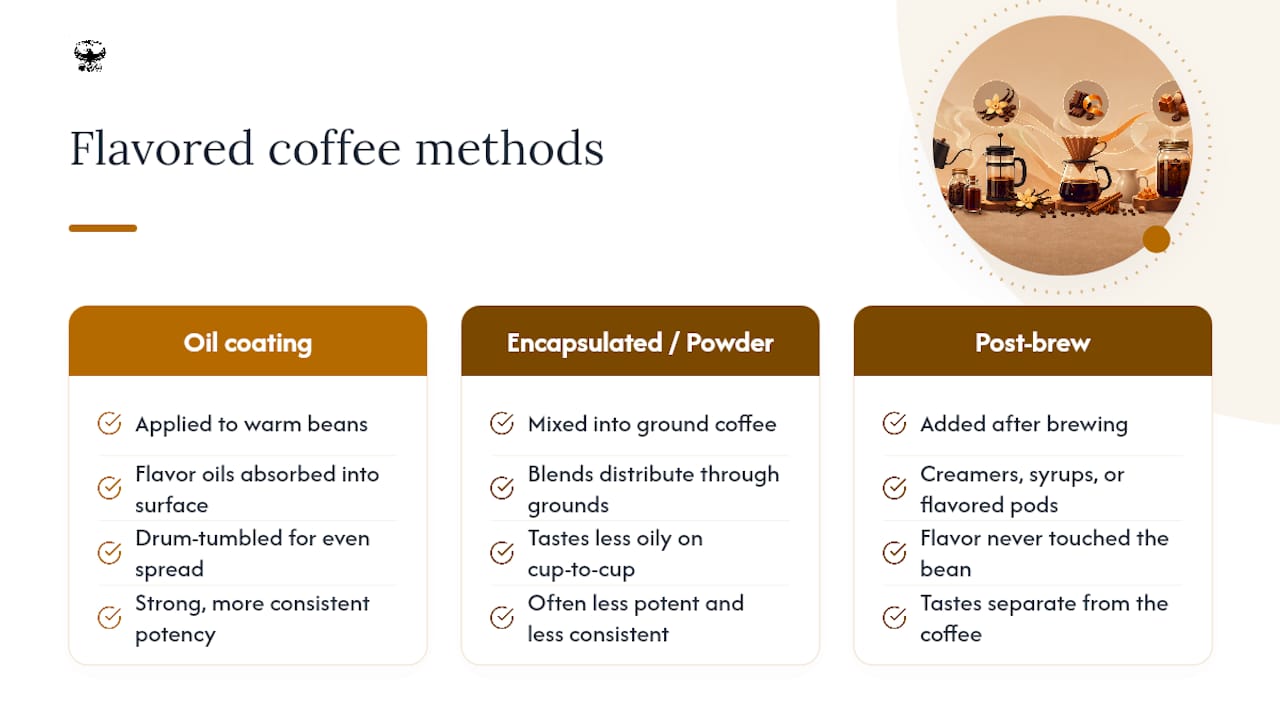
Roast level changes how well any of this works. Darker roasts have more porous, oilier surfaces that grab flavor oil aggressively, which is why so many flavored coffees on shelves are medium to dark roast. Some roasters intentionally pull the roast slightly short of full development for flavored batches specifically to preserve that porosity and improve oil absorption, an industry technique rather than a universal rule. A lighter roast can technically be flavored too, but the denser bean structure often means the flavor sits closer to the surface and fades faster.
What Aroma Chemicals Give Flavored Coffee Its Taste?
Flavor chemists work from a fairly compact toolkit. A flavor-chemistry reference from Flavorist identifies roughly ten “must-have” aroma compounds that account for most of what coffee tastes like, alongside dozens of supporting chemicals used for finer tuning. Furans and pyrazines contribute roasted, nutty notes. Maltol and ethyl maltol create that cotton-candy sweetness you taste in caramel and vanilla blends. Vanillin delivers straightforward vanilla character, guaiacols add smoky or spicy depth, and trace sulfur compounds round out a roasted, almost meaty complexity that keeps a cup from tasting one-dimensional.
The balance matters more than any single compound. A small amount of sulfur or guaiacol keeps a flavored coffee tasting like coffee first. Push those levels too far, or lean too hard on maltol and vanillin, and the cup starts tasting like flavored syrup poured over hot water instead of a coffee with a flavor accent. That’s the tightrope every flavorist walks.
Natural vs. Artificial Flavored Coffee: What the Label Means
“Natural flavor” on a coffee bag means the flavoring compound was originally derived from a plant, animal, or other natural source, even if it was heavily processed in a lab afterward. “Artificial flavor” means the compound was built synthetically from scratch, often to mimic the exact same molecule found in nature. Chemically, the two can be identical or nearly so. The difference is sourcing and, often, cost and consistency.
Commercial flavor coatings typically get diluted in a carrier before application. Common carriers include water, food-grade alcohol, propylene glycol, and fractionated vegetable oils, and modern flavor systems are formulated specifically to balance shelf stability with a glossy, appealing finish on the bean, according to a manufacturing overview from MadeHow. Propylene glycol in particular gets chosen because it holds flavor compounds in suspension well and resists evaporation.
For buying, check the roast date first, since flavored oils degrade faster than the bean itself. Look for ingredient transparency on the label, and follow any suggested use window the roaster provides rather than assuming flavored coffee keeps as long as plain roasted beans.
Which Flavors Pair Best With Which Roast Levels?
Flavor families break down into a handful of recognizable groups, and each one tends to have a natural home on the roast spectrum. Shared aromatic compounds explain why certain combinations taste right together instead of fighting each other, a pattern confirmed by practical recipe testing from ThirstyBear. Vanilla and caramel share sweetness compounds, which is why they’re almost always paired rather than sold separately.
- Vanilla and caramel: creamy, sweet, works across all roast levels but shines on medium roast.
- Hazelnut and almond: nutty, rounds out the natural toastiness of medium to dark roasts.
- Chocolate and cocoa: bold and heavy, pairs almost exclusively with dark roast for a dessert-like cup.
- Citrus and zest: bright and delicate, needs a light roast or it gets buried under roast bitterness.
- Warm spices like cinnamon and clove: work on medium roast, especially in fall-style blends.
- Floral notes: the most fragile category, almost always paired with light roast single origins.
For black coffee, lighter flavor applications let the underlying bean character still come through. Milk-based drinks can handle much stronger flavoring since dairy or milk alternatives mute sweetness and intensity anyway.
How Do You Make Flavored Coffee at Home?
Three methods cover almost everything you’d want to do at home, and each one fits a different drink and skill level, per practical testing from ThirstyBear.
- Homemade syrup. Simmer equal parts sugar and water until dissolved, add your flavoring agent (vanilla bean, cinnamon stick, cocoa powder) during the simmer, then strain and cool. Syrups are the most versatile option, especially for iced coffee and milk-based drinks, since they dissolve instantly into cold liquid without leaving grit.
- Extracts. Add a few drops of a concentrated extract, like almond or peppermint, directly into the finished cup or the grounds before brewing. Extracts work fastest and add almost no sugar, making them the better choice for hot drip coffee and espresso where you don’t want to dilute the shot.
- Direct spices or powders. Mix cinnamon, nutmeg, or cocoa powder straight into the dry grounds before brewing, or steep whole spices alongside the coffee. This method has zero prep time and works especially well in a French press, where the metal filter lets more of the spice oil and coffee oil through for a fuller-bodied cup.
Brewer choice changes the outcome more than people expect. A pour-over’s paper filter traps oils and gives a cleaner, lighter flavored cup, while French press and espresso let more oil and spice carry through for intensity. Use filtered water, since chlorine and mineral off-tastes can mute the added aroma before it ever reaches your tongue.
Pro Tip: Start any new flavor at half the recommended dose. It’s much easier to add more extract or syrup than to fix an over-flavored pot.
Buying, Grinding, and Storing Flavored Coffee
Check the roast date before anything else. Flavor oils break down faster than the coffee bean underneath, so a bag that’s been sitting on a shelf for months loses its flavored edge well before the coffee itself goes stale. Look at the ingredient list for what carrier or solvent was used, and follow any grind recommendation the roaster suggests for that specific flavor.
Grinders are the real casualty of flavored beans. The oil coating that makes flavored beans smell so good on the shelf is the same oil that can clog burrs and shorten a grinder’s working life, which is why Tasting Table suggests buying flavored coffee pre-ground or applying flavor after grinding whenever possible.
Store flavored coffee in a cool, dark, airtight container, away from the stove or any heat source. Plan to use it within a few weeks for peak flavor, and freeze portions in sealed bags if you need it to last longer.
The Case for Tasting Before You Commit
Flavored coffee rewards curiosity more than caution. The compounds behind vanilla, hazelnut, and chocolate profiles aren’t complicated once you know what to look for, but the only real way to learn your own preference is by tasting several side by side instead of guessing from a label. Small-batch roasting matters here specifically because flavor oil quality and coating consistency vary enormously between producers, and a rushed batch shows up immediately as an artificial, one-note cup. My advice: pick one familiar flavor first, brew it two different ways before judging it, and only move to bolder blends once you know how your own setup handles oil and intensity.
— David P.
Try Tri Crow Coffee’s Flavored Lineup Before You Commit to a Bag
Guessing which flavor you’ll like from a shelf label is how most people end up with an unopened bag of something too sweet. Small-batch roasting means every flavored coating gets applied and checked in limited quantities, which helps keep the coffee character intact instead of drowning it in syrup notes.
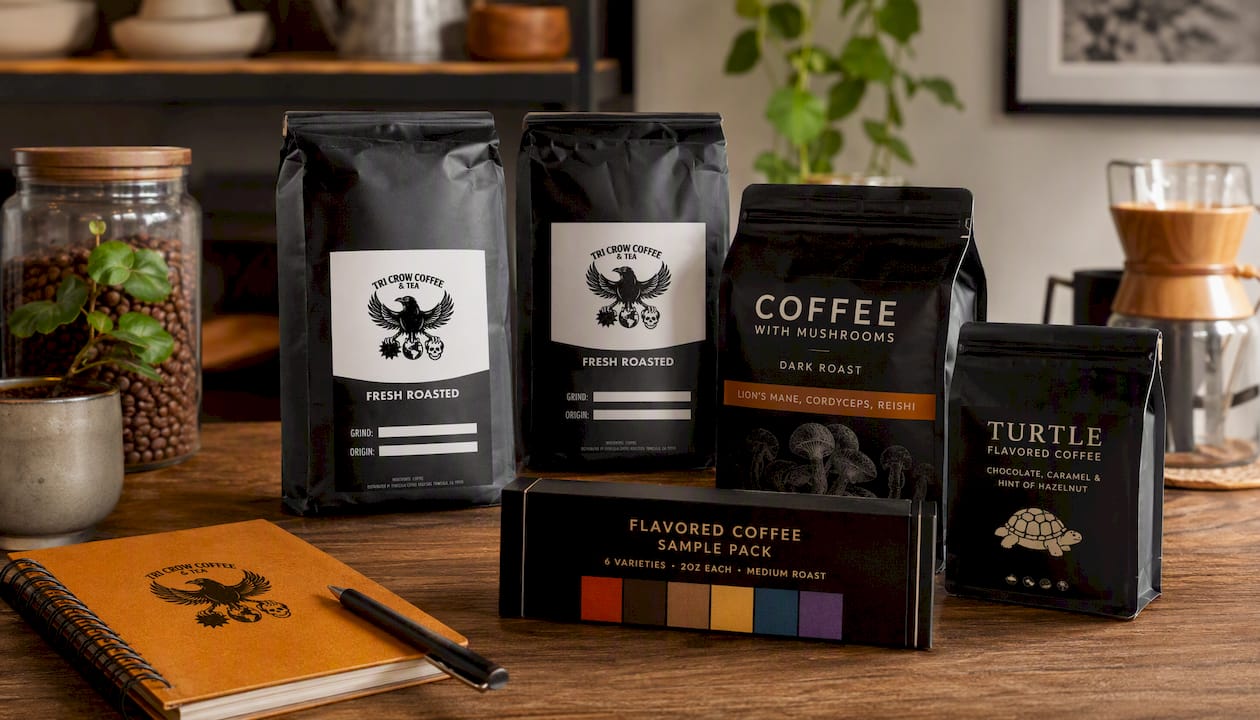
The Flavored Coffee Sample Pack gives you six 2oz medium roast varieties, enough to actually compare profiles instead of committing to a full bag on a guess. If chocolate, caramel, and hazelnut sound like your kind of cup, the Turtle flavored coffee is a solid single flavor to start with. For something outside the usual flavor families entirely, the Coffee with Mushrooms, a dark roast blended with lion’s mane, cordyceps, and reishi, is worth trying if you want function alongside flavor. Browse the full flavored coffee collection and start with whichever profile sounds most like your everyday cup.
Sources
- How Roasters Add Vanilla, Hazelnut, And Other Flavors To Coffee Beans — Tasting Table
- Flavor compounds and methods for formulating coffee flavors — Flavorist
- How flavored coffee bean is made — MadeHow
- 10 Homemade Flavored Coffee Recipes — ThirstyBear
FAQ
What Is Flavored Coffee, Exactly?
Flavored coffee is roasted coffee that has flavor added after roasting, typically through an oil coating, extract, or syrup, rather than a flavor the bean developed naturally through growing conditions or roast level. The added flavor sits on or in the bean, while origin and roast character come from the coffee itself.
How Is Flavored Coffee Different From Regular Coffee?
Regular coffee gets its taste entirely from origin, processing, and roast level, while flavored coffee has an outside flavor applied on top of that base. Both can use the same beans, so the difference is the coating or infusion step, not the coffee itself.
Is Natural Flavoring Better Than Artificial Flavoring?
Neither is automatically better since both can taste similar and use overlapping compounds; the real difference is sourcing, cost, and sometimes shelf stability. Checking the ingredient list and roast date tells you more about quality than the natural-versus-artificial label alone.
Can I Make Flavored Coffee at Home Without Special Equipment?
Yes. A simple syrup, a few drops of extract, or spices mixed directly into the grounds cover most home flavoring needs without any special tools, according to ThirstyBear’s recipe testing. A French press or pour-over is all you need to brew any of these methods.
Does Flavored Coffee Cost More Than Regular Coffee?
Flavored coffee often costs somewhat more due to the added flavoring step and ingredients, though pricing varies by roaster and flavor complexity. Tri Crow Coffee’s current flavored coffee pricing is listed on the collection page.