
“Natural” and “artificial” on a coffee bag describe where the flavor compound came from, not how safe or good it tastes, according to the FDA’s flavoring rules. A natural vanilla note and an artificial one can be built from nearly identical molecules. What actually separates a great flavored coffee from a mediocre one is roast pairing, dosing, and transparency, not the word printed on the front. David at Tri Crow Coffee sees this confusion constantly from customers who assume “natural” automatically means better.
Before buying a bag, check three things:
- Exact label wording. “Naturally flavored” and “artificially flavored” are legally distinct terms, but neither guarantees quality.
- Roast level. Medium roasts tend to carry added flavor better than very dark roasts, which mask it.
- Ingredient transparency. Brands willing to describe their process, not just the flavor name, tend to be more careful about dosing and sourcing.
Key Takeaways
The natural versus artificial distinction in coffee flavor is a sourcing rule under FDA regulation, not a reliable signal of taste quality or safety.
| Point | Details |
|---|---|
| Labels reflect source, not quality | “Natural” means the flavor came from a listed plant or animal source; “artificial” means it didn’t, even if the molecule is identical. |
| Roast level shapes flavor perception | Medium roasts generally carry added flavor better than dark roasts, which tend to mask it. |
| Safety oversight exists but has limits | Both flavor types typically fall under FDA GRAS status, though proprietary formulas can hide allergen sources. |
| Equipment care matters | Flavored whole beans leave oil residue that can affect grinder performance over time; pre-ground flavored coffee avoids the issue. |
| Small-batch roasting allows tighter control | Tri Crow Coffee pairs flavor dosing with medium roasts like its Medium Roast Cold Brew through small-batch cupping rather than mass-scale coating. |
Table of Contents
- Natural vs Artificial Coffee Flavor: The FDA Definitions
- How Coffee Flavors Are Actually Made
- Does Roast Level Change How Flavor Tastes?
- Is Artificially Flavored Coffee Safe to Drink?
- How to Choose a Flavored Coffee Worth Buying
- How Tri Crow Coffee Handles Flavor and Roast Pairing
- What This Guide Gets Right That Most Advice Misses
- Where to Find Flavor Done Right
- Sources
- FAQ
Natural vs Artificial Coffee Flavor: The FDA Definitions
The FDA’s 21 CFR § 101.22 draws the line based on origin, not chemistry. A natural flavor has to come from a spice, fruit, vegetable, herb, bark, root, or similar source, extracted through distillation, roasting, enzymolysis, or fermentation. An artificial flavor is any flavoring substance not derived from those listed natural sources, even if it produces the exact same taste and aroma.
That last part surprises most people.
Two flavor compounds can be chemically indistinguishable from each other. One gets labeled “natural” because it was pulled from a plant. The other gets labeled “artificial” because a chemist built it from scratch in a lab, according to Scientific American’s breakdown of the regulation.
The FDA has also acknowledged ongoing confusion around the word “natural” itself, and its guidance on the term stops short of a strict, updated definition. In practice, you’ll see labeling like this on flavored coffee bags:
- “Natural flavor added” or “naturally flavored” — sourced from the plant or material it’s meant to taste like, or a related natural source.
- “Artificially flavored” or “artificial and natural flavors” — includes at least one lab-synthesized compound.
- “Flavored with natural [X] flavor” — a narrower claim, usually meaning the flavor derives specifically from that named ingredient.
None of these terms tell you how much flavor oil was used, how it was applied, or whether it will still taste good in three months.
How Coffee Flavors Are Actually Made
Natural coffee flavors usually start with real plant material. Producers extract aromatic compounds through steam distillation, cold pressing, or solvent extraction, pulling essential oils out of vanilla pods, hazelnuts, cinnamon bark, or citrus peel. Some natural flavor also comes from the roasting process itself, since roasting generates aromatic compounds through the Maillard reaction and caramelization, which is part of why naturally processed coffee already carries complex flavor notes before anything gets added.
Artificial flavors work differently. Flavor chemists identify the specific aroma molecules responsible for a taste (vanillin for vanilla, for instance) and synthesize them directly, often blending dozens of compounds to create a coffee nicotine pouches flavour profile like caramel or hazelnut. This approach is cheaper and more consistent batch to batch than sourcing natural extracts, which is why it dominates mass-market flavored coffee.
Once the flavor exists as a concentrated oil, roasters apply it to the beans:
- Roast the beans to the target profile, usually medium, so the bean structure is porous enough to absorb flavor.
- Apply flavor oil while beans are still warm, using pressurized spray systems or tumbling drums to coat evenly, a method detailed by Tasting Table.
- Tumble continuously to prevent “hot spots” where oil pools unevenly and over-saturates some beans while leaving others bare.
- Rest and package quickly to lock in aroma before the volatile compounds degrade.
Some roasters skip added flavor oils entirely and instead blend real ingredients like dried fruit or actual cinnamon into the grounds, or infuse cold brew concentrate with real botanicals. It’s slower and less shelf-stable, but it avoids the coating step altogether.
Pro Tip: Rub a flavored bean between your fingers. If it leaves a noticeable oily residue and a strong chemical smell before you even brew it, the flavor was likely dosed heavy to compensate for a lower-quality bean underneath.
Does Roast Level Change How Flavor Tastes?
Roast level determines how much room is left for added flavor to register. Dark and Italian roasts develop such strong roast-driven bitterness and smoky notes that delicate flavor oils get buried, which is why most flavored coffee on the market uses medium roasts as the base. A medium roast preserves enough of the bean’s inherent sweetness and acidity to let a hazelnut or caramel note sit on top of the coffee’s own character instead of masking it.
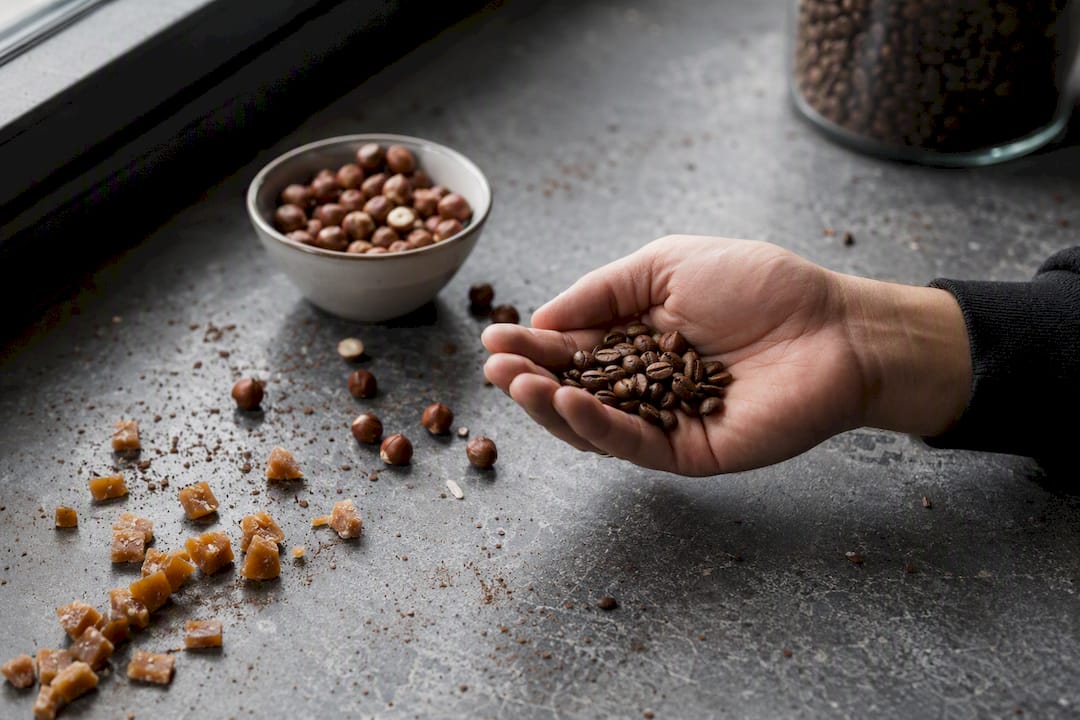
Origin matters here too. A naturally sweet, low-acid bean integrates flavoring more smoothly than a sharp, high-acid one, where added flavor can taste bolted on rather than blended in.
A few sensory cues separate well-integrated flavor from a heavy-handed coating:
- Balanced aroma smells like coffee first, flavor second, not the reverse.
- A lingering aftertaste, rather than a sharp chemical top-note that fades in seconds, usually signals better-quality flavor oil and dosing.
- Consistent color across beans suggests even tumbling; blotchy or shiny patches suggest uneven application.
One practical downside of any flavored whole bean, natural or artificial: the oil coating leaves residue in your grinder. Burr grinders especially can gum up over time, dulling grind consistency and eventually affecting extraction. Running a handful of plain rice or a grinder-cleaning tablet through the burrs every few weeks keeps things running clean if you drink flavored coffee regularly.
Is Artificially Flavored Coffee Safe to Drink?
Both natural and artificial flavors used in coffee generally fall under the FDA’s Generally Recognized as Safe (GRAS) framework, meaning they’re considered safe at the levels typically used in food and beverages. The GRAS designation applies to the flavoring substance itself, not to the finished flavored coffee product as a whole, and it doesn’t require the manufacturer to disclose every individual compound in a proprietary blend.
That’s the real gap for allergy-prone drinkers.
63% of Americans drink coffee every day, according to consumer research from Lose It!, which puts a lot of people in contact with flavored blends regularly. Because flavor formulas are often trade secrets, a label might list simply “natural and artificial flavors” without naming the tree nuts, dairy derivatives, or soy lecithin sometimes used as carriers.
A few practical rules:
- If you have a nut, dairy, or soy allergy, contact the manufacturer directly for full ingredient disclosure rather than relying on the front label.
- If a product won’t provide that information, skip it. That’s a legitimate reason to avoid a flavored coffee entirely.
- Flavor oils can also shorten shelf life. Added oils are more prone to oxidation than the coffee’s own natural oils, so flavored beans go stale and can turn rancid faster than unflavored ones, especially if stored warm or in direct light.
How to Choose a Flavored Coffee Worth Buying
Start with the label, but don’t stop there. Look for exact wording (“naturally flavored” versus “flavored with natural and artificial flavors”), check the roast level, and see whether the brand describes its process anywhere beyond the bag.
- Read past the flavor name. “Natural vanilla flavor” is narrower and more traceable than a generic “natural flavor.”
- Match roast to flavor. Medium roasts generally showcase added flavor best; reach for dark roast only if you want the roast itself to dominate.
- Check for real-ingredient signs. Visible bits of dried fruit, spice flecks, or a listed infusion method suggest less reliance on synthetic top-notes.
- Smell before you brew. A jarring, one-note chemical smell straight from the bag is a warning sign.
- Buy pre-ground if you’re worried about your grinder. Whole flavored beans leave more oil residue than pre-ground versions measured for a single pour.
Run a side-by-side cupping if you’re serious about comparing options: brew the same bean plain and flavored, then note how long the aroma lingers and whether the aftertaste turns sharp or stays smooth. That single test tells you more about quality than any label claim.
Pro Tip: If you’re weighing whether “natural or synthetic” actually changes the cup, brew a naturally processed coffee like a Tanzania medium-light single origin next to a flavored blend. You’ll taste how much natural sweetness the process itself contributes before any flavor oil enters the picture.
How Tri Crow Coffee Handles Flavor and Roast Pairing
David has written about how natural-process methods shape flavor before anything gets added, and that groundwork informs how Tri Crow approaches flavored batches. Small-batch roasting allows for cupping and micro-batch testing of flavor oil dosing against specific roast profiles, a level of control that’s harder to maintain at mass-production scale.
A few things that show up in that process:
- Medium roasts get prioritized as the base for flavored offerings, since they hold onto bean character better than darker roasts.
- Each batch gets tasted before release, not just measured by weight of oil applied.
- Products like the Medium Roast Cold Brew, with its chocolate and floral notes, demonstrate how roast choice and natural sweetness can carry flavor without heavy synthetic dosing.
What This Guide Gets Right That Most Advice Misses
Most coverage of natural versus artificial flavor treats it as a health scare story: synthetic bad, natural good, case closed. That framing doesn’t hold up against what the FDA’s own rules actually say. The distinction is about sourcing, not safety, and a “natural flavor” label tells you almost nothing about dosing, quality, or how the coffee will actually taste in your cup.
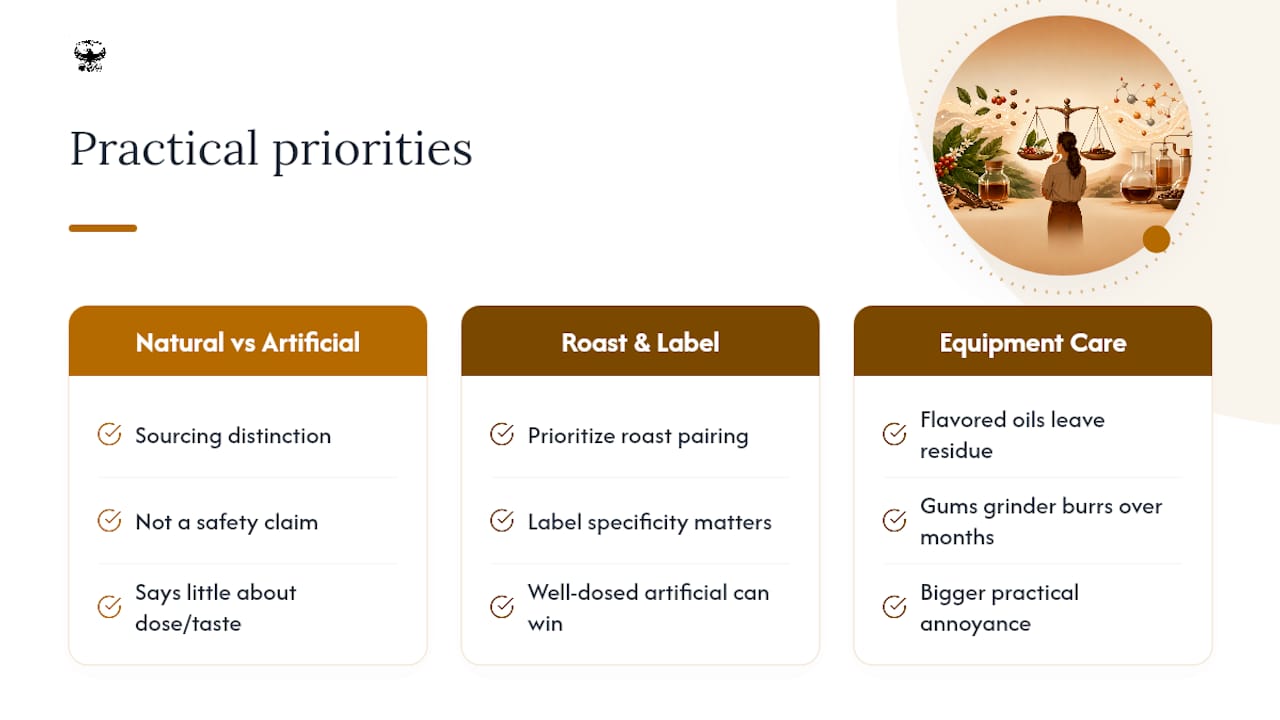
Where conventional advice really falls short is equipment care. Almost nobody warns buyers that flavored whole beans leave oil residue that gums up grinder burrs over months of regular use. That’s a bigger practical annoyance for most home coffee drinkers than any theoretical difference between a lab-synthesized vanillin molecule and one pulled from a vanilla pod.
If you take one thing from this, prioritize roast pairing and label specificity over the natural/artificial binary itself. A well-dosed artificial hazelnut note on a properly matched medium roast will beat a heavy-handed natural extract slapped onto an over-roasted bean every time. Read past the buzzword. Judge the cup.
— David
Where to Find Flavor Done Right
If you’ve read this far, you already know that a flavor label tells you less than a well-roasted, well-dosed cup does. Tri Crow Coffee builds its flavored and single-origin offerings around that principle: small batches, medium roasts chosen specifically to carry flavor cleanly, and no reliance on heavy-handed oil dosing to cover up a mediocre bean.
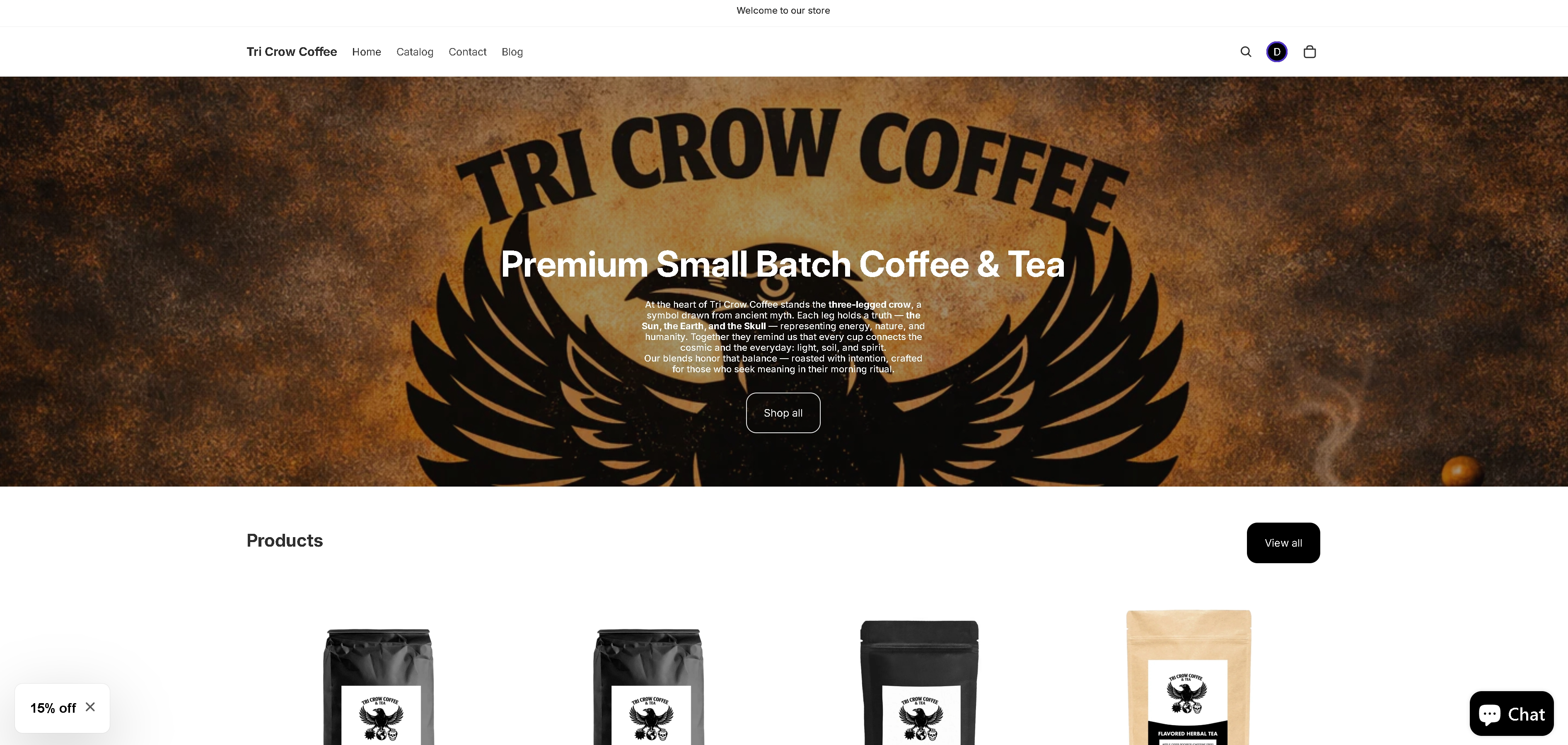
Start with something that showcases natural sweetness without any added flavor at all, like the Tanzania medium-light single origin, or compare several roast styles at once with the Best Sellers Sample Pack. If you brew for a household that splits between coffee and tea, the English Breakfast loose leaf and Earl Grey with bergamot and blue cornflowers get roasted and blended with the same small-batch attention. Order a sample pack this week and taste the difference roast pairing makes for yourself.
Sources
- 21 CFR § 101.22 - Foods; labeling of spices, flavorings, colorings and chemical preservatives. | LII / e-CFR
- What Is the Difference Between Natural and Artificial Flavors? | Scientific American
- How Roasters Add Vanilla, Hazelnut, And Other Flavors To Coffee Beans | Tasting Table
FAQ
Is Artificially Flavored Coffee Healthy?
Artificial flavors used in coffee typically fall under FDA GRAS status, meaning they’re considered safe at normal use levels, but “healthy” depends more on added sugar and creamer than the flavor source itself.
Should I Avoid Artificial Flavors?
Only if you have a specific allergy or sensitivity concern, since proprietary flavor formulas don’t always disclose every compound; otherwise, artificial flavors aren’t inherently riskier than natural ones.
Is Natural or Artificial Flavor Better?
Neither is automatically better. The FDA’s distinction is based on source, not quality, and natural and synthetic versions of the same flavor compound can taste and behave identically in your cup.
Is Folgers Even Real Coffee?
Folgers is made from real roasted coffee beans, though mass-market instant and pre-ground blends often use lower-grade robusta beans and heavier processing than small-batch roasted coffee, which affects flavor more than authenticity.