
Coffee pods can be compostable, but most only qualify for industrial facilities, not your backyard bin. Look for a BPI, ASTM D6400/D6868, or TÜV OK Compost HOME logo on the package before you buy. If your area has no industrial composting access, empty the grounds into your own compost pile and route the shell to a take-back program or, as a last resort, the trash.
TL;DR:
- Most compostable coffee pods only qualify for industrial composting and will not break down properly in backyard piles unless explicitly labeled for home use.
- Certification labels like BPI, ASTM D6400/D6868, or TÜV OK Compost HOME indicate the conditions under which a pod will biodegrade, but many products meet only industrial standards.
- Proper disposal involves emptying coffee grounds into a compost pile and checking if the pod’s shell is accepted by local waste programs or using manufacturer take-back options whenever available.
- Reusable capsules and aluminum pods generally have a lower environmental impact over their lifecycle than single-use compostable pods, especially if industrial composting access is limited.
- Time for a certified pod to fully decompose ranges from about 46 days in industrial composting to over a year outdoors, depending on environment conditions.
Table of Contents
- Are Coffee Pods Compostable, and What Does That Actually Mean?
- Industrial Vs Home Composting: Why the Difference Matters
- How to Verify a Pod’s Compostability Before You Buy
- What to Do When Your System Won’t Accept Compostable Pods
- Reusable, Aluminum, or Compostable: Which Pod Actually Wins?
- How Long Does It Actually Take for a Coffee Pod to Compost?
- Do Compostable Pods Cost More Than Regular Ones?
- A Roaster’s View on Pods and Practical Composting
- Tri Crow Coffee Pods and Sample Packs
- Where to Verify Compostability Claims Yourself
- Sources
- FAQ
Are Coffee Pods Compostable, and What Does That Actually Mean?
“Compostable” isn’t a vibe, it’s a certification. A product earns that label only after independent testing confirms it breaks down within a defined timeframe under controlled conditions, typically six to twelve months. “Biodegradable” carries no such guarantee. Anything organic technically biodegrades eventually. A plastic fork left in a landfill for 40 years still qualifies as “biodegradable” by the loosest reading of the word, which is exactly why marketers love it and scientists don’t.
In the U.S., three credentials actually mean something on a coffee pod:
- BPI certification — the Biodegradable Products Institute maintains a public registry of products verified against ASTM standards.
- ASTM D6400 or D6868 — the technical standards that define industrial compostability for plastics and packaging.
- TÜV OK Compost HOME — a rarer mark confirming a product breaks down in a typical backyard pile, not just a commercial facility.
Most pods carrying an eco-label meet only the industrial standard. That distinction determines whether the pod belongs in your backyard bin or nowhere near it, so read the fine print before you toss anything in.
Industrial Vs Home Composting: Why the Difference Matters
Industrial composting facilities run hot, often above 130°F, and hold that temperature for weeks under monitored moisture and turning schedules. Backyard piles rarely get that consistent. A pod certified only for industrial breakdown can sit in a home compost heap for years without fully disappearing.
The science backs this up under the right conditions. A peer-reviewed trial at the University of Tennessee found certified compostable pods fully degraded within the expected timeframe of an industrial composting setup.
The catch: access to that setup isn’t guaranteed. Composting operations vary by method, whether windrow, in-vessel, or aerated static pile, and each runs on a different processing window. A facility with a shorter cycle may screen out and discard packaging that a slower facility would fully break down.
Municipal programs complicate things further:
- Many recycling and composting operators flag pods as too small for automated sorting equipment.
- Regional scans, including reporting from Ontario, found many local systems currently reject compostable pods because they don’t break down within the facility’s timeframe.
- A “compostable” label does not guarantee your city’s green bin program will accept it.
Check your municipal waste page before tossing a certified pod in curbside organics. Guessing wrong contaminates the whole batch.
How to Verify a Pod’s Compostability Before You Buy
A logo on the front of the bag tells you almost nothing by itself. Here’s the actual verification routine worth using at the shelf or checkout screen:
- Find the certifier’s mark and read what it specifies. A BPI or OK Compost logo that says “industrial” or “commercial” means backyard composting won’t work. One that says “HOME” means it will.
- Check every component, not just the pod body. The outer shell might be certified while the lid film, foil ring, or filter paper is not. If even one part isn’t listed as compostable, the whole unit likely isn’t either.
- Cross-reference the certifier’s database. BPI’s product registry lets you search a brand name directly rather than trusting the packaging copy.
- Treat “biodegradable” or “eco-friendly” alone as a red flag, not a green one. A Greenpeace investigation into packaging claims found vague eco-language routinely misleads shoppers without any third-party backing. If the label offers no certifier name, assume unverified until you find one.
This four-step check takes about ninety seconds and saves you from a pod that sounds green but composts nowhere.
What to Do When Your System Won’t Accept Compostable Pods
Plenty of readers will do everything right and still hit a wall: no industrial facility nearby, no municipal acceptance, no way to get a certified pod into a compost stream. That’s not a dead end, it’s just a different set of steps.
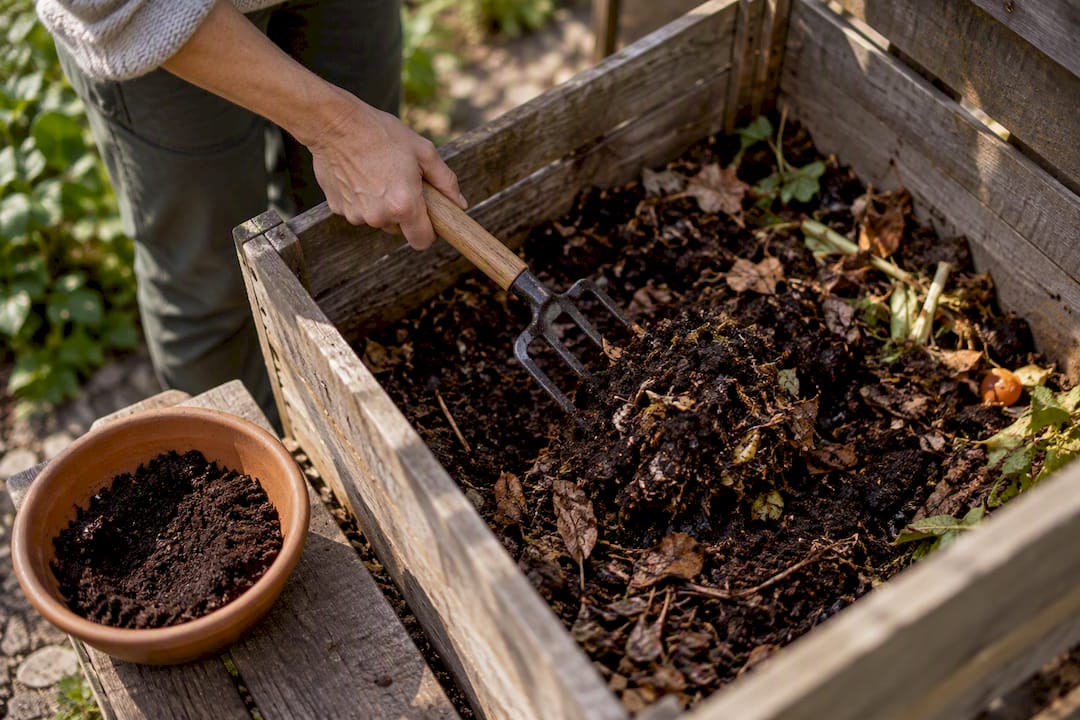
- Empty the grounds first, always. Used coffee grounds are reliably compostable on their own, no certification required, and adding them to a backyard pile or worm bin reduces the methane they’d otherwise generate in a landfill.
- Check for a manufacturer take-back or mail-back program. Several coffee brands run pod-specific recycling programs that accept used shells by mail, separate from municipal recycling entirely.
- Never force a compostable pod into curbside organics your city doesn’t accept. One rejected batch of packaging can contaminate an entire load of otherwise-compostable material, and processors sometimes landfill the whole thing rather than sort it.
- If nothing else works, empty the grounds and trash the shell. That’s still better than sending both grounds and shell to landfill together.
Pro Tip: Keep a small container by your coffee maker just for used pods. Emptying grounds becomes a five-second habit instead of a chore you keep postponing, and the methane reduction from composting grounds is real even if the shell ends up in the trash.
Reusable, Aluminum, or Compostable: Which Pod Actually Wins?
Compostable single-use pods sound like the obvious environmental choice, but lifecycle numbers tell a messier story.
Reusable, refillable capsules tend to come out ahead across full lifecycle assessments, simply because the manufacturing footprint of one durable pod gets spread across hundreds of brews instead of one. Aluminum pods can be recycled efficiently, but almost never through curbside programs. They need a brand-run take-back system to actually get recycled rather than landfilled.
That leaves compostable pods in an odd middle spot: genuinely lower-impact only when they reach a facility that will actually process them. Without that access, a compostable pod that ends up in a landfill offers no real advantage over a standard one; it just sits there looking different.
- Reusable capsules: best lifecycle numbers, requires upfront investment in a refillable unit.
- Aluminum: recyclable in theory, dependent on brand take-back programs.
- Compostable: strong option if an accepting industrial stream exists nearby; otherwise, empty the grounds and treat the shell like standard waste.
If you’re unsure which route fits your kitchen setup, a breakdown of sustainable coffee formats can help you weigh convenience against actual environmental payoff.
How Long Does It Actually Take for a Coffee Pod to Compost?
Timeframes swing wildly depending on where the pod ends up. Under industrial composting conditions, a certified pod can fully degrade in about 46 days, driven by sustained heat above 130°F, controlled moisture, and regular turning that keeps microbial activity high.
Drop that same pod in a backyard pile instead, and the math changes completely. Home compost setups rarely sustain industrial temperatures, so a pod certified only for commercial facilities may sit largely intact for a year or longer, if it breaks down at all. Even pods certified for home use, under the rarer OK Compost HOME standard, generally take longer outdoors than they would in a commercial facility, often stretching toward the twelve-month mark rather than the six-week range industrial trials report.
Landfill conditions are the worst case. Without oxygen, heat, or turning, a compostable pod behaves almost like ordinary trash. It may sit for years in roughly the same state it went in, since the anaerobic, compacted environment lacks everything a compostable material needs to actually decompose. That’s the core reason certification and facility access matter more than the label alone. A pod’s compostability is a potential, not a guarantee, and the surrounding environment decides whether that potential gets used.
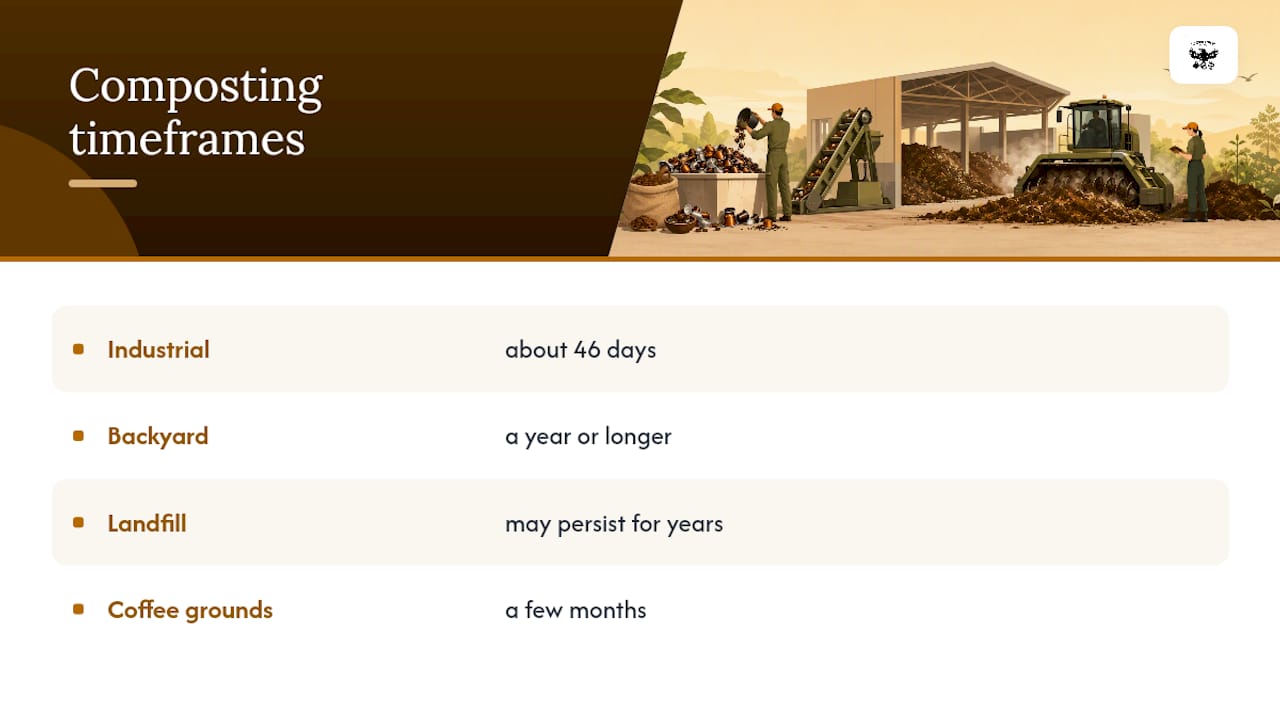
Coffee grounds themselves are the outlier. Emptied into any active compost pile, grounds typically break down within a few months regardless of setup, since they carry no plastic or fiber shell to slow the process.
Do Compostable Pods Cost More Than Regular Ones?
Yes, generally. Certified compostable materials cost more to source and manufacture than standard plastic or aluminum, and that difference usually show up at checkout. Shoppers can expect a modest per-pod premium over conventional single-serve capsules, though the gap has narrowed as more roasters adopt compostable packaging at scale.
The bigger cost question isn’t the sticker price, it’s whether you’re actually getting the environmental return you paid for. A compostable pod that ends up in a landfill because no local facility accepts it delivers zero composting benefit despite the higher price, which means the “cost” of buying compostable only pays off if disposal access exists where you live.
There’s a flip side worth weighing too. Municipalities and waste haulers sometimes report processing savings when compostable packaging actually completes its cycle in an industrial facility, since it can integrate into existing organics streams rather than requiring separate landfill handling. That savings shows up at the system level, not on your grocery receipt, but it’s part of why some foodservice operators are shifting toward compostable packaging despite the higher upfront cost.
For most home coffee drinkers, the practical takeaway is simple: paying more for a certified compostable pod only makes financial and environmental sense if you’ll actually use it in a compost stream that accepts it. Otherwise, that premium buys packaging that behaves exactly like the cheaper option once it hits the landfill.
A Roaster’s View on Pods and Practical Composting
Most compostable pod marketing skips the part that actually matters: whether your city can process it. That gap between certification and real-world access is the whole story, and it’s why we built our own pod guidance around what people can realistically do at home, not just what a label promises.
We point customers toward emptying grounds first, every time, because that step works regardless of local infrastructure. Our grounds composting guide and our breakdown of compostable versus biodegradable packaging both start from that same premise: control what you can control.
— David P.
Tri Crow Coffee Pods and Sample Packs
If you want single-serve convenience without guessing what the packaging actually does, Tri Crow Coffee lists certification and disposal details plainly on every pod product page instead of burying them behind a vague “eco” label.
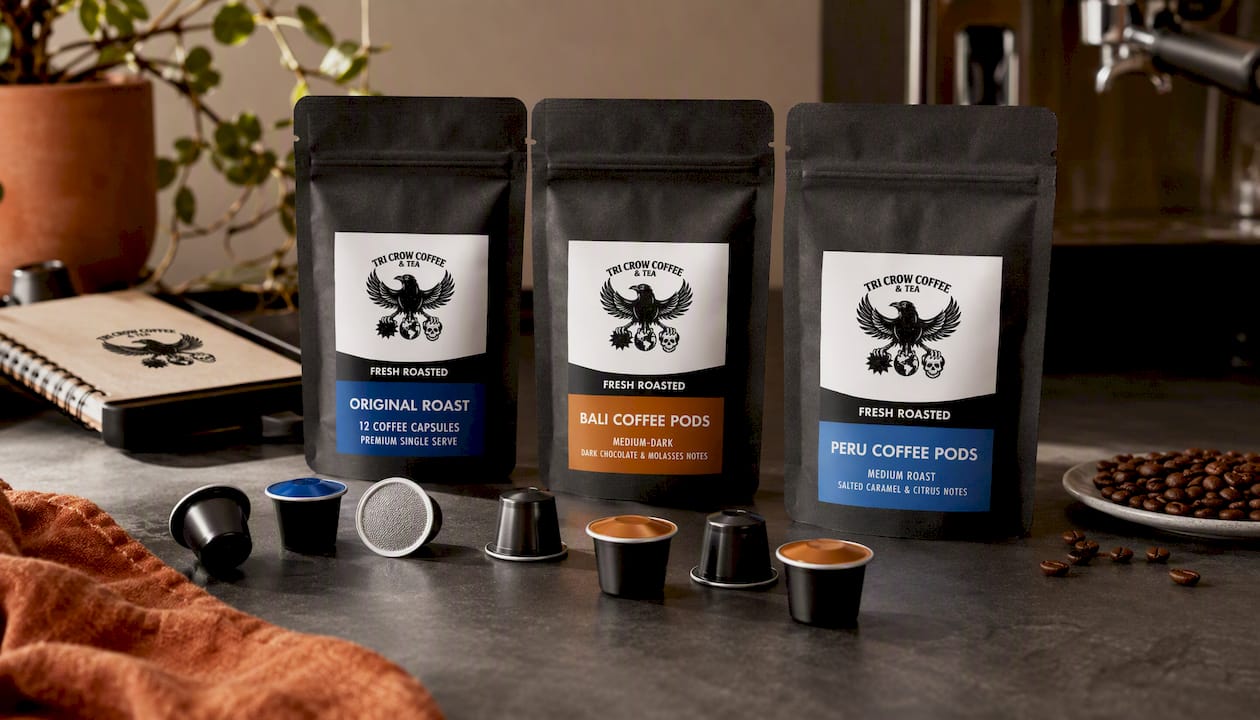
Our Pods & Capsules lineup includes several roasts worth trying, including the Original Roast 60-count box for households that brew daily and the Original Roast 12-count pack for smaller kitchens. If you’d rather sample before committing, the Single Origin Favorites sample pack, the Best Sellers sample pack, and the Flavored Coffee sample pack each cover six varieties in 2oz portions, including sweeter picks like Cinnamon Hazelnut and S’mores. Prefer single origin? Try our small-batch Tanzania medium-light roast.
Every pod page notes what the packaging is made of and how to handle disposal responsibly, so you’re not left guessing after your last cup. Browse the full pod collection and pick a roast that fits how you actually plan to dispose of it.
Where to Verify Compostability Claims Yourself
Don’t take any brand’s word for it, including ours. Check these directly before you buy or toss:
- BPI’s certified product registry for confirmed compostable items in North America.
- The University of Tennessee’s peer-reviewed composting trial for facility-tested degradation data.
- Your city or county’s waste management page, since municipal guidance like Cuyahoga County’s varies significantly by region.
Sources
- Compostable, biodegradable and bio-based plastic: what’s the difference? — Ellen MacArthur Foundation
- Life cycle assessment and composting trials for compostable pods — PMC/peer-reviewed study
- Dispose of Coffee Pods Right — CuyahogaRecycles
- Biodegradable Products Institute (BPI) — certification body and product registry
FAQ
Which coffee pods are compostable?
Only pods carrying a verifiable third-party certification, such as a BPI mark or ASTM D6400/D6868 rating, qualify as genuinely compostable. Most of those require an industrial facility, so check whether the label specifies “home” or “commercial” before assuming your backyard pile will work.
How do I dispose of coffee pods?
Empty the used grounds into a backyard compost pile or worm bin first, since grounds are reliably compostable regardless of the shell material. Then check whether the empty shell carries a certification your local facility accepts, look into a manufacturer take-back program, or dispose of it in regular trash if no composting option exists nearby.
Can Keurig-style pods be composted?
It depends entirely on the specific pod and its certification, not the brand format itself. Standard plastic single-serve capsules generally are not compostable, while certified compostable versions still require an accepting industrial facility, which many municipal programs don’t currently provide.
What’s the most environmentally friendly coffee pod?
Reusable, refillable capsules typically score best across full lifecycle comparisons because their manufacturing impact spreads across hundreds of uses. Among single-use formats, a compostable pod only outperforms alternatives when it actually reaches a composting facility that accepts it. Tri Crow Coffee’s pod lineup lists packaging details plainly so you can weigh format against your local disposal access.
Are coffee pods recyclable?
Most plastic single-serve pods are not accepted in curbside recycling because they’re too small for sorting equipment at material recovery facilities. Aluminum pods can be recycled, but almost always only through a brand-specific take-back program rather than standard curbside pickup.