
Yes, used coffee grounds are compostable, and adding them to your pile is one of the easiest upgrades you can make to your compost. The rule that matters most: mix grounds with carbon-rich material and cap them at roughly 20% of your pile’s volume. Dump a five-gallon bucket straight on top of your pile and you’ll get a dense, matted layer that blocks air and slows everything down.
Keep these three things in mind before you start:
- Grounds count as a “green,” a nitrogen source, even though they’re brown in color.
- Blend them with dry leaves, straw, or shredded paper rather than piling them alone.
- Expect finished compost in roughly 3 to 6 months if you turn the pile regularly and keep it damp, not soggy.
Key Takeaways
Coffee grounds compost successfully when limited to about 20% of pile volume and mixed thoroughly with carbon-rich browns like leaves or shredded paper.
| Point | Details |
|---|---|
| Grounds are a green, not a brown | Their 20:1 carbon to nitrogen ratio means they need dry, carbon-heavy material to balance the pile. |
| Cap volume at 20% | Exceeding that ratio risks crusting, odor, and stunted seedlings nearby. |
| Expect 3 to 6 months to finish | Weekly turning and consistent moisture keep the timeline on track. |
| Avoid raw grounds near seedlings | Uncomposted grounds can temporarily tie up nitrogen and inhibit germination. |
| Worm bins speed stabilization | Thin layers mixed into bedding let vermicomposting neutralize grounds faster than an outdoor pile. |
| Tri Crow Coffee supports the habit | Small-batch roasting means fresh grounds are a natural byproduct worth composting rather than tossing. |
Table of Contents
- Why Coffee Grounds Help Your Compost Pile
- How to Add Coffee Grounds to a Compost Pile or Bin
- Vermicomposting and Other Faster Options
- How Much Coffee Grounds Is Too Much?
- Collecting and Storing Coffee Grounds the Smart Way
- Why Trust This Guide on Composting Coffee Grounds
- An Editorial Take on Composting Coffee Grounds
- Bring That Ritual Into Your Compost Routine
- Sources
- FAQ
Why Coffee Grounds Help Your Compost Pile
Coffee grounds carry a carbon to nitrogen ratio of about 20 to 1, which puts them closer to a green than most people expect from something the color of dirt. A healthy compost pile runs best at roughly 25 to 30 parts carbon for every one part nitrogen, so grounds need company from drier, carbon-heavy material to hit that target.
Coffee grounds C:N ratio: about 20:1. Target compost pile C:N: 25 to 30:1. That gap is exactly why straight grounds alone never break down cleanly, and why pairing them with leaves or shredded paper matters more than the grounds themselves.
Here’s what grounds actually contribute:
- Nitrogen for microbes to feed on, though the total nutrient load is modest, generally in the 1 to 2% nitrogen range by weight.
- Structure and organic matter that help a pile hold moisture without turning to mush.
- Food for the bacteria and fungi doing the actual decomposition work.
One myth deserves to die here: brewed coffee grounds are not acidic. Most of the acid stays in your cup. Extension research puts spent grounds at a near-neutral pH, around 6.5 to 6.8, so they won’t meaningfully swing your soil or compost toward acidic. If you’re hoping to acidify soil for blueberries, look elsewhere.
How to Add Coffee Grounds to a Compost Pile or Bin
Coffee grounds work in an open backyard pile, a closed tumbler, or a simple wire bin. The method changes slightly depending on the setup, but the principles hold across all three.
- Collect and dry-store your browns first. Shredded leaves, straw, or torn cardboard should be ready before you add grounds, not scrambled together afterward.
- Layer, don’t dump. A workable starting ratio is one part coffee grounds to three parts dry leaves by volume, which roughly mirrors the mix recommended by Oregon State University Extension: three parts leaves, one part grass clippings, one part grounds.
- Mix thoroughly, then check moisture. The pile should feel like a wrung-out sponge. Too wet and it turns anaerobic; too dry and decomposition stalls.
- Turn weekly for a hot pile, or mix every few days in a closed bin. Aeration keeps the microbes that break down grounds working efficiently instead of suffocating in a dense pocket.
- Watch your volume. Grounds should stay under about 20% of total pile volume. If you’re collecting a large bag from a coffee shop, spread it across several turning sessions instead of adding it all at once.
Progress shows up in three ways: the pile heats up noticeably in the center, the smell shifts from sharp and vinegary to earthy, and the material darkens and loses its original texture within the first few weeks.
Pro Tip: If you’re dumping a whole coffee-shop bucket at once, spread it thin across the entire pile surface rather than mounding it in one spot. A concentrated wet clump in the center of your pile is the single most common cause of the anaerobic, sour-smelling mess new composters run into.
Vermicomposting and Other Faster Options
A standard outdoor pile isn’t the only route. If you want to neutralize the compounds that occasionally cause trouble with fresh grounds, a few alternatives work faster.
- Worm bins: Red wigglers handle coffee grounds well in small, thin layers mixed into shredded cardboard or newspaper bedding. Watch the worms for a few days after adding grounds; if they retreat from the area, cut back the amount next time.
- Bokashi and thermal treatments: Small-batch fermentation or heat treatment can stabilize grounds quickly, making them safer for potting mixes sooner than a slow outdoor pile allows.
- Direct soil amendment: Only use fully composted grounds this way. A narrative review of spent coffee grounds research found that uncomposted grounds can inhibit plant growth at low concentrations, so keep raw grounds away from seed beds and young seedlings until they’ve broken down.
How Much Coffee Grounds Is Too Much?
The 20% by volume ceiling isn’t an arbitrary number pulled from thin air. Push much past that, and you risk two separate problems: a stalled pile that goes anaerobic, or actual harm to nearby seedlings from compounds that haven’t had time to break down.
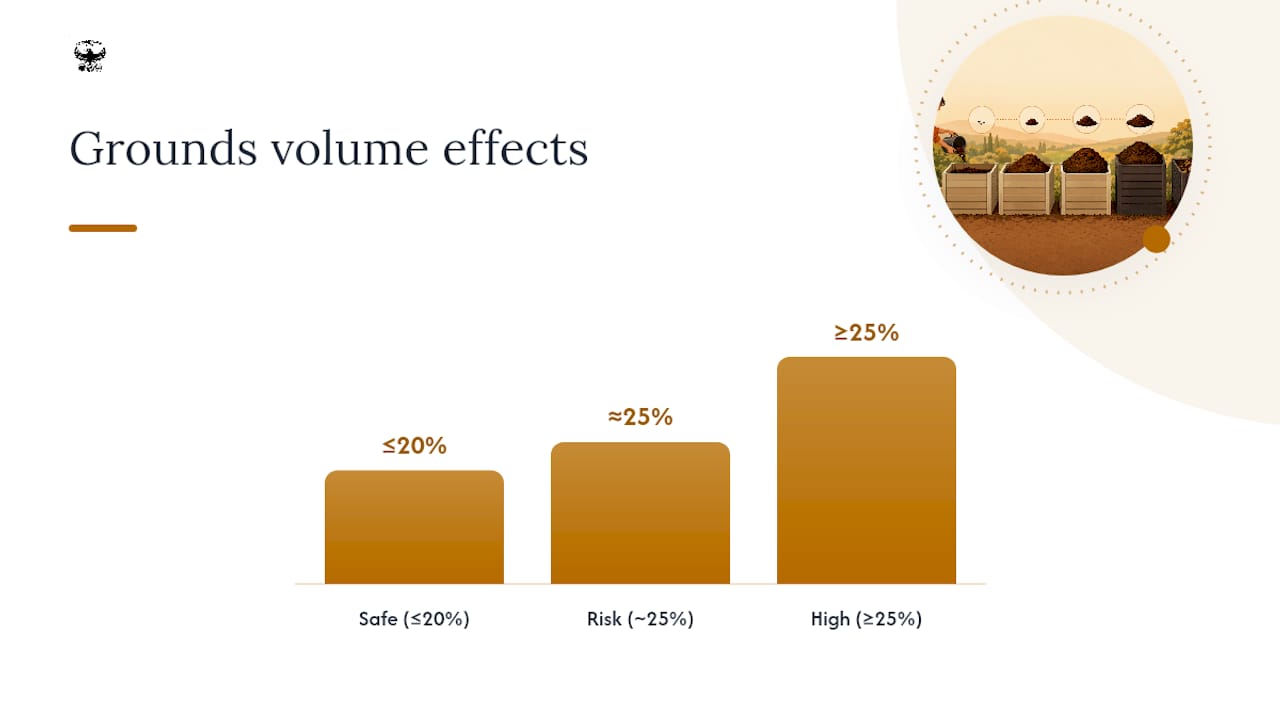
One controlled test found uncomposted grounds added at roughly 25% volume produced poor lettuce germination, a reminder that “more nitrogen” doesn’t automatically mean “more benefit” when the material hasn’t composted yet.
A handful of plants seem particularly sensitive to fresh, high-concentration grounds:
- Geraniums
- Asparagus fern
- Certain clovers and lawn grasses
And a separate group of plants simply won’t benefit from grounds the way gardeners assume. Lavender, rosemary, and thyme prefer alkaline soil, so grounds won’t help them the way the “coffee grounds acidify soil” myth suggests. Since brewed grounds sit near neutral pH anyway, that advice was based on a misunderstanding from the start.
If your pile stalls or smells off after adding grounds, the fix is usually simple: add more dry carbon material, turn the pile to reintroduce oxygen, or let it rest longer before adding fresh grounds again. If growth nearby looks stunted, it’s often a sign of temporary nitrogen tie-up rather than permanent damage. Microbes decomposing fresh organic matter borrow nitrogen from the surrounding soil before releasing it back, and that borrowing period passes once decomposition finishes.
Collecting and Storing Coffee Grounds the Smart Way
If you’re gathering grounds from your own kitchen or picking up a bucket from a local coffee shop, a few habits keep the process from turning into a soggy, moldy mess under your sink.
- Store grounds in a sealed bucket or container, and aim to add them to your compost within about a week.
- If you can’t compost that quickly, refrigerating a smaller batch buys extra time.
- Mold on stored grounds is common and usually harmless. Mix it into the pile rather than piling fresh grounds on top of it, which just recreates the same crusting problem.
- Paper coffee filters compost fine as long as they’re plain paper with no staples. Most single-serve pods are not compostable curbside; check the packaging before tossing them in.
If you’re building a habit of saving your own daily grounds, a simple home workflow for collection makes this far less of a chore than it sounds.
Why Trust This Guide on Composting Coffee Grounds
Tri Crow Coffee roasts in small batches, which means grounds pass through our kitchen and testing routines constantly, giving us a direct, ongoing view of how different roasts and grind sizes break down once they hit a compost pile. This guide was written by David, who has produced several other educational guides on brewing and sustainable coffee habits for Tri Crow Coffee.
Grounds from a coarse, dark roast behave differently in a pile than a fine grind from a lighter roast. Texture affects how quickly a compost pile absorbs and breaks down the material, which is worth knowing if you’re troubleshooting a slow or clumpy batch.
An Editorial Take on Composting Coffee Grounds
Most advice on this topic treats coffee grounds like a miracle nitrogen bomb or dismisses them as compost filler. Neither is right. The research points to something more modest and more useful: grounds are a decent, moderate green that improves structure and feeds microbes, but they’re not a substitute for thoughtful ratios.
The conventional wisdom that fails gardeners most often is the acidity myth. People withhold grounds from plants that would actually benefit, or dump them near acid-loving plants expecting a soil pH miracle that near-neutral brewed grounds simply can’t deliver.
If you take one thing from this guide, prioritize volume control over everything else. Getting the 20% ceiling right solves most of the problems people blame on “bad coffee grounds,” from crusting to stalled piles to unhappy seedlings. Worm bins deserve more attention too. They stabilize grounds faster than most backyard piles ever will, and they’re a low-effort option for anyone short on outdoor space.
Bring That Ritual Into Your Compost Routine
Composting your grounds closes a loop that starts the moment you brew. Tri Crow Coffee roasts in small batches specifically so every cup, and every leftover scoop of grounds, comes from beans handled with intention rather than mass production. If you’re drawn to a slower, more deliberate morning routine, our instant coffee blended with mushrooms offers a quick option that still leaves usable grounds behind, while our coarse ground cold brew produces the thicker, coarser grounds that tend to compost fastest thanks to better airflow in the pile. For gardeners who want to understand the bigger sustainability picture behind sourcing, Third Space Coffee’s guide to sustainable coffee is worth a read alongside your composting routine. Ready to try a roast that’s worth saving the grounds from? Browse our current small-batch selection and place an order today.
Sources
- Benefits of composting coffee grounds (UC Master Gardeners / UC ANR blog)
- Coffee grounds boost soil health — and help control slugs | OSU Extension Service
- Why Should We Be Concerned with the Use of Spent Coffee Grounds as an Organic Amendment of Soils? A Narrative Review (MDPI)
FAQ
Which plants should not get coffee grounds?
Geraniums, asparagus fern, and some clover and lawn grass varieties have shown sensitivity to fresh, uncomposted grounds, so stick to finished compost around them. Herbs like lavender, rosemary, and thyme prefer alkaline soil and simply won’t benefit from grounds as an acidifier, since brewed grounds sit near neutral pH.
What animals or pests do coffee grounds keep away?
Coffee grounds are sometimes used as a physical deterrent against slugs, and Oregon State University Extension notes they can play a role in slug management as part of broader soil health practices, though results vary by garden.
How long does it take coffee grounds to break down in compost?
A well-maintained pile with grounds mixed in typically finishes in 3 to 6 months, assuming you turn it weekly and keep moisture consistent.
Which plants benefit most from finished coffee grounds compost?
Leafy greens, tomatoes, and most vegetable garden crops respond well to the organic matter and structure that composted grounds add, since the primary benefit comes from improved soil structure and moisture retention rather than any single nutrient boost.
Are coffee filters and pods compostable along with the grounds?
Plain paper filters without staples compost right alongside the grounds. Most single-serve coffee pods are not compostable through standard curbside or backyard systems, so check the packaging before adding them to your pile.