
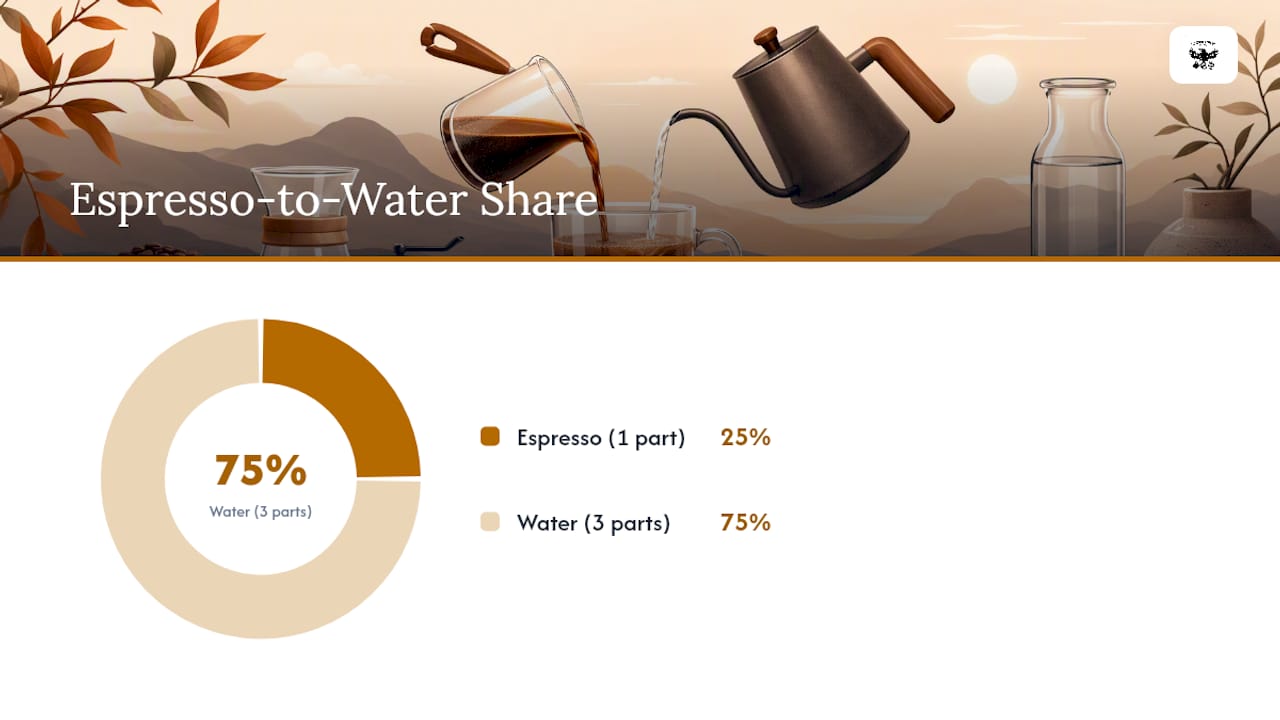
An Americano is just espresso diluted with hot water, and the classic starting point is roughly 1 part espresso to 3 parts water, or about 2 parts water to 1 part espresso. Heat your water to around 200°F (93°C), pull your shot, and pour. Everything else, from cup size to whether you own a machine, is covered below.
TL;DR:
- Achieving the correct 1:3 ratio of espresso to water is crucial, with about 90 to 100ml of water per double shot for most mugs.
- Non-espresso methods like Moka pots and AeroPress can produce a concentrated base but lack crema, requiring dilution similar to traditional machines.
- Fixing flavor issues involves adjusting dose, grind size, and temperature separately, rather than making multiple changes at once.
- Using fresh beans and proper grind size ensures a balanced extraction, avoiding thin, bitter, or sour tastes.
- Prioritizing shot quality and proper dilution techniques outweighs expensive equipment in making a good Americano.
Table of Contents
- What You Need to Make an Americano at Home
- How Do You Make a Classic Hot Americano?
- What Ratio of Espresso to Water Should You Use?
- Can You Make an Americano Without an Espresso Machine?
- Why Does My Americano Taste Watery, Bitter, or Sour?
- How Do You Make an Iced Americano?
- What Small Habits Actually Improve Your Americano?
- The Ratio Matters More Than the Machine
- Which Tri Crow Coffee Products Work Best for an Americano
- Sources
- FAQ
What You Need to Make an Americano at Home
You don’t need a café setup, but a few basics make the difference between a flat cup and a genuinely good one. For an espresso-based Americano, gather an espresso machine (or one of the no-machine options below), a burr grinder, a kettle you can control for temperature, a scale, and a tamper if your machine uses a portafilter.
Fresh beans matter more than gear. Coffee starts losing aromatic compounds within a couple of weeks of roasting, so buy in small batches and grind right before brewing. Tri Crow Coffee’s House Blend, Medium Roast is built for exactly this: a Central and South American bean profile that pulls a clean, balanced shot with no bitter edge once diluted. If you want more fruit and cocoa character showing through the water, the Latin American Blend holds up well even at 1:3 dilution. And if mornings move fast, the Instant Coffee pouch skips the machine step entirely.
- Espresso machine, Moka pot, AeroPress, or French press
- Burr grinder for fresh, consistent particle size
- Kettle for temperature-controlled water
- Kitchen scale (accuracy beats guessing)
- Filtered water, since tap minerals affect taste
How Do You Make a Classic Hot Americano?
This is the standard method, and once you’ve done it two or three times, it takes less than five minutes start to finish.
- Preheat your cup. Fill it with hot water while you prep everything else, then dump it right before pouring. A cold cup pulls heat out of your drink almost immediately, and preheating measurably slows that drop.
- Heat your water to about 200°F (93°C). If you don’t have a temperature-controlled kettle, boil it and let it sit for 20 to 30 seconds. That short rest brings boiling water down close to the target range.
- Dose and grind. For a double shot, aim for roughly 18 grams of finely ground coffee, tamped evenly into the portafilter.
- Pull the shot. A double should run 25 to 30 seconds and land around 45 to 55ml of liquid. If it’s running fast or thin, your grind is too coarse.
- Choose your pour order. Pour the hot water into the cup first, then add espresso on top, and you preserve more of the crema and get a stronger hit of aroma up front. Espresso first, water after, breaks the crema apart and gives you a more even, integrated cup from the first sip to the last. This is the same tradeoff that separates an Americano from a long black) in Australian and New Zealand coffee culture, where the order is treated as a real stylistic choice, not an afterthought.
- Measure your water. For a 1:3 ratio, that’s about 90 to 100ml of hot water per double shot, which matches what most café-style guides land on when they’re trying to preserve crema and aroma.
- Taste before you commit. If it tastes thin, don’t just eyeball more coffee in. Pull another shot.
If you want more depth on grind size and tamping pressure specifically, the mechanics carry over directly from a standard espresso pull.
Pro Tip: Taste your Americano at the halfway point, not just at the end. If it’s already flat by the middle of the cup, your next batch needs less water or one more shot, not a different bean.
What Ratio of Espresso to Water Should You Use?
Ratio is the single biggest lever you have, more than bean choice, more than grind size. Get it wrong and even a great shot tastes like weak diner coffee.
The three common starting points:
- 1:2 (strong): one part espresso to two parts water, for people who want an Americano that still tastes like espresso first
- 1:3 (balanced default): the most commonly recommended ratio and the one to start with if you’ve never made one before
- 1:4 (mild): closer to a long, gentle black coffee, good for sipping slowly
By cup size, using the 1:3 default: a 6 to 8 ounce mug takes 2 shots plus 4 to 6 ounces of water, a 12 ounce mug takes 3 shots plus about 9 ounces of water, and a 16 ounce mug takes 4 shots plus about 12 ounces of water. That scaling pattern lines up with what most home recipe guides recommend for an 8 ounce cup: two shots, not one, once you’re past a small cup.
The mistake almost everyone makes the first time is scaling up by adding only water to a bigger mug. That’s how you end up with something that tastes like flavored hot water. Shot count controls body and strength. Water controls volume and how long the drink lasts. Treat them as two separate dials, not one.
Can You Make an Americano Without an Espresso Machine?
Yes, and this is where a lot of home coffee enthusiasts get stuck thinking they need a $600 machine to enjoy this drink. You don’t. The trick is building a small, concentrated base and diluting it the same way you would a real espresso shot.
- Moka pot: Brew a full pot, which naturally produces a strong, syrupy concentrate close to espresso in intensity. Use about 1 to 2 ounces of that concentrate per serving and dilute with hot water at the same 1:3 starting ratio.
- AeroPress: Use the inverted method with a fine grind and a short 1 to 1.5 minute steep before pressing. This produces a concentrated shot you can dilute directly.
- French press: Use a finer grind than usual and a shorter steep, or simply use more coffee per ounce of water than a normal brew. The goal is a concentrate, not a full-strength pot of regular coffee.
- Capsule machines: Run the strongest or “espresso” capsule setting, then dilute with hot water the same way you would a shot pulled on a traditional machine.
None of these will produce true crema, since that requires the pressure a real espresso machine generates. The taste difference is smaller than most people expect once diluted, though the AeroPress tends to land closest in body and clarity.
Why Does My Americano Taste Watery, Bitter, or Sour?
Every one of these problems traces back to one of three variables: dose, grind, or temperature. Fix the right one and the whole cup improves.
- Watery or thin: You added water without adding a shot. Fix it by using another dose of espresso, not less water, especially in a mug larger than 8 ounces.
- Bitter: Your extraction ran too long or your grind is too fine. Coarsen the grind slightly and check that your shot isn’t running past 30 seconds.
- Sour: The opposite problem, usually an under extracted shot or beans that are past their peak freshness. Grind finer, extend extraction time slightly, and check your roast date.
- Lukewarm: You skipped preheating the cup, or your water wasn’t hot enough to begin with. Use water straight off the boil after its short rest, and always preheat.
- Flat or dull: Usually stale beans or hard tap water muting the flavor. Switch to filtered water and buy beans in smaller quantities more often.
Pro Tip: Change one variable per cup, not three. If you adjust grind, dose, and water temperature all at once, you’ll never know which fix actually worked.
How Do You Make an Iced Americano?
The same drink, built slightly stronger to survive contact with ice. Ice dilutes as it melts, so if you build an iced Americano at the same strength as the hot version, it’ll taste watered down within a few minutes.
- Pull your shots as normal, but reduce your hot water slightly, aiming for a 1:2 ratio instead of 1:3, before pouring over ice.
- Pour espresso directly over a full glass of ice for the least melt dilution, rather than adding ice to an already-poured drink.
- Some home baristas skip water entirely and brew a cold long black by pouring shots straight over ice with no dilution at all, letting the ice do the diluting as it melts.
- For variations, a small splash of milk turns this into an iced Americano macchiato of sorts, and a half ounce of vanilla or caramel syrup works without overwhelming the espresso character.
If you’re leaning toward fully cold-brewed options instead of iced espresso drinks, the process and ratios differ enough that it’s worth a separate cold brew method.
What Small Habits Actually Improve Your Americano?
Consistency comes from repetition, not from better equipment. Set up your station the same way every time: cup out, water heating, grinder measured, so the shot and the water hit close to the same temperature window every single morning.
Smell your beans before you grind them. A dull or flat smell usually means the roast date is older than you’d like, even if the bag still looks fine. Taste your shot on its own before you dilute it. That fifteen seconds tells you whether the problem, if there is one, is in the espresso or in your dilution ratio.
Match the bean to the drink you actually want. The Instant pouch works when you need something fast with no cleanup. House Blend suits a classic, espresso-forward Americano where you want the coffee itself to lead. The Latin American Blend rewards a slightly heavier dilution, since its fruit and cocoa notes come through even at 1:4.
The Ratio Matters More Than the Machine
Most Americano advice online spends far too much time on equipment and not nearly enough on ratio discipline. People assume a nicer machine fixes a watery cup. It doesn’t. A $150 machine with a correctly dosed double shot and a 1:3 pour beats a $2,000 machine with a single shot drowned in water, every time.
The conventional advice to “just add hot water to espresso” undersells how much the pour order and shot count actually shape the final drink. Crema retention, dilution timing, even cup temperature all come down to small technique choices, not spending more money.
If you’re starting out, prioritize one thing above everything else: get your shot right before you touch the water. A great shot diluted properly is always an Americano worth drinking. A mediocre shot diluted properly is still a mediocre Americano, just a bigger one.
— David P.
Which Tri Crow Coffee Products Work Best for an Americano
If you’re building your Americano routine around whole beans, the House Blend, Medium Roast is the straightforward choice: a Central and South American profile designed to hold its character through a 1:3 dilution without turning flat or thin. Grind it fine, dose around 18 grams for a double, and you’ve got the backbone of a classic Americano.
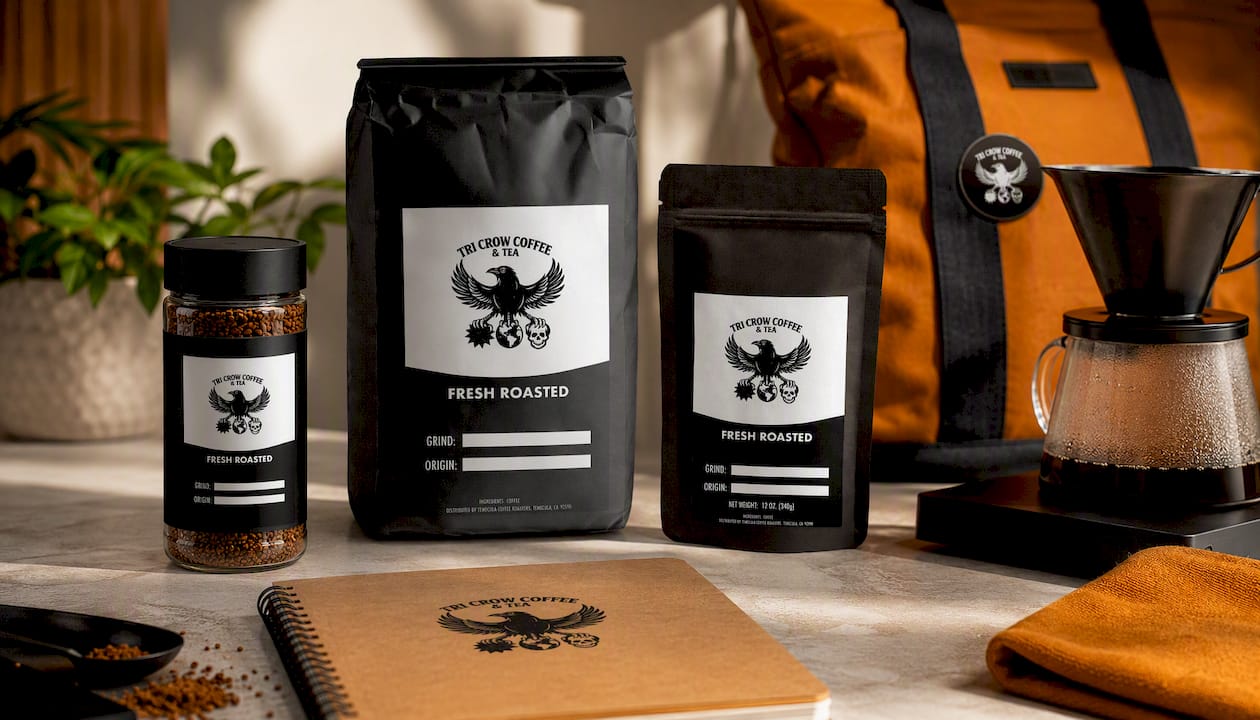
Want something with more personality once it’s diluted? The Latin American Blend brings nutty, fruity, and cocoa notes that actually survive dilution better than lighter roasts, since the medium-dark profile has more to give before it thins out. And on mornings when a full brew setup isn’t happening, the Instant Coffee 30-serving pouch makes an Americano-style cup in under a minute: dissolve one serving in a small amount of hot water for a concentrated base, then top with more hot water to your preferred strength.
All three are roasted in small batches, so freshness stays tighter than what you’ll typically find on a grocery shelf. If you’re ready to build your next batch of Americanos around one of them, browse the full lineup and pick the roast that matches how you actually drink your coffee.
Sources
- How to Make an Americano (CoffeeGeek)
- How to Make an Americano at Home (Time for Espresso)
- Preheating the mug (The Kitchn)
- How to make an Americano (A Couple Cooks)
FAQ
Is an Americano Just Espresso and Hot Water?
Yes. An authentic Americano is one or two shots of espresso diluted with hot water, traditionally with no milk or sweetener added.
How Do You Make an Americano With Regular Coffee?
You can’t make a true Americano without a concentrated base, but a strong French press or Moka pot brew diluted with hot water gets close in body and strength, even without real espresso.
How Do You Make Americano Coffee at Home Without a Machine?
Brew a concentrated base using a Moka pot, an inverted AeroPress with a short steep, or a strong French press, then dilute it with hot water at roughly a 1:3 ratio, the same starting point used for machine-made versions.
Is an Americano Just Black Coffee?
Not exactly. It’s black in the sense that it has no milk, but it’s built from diluted espresso rather than drip-brewed coffee, which gives it a different body and a more concentrated flavor base even after dilution.
What’s the Best Ratio for a Beginner to Start With?
Start at 1:3, roughly two shots plus 4 to 6 ounces of hot water for an 8 ounce cup, then adjust toward 1:2 for more strength or 1:4 for a milder cup once you know your preference.