
Earthy coffee tastes like damp soil, forest floor, wood, or mushroom, sometimes with a hint of tobacco, and it shows up most in full-bodied cups with muted acidity. That flavor can be a deliberate, prized trait of certain origins and processing methods, or it can signal a moldy, defective bean, so knowing the difference matters more than the label itself. Sumatra and Sulawesi beans are the classic starting point for this profile, and Tri Crow Coffee roasts a few small batches built around exactly this style.
TL;DR:
- Earthiness in coffee often stems from origins like Sumatra, Sulawesi, or India Monsooned Malabar, with each producing distinct earthy subcategories.
- Processing methods such as wet-hulling and natural processing significantly influence how much earthy flavor manifests, especially in darker roasts.
- Brew techniques like French press and cold brew enhance body and earthy weight, while espresso concentrates and intensifies these notes.
- Proper evaluation requires smelling the dry grounds and understanding the difference between balanced terroir and musty, defective beans.
- Transparent labels specifying processing and origin help distinguish genuine earthy profiles from marketing hype or storage issues.
Table of Contents
- What Does “Earthy” Mean in a Cup of Coffee?
- Which Coffee Origins Produce the Most Earthy Beans?
- How Processing and Roasting Change Earthy Flavor
- How Should You Brew Earthy Coffee to Bring Out Its Body?
- How Do You Taste and Pair Earthy Coffee Properly?
- Why Earthy Coffee Deserves More Respect Than It Gets
- Tri Crow Coffee Picks for an Earthy, Grounded Cup
- Sources
- FAQ
What Does “Earthy” Mean in a Cup of Coffee?
“Earthy” isn’t one flavor. It’s a cluster of related notes that professional tasters break into subcategories, and knowing which subcategory you’re tasting tells you a lot about the bean in front of you.
- Loam or damp soil: a wet, mineral quality, often paired with heavy body and a lingering finish.
- Cedar or wood: a drier, more aromatic version, common in aged or monsooned beans.
- Mushroom or umami: a savory, almost broth-like depth that shows up in wet-hulled Indonesian coffees.
- Tobacco: a smoky, dried-leaf note that often overlaps with dark roast character.
These descriptors pair with a full body and muted acidity rather than the bright, fruity acidity you’d expect from a washed African coffee. Tasters treat woody, mineral, and mushroom notes as distinct subcategories worth separating in cupping notes, because a cedar note reads very differently on the palate than a mushroom one, even though both get lumped under “earthy” casually.
The defect version is different and it’s worth learning to spot. Musty, moldy earthiness usually comes from poor storage or bad drying, and it smells “closed” or damp rather than layered.
Pro Tip: Smell the ground coffee dry, before you add water. If it smells sharp and complex, that’s terroir. If it smells flat and musty like a wet basement, that’s a storage problem, not a flavor profile.
Which Coffee Origins Produce the Most Earthy Beans?
Origin explains most of what you’re tasting. A handful of regions consistently produce earthy profiles, and each one gets there differently.
- Sumatra (Mandheling) and Sulawesi: wet-hulling and volcanic soil combine to produce a syrupy body with pronounced herbal, earthy character. Expect low acidity, heavy body, and notes ranging from cedar to dark chocolate.
- Ethiopia Harrar: dry-processed, so the earthiness leans more toward wine and berry with a rustic, wild edge rather than pure soil.
- Guatemala Antigua: volcanic soil again, but washed processing keeps things brighter, with earthy undertones layered under cocoa and spice.
- India Monsooned Malabar: beans aged in monsoon humidity develop a distinctly musty, woody profile that’s intentional, not accidental. It’s the most polarizing earthy style on this list.
If you want to try this profile at home without guessing at origin labels, Tri Crow Coffee’s 6 Bean Dark Roast Coffee leans into the bold, chocolate-forward end of earthy, while beans processed through methods detailed in Tri Crow’s natural process guide show the fruitier, rustic side of the spectrum. If you’re building out a broader sense of how origin shapes flavor generally, Tri Crow’s guide to bean types and origins is a useful companion read.
How Processing and Roasting Change Earthy Flavor
Origin sets the ceiling, but processing and roast decide how much earthiness actually reaches your cup. Wet-hulling, common across Indonesia, strips the parchment layer from the bean while it’s still slightly wet, and that unusual moisture exposure is what produces the herbal, earthy signature Sumatran coffees are known for. It’s an intentional technique, not a processing error.
Natural, or dry, processing works differently. The cherry dries around the bean instead of being washed off early, letting sugars ferment into the seed. That can produce fruity, boozy complexity, but it can also tip into rustic, earthy funk depending on how carefully the drying is managed. Contrast that with washed processing, which removes fruit early and tends to preserve brighter, cleaner acidity instead.
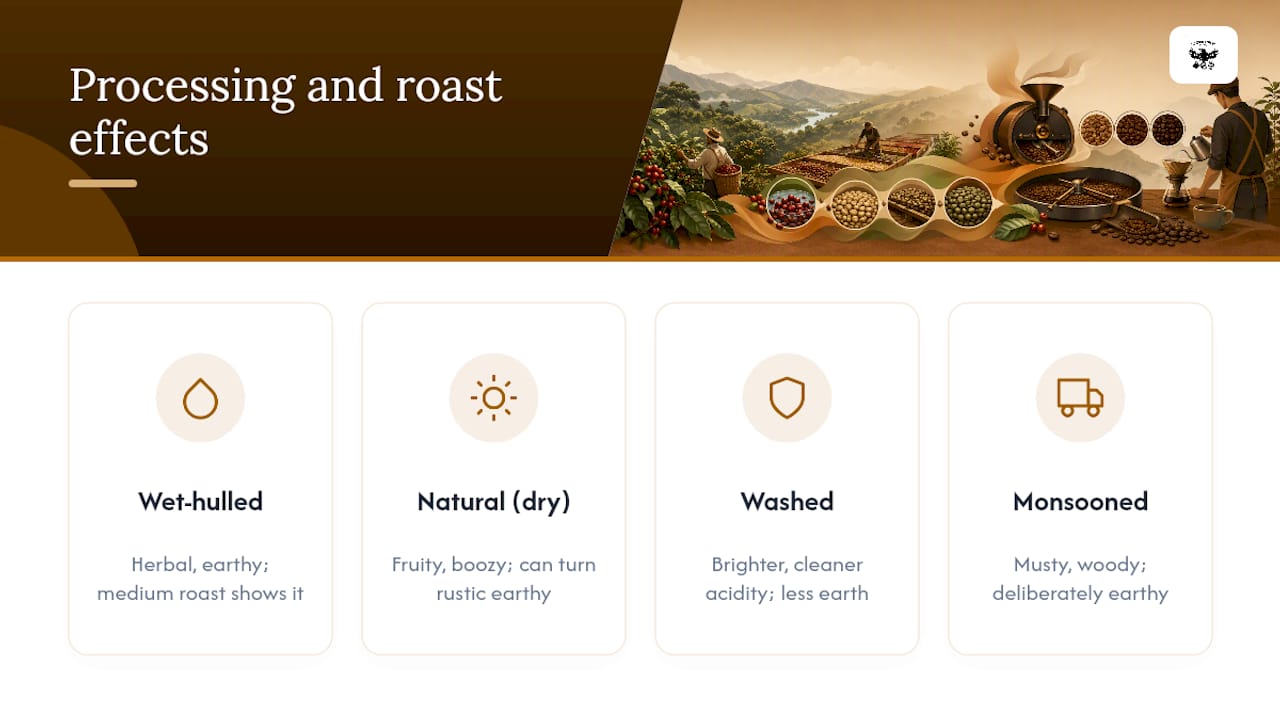
Monsooning takes this further. Indian Monsooned Malabar beans are deliberately exposed to humid monsoon winds for weeks, aging the bean and pushing it toward a musty, woody profile that reads as earthy almost by design.
Roast level then decides how much of that survives. Darker roasts push cocoa and smoke to the front, sometimes masking subtler earthy notes entirely, while medium roasts let the underlying terroir, altitude, and processing character come through more clearly. Research on chlorogenic acid and aromatic compound changes confirms that altitude, processing, and roast degree all measurably shift the volatile compounds responsible for these flavor differences.
How Should You Brew Earthy Coffee to Bring Out Its Body?
Brew method changes how earthiness lands on your palate almost as much as the bean itself does. Full immersion methods extract more body and soluble oils, which amplifies earthy weight. Pressure and short contact time concentrate it further. Filtered methods soften it.
- French press for maximum body: use a coarse grind, a 1:15 coffee-to-water ratio, and steep for about 4 minutes before pressing. The metal filter lets oils through that a paper filter would trap, which is exactly what you want here.
- Cold brew for a smoother, rounder version: coarse grind, 1:8 ratio, steeped 12 to 24 hours in the refrigerator. Long steeping smooths acidity while emphasizing body, so the earthy notes come across as mellow rather than sharp.
- Espresso to concentrate the profile: fine grind, water temperature between 195°F and 205°F, and a short 25 to 30 second shot. This is the fastest way to taste peak earthiness, though it’s also the least forgiving of a stale or defective bean.
- Pour-over if you want restraint: a lighter hand here lets subtler cedar or mineral notes show without the heavy body overwhelming everything else.
Pro Tip: If an earthy coffee tastes too heavy or muddy, a splash of milk softens it fast, cutting the loamy weight without erasing the cocoa or spice notes underneath.
How Do You Taste and Pair Earthy Coffee Properly?
Tasting earthy coffee rewards a slower approach than a quick sip. Smell the dry grounds first, then the wet grounds right after pouring water, then wait for the cup to cool to around body temperature before tasting again. Earthy notes often mute at scalding temperatures and open up considerably as the cup cools, which is why a coffee that tastes flat at first sip can turn genuinely complex a few minutes later.
Pairings can either amplify or soften that profile:
- Dark chocolate pulls out the cocoa side of earthy roasts and matches their weight.
- Roasted root vegetables (think sweet potato, beet) echo the soil and loam notes directly.
- Grilled mushrooms double down on the umami quality some earthy beans carry.
- Toasted bread or aged cheese add a savory contrast that balances heavier, muddier cups.
Sweeteners tend to brighten earthy coffee and push it toward the chocolate end of its range, while a pinch of cinnamon or cardamom can lean into the woody side instead.
Why Earthy Coffee Deserves More Respect Than It Gets
Earthy coffee gets a bad reputation partly because most drinkers only encounter it when something’s gone wrong, a stale bag, a mildewed bean, a badly stored batch, and that musty defect gets conflated with the real thing. Balanced earthiness, the kind you get from a well-executed wet-hulled Sumatran or a carefully monsooned Malabar, is a legitimate expression of place and process, not a flaw dressed up with nicer language.
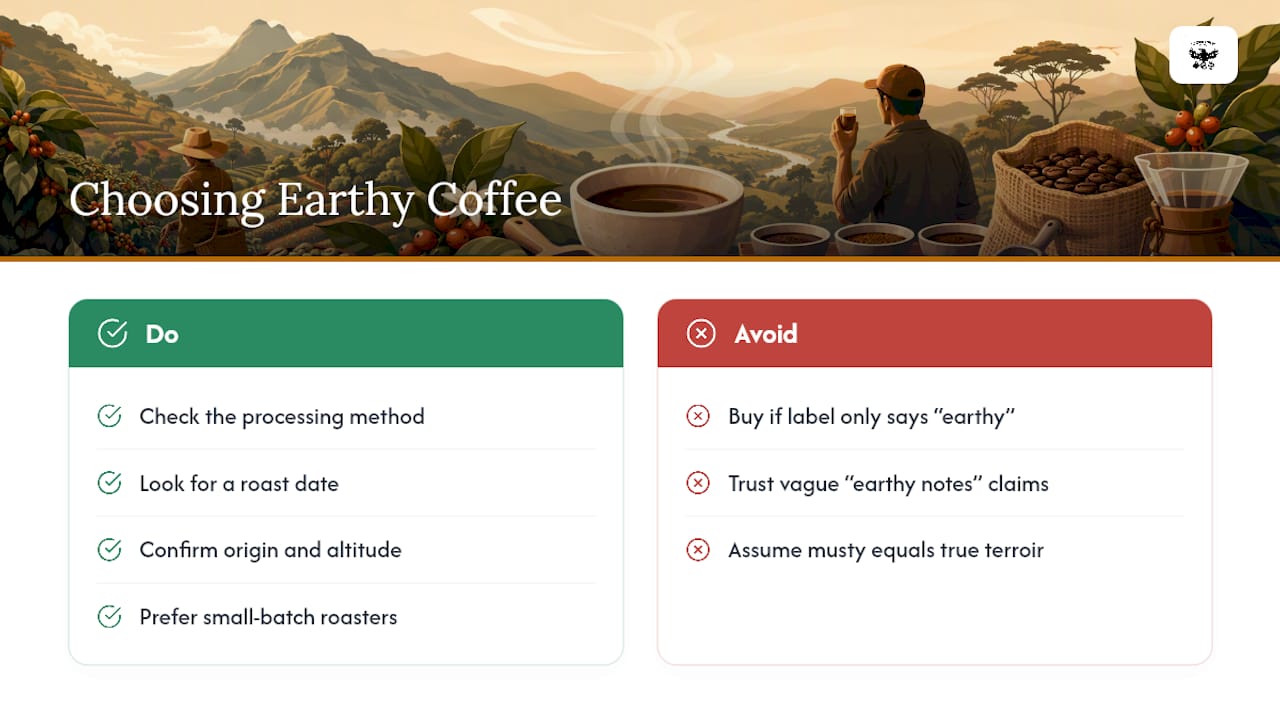
What buyers should actually pay attention to isn’t the word “earthy” on a bag. It’s whether the label tells you anything about processing, roast date, or origin altitude. A bag that says “earthy notes” with no other detail is a marketing choice. A bag that names its processing method and origin region is giving you something you can actually evaluate before you buy. Small batch roasting helps maintain control over consistency, since earthy profiles shift noticeably from one harvest or drying cycle to the next.
The gap between what earthy coffee promises and what most bags deliver comes down to transparency, not the flavor itself.
— David P.
Tri Crow Coffee Picks for an Earthy, Grounded Cup
If you’re ready to taste this profile instead of just reading about it, three small-batch options from Tri Crow Coffee cover most of what earthy coffee can do.
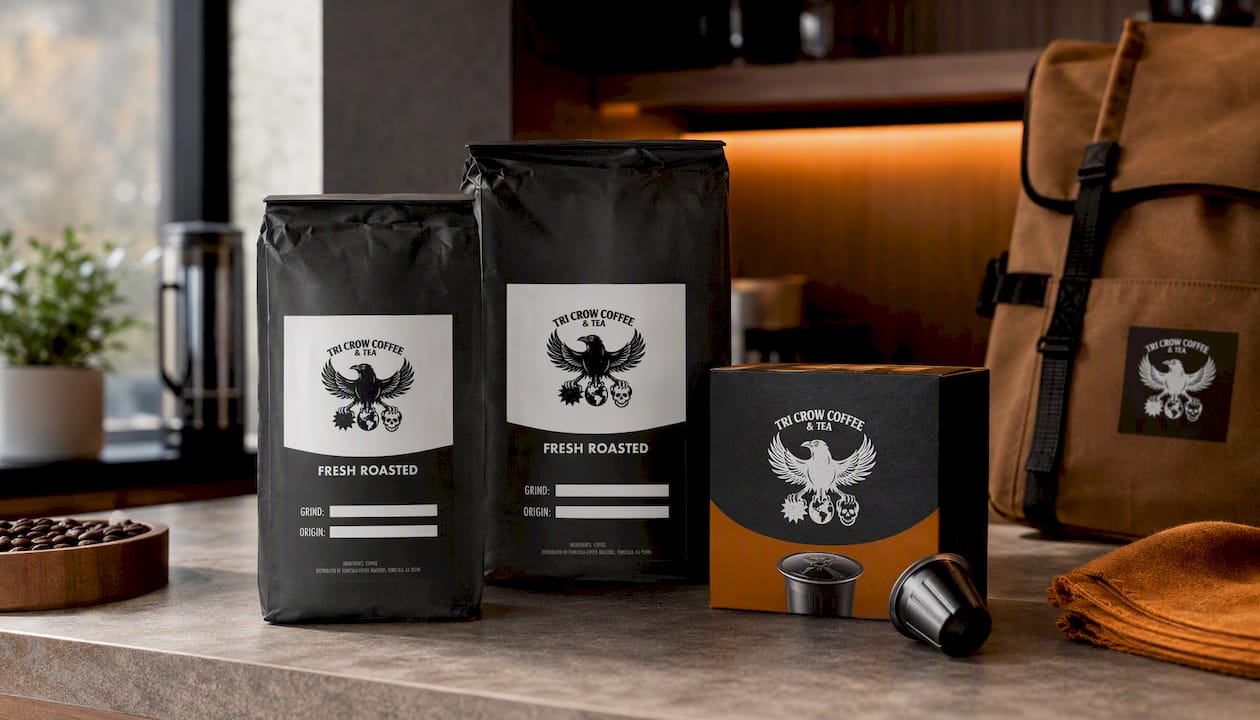
The 6 Bean Dark Roast Coffee is the boldest starting point. It’s a small-batch house blend built around heavy body and dark chocolate depth, and it holds up well in a French press or as drip coffee where you want that weight to carry the whole cup. For anyone leaning toward espresso, the African Espresso Blend brings a medium/dark roast that stays bold and smooth under pressure, concentrating chocolate and spice notes in a short shot without turning bitter. If convenience matters more than ceremony, the Bali Coffee Pods deliver a medium-dark, single-serve cup with dark chocolate and molasses notes that lean earthy-sweet rather than heavy.
Start with a small bag of whichever profile sounds closest to what you’re after, brew it two ways, French press and pour-over, and you’ll hear the difference roast and method make on the same bean. Browse the current batches at Tri Crow Coffee and order while the current roast is fresh.
FAQ
What Is Earthy Coffee, Exactly?
Earthy coffee carries flavor notes of damp soil, wood, mushroom, or tobacco, usually with a full body and low acidity, most often found in Sumatran, Sulawesi, or monsooned Indian coffees.
Why Does My Coffee Taste Earthy?
It’s usually the origin and processing, particularly wet-hulling or natural processing, but if the flavor reads musty or “closed” rather than complex, it may signal poor storage or a moldy bean rather than terroir.
What Are the Most Flavorful Coffee Beans for an Earthy Profile?
Sumatra Mandheling and Sulawesi lead this category, with Ethiopia Harrar and India Monsooned Malabar offering distinct variations. Tri Crow Coffee’s 6 Bean Dark Roast Coffee is built specifically for readers chasing this bold, grounded profile.
What Does an Earthy Flavor Mean in Coffee Tasting?
It means the cup carries soil, wood, or mushroom notes rather than the bright, fruity acidity typical of washed African coffees, and it’s generally considered a terroir trait when balanced, not a defect.
Which Brewing Method Brings Out Earthy Notes Best?
French press and cold brew emphasize body and soften acidity, which highlights earthy weight, while espresso concentrates the same notes into a shorter, more intense shot.