
TL;DR:
- Washed process coffee involves removing all fruit from the cherry before drying, producing a clean and bright cup. It highlights the coffee’s origin, varietal, and altitude, making it the industry standard for evaluating terroir. Proper sorting, fermentation, and water cleanliness are crucial for quality, and washed coffees are best brewed using filter methods like pour-over or Chemex.
Washed process coffee is defined by the complete removal of the coffee cherry’s fruit before the beans are dried, producing a cup that is clean, bright, and free of fruit-driven flavor interference. Also called the “fully washed” method, it is the industry benchmark for origin clarity in specialty coffee. The process relies on three core stages: mechanical depulping, fermentation tank treatment to dissolve mucilage, and a thorough rinse before drying. For home brewers who want to taste where a coffee actually comes from, washed coffees are the clearest window into terroir, varietal character, and altitude.
What is washed process coffee and how does it work?
Washed process coffee strips the coffee cherry down to its seed before any drying begins. That single decision shapes everything about the final cup. When fruit stays on the bean during drying, as it does in natural processing, it leaves behind sweetness, body, and fermented fruit notes. The washed method removes that influence entirely, letting the bean’s own character speak.
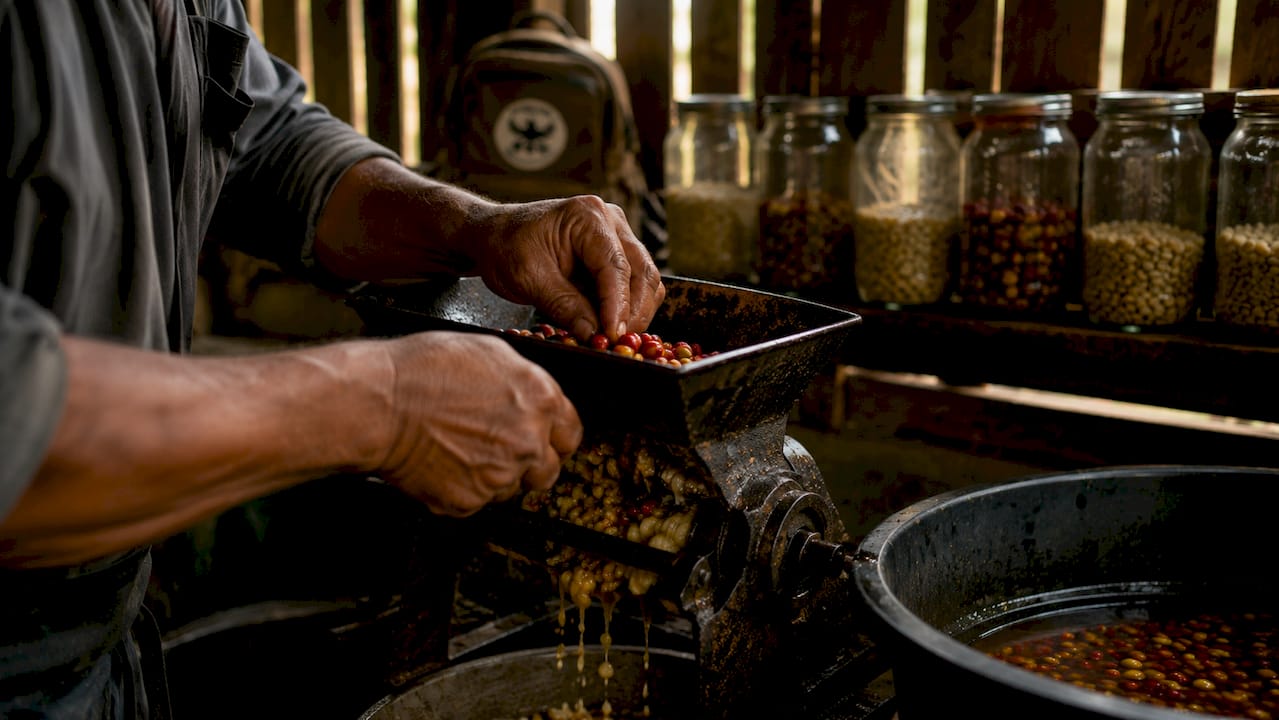
The process starts at the farm level, where producers sort freshly harvested cherries by ripeness. Only ripe, undamaged cherries enter the depulper. This sorting step is not optional. Fermentation cannot improve raw cherry quality, so any defective fruit that enters the line stays a defect through to the final cup.
After depulping, the beans still carry a sticky layer called mucilage. Fermentation in water tanks breaks that layer down. The washed coffee process depends on water quality, fermentation time, and drying speed to minimize defects and maximize clarity. Get any one of those wrong, and the cup suffers.
Once fermentation is complete, producers rinse the beans thoroughly. That rinse is what earns the “fully washed” label. It stops fermentation completely and fixes the flavor profile before drying begins.
How is coffee washed? Step-by-step processing explained
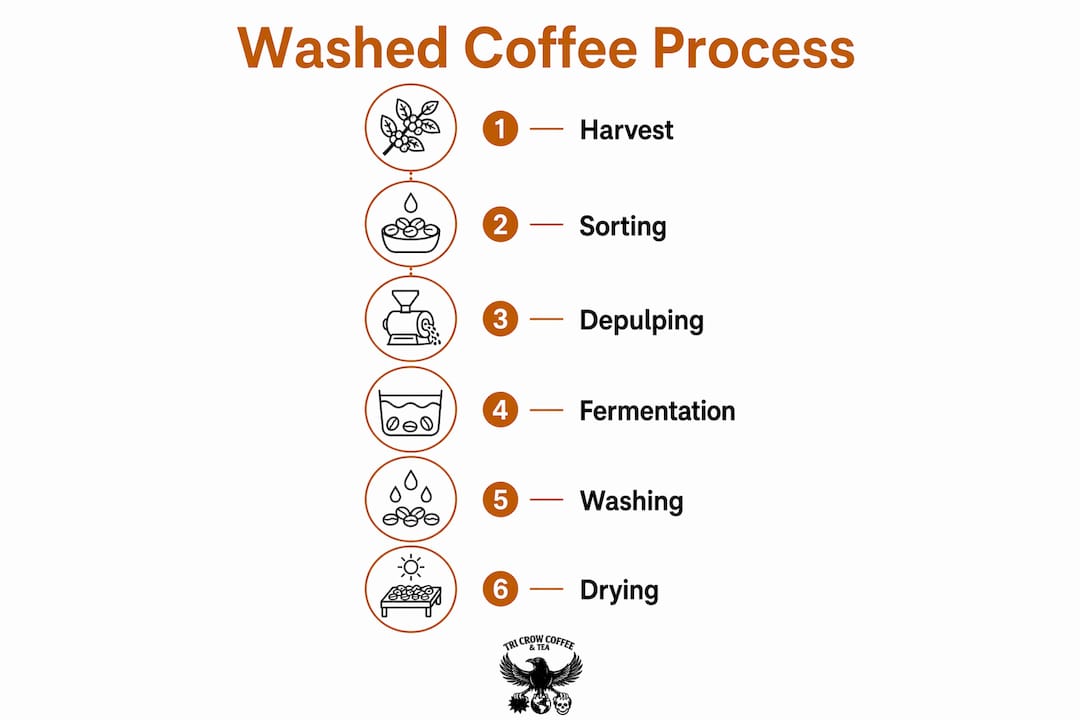
The washed coffee process follows a clear sequence. Each step builds on the last, and skipping or rushing any stage creates defects that no roaster can fix later.
-
Cherry harvest and sorting. Producers pick ripe cherries by hand or machine, then float them in water. Damaged or unripe cherries float and get removed. Only dense, ripe fruit moves forward.
-
Mechanical depulping. A depulping machine removes the outer skin and most of the fruit pulp. What remains is the bean wrapped in mucilage, a thin, sticky layer of fruit sugars and pectin.
-
Fermentation in tanks. Beans sit in water tanks while naturally occurring microbes break down the mucilage. The typical fermentation window is 12–36 hours, though the full range runs from 6 to 72 hours depending on temperature and altitude. Warmer climates speed fermentation; cooler highland farms slow it down.
-
Rinsing and washing channels. After fermentation, producers flush the beans through long washing channels. This rinse removes all remaining mucilage and residue. Washing channels also sort beans by density, separating heavier, denser beans from lighter defects and floaters. That density sort is an early quality filter built directly into the process.
-
Drying. Clean beans dry on raised beds or patios for 7–14 days, depending on climate and airflow. The target moisture content is 10–12%. Drying too fast causes cracking; drying too slow invites mold and off-flavors.
Pro Tip: If you are buying green coffee to roast at home, ask the producer or importer for the fermentation time and drying method. Those two numbers tell you more about the cup’s potential than almost any other data point.
What flavor characteristics does washed coffee offer?
Washed coffees are defined by bright acidity, clarity, and a clean finish. The early removal of fruit limits fermentation’s influence on flavor, which means the bean’s own chemistry drives the cup. That is exactly why washed processing is the industry benchmark for evaluating altitude, varietal, and origin.
A well-processed washed Ethiopian Yirgacheffe tastes like jasmine, lemon, and bergamot because those are the varietal’s actual flavor compounds. Nothing from the fruit layer is masking or amplifying them. A natural-processed version of the same bean would taste sweeter, heavier, and more like blueberry jam. Neither is wrong. They are just different tools for different goals.
The table below shows how washed processing compares to natural and honey processing across key flavor and quality dimensions.
| Category | Washed | Natural | Honey |
|---|---|---|---|
| Fruit influence | Minimal | High | Moderate |
| Acidity | Bright, clean | Lower, rounded | Medium |
| Body | Light to medium | Full, heavy | Medium to full |
| Flavor clarity | Very high | Lower | Moderate |
| Roasting predictability | High | Variable | Moderate |
| Best for showcasing terroir | Yes | Less so | Partially |
Washed coffees offer predictable roasting and higher stability, which is why specialty roasters rely on them for origin evaluation. When a roaster wants to know what a farm’s soil, altitude, and microclimate actually taste like, they reach for a washed lot.
Pro Tip: Brew washed coffees as pour-overs or Chemex to let the clarity and acidity shine. Those methods reward clean, bright profiles far better than a French press, which adds body and can muddy delicate notes.
What are critical quality control factors in washed processing?
Quality in washed coffee lives or dies at three points: cherry sorting, fermentation timing, and water cleanliness. Miss any one of them, and the cup reflects it.
-
Cherry sorting before depulping. Strict cherry sorting is the single most important quality control step. Under-ripe or damaged cherries cannot be corrected by fermentation. They carry astringency, sourness, or woody notes that survive every stage of processing and roasting.
-
Fermentation timing. Fermentation duration from 6–72 hours is sensitive to temperature and climate. Too short, and mucilage remains on the bean, creating a slimy texture and off-flavors in the cup. Too long, and the beans absorb sour, vinegary compounds from over-fermentation. Producers monitor the parchment surface by touch and smell to judge readiness.
-
Water quality and cleanliness. Dirty or recycled water introduces bacteria that compete with the natural fermentation process. Clean, fresh water at each rinse stage protects flavor integrity.
-
Density sorting in washing channels. Washing channels function as grading tools by separating beans by density. Lighter, defective beans float and get removed. This step reduces downstream defect risk before the coffee ever reaches a drying bed.
-
Drying speed and moisture targets. Rushing the drying stage by using mechanical dryers at high heat can lock in grassy or hay-like flavors. Slow, even drying on raised beds preserves the clean profile the washed method is built to deliver. The Grade 1 specialty standard requires no more than 3 defects per 300g sample, and proper drying is a major factor in hitting that threshold.
How should home brewers select and brew washed coffee?
Washed coffee rewards brewers who pay attention to method and freshness. The clean, bright profile that makes washed coffee special is also the first thing to fade when beans are stale or ground incorrectly.
-
Choose filter brewing methods. Pour-over, Chemex, AeroPress, and drip machines all highlight the clarity and acidity that define washed coffees. These methods use paper filters that remove oils and fine particles, keeping the cup clean and transparent.
-
Grind fresh and grind medium. A consistent medium grind suits most filter methods for washed coffee. Grinding too coarse makes the cup thin and sour; too fine makes it bitter and muddy. Grind right before brewing for the best result.
-
Use water between 195°F and 205°F. Water that is too cool under-extracts washed coffee, leaving it flat and sour. Water at the right temperature pulls out the floral and citrus notes that make washed coffees worth drinking.
-
Prioritize light to medium roasts. Washed coffees shine at lighter roast levels because the roaster preserves the origin character the processing worked to reveal. Dark roasts push those flavors aside in favor of roast-driven bitterness.
-
Store beans properly. Keep beans in an airtight container away from light and heat. Washed coffees are more delicate than naturals and lose their brightness faster when exposed to air.
Pro Tip: Buy washed single-origin coffees in small quantities and brew them within three weeks of the roast date. The acidity and clarity that define the washed profile are at their peak in that window.
Key takeaways
The washed process is the most reliable method for revealing a coffee’s true origin character, because removing all fruit before drying eliminates processing noise and lets terroir, varietal, and altitude drive the cup.
| Point | Details |
|---|---|
| Fruit removal defines the method | All skin, pulp, and mucilage are removed before drying, producing a clean cup. |
| Fermentation timing is critical | The 6–72 hour window must match temperature and climate to avoid off-flavors. |
| Cherry sorting sets the ceiling | No amount of fermentation or rinsing can fix defects from under-ripe cherries. |
| Washed coffee highlights terroir | Specialty roasters use washed lots to evaluate altitude, varietal, and origin character. |
| Filter brewing maximizes clarity | Pour-over and Chemex methods best preserve the bright acidity washed coffees deliver. |
Why washed coffee is the most honest cup you can brew
I have tasted a lot of coffee across a lot of processing methods, and washed coffees are the ones that keep me honest. When you brew a natural or honey-processed coffee, you are tasting the fruit as much as the bean. That is not a flaw. It is a choice. But when you want to know what a farm actually produces, what the soil and altitude and varietal contribute on their own terms, you reach for a washed coffee.
The thing most home brewers miss is that washed coffee is unforgiving in the best possible way. A poorly grown bean has nowhere to hide. A great bean from a high-altitude farm in Ethiopia or Tanzania will show you exactly what it is capable of. That transparency is what makes coffee terroir a real concept rather than marketing language.
My honest caution: not all washed coffees are equal. The method is only as good as the cherry sorting and fermentation control behind it. I have had washed coffees that tasted sour and hollow because fermentation ran too long, and others that tasted grassy because drying was rushed. The label “washed” tells you the method, not the quality. Buy from roasters who can tell you the farm, the fermentation time, and the drying method. That information is the difference between a good cup and a great one.
If you are new to washed coffees, start with a single-origin light roast from a well-documented origin like Ethiopia, Kenya, or Tanzania. Brew it as a pour-over. Taste it black. That is where the method reveals itself most clearly.
— David
Tri Crow Coffee and the washed process difference
Tri Crow Coffee sources and roasts in small batches specifically to preserve what washed processing works so hard to create: clarity, brightness, and origin character you can actually taste.
The Tanzania Medium-Light is a single-origin washed coffee that delivers exactly the bright acidity and clean finish the method is known for. If you want to explore how coffee processing matters across different roast styles, the Best Sellers Sample Pack includes six varieties across two-ounce portions, giving you a direct comparison without committing to a full bag. Every batch ships fresh, roasted to order, and built for the kind of intentional brewing that makes washed coffee worth the effort.
FAQ
What is the washed process in coffee?
The washed process removes all fruit from the coffee cherry before drying, using mechanical depulping and fermentation to strip the mucilage layer. The result is a clean, bright cup that highlights the bean’s origin character rather than fruit-driven flavors.
How long does washed coffee fermentation take?
Fermentation in washed processing typically runs 12–36 hours, though the full range extends from 6 to 72 hours depending on temperature and altitude. Timing is critical: too short leaves mucilage, and too long causes sour off-flavors.
What does washed coffee taste like?
Washed coffees are known for bright acidity, floral or citrus notes, and a clean, transparent finish. The flavor reflects the bean’s varietal and origin rather than any influence from the fruit layer.
How is washed coffee different from natural process coffee?
Washed coffee removes all fruit before drying, producing clarity and brightness. Natural process coffee dries with the fruit intact, adding sweetness, body, and fermented fruit notes to the cup.
Is washed coffee better for home brewing?
Washed coffee is ideal for filter brewing methods like pour-over and Chemex because those methods preserve the clarity and acidity the process creates. Home brewers who prefer clean, bright cups with defined flavor notes will find washed coffees consistently deliver that profile.