
Paying more for a bag of coffee does not automatically mean you’re getting something better or more ethical. Specialty labels, origin stamps, and certification seals can look impressive, but without real traceability, they’re mostly marketing. Traceability is the documented ability to follow a coffee’s journey from the farm where it was grown, through processing, export, roasting, and finally into your cup. It’s the difference between a story you’re told and a story you can verify. This article breaks down what traceability actually means, who it helps, where it falls short, and how you can use it to make smarter, more ethical buying decisions.
Table of Contents
-
A closer look: The truth most consumers miss about traceable coffee
-
Discover traceable, ethically sourced coffee options from Tri Crow
Key Takeaways
| Point | Details |
|---|---|
| Transparency reveals real impact | Traceability helps you see where your coffee comes from and who benefits along the way. |
| Technology builds trust | Blockchain and smart sensors ensure the coffee you buy matches its ethical and quality promises. |
| Not all premiums reach farmers | Much of the extra money from certified or traceable coffee may end up with roasters or retailers. |
| Look deeper than labels | Verify claims and demand documentation to support ethical and sustainable coffee purchases. |
| Your choices drive change | By choosing traceable products and holding brands accountable, you make a difference in the coffee world. |
What is coffee traceability and why does it matter?
Coffee traceability means creating a documented, verifiable record of every step a coffee takes from the moment it’s harvested to the moment it reaches you. Think of it like a passport for your coffee, one that records where it was grown, who picked it, how it was processed, and what conditions it traveled through before landing in your bag.

This matters for three interconnected reasons: quality, ethics, and sustainability. On the quality side, traceability helps roasters and buyers identify exactly which farms and processing methods produce the flavor profiles they’re looking for. On the ethics side, it creates accountability for labor conditions, environmental practices, and fair payment to farmers. On the sustainability side, it allows buyers and certifiers to verify that land is being managed responsibly.
The demand for this kind of transparency has grown sharply among American coffee drinkers who want to know their purchase is doing some good in the world. And the data backs up the value of that demand. Research shows that blockchain traceability yielded a USD 0.35 per kilogram price premium and a USD 356 annual household income increase (about 13%) for smallholder farmers, along with measurably better market access.
Here’s what a traceable coffee supply chain typically documents:
-
Farm origin: GPS coordinates, farmer name, cooperative or estate
-
Harvest date and method: Hand-picked, machine-harvested, selective or strip pick
-
Processing method: Washed, natural, honey, wet-hulled
-
Export and import records: Weight, moisture content, transport conditions
-
Roast profile and date: Roast level, batch number, roast date
-
Certification status: Organic, Fairtrade, Rainforest Alliance, Direct Trade
Each of these data points adds a layer of accountability that a simple label cannot provide. When all of them are present and verifiable, you have a genuinely traceable coffee.
How traceability works: Technology from farm to cup
Knowing why traceability matters is one thing. Understanding how it actually works helps you evaluate whether a brand’s transparency claims are real or just polished marketing copy.
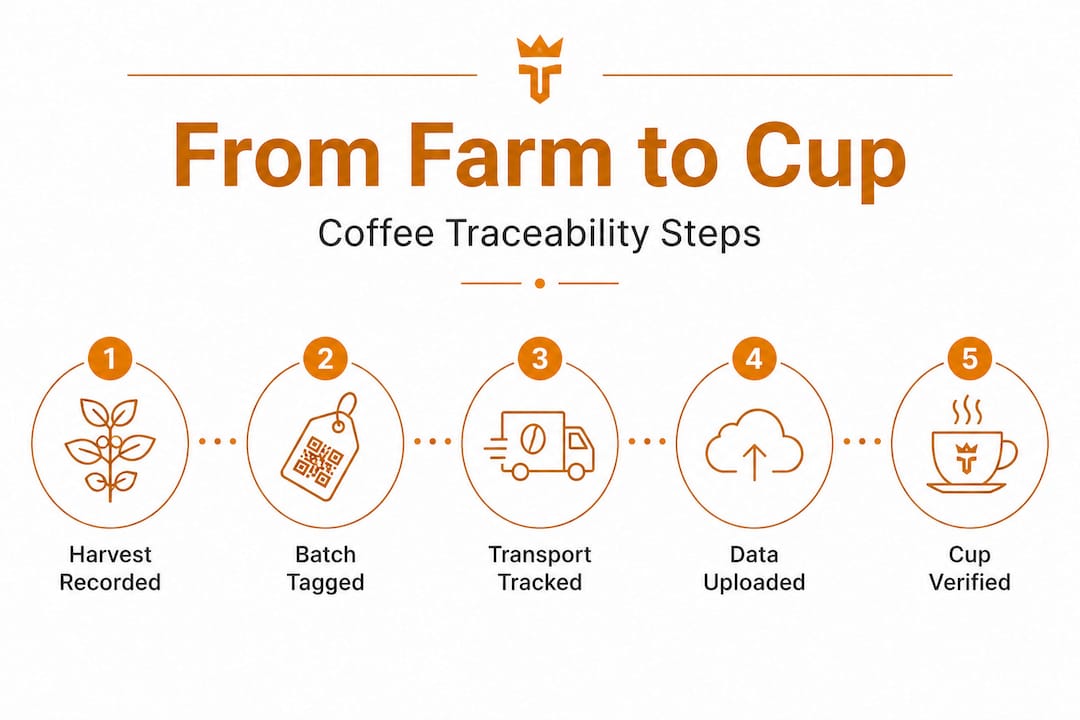
Modern coffee traceability relies on a combination of blockchain technology and Internet of Things (IoT) devices. Blockchain is a type of digital record-keeping where data is stored in linked blocks that cannot be altered retroactively. IoT devices are physical sensors and tags that collect real-world data automatically. Together, they create a supply chain record that is both detailed and tamper-resistant.
Here’s how the process typically unfolds, step by step:
-
Harvest: RFID (Radio Frequency Identification) tags are assigned to each batch at the farm. These tags carry a unique ID linked to the farm’s GPS location, the harvest date, and the farmer’s profile.
-
Processing: Environmental sensors record temperature, humidity, and drying time during processing. This data is uploaded to the blockchain automatically.
-
Export: Weight, moisture readings, and grading results are logged. Smart contracts (automated agreements built into the blockchain) trigger payment releases when conditions are met.
-
Shipping: GPS logs track the container’s route and flag any deviations or temperature breaches.
-
Roasting: The roaster receives the full data record and links their roast profile and batch number to it.
-
Consumer access: A QR code on the bag lets you pull up the entire chain of custody in seconds.
Research on tech in traceable coffee supply chains confirms that advanced methodologies using blockchain with IoT, including RFID tags for batch identification at harvest, GPS logs, environmental sensors, and smart contracts for ownership transfers, are already being deployed in real supply chains.
| Technology | Role in traceability | Benefit |
|---|---|---|
| RFID tags | Batch identification at harvest | Links physical coffee to digital record |
| GPS logging | Route and location tracking | Confirms geographic origin claims |
| Environmental sensors | Temperature and humidity monitoring | Protects quality, detects mishandling |
| Blockchain records | Immutable data storage | Prevents fraud and data tampering |
| Smart contracts | Automated payment triggers | Speeds up fair payment to farmers |
| QR codes | Consumer-facing access point | Makes the supply chain visible to buyers |
Pro Tip: When you scan a QR code on a coffee bag, look for specific data like farm GPS coordinates or harvest date, not just a general “sourced from Ethiopia” statement. Vague origin claims are a sign the traceability is shallow.
Who really benefits from traceable coffee?
With technology enabling traceability, it’s important to ask who actually gains from these systems and whether all parts of the chain benefit equally. The answer is more complicated than most brands want to admit.
Farmers do benefit, but not always as much as the marketing suggests. Traceability can open doors to specialty markets that pay significantly more than commodity prices. It can also help cooperatives demonstrate quality consistency, which builds long-term buyer relationships. These are real, meaningful gains.
But the distribution of value is uneven. Consider what the research shows about Fairtrade certification, one of the most recognized traceability and ethics programs in the world. Fairtrade certification is associated with roughly 5 cents per pound higher export prices, but with no increase in sales volume or domestic prices for producers. Meanwhile, the distribution of Fairtrade premiums shows that roasters and retailers capture 61 to 70 percent of the premium that consumers pay for certified coffee.
“Consumers often assume that paying a premium for certified coffee means farmers are getting a bigger check. The data tells a more complicated story.”
This doesn’t mean traceable or certified coffee is a bad choice. It means you need to look deeper than the logo. Here’s a quick breakdown of who tends to benefit most at each level:
-
Farmers: Gain from price premiums, market access, and quality recognition, but often receive a smaller share than expected
-
Cooperatives: Benefit from collective bargaining power and access to certification programs
-
Exporters and importers: Gain efficiency and reduced fraud risk from digital records
-
Roasters: Can charge higher prices and build brand differentiation through transparency stories
-
Retailers: Capture a significant portion of the premium through markup
-
Consumers: Get quality assurance and ethical alignment, but need to verify claims actively
The takeaway here is not cynicism. It’s informed engagement. Traceable coffee is better than untraceable coffee. But not all traceable coffee is equally equitable, and your buying choices are more powerful when you understand the full picture.
Limitations and pitfalls of coffee traceability
Understanding who benefits is only half the story. The reality of traceability systems comes with challenges and tradeoffs every buyer should know before taking a brand’s transparency claims at face value.
One of the most significant issues is exclusion. Blockchain and IoT-based traceability systems require reliable internet connectivity, smartphones or tablets, and a baseline level of digital literacy. Research on smallholder barriers in traceable coffee found that 62 percent of smallholder farmers face connectivity issues and 41 percent face digital literacy gaps, meaning the very farmers who need better market access the most are often the ones least able to participate in these systems.
Larger farms and well-funded cooperatives are better positioned to adopt traceability technology, which can inadvertently concentrate the benefits among producers who are already more advantaged. Blockchain is not a standalone solution either. Without strong governance structures and attention to power dynamics within supply chains, the technology can simply digitize existing inequalities rather than correct them.
There’s also the risk of traceability becoming a marketing tool rather than a genuine accountability mechanism. Some brands use the language of transparency without providing verifiable data. A coffee described as “farm-to-cup” or “direct trade” may have no documentation behind those claims at all.
Regulatory complexity adds another layer of difficulty. The EU Deforestation Regulation (EUDR), which requires supply chain documentation proving coffee was not grown on deforested land, has created compliance challenges. Research on risks of traceability in coffee highlights issues like remote farms that are difficult to map accurately and false positives in deforestation detection algorithms, which can unfairly flag compliant farmers.
Pro Tip: If a brand claims full traceability but can’t tell you the name of the farm, the cooperative, or the processing station, that’s a red flag. Real traceability has specific, verifiable details attached to it.
How to use traceability to choose better coffee
Armed with this new clarity, you’re ready for practical steps to support responsible coffee with your buying choices. Knowing what to look for and what questions to ask makes all the difference.
-
Look for specific origin data. A country of origin is not enough. Look for the region, the farm or cooperative name, and ideally GPS coordinates or a farm code. The more specific, the more credible.
-
Ask your roaster directly. A good roaster should be able to tell you exactly where their coffee came from, who they bought it from, and what they paid. If they can’t answer those questions, their traceability story is thin.
-
Check for verifiable certifications. Fairtrade, Rainforest Alliance, and organic certifications all have public databases where you can verify a producer’s status. Use them.
-
Scan QR codes and follow up. If a bag has a QR code linking to supply chain data, scan it and read it critically. Look for harvest dates, processing details, and farmer profiles, not just a pretty map.
-
Prioritize impact-driven programs. Some roasters go beyond certification and publish direct trade contracts, farmer income data, or annual transparency reports. These brands are putting real accountability behind their claims.
-
Diversify your sourcing. Buying from multiple origins and producers, rather than always defaulting to the same brand, exposes you to a wider range of supply chain practices and helps you develop a sharper eye for what real transparency looks like.
Research on traceability limitations and potential confirms that while traceable coffee promises real premiums and ethical benefits, full impact requires overcoming implementation barriers, and not all traceability guarantees equity since value often stays upstream.
The bottom line: Traceability is a tool, and like any tool, its value depends on how it’s used. When you ask the right questions and look for specific, verifiable answers, you turn that tool into genuine purchasing power.
A closer look: The truth most consumers miss about traceable coffee
Here’s something most articles on this topic won’t say directly: traceability is only as meaningful as the integrity of the people and systems behind it. The technology is impressive. Blockchain records are genuinely tamper-resistant. IoT sensors really do capture real-world data. But none of that matters if the governance structure around the data is weak, if the farmer was pressured to accept terms, or if the premium never travels past the importer’s margin.
We’ve seen this play out in the specialty coffee world more than once. A roaster builds a beautiful transparency story, publishes a glossy farm profile, and charges a significant premium. But when you look closely at the numbers, the farmer’s actual take-home income barely moved. The story was real. The accountability was not.
This is why we believe traceability should be treated as a journey, not a badge. The most honest brands in this space are the ones who acknowledge that their supply chain relationships are evolving, that they’re still learning, and that they publish their shortcomings alongside their successes. Perfection is not the goal. Progress, verified by real data and honest communication, is.
For you as a coffee buyer, the most powerful thing you can do is stay curious and stay skeptical. Not cynical, but genuinely engaged. Ask questions. Expect answers. Support brands that welcome scrutiny rather than deflecting it with prettier packaging.
Discover traceable, ethically sourced coffee options from Tri Crow
If this article has made you think differently about what’s in your bag, the next step is finding coffee that actually lives up to the standard you now know to look for.
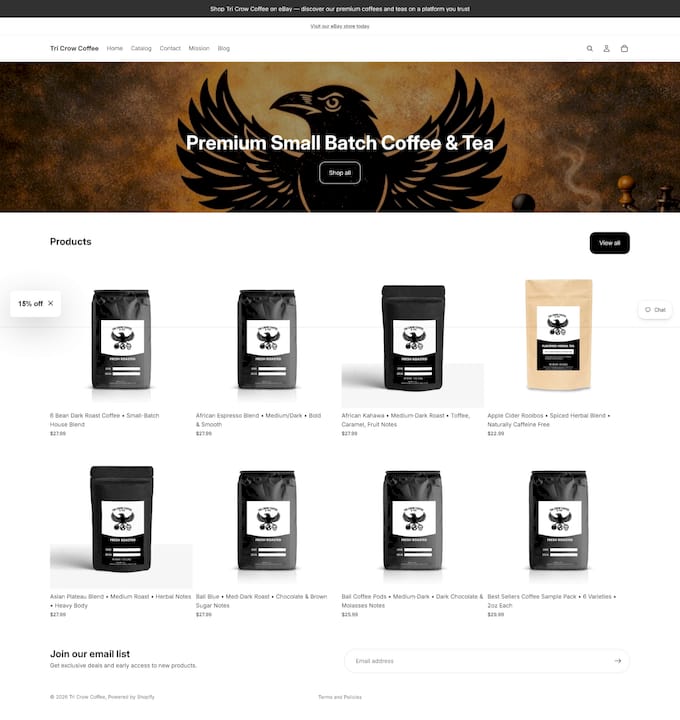
At Tri Crow Coffee, we source small-batch, sustainably grown coffees with a commitment to real transparency, not just the kind that looks good on a label. Whether you’re exploring origins for the first time or deepening an existing practice, our single origin coffee sample pack is a great way to taste the difference that traceable sourcing makes. If you’re looking for something consistent and approachable every morning, our house blend is crafted with the same sourcing standards. Your daily cup can be a meaningful choice. We make it easy to take that step.
Frequently asked questions
How does coffee traceability benefit farmers?
Traceability helps farmers earn higher prices and access better markets, with research showing blockchain traceability can increase household income by around 13 percent annually. However, the degree of benefit depends heavily on how the system is governed and who controls the data.
What technology is used to trace coffee from farm to cup?
Tech in traceable coffee supply chains includes RFID tags at harvest, GPS logging during transport, environmental sensors during processing, and blockchain smart contracts that automate ownership transfers and payment triggers.
Are traceability labels like Fairtrade always good for small farmers?
Not always. While they may bring modest price premiums, research on the distribution of Fairtrade premiums shows roasters and retailers capture 61 to 70 percent of what consumers pay, meaning much of the value doesn’t reach the producer.
What are the biggest barriers to making traceable coffee work everywhere?
The main barriers are poor internet infrastructure, digital literacy gaps, and systems that favor larger farms. Data on smallholder barriers in traceable coffee shows 62 percent of smallholders face connectivity issues and 41 percent struggle with digital literacy.
How can I verify if a coffee is truly traceable and ethical?
Ask the roaster for specific farm or batch information, look for verifiable certification records in public databases, and check whether QR codes link to real supply chain data with dates, locations, and farmer details rather than just a general origin story.