
TL;DR:
- Organic coffee is grown without synthetic chemicals and certified for health and sustainability benefits. It contains more nutrients, supports biodiversity, and reduces chemical exposure for consumers and workers. Although more expensive, it offers environmental, health, and ethical advantages that justify the price premium.
Organic coffee is defined as coffee grown without synthetic pesticides, herbicides, or fertilizers and certified under standards like USDA Organic, making it a measurably healthier and more sustainable choice. The reasons to choose organic coffee go well beyond marketing. 85% of non-organic coffee samples contained detectable pesticide residues in 2023 analysis. That single figure reframes the question from “is organic worth it?” to “what exactly am I drinking every morning?” Tri Crow Coffee sources and roasts with exactly this question in mind, crafting small-batch blends that reflect a commitment to cleaner ingredients and traceable origins.
Why choose organic coffee for your health
Conventional coffee carries a chemical burden that most drinkers never consider. Because coffee is one of the most heavily treated crops in the world, pesticide residues detected in non-organic samples represent a daily, cumulative exposure for regular drinkers. Organic certification eliminates that exposure entirely by prohibiting synthetic inputs at every stage of cultivation.

The health advantages extend beyond what organic coffee removes. Organic coffee contains higher levels of antioxidants, magnesium, potassium, niacin, and B vitamins than conventional coffee. Those nutrients matter because antioxidants reduce oxidative stress, and magnesium supports muscle function and sleep quality. You get more from every cup, not just fewer harmful residues.
Digestive sensitivity is another reason coffee drinkers switch to organic. Synthetic fertilizers alter soil chemistry, which affects the bean’s natural acid profile. Many people who report stomach discomfort from conventional coffee find that organic varieties are noticeably gentler, likely because the bean develops in a cleaner, more balanced growing environment.
Key health benefits of choosing organic coffee:
- No synthetic pesticide or herbicide residues in the final cup
- Higher antioxidant content compared to conventionally grown beans
- Greater levels of magnesium, potassium, niacin, and B vitamins
- Reduced digestive irritation for sensitive drinkers
- No synthetic fertilizer residues affecting bean chemistry
Pro Tip: If you experience stomach sensitivity with your current coffee, try switching to a certified organic medium roast before blaming caffeine. The culprit is often the chemical residue, not the caffeine itself.
How does organic coffee farming protect the environment?
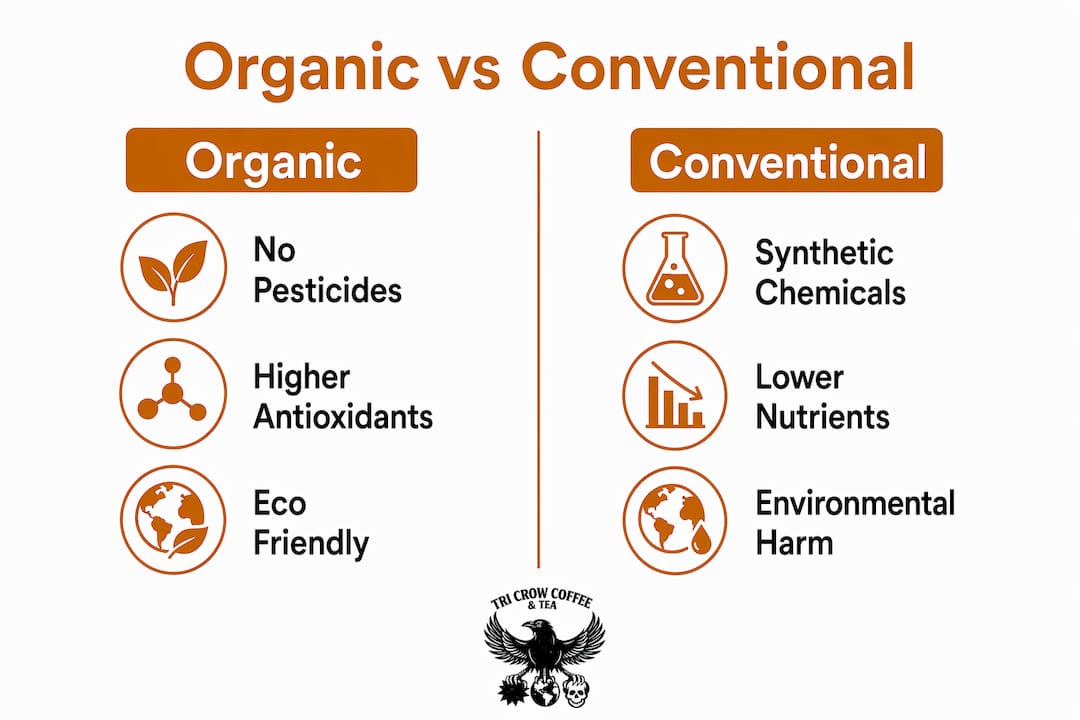
Organic coffee farming produces ecological benefits that conventional agriculture cannot replicate. Shade-grown organic coffee supports 76% more epiphyte species and 2–3 times more bird species than sun-grown monocultures. That biodiversity is not incidental. It reflects a farming system designed to work with natural ecosystems rather than replace them.
Soil health and carbon storage
Organic farms build soil rather than deplete it. Composting, cover cropping, and the avoidance of synthetic inputs allow microbial communities to thrive underground. Healthy soil sequesters more carbon, which means organic coffee farms actively contribute to climate mitigation while producing a crop. Conventional farms, by contrast, often degrade soil over time, requiring ever-increasing chemical inputs to maintain yields.
Forest habitat preservation
Each pound of organic coffee produced helps protect approximately 0.5 square meters of forest habitat through shade tree preservation. At scale, that adds up to meaningful conservation. Shade trees provide canopy for migratory birds, prevent erosion, and maintain the microclimate that coffee plants actually prefer. Sun-grown conventional farms clear that canopy entirely, trading long-term ecological health for short-term yield.
Water management standards
Organic certification mandates efficient water management and proper waste handling to reduce environmental impact on local watersheds. Coffee processing is water-intensive, and conventional wet-processing operations frequently discharge untreated wastewater into rivers. Certified organic operations must meet documented standards for both water use and effluent handling. That requirement protects the communities living downstream from coffee-growing regions.
Pro Tip: When reading an organic coffee label, look for “shade-grown” alongside the USDA Organic seal. Shade-grown certification confirms the biodiversity benefits described above. The two certifications together signal the highest environmental standard available.
| Environmental factor | Conventional farming | Organic farming |
|---|---|---|
| Pesticide use | Synthetic pesticides applied regularly | Prohibited entirely |
| Bird species diversity | Baseline monoculture levels | 2–3 times higher |
| Epiphyte species | Standard density | 76% more species supported |
| Forest habitat per pound | Minimal preservation | ~0.5 m² protected |
| Water management | Often unregulated discharge | Certified standards required |
Is organic coffee worth the price premium?
Organic coffee costs more, and the reasons are structural, not arbitrary. USDA Certified Organic coffee commands a $2–6 per pound premium over conventional coffee due to certification costs, lower average yields, and the labor-intensive nature of organic cultivation. Certification alone requires years of documented compliance before a single bag can carry the USDA Organic seal.
The yield argument against organic farming is weaker than it once was. Eco-friendly farming practices such as composting and Indigenous Microorganisms can increase coffee yield and disease resilience, partially offsetting traditional yield losses. That research challenges the assumption that organic automatically means less productive. Farmers who invest in ecological methods often see long-term gains that conventional chemical dependency cannot match.
Supply chain requirements also contribute to the price. Chain-of-custody documentation is mandatory in organic coffee supply chains to prevent contamination from non-organic beans. Serious organic roasters maintain separate storage and processing lines throughout the entire operation. That infrastructure costs money, and it shows up in the final price per bag.
For daily coffee drinkers, the math is straightforward. Spread across 30 cups per bag, a $4 premium adds roughly $0.13 per cup. That is a small cost for eliminating daily pesticide exposure and supporting farming systems that protect ecosystems. For occasional drinkers, the calculus shifts, but the ethical and environmental case remains. Understanding coffee bean origins and flavor profiles also helps you identify which organic varieties deliver the best value for your palate.
How does organic certification protect farmers and communities?
Organic certification does more than regulate what goes into the soil. Organic farms tend to have safer working conditions, supporting fair labor and reducing chemical exposure among workers. Farm laborers on conventional operations handle synthetic pesticides daily, often without adequate protective equipment. Organic certification removes that hazard at the source.
The social benefits of organic sourcing include:
- Elimination of toxic chemical exposure for farm workers and their families
- Documented labor standards embedded in many certification programs
- Greater transparency and traceability from farm to roaster to cup
- Support for farming communities that invest in long-term land stewardship
- Reduced health costs for workers no longer handling synthetic inputs
Traceability is the mechanism that makes ethical sourcing real rather than aspirational. Transparency in coffee sourcing allows consumers to verify the claims on the label. When a roaster can document the farm, the certification body, and the chain of custody, the word “ethical” carries actual weight. Without that documentation, it is just marketing language.
Organic certification also tends to align with fair trade principles, though the two are separate standards. Many organic farms participate in both programs because the underlying values overlap: long-term thinking, community investment, and rejection of practices that extract value without returning it. For coffee drinkers who care about where their money goes, organic certification is the most verifiable signal available.
Key Takeaways
Organic coffee is the superior choice for health, environmental impact, and ethical sourcing because it eliminates pesticide exposure, protects biodiversity, and supports safer working conditions for farmers.
| Point | Details |
|---|---|
| Pesticide exposure eliminated | 85% of non-organic samples contain residues; organic certification removes this risk entirely. |
| Higher nutrient content | Organic coffee delivers more antioxidants, magnesium, potassium, and B vitamins per cup. |
| Biodiversity protection | Shade-grown organic farms support 76% more epiphyte species and 2–3 times more bird species. |
| Price premium is justified | A $2–6 per pound premium adds roughly $0.13 per cup for daily drinkers. |
| Farmer welfare improves | Organic certification reduces chemical exposure and supports safer labor conditions on farms. |
What I’ve learned after years of drinking organic coffee
The flavor argument for organic coffee is the one most enthusiasts overlook. Organic beans grown in healthy, biologically active soil express terroir more clearly than beans grown in chemically managed monocultures. The soil microbiome directly influences the sugars and acids that develop in the bean during growth. When you taste a well-sourced organic coffee and notice unusual clarity or complexity, that is not coincidence. It is the result of a living ecosystem doing its job.
The price objection is the one I hear most often, and I think it misframes the question. The real question is not whether organic coffee costs more. It is whether the alternative is actually cheaper when you account for what conventional farming externalizes: degraded soil, polluted watersheds, and farm workers absorbing chemical exposure so that a bag of coffee can cost two dollars less. Those costs exist. They are just paid by someone else.
The misconception I find most frustrating is that organic coffee is somehow a niche or premium category for people with extra money to spend. Organic farming is older than synthetic agriculture. It is the baseline from which industrial methods departed, not an upgrade from them. Choosing organic is not a lifestyle statement. It is a return to the way coffee was grown before the chemical industry decided farming needed to be industrialized.
If you are a regular coffee drinker and you have not made the switch yet, start with one bag. Pay attention to how your stomach feels. Notice the flavor. Then decide.
— David
Tri Crow Coffee and the organic difference
Tri Crow Coffee builds every blend around the same principles this article describes: clean sourcing, traceable origins, and small-batch craft that preserves what makes a great bean great.
The Max Caf Blend, combining Tanzania and India Robusta, delivers high caffeine alongside a rich, full-bodied cup that reflects careful sourcing. The House Blend offers a smooth, balanced medium roast from Central and South American origins, built for daily drinking. Both reflect Tri Crow Coffee’s commitment to intentional, ethically sourced coffee that you can feel good about brewing every morning. If you are ready to make the switch to organic, these blends are a strong place to start.
FAQ
What makes coffee officially “organic”?
Coffee earns organic certification when it is grown without synthetic pesticides, herbicides, or fertilizers on land that has been free of prohibited substances for at least three years. USDA Organic is the most recognized standard in the United States.
Does organic coffee taste different from conventional coffee?
Organic coffee grown in biologically healthy soil often expresses more complex flavor because the soil microbiome influences the bean’s sugar and acid development. Many drinkers report cleaner, more distinct flavor profiles compared to conventionally grown beans.
Why does organic coffee cost more?
USDA Certified Organic coffee carries a $2–6 per pound premium due to certification costs, lower average yields, and mandatory chain-of-custody documentation throughout the supply chain.
Is organic coffee better for the environment?
Organic coffee farming supports significantly higher biodiversity, protects forest habitat, and requires certified water management practices. Each pound produced helps preserve approximately 0.5 m² of forest habitat through shade tree preservation.
Does organic certification protect coffee farmers?
Organic certification eliminates synthetic chemical exposure for farm workers and often incorporates labor standards that improve working conditions. Organic farms provide safer working conditions compared to conventional operations where workers handle pesticides daily.
Recommended
- Why coffee origin matters: flavor, ethics, and sustainability – Tri Crow Coffee
- Advantages of Small Batch Coffee: Flavor, Freshness, Ethics – Tri Crow Coffee
- How to select coffee beans for great home brewing flavor – Tri Crow Coffee
- Natural Process Coffee: Flavor, Method, and Craft – Tri Crow Coffee