
Premium tea is worth buying when you want layered flavor, traceable sourcing, and leaves that survive three or four steeps without going flat. It’s not worth it if you just need caffeine before a 7 a.m. meeting. The simple rule: buy premium for mindful sipping, gifting, or slow weekends; stick with mid-range for the mug you down while answering email. The sections below break down the quality signals, the actual cost-per-cup math, and how to brew premium leaves so they earn that price tag.
- Premium tea rewards attention: flavor complexity, provenance, and re-steepability are the payoff.
- Mid-range tea is fine for quick, functional cups where speed matters more than nuance.
- The real test isn’t the price on the tin. It’s whether the seller can tell you where and when the leaf was picked.
Key Takeaways
Premium tea justifies its price through traceable sourcing, whole-leaf integrity, and re-steepability that lowers real cost per cup over time.
| Point | Details |
|---|---|
| Definition matters | Premium tea means whole-leaf integrity, traceable origin, and artisanal processing, not just a high price tag. |
| Check the signals | Look for harvest dates, origin details, and real leaf photos before paying a premium price. |
| Do the math | Re-steepable teas like oolong and pu-erh can cost less per cup than single-steep bagged tea. |
| Brew with intent | Match water temperature and steep time to tea type to unlock extra infusions without bitterness. |
| Start small with Tri Crow | Tri Crow Coffee’s small-batch matcha, English breakfast, and Earl Grey ship with the traceability details this guide recommends checking. |
Table of Contents
- Why Buy Premium Tea Leaves Instead of Commodity Blends?
- What Quality Signals Prove a Tea Is Actually Premium?
- Does Premium Tea Actually Taste Different?
- What Are the Health Benefits of Premium Tea?
- Is Premium Tea Worth the Extra Cost Per Cup?
- How Do You Shop for Premium Tea Without Getting Fooled?
- How Should You Brew Premium Tea to Get the Most Value?
- What a Small-Batch Producer Actually Watches For
- Try Tri Crow Coffee’s Small-Batch Teas Before You Commit
- Sources
- FAQ
Why Buy Premium Tea Leaves Instead of Commodity Blends?
“Premium” isn’t a marketing sticker. In the specialty trade, it describes whole or large-leaf tea with traceable origin, meaning you can point to a single estate or region rather than a vague “product of several countries” label on the box. Commodity tea, by contrast, is usually made from dust or fannings, the broken leftover bits from processing, which oxidize faster and lose aromatic nuance almost as soon as the bag is sealed.
The Specialty Tea Association ties premium quality to leaf integrity, traceable sourcing, and artisanal processing that preserves essential oils. That’s the objective baseline, not a brand’s opinion of itself.
- Whole or large-leaf structure, not crushed dust or fannings.
- Traceable origin: single estate, garden, or defined region.
- Harvest and packing dates disclosed, not hidden.
- Processing that protects volatile aromatics instead of rushing them to market.
What Quality Signals Prove a Tea Is Actually Premium?
Anyone can print “premium” on a tin. The proof is in details a seller either shares or doesn’t. Genuine premium tea usually comes with a harvest date, an estate or garden name, and sometimes a lot number, the same kind of traceability wine collectors expect from a vintage. Alveus notes that sellers who can explain origin, harvest, and processing earn more trust from buyers who actually know what they’re looking at, and for good reason.
Look for these before you pay a premium price:
- Harvest date and lot number. No date usually means no accountability.
- Whole-leaf photos. Consistent color, minimal stem or debris, leaves that look intact.
- Processing notes. Shade-grown, hand-plucked, or small-batch claims should come with specifics, not just adjectives.
- Protective packaging. Light-blocking, air-sealed pouches or tins, with a pack date visible.
- Ethical sourcing claims. Organic certification and fair-wage sourcing matter, but note what they don’t guarantee: neither one promises better flavor or fresher leaf on its own.
Pro Tip: If a product page shows more photos of the gift box than the actual leaves, that’s usually a tell. Ask to see a close-up of the dry leaf before you buy in bulk.
Does Premium Tea Actually Taste Different?
Yes, and the difference is not subtle once you know what to look for. Premium leaves deliver layered flavor: floral top notes, a mineral or vegetal middle, and a clean finish, instead of the flat, single-note flavor common in mass-market bags. Much of that comes down to whole-leaf structure. Loose-leaf tea generally outperforms bagged tea in aroma and complexity because whole leaves unfurl fully in hot water and hang onto volatile compounds that get lost when tea is crushed into teabag-ready dust.
Mouthfeel matters too. Good premium tea has body and a lingering finish rather than sharp, one-dimensional astringency. And because the leaf structure stays intact, premium tea often handles multiple infusions gracefully, with each steep revealing a slightly different side of the same leaf.
- Smell the dry leaf first: complexity should be obvious before water even touches it.
- Watch the color of the liquor: clarity and brightness are good signs.
- Taste the second steep, not just the first. That’s often where premium tea really shows its range.
What Are the Health Benefits of Premium Tea?
Regular tea drinking has real, if modest, health associations, and premium processing can help preserve the compounds behind them. Cleveland Clinic links drinking 3 to 5 cups (24 to 40 ounces) of green tea daily to potential heart, metabolic, and cognitive benefits, though those effects show up most clearly alongside a generally healthy lifestyle, not as a standalone fix.
Reviews cited by Healthline connect green tea’s L-theanine and catechins, especially EGCG, to antioxidant activity and modest metabolic and cognitive support, with benefits strongest at consistent daily intake.
Shade-grown and early-spring harvests, common practices behind many premium greens, tend to concentrate these compounds more than mass-produced leaf grown for volume. That’s a real chemistry difference, not just marketing. Still, premium tea is not a treatment for anything. It’s a better-tasting way to get benefits tied to the tea itself, not a substitute for diet, sleep, or exercise.
Is Premium Tea Worth the Extra Cost Per Cup?
This is where “is premium tea worth it” actually gets answered, with math instead of opinion. A tin of premium loose leaf costs more upfront, but re-steepability changes the equation fast.
Take a pouch of premium oolong. At about 2 grams per steep and multiple infusions per session, that pouch yields many cups; this can make the cost per cup lower than mid-shelf bagged tea that only steeps once. Premium teas often offer richer flavor and better re-steepability, which lowers real cost per cup, which is the whole argument in one sentence.
| Tea type | Typical re-steeps | Value pattern |
|---|---|---|
| Oolong | 3 to 5 steeps | Stretches furthest; strong cost-per-cup value |
| Pu-erh | 5 or more steeps | Ages well; best long-term value for regular drinkers |
| Green | 1 to 2 steeps | Delicate; fewer re-steeps but concentrated flavor |
| Black | 1 to 2 steeps | Fewer re-steeps; still often cheaper than specialty coffee per cup |
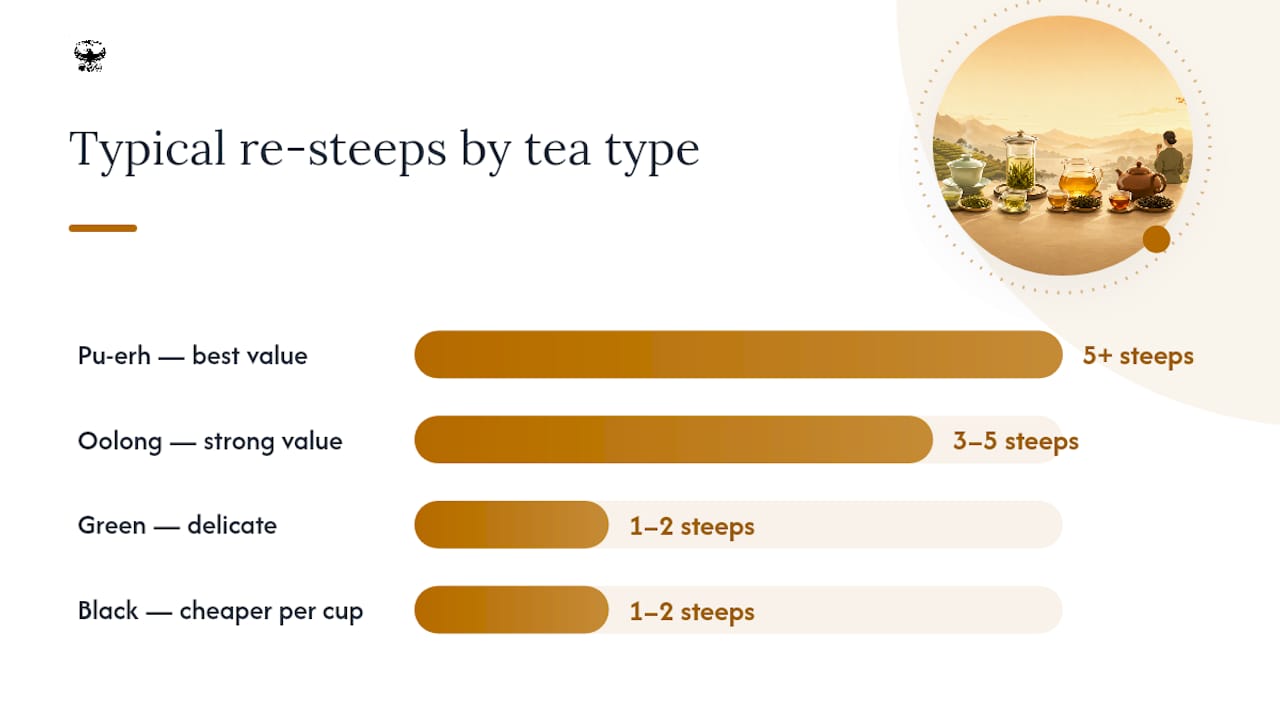
Pu-erh in particular rewards patience. Explore what pu-erh brewing and aging look like if you want a category built almost entirely around multiple infusions.
Pro Tip: Before buying a full tin, always check the recommended grams-per-cup on the label. Sellers who list it are usually confident about how their tea performs across multiple steeps, not just the first one.
How Do You Shop for Premium Tea Without Getting Fooled?
A short checklist saves you from paying luxury prices for average leaf. Before checkout, confirm the seller lists a harvest or pack date, names an actual origin (not just “imported”), and shows real photos of the dry leaf, not just packaging art.
- Harvest and pack date visible on the product page.
- Origin named specifically, ideally down to region or estate.
- Photos of actual leaves, plus clear brewing instructions.
- Re-steep guidance included, not left for you to guess.
- Sample sizes available before you commit to a full tin.
Red flags run the other direction: vague origin language, no dates anywhere, gift packaging emphasized over leaf information, or “vintage” claims with zero provenance behind them. If a seller can’t answer a direct question about harvest timing, that’s information worth having before you spend. For everyday picks between splurges, a flavor-first selection guide helps you figure out what you actually like before paying premium prices to find out.
How Should You Brew Premium Tea to Get the Most Value?
Brewing technique decides whether that $24 tin performs like it should. Green tea generally wants cooler water, around 175°F, steeped 1 to 2 minutes to avoid bitterness. Oolong does well around 195°F for 1 to 3 minutes, and can typically handle four or five re-steeps if you extend each one slightly. Black tea takes near-boiling water, roughly 200 to 212°F, for 3 to 4 minutes. Pu-erh benefits from a quick rinse first, then short, repeated steeps at boiling. Matcha isn’t steeped at all; whisk it directly with water around 175°F.
- Measure leaf by weight, not by eyeballing a spoon.
- Match water temperature to tea type.
- Steep short the first time. You can always steep longer on re-steeps.
- Store opened tea in an airtight, opaque container away from heat.
Pro Tip: Extend each re-steep by 15 to 30 seconds rather than repeating the same steep time. That single adjustment often unlocks two extra infusions from the same leaves.
What a Small-Batch Producer Actually Watches For
Small-batch production controls variables that large-volume tea simply can’t. Lot sizes stay small enough to run quality checks on freshness and leaf consistency before packaging, rather than blending huge volumes to mask inconsistency.
That scale also keeps supplier relationships closer, which makes real provenance disclosure possible instead of a vague country-of-origin label. When Tri Crow Coffee evaluates a matcha, English breakfast, or Earl Grey lot, the questions are the same ones this guide has walked through: harvest timing, leaf integrity, and whether the flavor holds up past the first steep.
- Small lot sizes allow tighter freshness and quality checks.
- Closer supplier ties support honest, specific origin claims.
- Packaging choices protect leaf integrity after opening, not just before sale.
A Note From Tri Crow Coffee
Premium tea earns its price when the seller can back it up with facts, not adjectives. Tri Crow Coffee is built around small-batch sourcing precisely because traceability and mindful brewing shouldn’t be optional extras. Buy premium when flavor and provenance matter to you; mid-range is a perfectly reasonable choice for a fast Tuesday morning cup.
Try Tri Crow Coffee’s Small-Batch Teas Before You Commit
Tri Crow Coffee’s advantage over guessing your way through unfamiliar tea brands is simple: every blend ships with the traceability signals this guide just walked through, harvest timing, careful small-batch processing, and honest leaf photography instead of gift-box marketing.
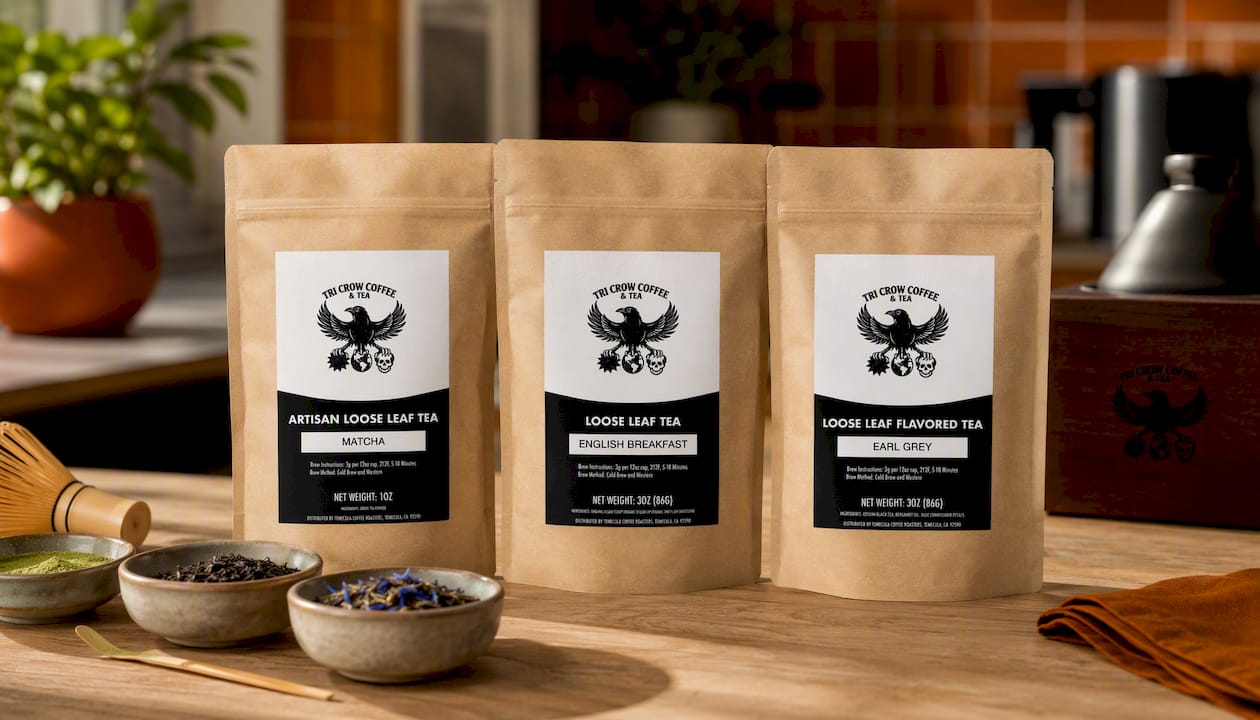
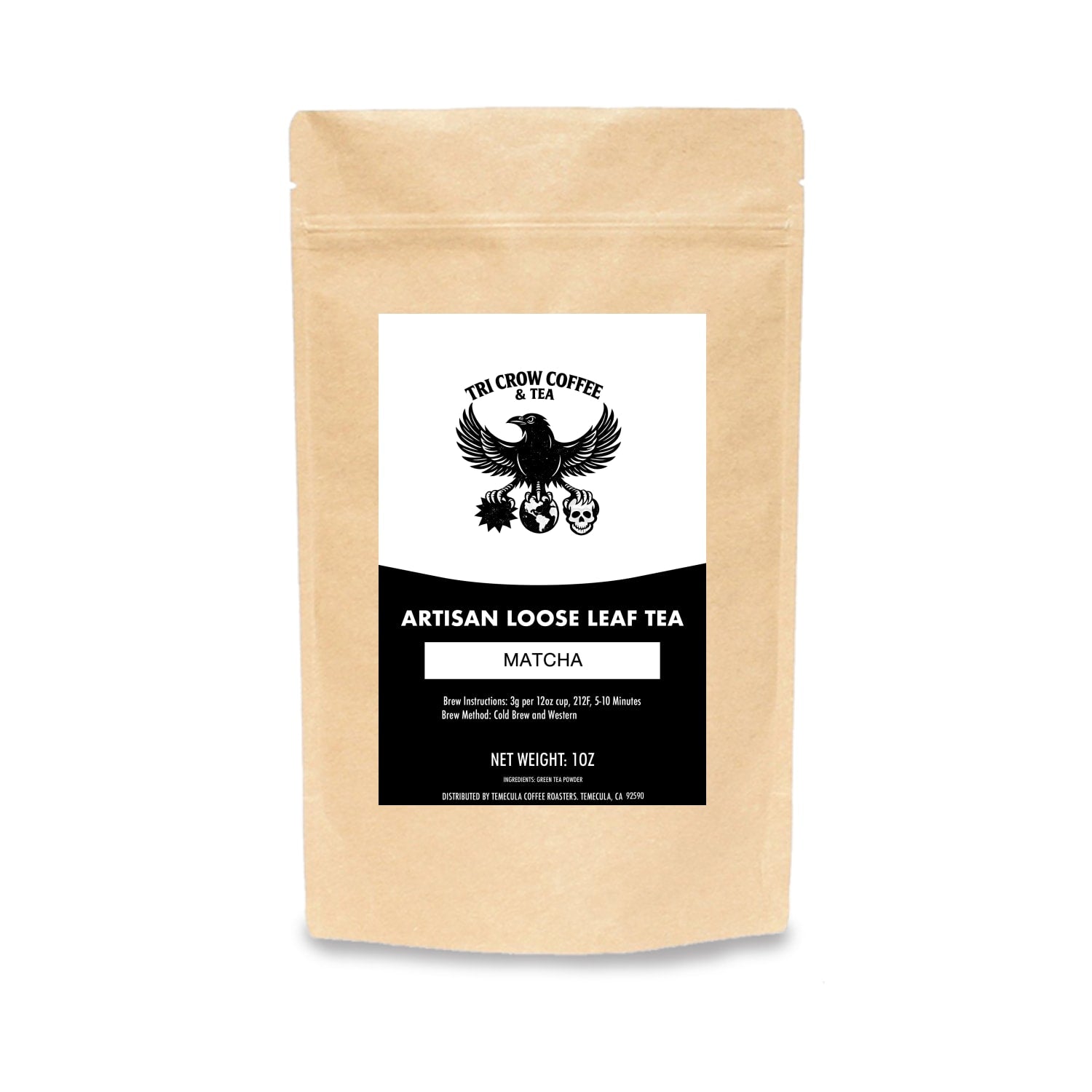
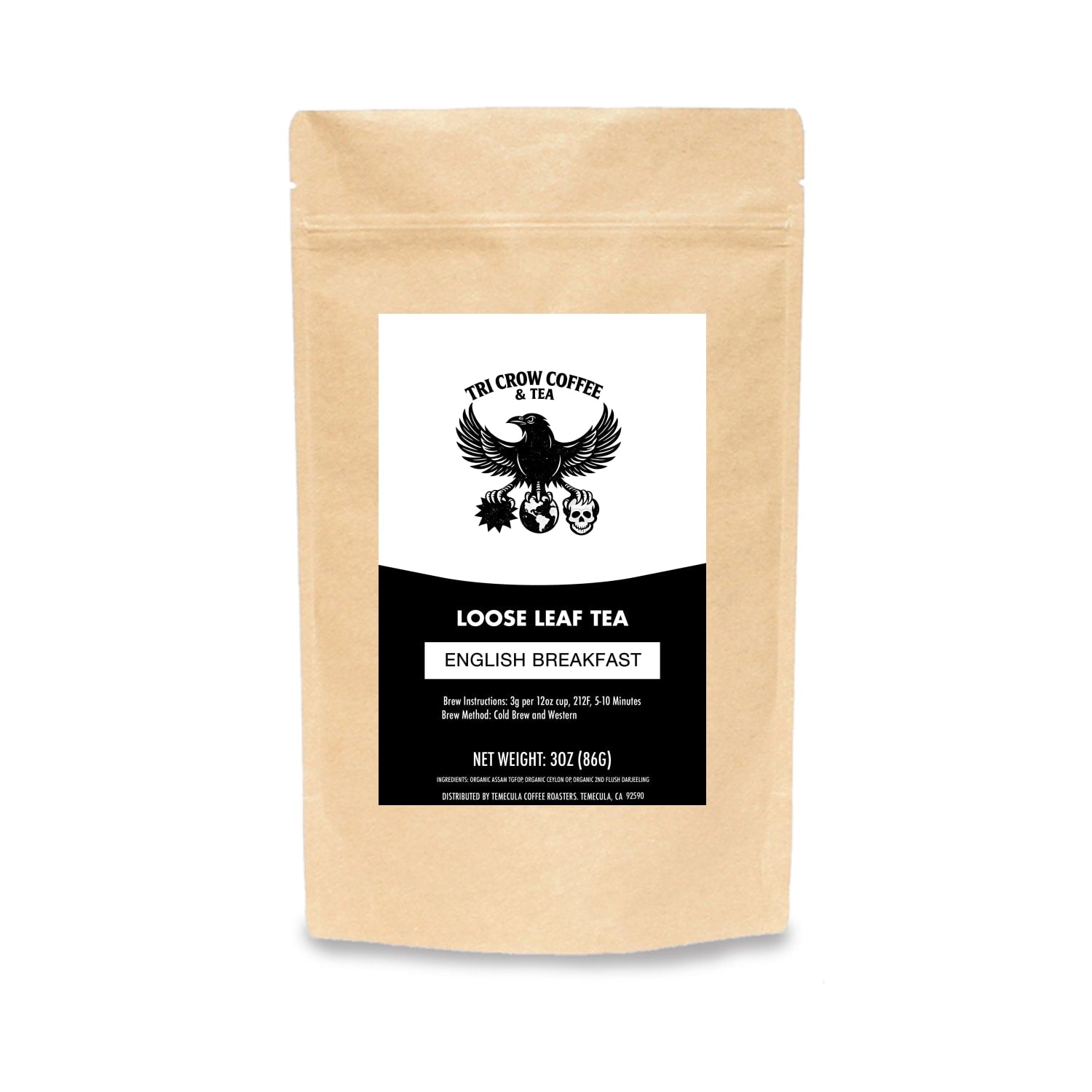
Start with the Matcha Green Tea, loose leaf, 1 oz small-batch if you want a shade-grown green built for daily ritual. If you’d rather ease in with something familiar, the English Breakfast loose-leaf tea is a strong, smooth black that holds up well with milk, and the Earl Grey with Ceylon OP, bergamot oil, and blue cornflowers covers the classic flavored side of the shelf. For readers who want to widen the search further, a broader coffee and tea shopping category is worth a look too.
If you only drink tea occasionally or need something fast and functional, prioritize price over premium sourcing; that’s a legitimate choice, not a compromise. But if flavor, provenance, and a slower morning matter to you, start with a small size, brew it by the steps above, and judge for yourself whether it’s worth reordering.
Sources
- Top 10 evidence-based health benefits of green tea — Healthline
- Are expensive tea brands really worth the extra cost? — TeaBrands
FAQ
What Does Premium Tea Mean?
Premium tea refers to whole or large-leaf tea with traceable origin and artisanal processing that preserves flavor and aroma, as opposed to broken commodity leaf sold mainly on volume.
What Are the Best Premium Teas to Start With?
Shade-grown matcha, single-estate Ceylon black teas like English breakfast, and flavored classics like Earl Grey are reliable starting points because their quality differences from commodity versions are easy to taste immediately.
What Is the Unhealthiest Tea to Drink?
Heavily sweetened bottled or instant tea drinks, and low-grade teabags padded with artificial flavoring, generally offer the least benefit; plain loose-leaf tea without added sugar is the more health-forward choice.
What Is Considered High-Quality Tea?
High-quality tea shows whole-leaf structure, disclosed harvest and pack dates, a named single-origin source, and processing that preserves aroma, the same criteria the Specialty Tea Association uses to define specialty-grade leaf.