
TL;DR:
- Ready-to-drink coffee is a fully brewed beverage designed for immediate consumption without preparation. The market is valued at nearly $25 billion and is expanding rapidly due to consumer demand for convenience and functional benefits. Different types include cold brew, nitro, and protein blends, with flavor profiles ranging from classic black to dessert-inspired options.
Ready-to-drink (RTD) coffee is a pre-packaged, fully brewed coffee beverage designed for immediate consumption with no brewing, equipment, or wait time required. The category spans canned cold brew, bottled lattes, nitro coffee, and plant-based blends sold chilled at grocery stores, convenience stores, and online retailers. The global RTD coffee market is valued at approximately $24.83 billion in 2026 and is projected to reach $53.5 billion by 2032. That growth reflects a fundamental shift in how people consume coffee. Younger generations especially favor RTD coffee to fit mobile, fast-moving lifestyles where stopping to brew is not always an option.
What is RTD coffee made of?
RTD coffee starts with brewed coffee as its base. From there, formulations vary widely depending on the product style and target consumer. Standard ingredients include water, milk or plant-based alternatives like oat milk and almond milk, and sweeteners ranging from cane sugar to monk fruit.
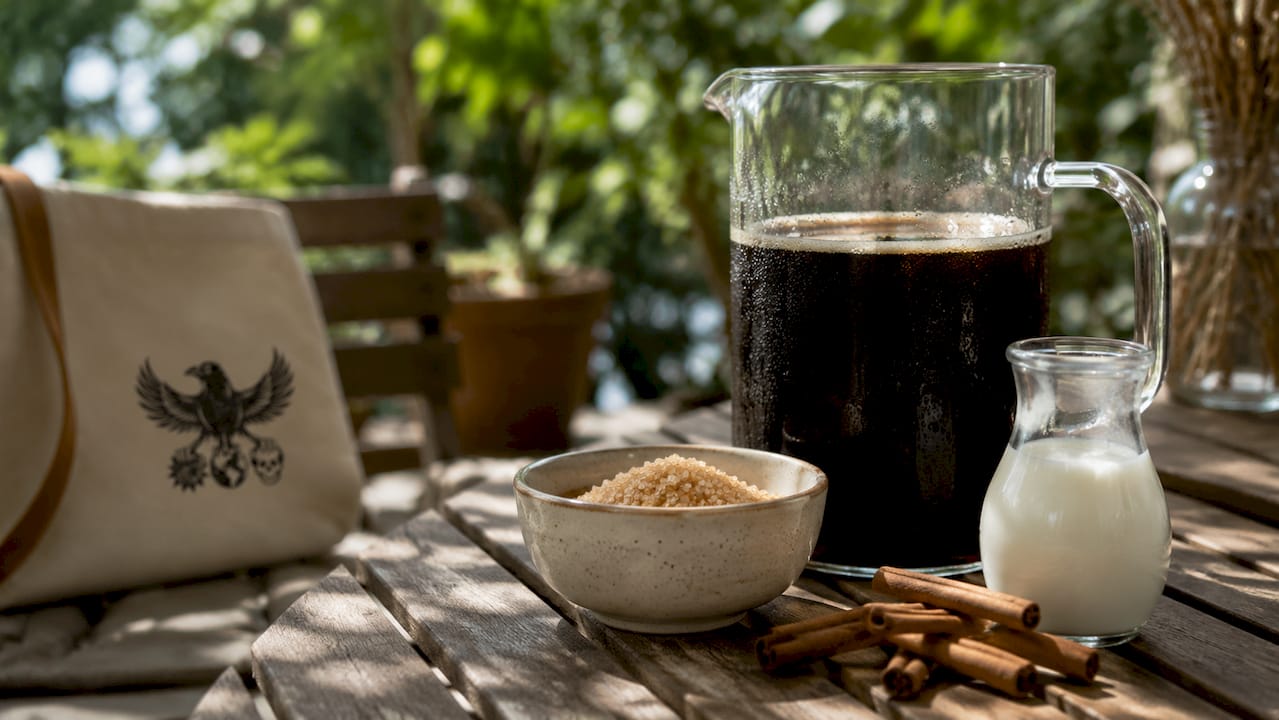
The more interesting story is what brands are adding beyond the basics. Modern RTD coffees increasingly include functional ingredients like MCT oil, adaptogens such as ashwagandha and lion’s mane, and protein at up to 25 grams per 12-ounce serving. These additions target consumers who want their coffee to do more than caffeinate. Think mental clarity, sustained energy, and muscle recovery all in one bottle.
Formulating a great RTD coffee is harder than it sounds. Brands must balance sweetness, bitterness, mouthfeel, and functional benefits without letting any single element overpower the coffee flavor itself. Fiber is often used to support mouthfeel when fat content is reduced. Bitterness modulation requires careful calibration of the coffee-to-water ratio and extraction method.
The industry is also moving toward cleaner labels. Fewer artificial flavors, less added sugar, and shorter ingredient lists are now selling points. Consumers want to read a label and recognize every item on it.
Common flavor profiles in the RTD category include:
- Classic black cold brew with no added sweetener
- Mocha and vanilla latte styles with milk and moderate sweetness
- Caramel and hazelnut flavored bottled coffees
- Dessert-inspired blends like horchata or brown sugar oat
- Unsweetened plant-based lattes with oat, almond, or coconut milk
Pro Tip: Check the ingredient list for the order of sweeteners. If sugar appears before milk or coffee, the product skews sweet. If you prefer a coffee-forward taste, look for products where brewed coffee or cold brew concentrate is listed first.
What are the main benefits of RTD coffee vs. brewed coffee?
RTD coffee wins on convenience above everything else. Pre-packaged RTD coffees eliminate brewing time, equipment, and cleanup entirely. You open it, you drink it. That simplicity is the core value proposition for millions of people every day.
The benefits stack up quickly when you compare RTD coffee to both home-brewed coffee and made-to-order café drinks:
- Immediate consumption. No grinder, no brewer, no wait. RTD coffee is ready the moment you reach for it.
- Consistent flavor. Every can or bottle delivers the same taste. Home brewing varies based on grind size, water temperature, and technique.
- Lower cost than café drinks. A bottled latte typically costs a fraction of a barista-made equivalent at a specialty coffee shop.
- Portability. Sealed cans and bottles travel without spilling. They fit in a bag, a car cupholder, or a gym locker.
- Functional enhancements. Protein, adaptogens, and clean mental energy from ingredients like L-theanine and MCT oil are built directly into the drink.
The consistency point deserves more attention. Water quality, grind consistency, and brew time all affect the flavor of home-brewed coffee. RTD coffee removes those variables entirely. What you taste on monday is identical to what you taste on friday.
RTD coffee also fits scenarios where brewing is simply not possible. Commutes, flights, outdoor workouts, and long work sessions all benefit from a drink that requires nothing but opening.
How do the different types of RTD coffee compare?
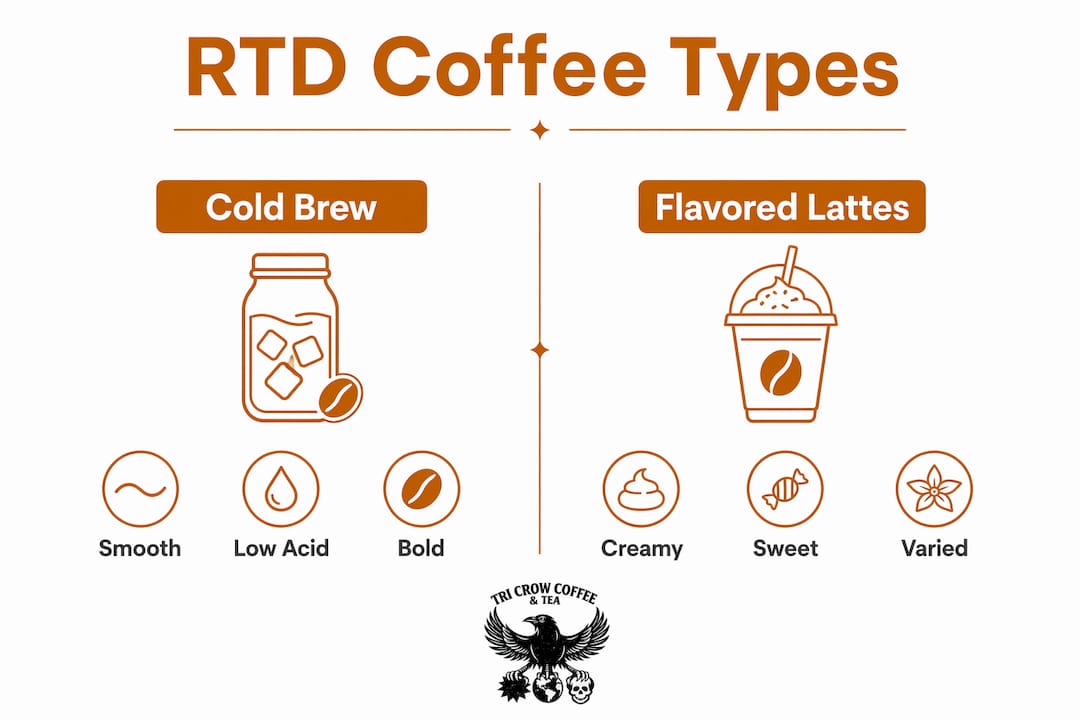
The RTD coffee category is not one product. It is a broad family of beverages with distinct preparation methods, flavor profiles, and target occasions. RTD coffee variations include nitro infusions, oat milk lattes, and flavored blends in both cans and bottles.
| RTD Coffee Type | Flavor Profile | Key Characteristic |
|---|---|---|
| Cold brew | Smooth, low acid, bold | Steeped 12–24 hours in cold water |
| Nitro cold brew | Creamy, slightly sweet | Nitrogen-infused for frothy texture |
| Iced coffee | Bright, slightly acidic | Hot-brewed then chilled |
| Bottled latte | Milky, sweet, balanced | Espresso or concentrate with milk |
| Protein coffee | Bold, filling | 15–25g protein per serving |
| Plant-based latte | Creamy, mild | Oat, almond, or coconut milk base |
Cold brew dominates the RTD segment for good reason. Its lower acidity and smoother taste require less sweetener to be palatable. That makes it a natural fit for health-conscious consumers who want flavor without a sugar load.
Nitro cold brew takes that smoothness further. Nitrogen gas creates a cascading, creamy texture without adding dairy or sweetener. The result tastes richer than it is, which is a genuine formulation achievement.
Protein-infused RTD coffee is the fastest-growing subsegment. Brands are betting that consumers who already drink protein shakes and coffee separately will consolidate into one product. Consumer trust in this category depends on ingredient transparency and the quality of the protein source, not just the gram count on the label.
Flavor trends are also shifting. Classic vanilla and mocha still lead in volume, but dessert-inspired profiles like brown sugar cinnamon and salted caramel are gaining ground. Low-sugar and unsweetened options are growing fastest among consumers who read nutrition labels carefully.
Pro Tip: If you are new to RTD coffee, start with a cold brew or nitro cold brew before trying flavored lattes. The unflavored versions give you the clearest sense of the coffee quality inside the can.
How to enjoy and store RTD coffee
RTD coffee is designed for convenience, but a few habits make the experience noticeably better. Serving temperature matters more than most people realize. Cold brew and nitro coffee taste best at 38–42°F. Bottled lattes can be enjoyed slightly warmer, around 45–50°F, which brings out the milk sweetness.
Storage is straightforward before opening. Keep sealed cans and bottles refrigerated or at a cool room temperature away from direct sunlight. Once opened, refrigerate immediately and consume within 24 hours. Carbonated or nitro products lose their texture quickly after opening, so finish those in one sitting.
Practical tips for getting the most from your RTD coffee:
- Shake bottled lattes before drinking. Milk solids and sweeteners settle during storage.
- Pour nitro cold brew gently into a glass to preserve the nitrogen cascade and creamy head.
- Check caffeine content before your second can. Many RTD coffees contain 150–200mg of caffeine per serving, which is comparable to two standard espresso shots.
- Pair with protein-rich snacks if you are using a functional RTD coffee as a meal replacement or workout drink.
- Store cans upright to minimize oxidation at the seal point.
RTD coffee also works as a base for simple recipes. Pour cold brew over ice with a splash of oat milk and a pinch of cinnamon for a quick café-style drink at home. Blend a bottled latte with ice and a frozen banana for a coffee smoothie that takes under two minutes. Exploring coffee drink varieties this way turns a convenience product into something more personal.
Key Takeaways
RTD coffee is the fastest-growing segment in the global coffee market because it delivers consistent flavor, functional benefits, and genuine convenience that neither home brewing nor café visits can match.
| Point | Details |
|---|---|
| RTD coffee defined | Pre-brewed, packaged coffee ready to drink with no equipment or prep time needed. |
| Market size | The global RTD coffee market is valued at $24.83 billion in 2026 and growing fast. |
| Ingredient variety | Formulations range from simple cold brew to protein-packed functional blends with adaptogens. |
| Cold brew leads | Cold brew dominates RTD sales due to lower acidity and smoother flavor with less sweetener. |
| Storage and serving | Refrigerate after opening, consume within 24 hours, and serve cold for best flavor. |
What I actually think about where RTD coffee is headed
The RTD coffee category has matured faster than most people in the coffee world expected. Five years ago, the shelf was dominated by heavily sweetened bottled lattes that tasted more like dessert than coffee. What I see now is genuinely different. Cold brew quality has improved, protein formulations have gotten cleaner, and brands are finally treating the coffee flavor as the hero rather than a vehicle for sugar.
What concerns me is the gap between marketing and reality in the functional segment. A can labeled with adaptogens and MCT oil sounds compelling. But the actual dose of those ingredients often falls below what research suggests is effective. Consumers deserve to know whether they are getting a therapeutic amount of lion’s mane or a trace quantity added for label appeal. Ingredient transparency, as Tri Crow Coffee approaches it with traceable sourcing, is the standard the whole category should be moving toward.
The 2026 coffee trends I find most credible are the ones centered on ritual and quality rather than novelty. RTD coffee fits into that story when the product is genuinely good. It does not replace the experience of a carefully brewed cup. It fills a different moment. The best RTD coffees I have tried are the ones where you can taste the coffee first and everything else second.
— David
Tri Crow Coffee for the days when you want something more intentional
RTD coffee handles the fast moments. Tri Crow Coffee handles the ones worth slowing down for.
Tri Crow Coffee roasts in small batches to keep flavor consistent and quality high. The Max Caf Blend, built from Tanzania and India Robusta beans, delivers high caffeine and a bold profile that stands up to milk, ice, or a straight black pour. The Cowboy Blend brings cocoa, caramel, and vanilla notes in a dark and medium roast that rewards a slower morning. For everyday drinking, the House Blend offers a balanced medium roast from Central and South American origins. Each one is crafted for the moment you actually want to taste what is in your cup.
FAQ
What does RTD stand for in coffee?
RTD stands for ready-to-drink. RTD coffee is a pre-brewed, packaged beverage sold chilled and ready for immediate consumption without any preparation.
Is RTD coffee healthy?
RTD coffee can be healthy depending on the formulation. Products with low sugar, clean-label ingredients, and functional additions like protein or L-theanine offer genuine nutritional value. Always check the label for added sugar content and ingredient quality.
How is cold brew RTD coffee different from iced coffee?
Cold brew is steeped in cold water for 12–24 hours, producing a smoother, less acidic concentrate. Iced coffee is hot-brewed and then chilled, which retains more acidity and a brighter flavor profile.
Where can you buy RTD coffee?
RTD coffee is sold at grocery stores, convenience stores, warehouse retailers like Costco, and online through brand websites and platforms like Amazon. Availability has expanded significantly as the market has grown.
How much caffeine is in RTD coffee?
Caffeine content varies by product, but most RTD coffees contain between 150 and 200mg per serving. Nitro cold brews and protein coffee blends often sit at the higher end of that range.