
TL;DR:
- Post-harvest coffee processing involves removing fruit layers and drying beans to stabilize moisture levels of approximately 11–12.5%, shaping flavor and aroma during roasting. The three main methods—Washed, Natural, and Honey—leave different components on the bean, resulting in distinct cup profiles from bright and clean to fruity and complex. Careful control of processing, fermentation, and drying significantly influences coffee quality, flavor, and price.
Post-harvest coffee processing is the sequence of physical, biological, and chemical steps that converts freshly picked coffee cherries into stable green beans ready for export and roasting. The goal is simple: strip away the fruit layers in a controlled way, then dry the beans to the industry-standard moisture target of approximately 11–12.5%, which halts enzymatic activity and prevents mold. Recent metabolomic and lipidomic research confirms that the method chosen at this stage directly regulates the amino acids and lipids that become aroma and flavor during roasting — which is exactly why Tri Crow Coffee treats processing notes as a first-order signal when selecting small-batch beans.
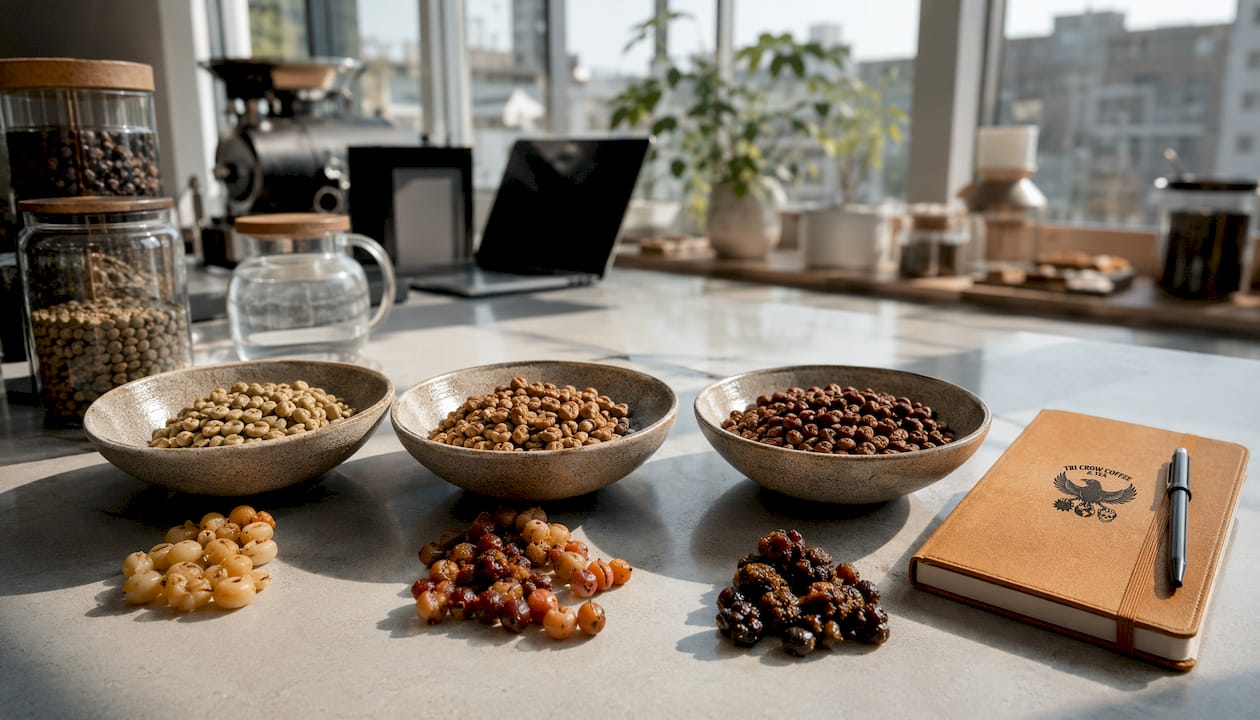
The three primary methods are Washed, Natural, and Honey. In short: Washed produces clean, bright cups; Natural produces fruit-forward, winey ones; Honey lands somewhere between, with sweetness and body.
- Washed: pulp removed before drying → clean, high-clarity acidity
- Natural: whole cherry dried intact → fruity, winey, complex
- Honey: pulp removed, mucilage kept → sweet, full-bodied, nuanced
Table of Contents
- Why processing is the biggest non-roast factor in your cup
- The three main methods: what stays on the bean and how each tastes
- What fermentation actually does to your coffee
- Drying: the step that determines safety and shelf life
- How to use processing labels when you’re buying beans
- A practical buying checklist before you order
- How Tri Crow Coffee applies processing knowledge to its small-batch roasts
- Key Takeaways
- Processing transparency is the ritual, not just the label
- Tri Crow Coffee’s small-batch lineup, organized by processing style
- FAQ
Why processing is the biggest non-roast factor in your cup
Processing is the primary non-roast variable that shapes cup flavor after origin and variety. The roaster works with what the processing stage leaves behind.
“Post-harvest processing modifies the quality of the coffee and increases the value of coffee production. Aroma and taste precursors were modified during processing and associated with husk removal, suggesting an activation of the germination metabolism.” — AIMS Press, flavor precursor research
A 2026 lipidomic study published in PMC identified 510 distinct lipids across 27 subclasses in green coffee beans processed by the three main methods, with 150 showing significant differences between methods. Glycerophospholipid metabolism was the dominant pathway. Those lipids, along with amino acids, are the raw material the roaster’s heat converts into the flavors you taste. Change the processing, and you change the palette the roaster starts with.
Practically, this means: a washed bean from Tanzania and a naturally processed bean from the same farm can taste like entirely different coffees. Processing also affects consistency and price. Carefully controlled methods reduce defect risk; experimental or labor-intensive methods command premiums because of higher risk and lower yields.
The three main methods: what stays on the bean and how each tastes
| Method | What stays on the bean | Typical cup profile | Drying time varies by method and climate conditions | Fermentation control | Roast recommendation |
|---|---|---|---|---|---|
| Washed | Nothing (fully stripped) | Clean, bright acidity, origin clarity | 9–14 days | High control, low variability | Light to medium |
| Natural | Full cherry (skin, pulp, mucilage) | Fruity, winey, heavy body | 3–5 weeks | Low control, higher variability | Medium to dark |
| Honey | Mucilage only (pulp removed) | Sweet, syrupy, complex | 1–3 weeks | Moderate control | Medium |
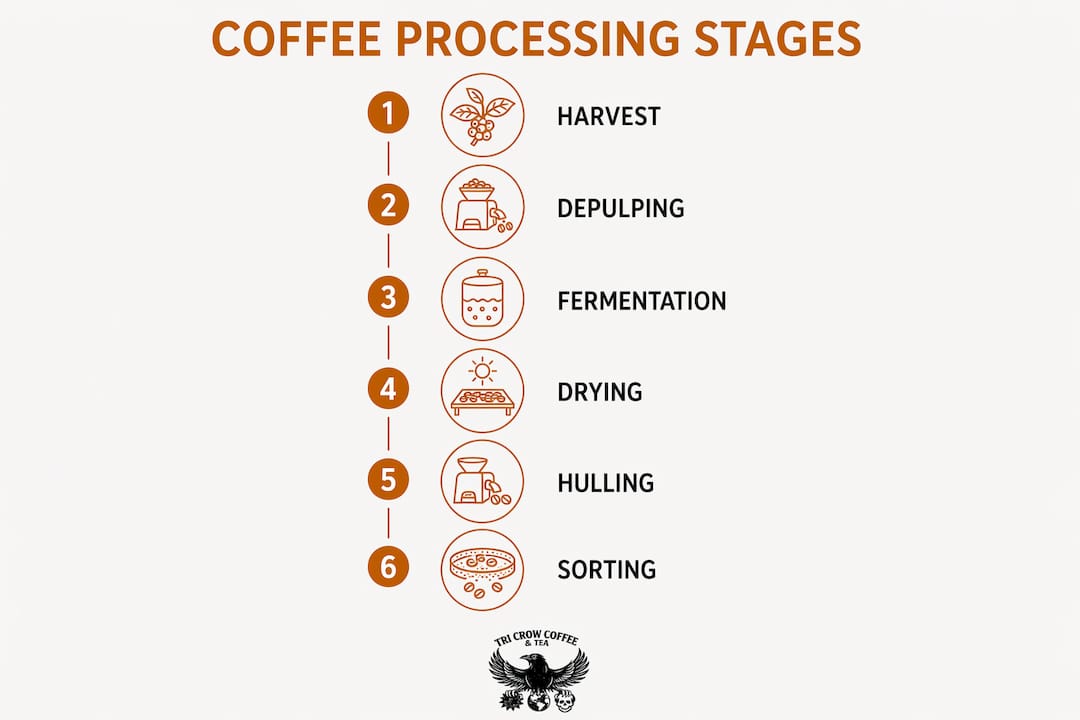
Washed (Wet) process — step by step:
- Cherries sorted and floated to remove defects (same-day processing reduces off-flavors)
- Skin and pulp removed by depulping machine
- Beans fermented in water for 8–72 hours to break down mucilage
- Washed clean, then dried on raised beds or patios for 10–14 days
Natural (Dry) process — step by step:
- Whole cherries sorted and spread on raised beds or patios
- Dried in sun for 3–5 weeks, turned regularly to prevent mold
- Dried fruit hull mechanically removed after drying
Honey process — step by step:
- Skin and pulp removed by depulping machine
- Mucilage left on the bean (yellow = minimal, red = moderate, black = maximum)
- Dried on raised beds for 1–3 weeks without washing
Pro Tip: For pour-over or filter brewing, start with a Washed bean at a light roast to taste origin character clearly. For espresso or milk drinks, a Honey or Natural at medium roast adds sweetness and body that cuts through.
Tri Crow Coffee’s guide to how processing shapes flavor walks through these distinctions in consumer-friendly detail if you want to go deeper.
What fermentation actually does to your coffee
Fermentation is the biological engine of coffee processing. Yeasts and bacteria break down the mucilage layer surrounding the bean, converting sugars and pectin into organic acids, alcohols, and aroma precursors. What sounds like decomposition is, when controlled, the source of coffee’s most complex flavors.
“Anaerobic fermentation and carbonic maceration rapidly change the coffee fruit, resulting in a flavor much different than traditional fermentation methods. Depulped beans contain lactic acid bacteria, acetic acid bacteria, enterobacteria, and yeasts that interact during fermentation.” — ScienceDirect, specialty coffee processing study
Standard aerobic fermentation runs 8–72 hours in open tanks. Anaerobic fermentation seals beans in oxygen-free containers, shifting the microbial environment and producing a richer, more unusual flavor profile. Recent industry findings show anaerobic techniques can significantly increase the abundance of flavor-precursor metabolites in Arabica beans compared with traditional methods. A metabolome analysis confirmed that anaerobic processing produced richer sensory attributes correlated with specific amino acids and organic acids.
The tradeoff is real. Overfermentation produces excessive acetic or butyric acid, which creates sour, vinegary, or rancid notes. Small producers carry more risk here because tight environmental controls are expensive. When you see “anaerobic fermentation” on a bag, it signals both intentional craft and higher price.
Drying: the step that determines safety and shelf life
Drying is where processing either succeeds or fails. The industry-standard safe moisture target of approximately 11–12.5% is not arbitrary. At that range, enzymatic germination halts and fungal growth becomes unlikely. Beans dried above 13% are prone to mold; beans dried below 10% become brittle and shatter during hulling, producing defective fragments.
Common drying methods and their timelines:
- Raised beds: airflow on all sides, 9–14 days for washed, 3–5 weeks for natural; preferred for specialty lots
- Patio drying: concrete or brick surfaces, similar timelines, higher risk of uneven drying
- Mechanical dryers: used when humidity is too high for sun-drying; faster but energy-intensive
Climate matters enormously. High humidity slows drying and raises mold risk. Producers in humid regions often combine sun-drying with mechanical finishing to hit the moisture target safely. On a bag or product page, notes like “sun-dried on raised beds” or “slow-dried at altitude” are genuine quality signals, not marketing filler. Good coffee packaging also plays a role in maintaining that moisture stability after the beans leave the farm.
How to use processing labels when you’re buying beans
Choose your processing based on the flavor you want, then match it to a roast level and brew method.
“Primary processing, which involves the transformation of fresh coffee cherries into stable green coffee beans, plays a central role in determining the retention, degradation, and conversion of flavor precursors.” — MDPI Food Chemistry, metabolomics study
Flavor-to-processing map:
- Clean, bright, tea-like acidity → Washed → light roast → pour-over or Chemex
- Fruity, jammy, winey → Natural → medium roast → French press or espresso
- Sweet, syrupy, balanced → Honey → medium roast → any brew method
What to look for on a bag: processing label, drying method (raised beds vs. patio), fermentation notes (aerobic, anaerobic, hours), roast date, and origin. A bag that lists all five is a transparency signal worth paying attention to. Tri Crow Coffee’s honey process guide and washed process guide break down exactly what to expect from each.
A practical buying checklist before you order
Timeline expectations from harvest to green bean:
- Washed: 2–3 weeks total (fermentation + 9–14 days drying)
- Honey: 3–5 weeks total (1–3 weeks drying, no fermentation tank)
- Natural: 5–7 weeks total (3–5 weeks drying)
- Anaerobic fermentation: add 1–2 weeks to any of the above
Processing choices affect price: experimental fermentations and carefully managed natural or honey lots command premiums because of labor intensity, higher defect risk, and lower yields. A single-origin natural at $20–$25 per 12 oz is not overpriced if the processing was done well.
Questions to ask a roaster before buying:
- What processing method was used, and was fermentation aerobic or anaerobic?
- What was the drying method and approximate drying time?
- What was the moisture content at packing?
- When was the harvest date, and when was it roasted?
- What roast level do you recommend for this processing style?
- Is this a single-origin lot or a blend of processing styles?
A sample pack is the lowest-risk way to compare processing styles side by side without committing to a full bag of each.
How Tri Crow Coffee applies processing knowledge to its small-batch roasts
Tri Crow Coffee treats processing transparency as a sourcing standard, not a marketing add-on. When selecting beans for small-batch roasts, the team leans on processing notes to determine roast profile: washed beans with high clarity get lighter roast curves to preserve acidity; naturally processed beans with heavy fruit character get medium profiles that let sweetness develop without burning off complexity.
The Tanzania Medium-Light Coffee is a single-origin example where origin and processing interact clearly — a lighter roast that lets the bean’s inherent character speak. The 6 Bean Dark Roast demonstrates how a house blend can balance multiple processing styles under a unified roast profile. For readers who want to taste the difference across processing types, the Best Sellers Coffee Sample Pack offers six varieties in 2 oz portions — a direct way to run your own side-by-side. Batches are limited, so availability shifts seasonally.
Key Takeaways
Post-harvest coffee processing determines the flavor precursors a roaster works with, making it the single most consequential step between the farm and your cup.
| Point | Details |
|---|---|
| Definition and goal | Processing converts fresh cherries into stable green beans, targeting a moisture content of 11–12.5%. |
| Three primary methods | Washed = clean/bright; Natural = fruity/winey; Honey = sweet/complex. |
| Fermentation’s role | Microbial activity converts mucilage into acids and aroma precursors that shape cup character. |
| Drying safety | Beans dried above 13% risk mold; below 10% they shatter during hulling. |
| Tri Crow Coffee | The Best Sellers Sample Pack lets you taste multiple processing styles across six small-batch varieties. |
Processing transparency is the ritual, not just the label
Most coffee drinkers read a processing label the way they read a nutrition panel: quickly, without much thought. That’s a missed opportunity. When you know that a Natural-processed bean spent five weeks drying in the sun, fermenting slowly inside its own fruit, you’re not just reading a method. You’re reading a set of decisions a producer made about risk, labor, and flavor. That context changes how you brew it and how you taste it.
Tri Crow Coffee’s approach to processing transparency is rooted in exactly that idea: the ritual of a mindful daily brew starts before the kettle boils. It starts with knowing what’s in the bag and why. Try a small sample, brew it slowly, and pay attention to what the processing left behind.
Tri Crow Coffee’s small-batch lineup, organized by processing style
If this guide sent you straight to your coffee shelf to check the label, the next step is tasting the difference firsthand. Tri Crow Coffee’s Best Sellers Coffee Sample Pack gives you six varieties in 2 oz portions — a low-commitment way to compare processing styles without buying six full bags. The Tanzania Medium-Light is a single-origin that shows what careful processing and a lighter roast can do for clarity. The 6 Bean Dark Roast and French Roast Central American Blend demonstrate how darker roast profiles interact with processed beans at the other end of the spectrum. The French Roast African brings bold, bittersweet character from a different origin entirely. All batches are small and rotate seasonally. The full shop also carries the Apple Cider Rooibos, Earl Grey Tea, and English Breakfast Tea for days when you want something caffeine-free or lighter. Browse the current lineup and order while your preferred processing style is in stock.
FAQ
What is post-harvest coffee processing in simple terms?
It’s the set of steps that removes the fruit layers from a coffee cherry and dries the bean to a stable moisture level of approximately 11–12.5%, making it ready for roasting.
Which processing method produces the most flavorful coffee?
There’s no single answer. Washed processing highlights origin clarity and acidity; Natural processing produces the most fruit-forward, complex cups; Honey sits between them with sweetness and body. The best method depends on the flavor profile you prefer.
Why does processing affect coffee price?
Experimental methods like anaerobic fermentation and carefully managed natural or honey lots require more labor, carry higher defect risk, and produce lower yields, all of which drive premiums compared with standard washed processing.
How long does coffee processing take from harvest to green bean?
Washed processing takes roughly 2–3 weeks; Honey takes 3–5 weeks; Natural takes 5–7 weeks depending on climate and drying conditions.
What does “anaerobic fermentation” mean on a coffee bag?
It means the beans were fermented in sealed, oxygen-free containers, which shifts the microbial environment and can significantly increase flavor-precursor metabolites compared with traditional open-tank fermentation.