
TL;DR:
- Peaberry coffee results from a natural mutation where only one seed develops inside a coffee cherry. It is rare, making up about 5% to 7% of harvests, and is hand sorted, which increases its price. While it often roasts more evenly and tastes brighter with a smoother finish, origin and processing methods have a greater impact on flavor than bean shape alone.
Peaberry coffee is defined as a naturally occurring mutation where only one seed develops inside a coffee cherry instead of the usual two flat-sided beans. The result is a smaller, rounder, and denser bean that behaves differently during roasting and often produces a brighter, sweeter cup. Peaberry occurs in 5%–7% of any coffee harvest, making it genuinely rare. That scarcity, combined with the hand sorting required to separate peaberries from regular beans, drives both the price premium and the curiosity surrounding them. Tri Crow Coffee sources and roasts with this kind of specificity in mind, treating every bean type as its own challenge worth understanding.
What is peaberry coffee and how does it form?
A standard coffee cherry contains two seeds that face each other flat side in. Each seed develops by pressing against the other, which is why regular coffee beans have one flat face and one curved face. A peaberry forms when one of those two seeds fails to develop. The surviving seed takes up the entire interior of the cherry and grows into a small, fully rounded shape with no flat side at all.
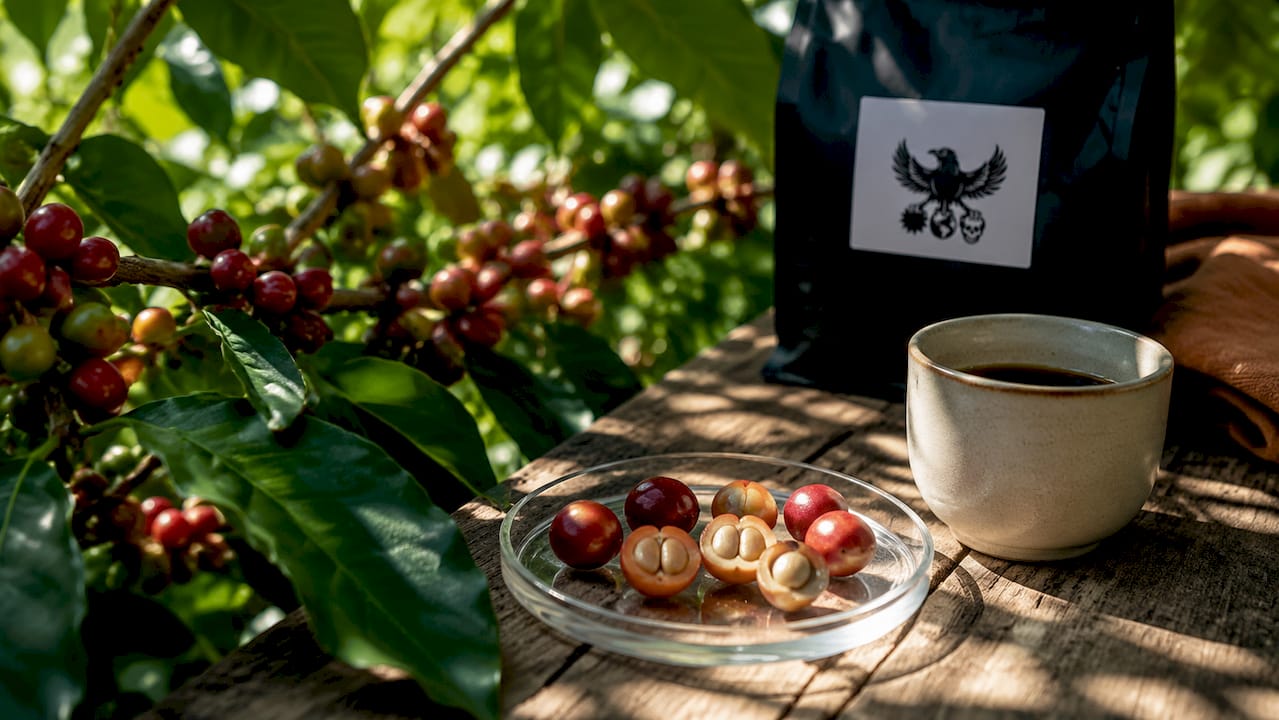
Peaberry is a natural mutation found in both Arabica and Robusta species. No specific growing condition reliably causes it. It simply happens across all origins, altitudes, and varietals at a consistent but low rate.
The physical differences are easy to spot once you know what to look for:
- Shape: Fully round with no flat face, compared to the half-moon profile of regular beans
- Size: Noticeably smaller than the flat beans from the same harvest
- Density: Higher density due to the concentrated development inside a single-seed cherry
- Surface: Smoother, more uniform curvature across the entire bean
Skilled workers sort peaberry beans by screen size from regular harvests to create separate lots. That sorting effort is labor-intensive. It is one of the main reasons peaberry commands a higher price even before roasting begins.
Pro Tip: If you buy whole-bean peaberry coffee, look for a consistent round shape across the bag. Irregular shapes mixed in suggest incomplete sorting, which affects roast evenness.
How does peaberry coffee taste and roast differently?
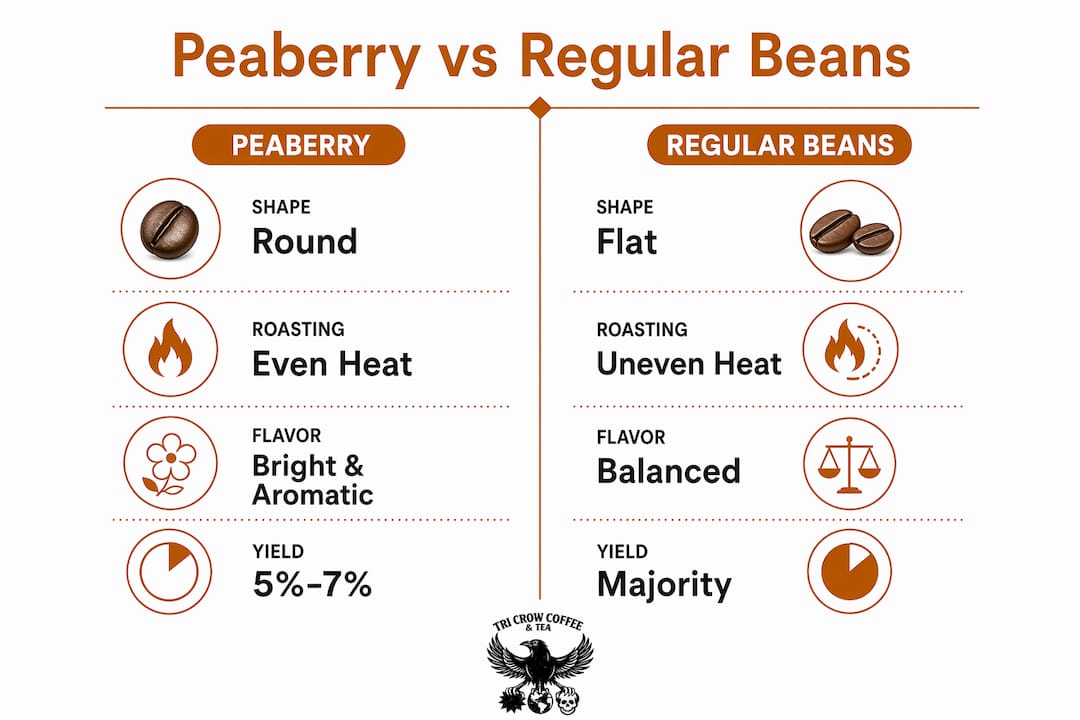
The round shape of a peaberry bean changes how heat moves across its surface during roasting. Roasting peaberry beans separately ensures more even heat circulation, since the uniform curve eliminates the flat face where heat can pool unevenly on regular beans. The result is a more consistent roast across each individual bean.
That roasting consistency shows up directly in the cup. Peaberry beans often taste brighter and more aromatic with a somewhat lighter body than flat beans from the same batch. The acidity tends to be cleaner and more defined rather than sharp or harsh. Many coffee drinkers describe the mouthfeel as smoother and less bitter than what they expect from regular coffee.
| Characteristic | Peaberry beans | Regular flat beans |
|---|---|---|
| Bean shape | Fully round, no flat face | Half-moon, one flat side |
| Roast evenness | More uniform heat distribution | Flat face can create uneven roasting |
| Flavor profile | Brighter acidity, sweeter, cleaner | More varied, fuller body |
| Mouthfeel | Lighter body, smoother finish | Heavier body, more bitter potential |
| Sorting method | Hand sorted by screen size | Standard mechanical processing |
Origin and processing still shape the flavor more than bean shape alone. A peaberry from Tanzania and a peaberry from Colombia will taste nothing alike. The round shape creates favorable roasting conditions, but it does not override the soil, altitude, or processing method behind the bean.
Pro Tip: When brewing peaberry for the first time, try a pour-over or Chemex method. These brewing styles highlight the clean acidity and aromatic brightness that peaberry roasting tends to produce.
Is peaberry coffee actually better?
Peaberry coffee is a quality grade, not a quality guarantee. A poorly processed peaberry lot will often underperform against a high-quality flat bean lot from a well-managed farm. Shape indicates potential. It does not assure what ends up in your cup.
The price premium is real. Peaberry coffee averages 5%–20% higher in price than regular beans from the same origin. That premium reflects scarcity and sorting labor, not a certified flavor upgrade. You are paying for the effort of separation and the lower yield, not a proven superiority.
Here is an honest breakdown of what peaberry coffee delivers and where it falls short:
Genuine advantages:
- More even roasting due to uniform bean shape
- Brighter acidity and sweeter, cleaner mouthfeel reported consistently across origins
- Smoother, less bitter finish favored by black coffee drinkers
- Interesting tasting experience for enthusiasts exploring specialty coffee
Real limitations:
- Higher price does not guarantee a better cup
- Lighter body may disappoint drinkers who prefer bold, heavy coffee
- Quality depends entirely on farm management and processing, not just bean shape
- Availability is limited, making consistent sourcing harder
The specialty coffee world sometimes overhypes peaberry as a premium tier above all other beans. That framing misleads buyers. A well-grown, carefully processed flat bean lot from a top-tier farm will outperform a carelessly handled peaberry every time. Understanding coffee grading and quality standards helps you evaluate any bean, peaberry or not, on its actual merits.
How does origin shape peaberry coffee flavor?
Not all peaberries taste the same. Origin, altitude, and processing methods are the dominant factors shaping peaberry coffee flavor. Bean shape is only one variable in a much larger equation.
Peaberry coffee appears prominently in Tanzania, Kenya, and Kona, where volcanic soils and high altitude contribute to bean density and flavor complexity. Tanzanian peaberry is known for bright citrus notes, wine-like acidity, and a clean finish. A Colombian peaberry from a lower-altitude farm will taste entirely different, often showing caramel sweetness, mild acidity, and a rounder body.
Processing method adds another layer of variation. Here is how the three main methods influence peaberry flavor:
- Washed processing strips the cherry fruit away before drying, producing clean, bright flavors with well-defined acidity. Peaberry beans processed this way tend to highlight their natural brightness most clearly.
- Natural processing dries the whole cherry intact, allowing fruit sugars to absorb into the bean. This adds sweetness, body, and fruity complexity that can soften peaberry’s typical lighter profile.
- Honey processing sits between the two, leaving some fruit mucilage on the bean during drying. The result is a balance of sweetness and acidity that works well with peaberry’s roasting characteristics.
Understanding how coffee processing affects flavor helps you predict what a peaberry will taste like before you brew it. A washed Tanzanian peaberry and a natural Ethiopian peaberry are both peaberries, but they will taste like entirely different coffees.
When choosing a peaberry coffee, match the origin and processing method to your flavor preferences. If you love bright, tea-like cups, look for washed East African peaberry. If you prefer sweetness and body, a natural-processed Latin American peaberry will serve you better. Exploring coffee bean origins and flavor profiles gives you the context to make that call confidently.
Key Takeaways
Peaberry coffee is a naturally occurring single-seed mutation that produces rounder, denser beans with favorable roasting characteristics, but origin and processing determine final cup quality far more than bean shape alone.
| Point | Details |
|---|---|
| Peaberry formation | One seed develops alone inside the cherry, creating a small, fully round bean. |
| Occurrence rate | Peaberry makes up 5%–7% of any harvest, making hand sorting necessary and costly. |
| Roasting advantage | Round shape allows even heat distribution, often producing brighter, cleaner flavor. |
| Quality reality | A peaberry label signals potential, not guaranteed superiority over well-processed flat beans. |
| Origin matters most | Tanzanian, Kenyan, and Kona peaberries differ widely due to soil, altitude, and processing. |
My honest read on peaberry coffee after years of tasting
I have tasted peaberry coffees from Tanzania, Kona, and Colombia across different roasters and processing methods. The brightness is real. When a peaberry lot is well-sourced and carefully roasted, the cup has a clarity that flat beans from the same farm rarely match. That clean, sweet finish is not marketing language. You can taste the difference.
What I push back on is the idea that peaberry is simply better coffee. I have had flat bean lots from Ethiopian natural farms that made the peaberry sitting next to them taste thin and forgettable. The round shape creates a favorable condition for roasting. It does not create flavor from nothing.
My advice is to treat peaberry as a category worth exploring, not a shortcut to a great cup. Buy it from origins you already enjoy. Pay attention to the processing method on the bag. If a roaster cannot tell you where the peaberry came from and how it was processed, the premium price is not justified. Specialty coffee rewards curiosity and specificity, and peaberry is one interesting corner of that world. It is not the whole picture.
— David
Peaberry coffee and what Tri Crow Coffee has to offer
Tri Crow Coffee roasts in small batches specifically to maintain the kind of flavor control that specialty beans like peaberry demand. Every roast is treated as its own problem to solve, not a volume exercise.
If you are building a more intentional coffee routine, the Pecan Pie lightly flavored coffee from Tri Crow Coffee is a strong starting point. It delivers roasted pecan and caramel notes with the clean, approachable finish that peaberry enthusiasts tend to appreciate. Tri Crow Coffee’s approach to sourcing and small-batch roasting means you get a consistent, thoughtfully crafted cup every time. Browse the full selection at tricrowcoffee.com to find the roast that fits your palate.
FAQ
What is peaberry coffee in simple terms?
Peaberry coffee comes from a coffee cherry where only one seed develops instead of the usual two. That single seed grows round and dense, which affects how it roasts and often how it tastes.
Does peaberry coffee taste different from regular coffee?
Peaberry coffee typically tastes brighter, sweeter, and cleaner than regular flat beans from the same origin. It tends to have a lighter body and a smoother, less bitter finish.
Why is peaberry coffee more expensive?
Peaberry beans occur in only 5%–7% of any harvest and must be hand sorted from regular beans by screen size. That low yield and labor-intensive sorting process drives the price premium.
Is peaberry coffee always higher quality?
No. Peaberry indicates a physical trait, not a quality guarantee. A poorly processed peaberry lot will underperform against a well-grown and carefully processed flat bean lot.
Which origins produce the best peaberry coffee?
Tanzania, Kenya, and Kona are the most recognized peaberry origins. High altitude and volcanic soils in these regions contribute to the bean density and flavor complexity that peaberry is known for.