
TL;DR:
- Honey processed coffee involves removing the cherry skin while leaving the mucilage on during drying, creating a sweeter and fuller-bodied cup. It uses a precise process that influences flavor complexity and varies from white to black honey, each with distinct drying challenges and flavor profiles. This method offers a sustainable alternative to washed processing and produces coffees that highlight sweet, fruity, and syrupy notes.
Honey processed coffee is defined as a post-harvest method that removes the outer cherry skin but leaves the sticky mucilage layer on the bean during drying. This hybrid technique sits between washed and natural processing, producing a cup that is sweeter and fuller-bodied than washed coffee but cleaner and more balanced than natural. Honey processing originated in Costa Rica in the early 2000s as a water-saving method that also gave producers precise control over flavor development. The name has nothing to do with added honey. It refers to the sticky mucilage’s honey-like appearance during drying. Understanding this method unlocks a whole new layer of appreciation for specialty coffee.
What is the honey coffee process and how is it done?
Honey processing follows a specific sequence that demands attention at every step. Each decision, from picking to hulling, shapes the final cup.
-
Selective harvesting. Producers hand-pick only fully ripe red or yellow cherries. Unripe or overripe fruit introduces inconsistency and off-flavors that no amount of careful drying can fix.
-
Mechanical depulping. A depulping machine removes the outer cherry skin. The machine settings are adjusted to control exactly how much mucilage stays on the bean. More mucilage retained means a darker honey designation and a richer final flavor.
-
Spreading on raised drying beds. Beans spread in thin, even layers on raised African beds or patios. Thin layers allow airflow and prevent hot spots where fermentation can run out of control.
-
Frequent turning. Workers turn the beans regularly throughout the drying period. Turning frequency varies from every 30 minutes for black honey to less frequent intervals for lighter honey types. This step is the most labor-intensive part of the process.
-
Drying period. Drying takes 10–25 days depending on how much mucilage remains on the bean. More mucilage means a longer drying window and greater risk of mold or over-fermentation.
-
Reposo stabilization. After drying, beans rest in a stabilization period called reposo. Reposo lasts 30–60 days at a moisture level of 10–12% before hulling. This rest period prevents microbial spoilage in the sugar-rich beans.
-
Hulling. The dried mucilage and parchment layer are removed mechanically, and the green beans are sorted and graded for export.
Pro Tip: If you are buying directly from a producer or importer, ask which honey type the lot is. White and yellow honeys suit filter brewing, while red and black honeys shine in espresso.
How does honey processing affect coffee flavor compared to washed and natural?
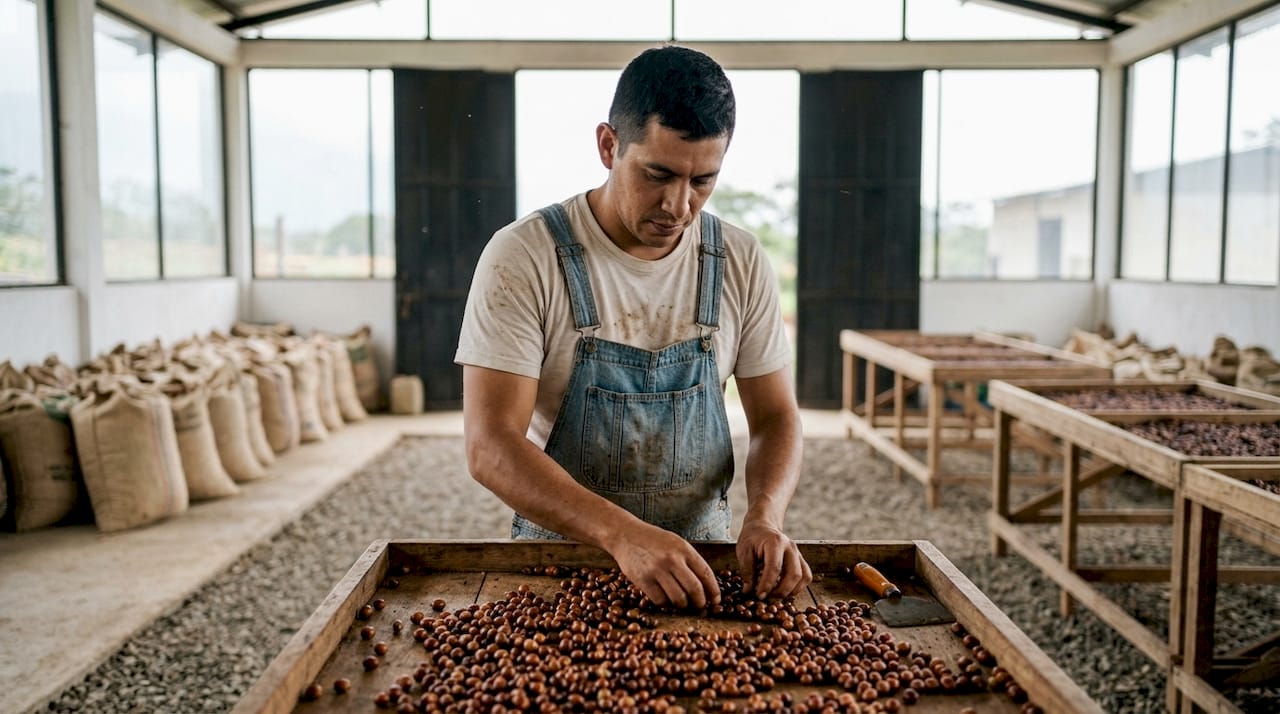
Honey processed coffee delivers a balanced sweetness and syrupy body that neither washed nor natural processing can fully replicate. The mucilage left on the bean acts as a sugar reservoir during drying. Those sugars migrate into the bean and generate Maillard reaction precursors that create complex caramel, stone fruit, and brown sugar notes during roasting.
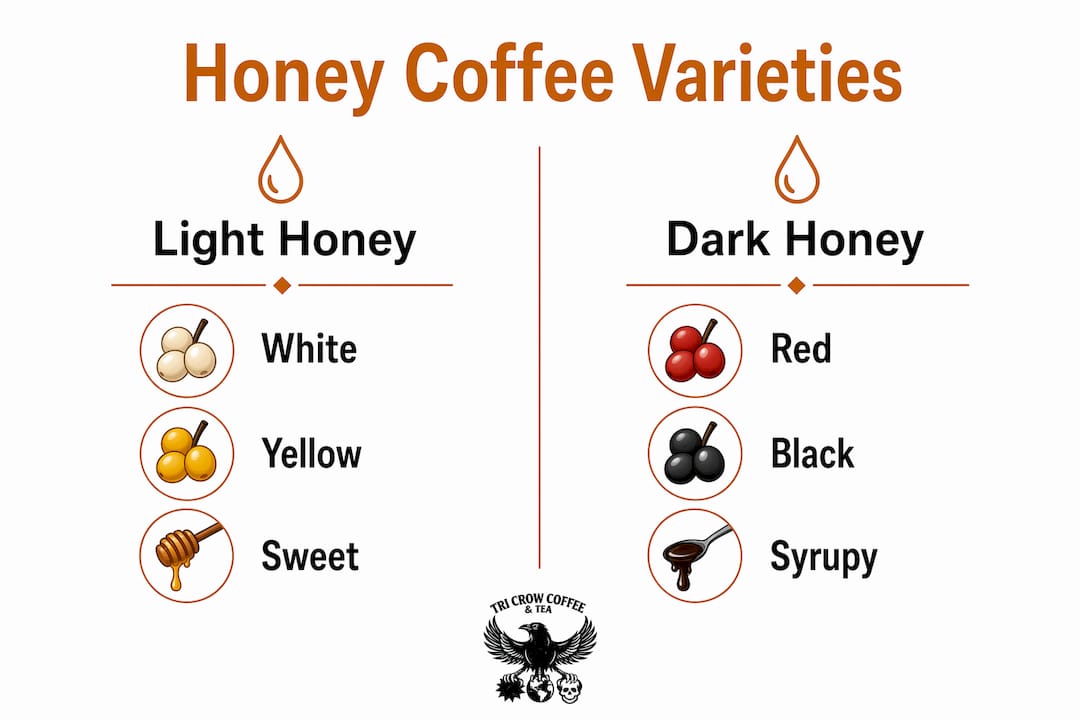
The flavor spectrum runs from white honey at one end to black honey at the other. White honey produces a clean, bright cup with mild sweetness and higher perceived acidity. Black honey produces a rich, fruit-forward cup with low acidity and a heavy, almost syrupy body. Red and yellow honeys fall between these poles, offering a balance of sweetness and clarity that many specialty roasters find most commercially appealing.
Compared to washed coffee, honey processing adds body and sweetness while softening acidity. Compared to natural processing, it delivers more clarity and less fermented fruit intensity. The honey process uses moderate water, yields medium to full body, and carries a moderate risk of defects. That balance makes it a reliable choice for producers who want flavor complexity without the unpredictability of full natural processing.
| Processing method | Body | Acidity | Sweetness | Water use | Defect risk |
|---|---|---|---|---|---|
| Washed | Light to medium | High | Low | High | Low |
| Honey | Medium to full | Balanced | Medium to high | Moderate | Moderate |
| Natural | Full | Low | High | Low | High |
Key flavor notes to expect from honey processed coffee:
- Caramel and brown sugar from mucilage sugar migration during drying
- Stone fruit such as peach, apricot, or plum, especially in red and black honeys
- Mild citrus brightness in white and yellow honeys
- Chocolate undertones in darker honey types after roasting
- Syrupy mouthfeel that coats the palate more than washed coffees
Understanding how processing shapes flavor helps you choose the right coffee for your brewing style and taste preferences.
What are the variations of honey processed coffee?
The four honey designations, white, yellow, red, and black, describe how much mucilage the producer leaves on the bean. Each level creates a distinct drying challenge and a distinct cup.
-
White honey retains roughly 10–25% of the mucilage. Drying is faster and easier to manage. The cup is clean and bright, close to a washed coffee but with a touch more sweetness and body.
-
Yellow honey retains a moderate amount of mucilage, typically around 25–50%. Drying takes slightly longer. The cup gains more sweetness and a rounder body while keeping good clarity.
-
Red honey retains 50–75% of the mucilage. Drying extends further, and turning frequency increases. The cup becomes noticeably sweeter with more fruit complexity and a fuller body.
-
Black honey retains 75–100% of the mucilage. Drying takes 20–25 days and demands constant attention. The defect risk is highest here. The reward is a rich, jammy, fruit-forward cup that approaches natural processing in intensity.
Costa Rica pioneered these color designations as a quality communication tool between producers and buyers. The system lets roasters specify exactly the flavor profile they want, and producers can price their labor and risk accordingly. Regions like El Salvador, Guatemala, and Ethiopia have adopted honey processing, each adding regional terroir to the method’s flavor range.
Pro Tip: Black honey is not always better. For filter coffee drinkers who prefer clarity, a well-executed yellow honey often outperforms a black honey that was rushed through drying.
What are the challenges and best practices in producing high-quality honey processed coffee?
Honey processing requires greater manual labor and risk management than washed processing. The mucilage sugars on the bean surface create an environment where fermentation and mold can develop quickly if conditions are not controlled. Getting it right consistently is harder than it looks.
The core quality risks and how producers manage them:
-
Surface fermentation. Mucilage sugars ferment rapidly in warm, humid conditions. Producers manage this by turning beans frequently and monitoring temperature on the drying beds.
-
Mold growth. Thick mucilage traps moisture. Thin spreading on raised beds and consistent airflow reduce mold risk significantly.
-
Uneven drying. Beans at the edges of a drying bed dry faster than those in the center. Regular turning and bed rotation keep moisture levels uniform across the lot.
-
Moisture control. Reaching the 10–12% moisture target without over-drying or under-drying requires daily measurement. Over-dried beans become brittle and crack during hulling. Under-dried beans spoil during storage.
-
Reposo management. Skipping or shortening the reposo period is a common mistake. The rest period allows moisture to equalize throughout the bean and prevents spoilage from residual sugars.
The environmental case for honey processing is real. The method uses significantly less water than washed processing while still producing a traceable, controlled flavor profile. For farms in water-stressed regions, honey processing reduces water usage while enhancing flavor control. That combination of sustainability and quality makes it attractive to specialty buyers who care about both the cup and the supply chain.
How should you brew honey processed coffee to highlight its best qualities?
Honey processed coffee rewards brewing methods that let its natural sweetness and body come through. The goal is to avoid over-extraction, which can push the sweetness into a cloying, heavy quality, and under-extraction, which strips the complexity you paid for.
-
Pour-over and filter methods work beautifully with white and yellow honeys. A medium grind, water temperature around 200°F, and a 3-minute brew time bring out the clean sweetness and fruit clarity without muddying the cup.
-
Espresso suits red and black honeys well. The pressure extraction amplifies the syrupy body and caramel notes. Pull at a slightly longer ratio than you would for washed coffee to balance the sweetness.
-
Cold brew is an underrated choice for honey processed coffee. The long, cold extraction softens acidity and draws out the stone fruit and chocolate notes that define darker honey types.
-
Storage matters. Keep honey processed coffee in an airtight container away from light and heat. The sugars in the bean make it slightly more sensitive to staling than washed coffee.
Pro Tip: Try your honey processed coffee without milk first. The natural sweetness and body often make dairy unnecessary, and you will taste the processing character more clearly.
For a deeper look at how the washed method compares, the washed process guide from Tri Crow Coffee covers the full contrast. If you want to understand the other end of the spectrum, the natural process breakdown explains why natural coffees taste so different from honey processed ones.
Key Takeaways
Honey processed coffee is the most flavor-flexible post-harvest method available, giving producers direct control over sweetness, body, and complexity by adjusting mucilage retention and drying time.
| Point | Details |
|---|---|
| Mucilage drives flavor | Leaving mucilage on the bean during drying creates sweetness, body, and fruit complexity. |
| Four honey types exist | White, yellow, red, and black honey differ by mucilage retention percentage and drying intensity. |
| Drying time is critical | Drying takes 10–25 days; longer drying with more mucilage raises defect risk significantly. |
| Reposo prevents spoilage | A 30–60 day rest period at 10–12% moisture stabilizes the bean before hulling. |
| Brewing method matters | Filter suits lighter honeys; espresso and cold brew highlight the richness of darker honey types. |
Why honey processed coffee deserves more attention than it gets
Most coffee conversations default to washed versus natural, as if those are the only two options worth understanding. Honey processing gets treated as a middle ground, which undersells what it actually does. It is not a compromise. It is a precision tool.
What I find most interesting about honey processing is how much producer skill it reveals. A washed coffee can hide inconsistencies behind the clean, bright profile the method naturally produces. A honey processed coffee cannot. Every decision, from cherry selection to turning frequency to reposo length, shows up in the cup. When a honey processed coffee is exceptional, you know the producer earned it.
The rise of color-coded honey designations is one of the more useful developments in specialty coffee communication. It gives buyers a shorthand for flavor expectations and gives producers a way to price their labor honestly. Black honey is not just a darker product. It represents more risk, more work, and more potential reward. That transparency matters.
The sustainability angle is also more significant than most casual coffee drinkers realize. Water scarcity affects many of the world’s best coffee-growing regions. A method that cuts water use while improving flavor control is not a niche experiment. It is a practical response to real conditions on the ground.
My honest prediction is that honey processing will continue to grow in specialty markets, not because it is trendy, but because it solves real problems for producers and delivers real value for buyers. The coffee in your cup is better for it.
— David
Tri Crow Coffee and the honey process difference
Tri Crow Coffee sources and roasts with the same care that honey processing demands at the farm level. The Honduras medium-dark roast brings caramel and brown sugar notes that reflect exactly what well-executed honey processing can produce. It is a cup that rewards attention.
For those who enjoy smooth, nutty profiles alongside fruit-forward sweetness, the hazelnut medium roast and the chocolate hazelnut roast round out a tasting experience worth building a ritual around. Tri Crow Coffee roasts in small batches to keep quality consistent, so every bag reflects the same standards that make honey processed coffee worth seeking out.
FAQ
What does honey processed coffee taste like?
Honey processed coffee tastes sweeter and fuller-bodied than washed coffee, with notes of caramel, stone fruit, and brown sugar. The exact flavor depends on the honey type, with white honey tasting clean and bright and black honey tasting rich and fruit-forward.
Does honey processed coffee actually contain honey?
No. The name refers to the sticky, honey-like appearance of the mucilage left on the bean during drying, not any added ingredient. No honey is used at any stage of production.
What is the difference between honey and washed coffee?
Washed coffee removes all mucilage before drying, producing a clean, bright, high-acidity cup. Honey processed coffee retains some or all of the mucilage, adding sweetness, body, and fruit complexity while using less water than washed processing.
How long does honey processing take?
The drying phase takes 10–25 days depending on mucilage retention, followed by a reposo stabilization period of 30–60 days before hulling. Darker honey types require the longest total processing time.
Is honey processed coffee harder to produce than washed coffee?
Yes. Honey processing requires more manual labor, more frequent turning of drying beans, and tighter moisture management than washed processing. The mucilage sugars create a higher risk of mold and fermentation defects if conditions are not carefully controlled.