
TL;DR:
- Filter coffee uses gravity to extract flavor through a filter, resulting in a clean cup with nuanced notes. Western-style brewing focuses on control and quick extraction, while South Indian filter coffee creates a bold, creamy decoction over a slower process. Both methods depend on fresh beans, proper grind size, and precise pouring to produce the best flavor.
Filter coffee is a brewing method where hot water passes through ground coffee held in a filter, extracting flavor while leaving grounds behind in a clean, sediment-free cup. Two distinct traditions define this method: Western-style drip and pour-over brewing, and South Indian filter coffee, each using different equipment, ratios, and techniques. Devices like the Hario V60, Chemex, and the traditional South Indian brass filter represent opposite ends of the same fundamental idea. Understanding both styles gives you a complete picture of what filter coffee actually is and what it can taste like.
What is filter coffee and how does it work?
Filter coffee is defined by gravity. Hot water flows through a bed of ground coffee, and a filter catches the grounds while the brewed liquid passes through into a vessel below. The filter itself, whether paper, metal, or cloth, determines how much oil and fine sediment reaches your cup. Paper filters produce the cleanest, brightest cup. Metal filters allow more oils through, adding body and texture.
The two main traditions share this gravity-driven logic but diverge sharply in execution. Western-style filter coffee targets a light to medium extraction over a short brew window. South Indian filter coffee brews a concentrated decoction over a much longer period, then blends it with hot milk. Both methods produce excellent results when brewed correctly, but they reward very different flavor preferences.
How does Western-style filter coffee brewing work?
Western filter coffee brewing relies on controlling four variables: grind size, water temperature, coffee-to-water ratio, and brew time. Get these right, and the cup is clean, aromatic, and layered with flavor. Get them wrong, and you get either a sour, thin brew or a bitter, over-extracted one.
The core brewing process
- Rinse your filter. Place a paper filter in your dripper (Hario V60, Chemex, or Melitta) and rinse with hot water. This removes paper taste and pre-heats your equipment, preventing a sudden temperature drop when you start brewing.
- Add your ground coffee. Use a medium grind, similar in texture to coarse sand. A standard starting ratio is 1 gram of coffee per 15–16 grams of water.
- Bloom the coffee. Pour water equal to twice the weight of your grounds and wait 30–45 seconds. This step releases trapped CO2 from freshly roasted beans. Skipping it causes uneven extraction and flat flavor.
- Pour in stages. Add the remaining water in slow, circular pours, keeping the bed saturated but not flooded.
- Time your drawdown. The full brew should finish in 2:30–4:30 minutes. Faster means under-extraction and sourness. Slower means over-extraction and bitterness.
Popular devices each produce a slightly different result. The Hario V60 rewards careful pouring technique and produces a bright, tea-like cup. The Chemex uses a thicker filter that strips more oils, resulting in an exceptionally clean brew. The AeroPress adds a small amount of pressure to the process, producing a denser, more concentrated result than a standard dripper.
Pro Tip: Adjust grind size before changing any other variable. A coarser or finer grind fixes most extraction problems faster than adjusting pour speed or ratio.
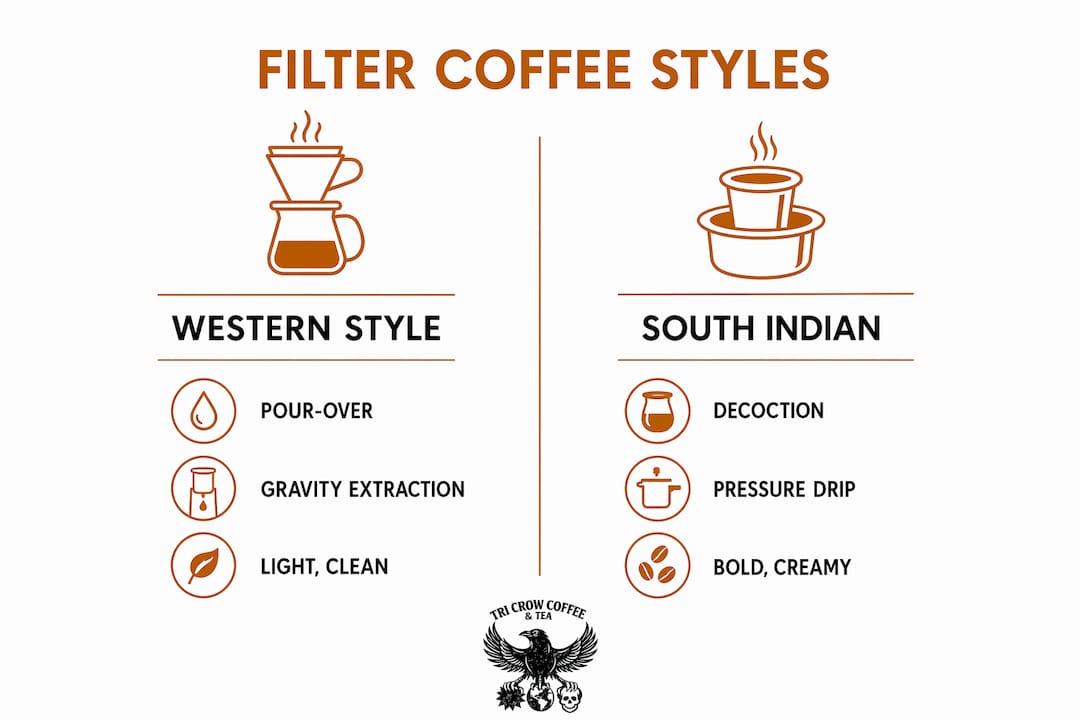
The ideal water temperature for Western-style brewing sits at 92–96°C. Water that is too cool under-extracts the coffee. Water that is too hot scorches the grounds and pulls harsh, bitter compounds.
What is South Indian filter coffee and how is it made?
South Indian filter coffee is a centuries-old brewing tradition that produces a bold, creamy, bittersweet cup unlike anything in the Western filter tradition. The brewing device is a two-chamber metal filter, typically made from brass or stainless steel. The upper chamber holds the coffee grounds and a pressing disc. The lower chamber collects the concentrated decoction as it drips through.
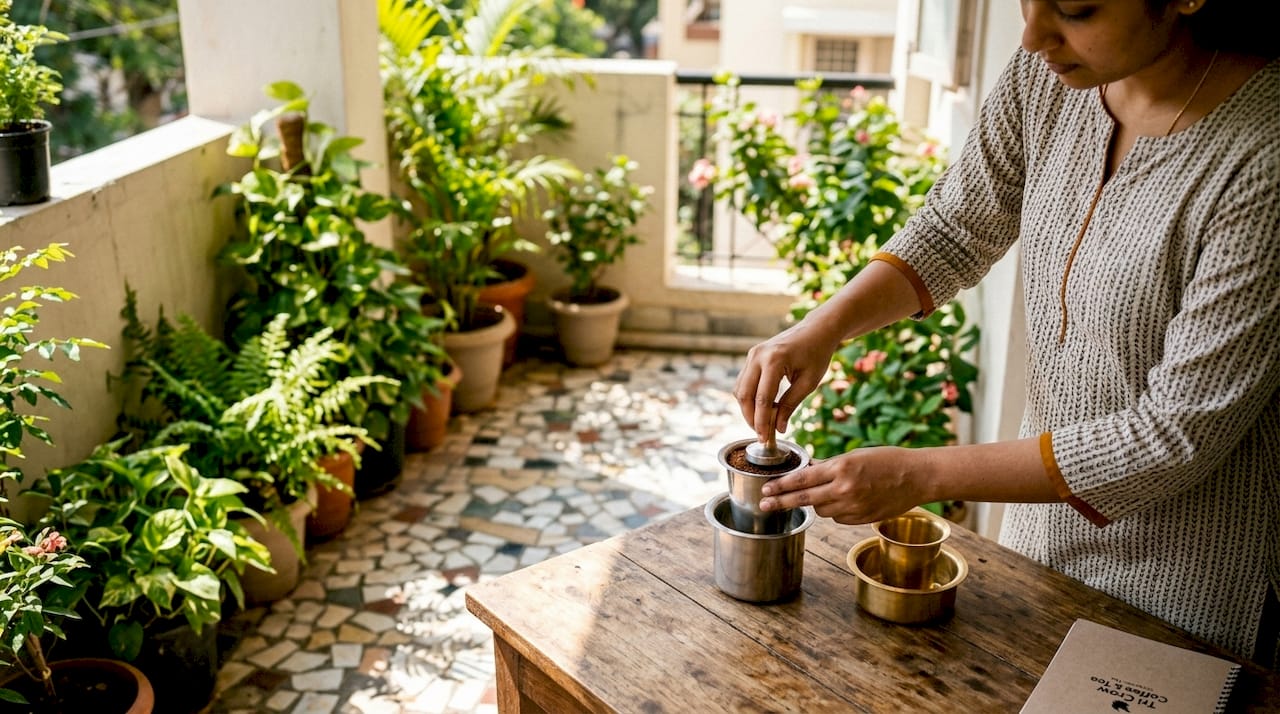
The blend and the decoction
The coffee used in this style is not a standard single-origin roast. A traditional South Indian blend contains 80–90% coffee and 10–20% chicory. Chicory adds body, a bittersweet edge, and a slightly woody depth that defines the flavor of this style. The typical dose runs 25–35 grams of this blend per 150 milliliters of water, a ratio far more concentrated than Western drip.
The brewing process is slow. Hot water poured over the grounds drips through the filter over 10–25 minutes, producing a thick, syrupy decoction. That decoction is then mixed with hot, frothed milk and sugar and served in a traditional dabarah-tumbler set. The frothing technique, pouring the coffee between the tumbler and the dabarah from a height, aerates the drink and cools it to a drinkable temperature.
Key points for brewing South Indian filter coffee correctly:
- Use boiling water that has been allowed to sit for about 30 seconds before pouring.
- Place the pressing disc on top of the grounds to level the surface, not to compress it. Over-pressing the grounds compacts the bed and blocks water flow entirely, halting extraction.
- Allow the full 10–25 minutes for the decoction to drip. Rushing it by adding more water produces a weak, watery result.
- Mix one part decoction with two to three parts hot milk, adjusting to taste.
Pro Tip: Warm the lower chamber with hot water before brewing. A cold chamber slows the drip and can cause the decoction to cool before it finishes collecting, dulling the final flavor.
The flavor profile of South Indian filter coffee is bold and rich, with a creamy body and a bittersweet finish from the chicory. It is a fundamentally different drinking experience from a Hario V60 pour-over, even though both qualify as filter coffee.
Filter coffee vs espresso and other brewing methods
Filter coffee and espresso share the same raw ingredient but produce entirely different results. Espresso uses pressure to force hot water through finely ground coffee in 25–30 seconds. Filter coffee uses gravity and takes minutes. The result is a concentrated, intense shot versus a larger, cleaner, more nuanced cup.
| Method | Extraction | Flavor profile | Grind size | Brew time |
|---|---|---|---|---|
| Filter (pour-over) | Gravity | Clean, bright, nuanced | Medium | 2:30–4:30 min |
| South Indian filter | Gravity (slow) | Bold, bittersweet, creamy | Medium-fine | 10–25 min |
| Espresso | Pressure | Intense, rich, concentrated | Fine | 25–30 sec |
| French press | Immersion | Full-bodied, heavy, oily | Coarse | 4 min |
| Instant coffee | Dissolution | Flat, muted | Pre-dissolved | Seconds |
French press uses immersion brewing, meaning the grounds sit in contact with water for the full brew time. This produces a heavier, oilier cup with more sediment than filter coffee. Instant coffee dissolves pre-brewed, dehydrated coffee in hot water. It requires no extraction at all and produces the least nuanced result of any method.
A common misconception is that filter coffee is weaker than espresso. Filter coffee contains comparable or greater total caffeine per serving because the serving size is much larger. Espresso is more concentrated per milliliter, but a 300-milliliter filter brew delivers a significant caffeine dose. The clarity and acidity of filter coffee highlight subtle flavor notes that espresso’s intensity tends to mask.
How to make filter coffee at home
Brewing great filter coffee at home requires less equipment than most people expect. The variables that matter most are freshness, grind, and water temperature.
Equipment you need
- A dripper: Hario V60, Chemex, or Melitta for Western style; a two-chamber metal filter for South Indian style
- A burr grinder: blade grinders produce uneven particles that cause inconsistent extraction
- A gooseneck kettle: the narrow spout gives you control over pour speed and direction
- A kitchen scale: measuring by weight produces consistent results every time
- Paper or metal filters matched to your dripper
Western pour-over workflow
- Heat water to 92–96°C.
- Rinse the paper filter and pre-heat the dripper.
- Grind fresh whole beans immediately before brewing. Grinding ahead of time accelerates staling.
- Add ground coffee to the filter. Tare your scale.
- Pour twice the weight of grounds in water for the bloom. Wait 30–45 seconds.
- Pour the remaining water in slow, steady circles over 2–3 minutes.
- Total brew time should land between 2:30 and 4:30 minutes.
South Indian filter coffee workflow
- Add 25–35 grams of the coffee-chicory blend to the upper chamber.
- Place the pressing disc on top and level gently. Do not press hard.
- Pour boiling water that has rested 30 seconds over the grounds.
- Allow the decoction to drip for 10–25 minutes.
- Mix one part decoction with two to three parts hot milk.
- Froth by pouring between vessels from a height before serving.
Freshness matters more than almost any other variable. Coffee roasted within the past three weeks extracts more evenly and tastes noticeably better than older beans. Stale coffee produces flat, papery cups regardless of technique.
Key takeaways
Filter coffee is defined by gravity-driven extraction through a filter, producing a clean, sediment-free cup that highlights clarity, aroma, and nuanced flavor.
| Point | Details |
|---|---|
| Two major styles | Western pour-over and South Indian filter coffee share the same principle but differ sharply in technique and flavor. |
| Bloom is non-negotiable | Pouring twice the coffee weight in water and waiting 30–45 seconds releases CO2 and prevents flat, uneven extraction. |
| Grind size drives results | Adjust grind before any other variable. Too coarse causes sourness; too fine causes bitterness. |
| South Indian blend is unique | An 80–90% coffee and 10–20% chicory blend creates the bold, bittersweet character specific to this tradition. |
| Freshness is the foundation | Beans roasted within three weeks and ground immediately before brewing produce the best extraction and flavor. |
Why filter coffee changed how I think about brewing
Filter coffee taught me that restraint is a skill. Espresso rewards intensity. Filter coffee rewards patience and attention. The first time I brewed a clean Hario V60 with a well-sourced Ethiopian bean, the cup tasted like bergamot and stone fruit. No milk, no sugar. That experience is not available from a pod machine or a French press.
South Indian filter coffee gave me a different lesson entirely. The ritual of the dabarah-tumbler, the slow drip, the frothing pour, these are not inefficiencies. They are the method. Rushing any step produces a noticeably worse cup. That kind of feedback loop makes you a better brewer faster than any amount of reading.
My honest recommendation: start with a Melitta or a Hario V60 and one good bag of single-origin beans. Brew the same recipe three days in a row before changing anything. The consistency teaches you more than experimentation does in the early stages. Once you understand what a balanced extraction tastes like, you can start adjusting grind, ratio, and temperature with purpose rather than guesswork.
Filter coffee’s accessibility and simplicity remain its greatest strengths. You do not need a $2,000 espresso machine to brew something genuinely excellent. You need fresh beans, a burr grinder, and about five minutes.
— David
Tri Crow Coffee: small-batch beans built for filter brewing
Tri Crow Coffee roasts in small batches specifically to preserve the freshness that filter brewing demands. Every bag ships within days of roasting, which means the bloom stage actually works the way it should.
The 6 Bean Dark Roast blend works beautifully in both Western pour-over and South Indian filter setups, offering enough body to hold up through milk without losing character. For readers who want to explore flavor profiles across origins before committing to a full bag, the Best Sellers Sample Pack includes six varieties at 2 ounces each. It is a practical way to find which roast suits your preferred filter method before buying in bulk.
FAQ
What is the difference between filter coffee and drip coffee?
Filter coffee and drip coffee refer to the same brewing principle. Drip coffee typically describes automatic machine brewing, while filter coffee is a broader term that includes manual methods like pour-over and South Indian filter.
How long does filter coffee take to brew?
Western-style filter coffee brews in 2:30–4:30 minutes. South Indian filter coffee takes 10–25 minutes because the decoction drips slowly through a concentrated bed of grounds.
Does filter coffee have more caffeine than espresso?
Filter coffee has less caffeine per milliliter than espresso, but a standard serving is much larger. A 300-milliliter filter brew typically delivers more total caffeine than a single 30-milliliter espresso shot.
What grind size is best for filter coffee?
A medium grind, similar to coarse sand, works best for Western pour-over. South Indian filter coffee uses a slightly finer grind to slow the drip and produce a concentrated decoction.
Can I use any coffee beans for filter brewing?
Any coffee bean works in a filter brewer, but freshly roasted beans roasted within three weeks produce noticeably better flavor and a more active bloom than older stock.