
TL;DR:
- Barrel aged coffee involves green beans resting in used barrels to absorb natural flavors from wood and spirits.
- The process creates complex, layered flavors like vanilla and caramel, unlike synthetic flavored coffees.
Barrel aged coffee is defined as green, unroasted coffee beans rested inside previously used wooden barrels to absorb flavor compounds from the wood and residual spirits. The flavor comes from a genuine chemical interaction during aging, not from synthetic sprays applied after roasting. Bourbon, rum, and wine barrels each produce a distinct flavor profile, making barrel aged coffee one of the most complex categories in specialty coffee. If you have ever tasted a cup with notes of vanilla, caramel, or dried fruit that felt too deep to be artificial, you were likely drinking a well-made barrel aged coffee.
What is barrel aged coffee and how does it differ from flavored coffee?
Barrel aged coffee and flavored coffee are not the same thing. Flavored coffee uses synthetic or natural flavor compounds sprayed onto roasted beans after processing. Barrel aged coffee builds flavor from the inside out, through a genuine chemical interaction that begins before the beans ever touch heat. That distinction matters enormously for the final cup.
The process starts with green, unroasted beans loaded into spent barrels, typically oak barrels that previously held bourbon, rum, or wine. The barrel’s charred interior acts like a reservoir, slowly releasing volatile aroma compounds including vanillin, lactones, and esters into the beans. These compounds migrate into the bean’s cellular structure over weeks. When the beans are later roasted, heat activates and transforms those absorbed compounds into the flavors you taste.
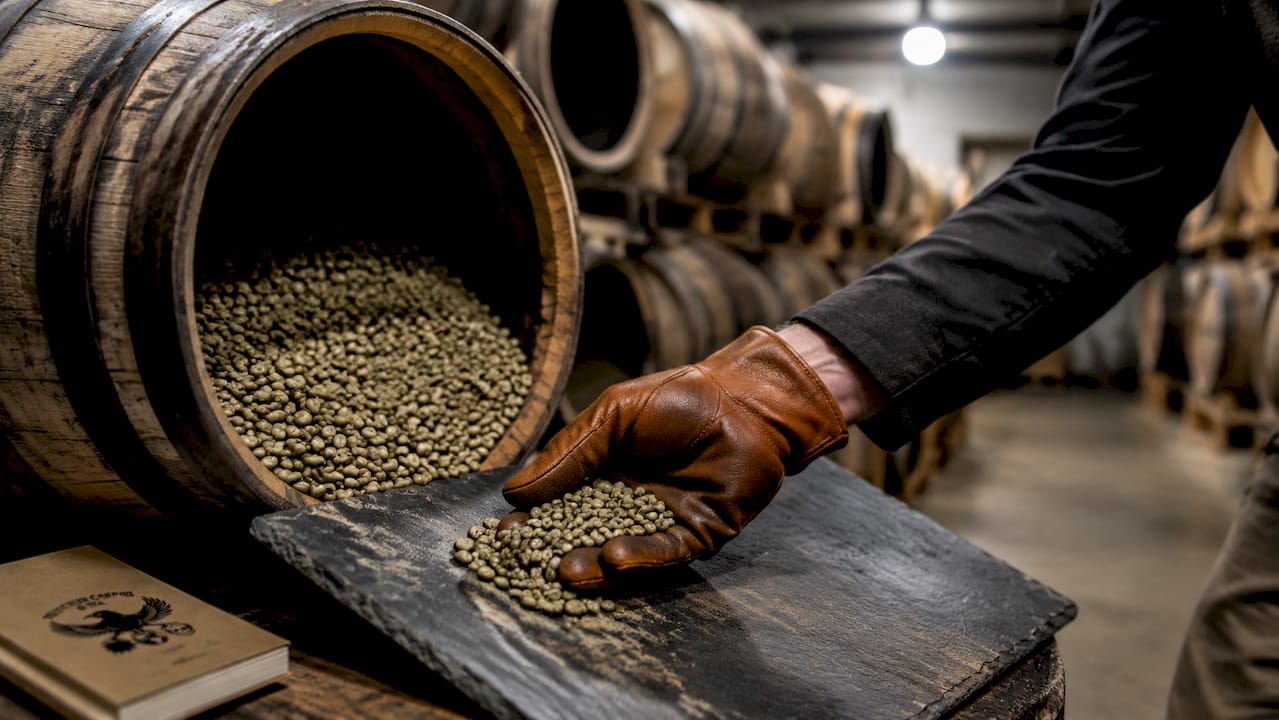
Flavored coffee, by contrast, applies flavor after roasting. The result is a surface coating that fades quickly and never integrates with the bean’s natural chemistry. Barrel aging creates flavor that is built into the bean itself. That is why barrel aged coffee tastes layered and evolving in the cup, while most flavored coffees taste flat or one-dimensional after the first few sips.
Pro Tip: Smell the dry grounds before brewing. Barrel aged coffee releases complex aromas from the grounds alone. Flavored coffee often smells sharp or artificial at this stage. Your nose tells the story before the water does.
The barrel aging process also requires careful environmental control. Humidity, temperature, and airflow all affect how quickly and evenly compounds transfer from wood to bean. Roasters who take this seriously monitor conditions throughout the aging window and adjust accordingly.
How does the barrel aging coffee process actually work?
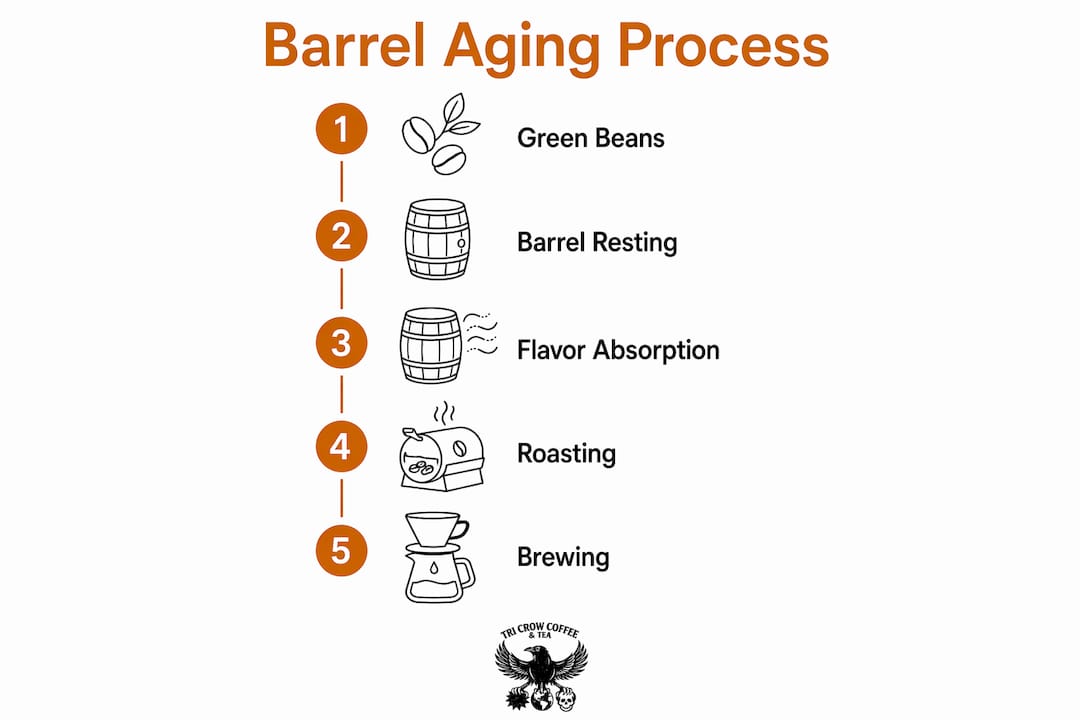
The barrel aging coffee process follows a defined sequence with a critical timing window. Green beans are loaded into used barrels and sealed or loosely covered to allow some airflow. Flavor transfer mostly occurs within the first four weeks of aging. Aging beyond 8–10 weeks risks harshness, excess tannin buildup, and potential bean spoilage from moisture accumulation.
Here is what happens chemically during those first weeks:
- Vanillin absorption: Oak wood naturally contains vanillin, the same compound that gives vanilla its flavor. The charred barrel interior releases vanillin directly into the beans.
- Lactone transfer: Lactones from the wood contribute coconut and creamy notes, especially prominent in bourbon barrel aged coffees.
- Ester migration: Esters from residual spirits add fruity and floral top notes that complement the bean’s natural acids.
- Tannin exposure: Tannins from the wood add structure and a mild astringency, similar to what you experience in a well-aged red wine.
One critical fact surprises most drinkers: the beans do not absorb liquid alcohol. Roasting drives off residual ethanol, leaving only the aromatic compounds behind. Barrel aged coffee is non-alcoholic. The barrel’s charred interior functions more like activated carbon, concentrating and releasing aromas rather than soaking the beans in spirits.
The roast profile applied after aging is equally important. Light to medium roasts are recommended to preserve the complexity that aging builds. A dark roast can burn off the delicate barrel-derived compounds, leaving only bitterness and a faint wood note. The roaster’s job is to find the temperature curve that develops the bean’s origin character while keeping the barrel flavors intact.
What does barrel aged coffee taste like by barrel type?
The barrel aged coffee flavor profile depends almost entirely on which barrel was used and how many times that barrel has been filled. First-fill barrels, meaning barrels used only once for spirits, deliver the strongest flavor transfer. Reused barrels produce subtler, more integrated notes. Neither is better by default. The right choice depends on how prominent you want the barrel character to be relative to the coffee’s origin flavor.
Different barrel types impart distinct aromatic profiles, and the differences are significant enough to make the same base bean taste like a completely different coffee.
| Barrel type | Primary flavor notes | Character in the cup |
|---|---|---|
| Bourbon | Vanilla, caramel, toasted oak | Sweet, warm, and round |
| Rum | Molasses, brown sugar, dried fruit | Rich, spiced, and full-bodied |
| Wine (red) | Red fruit, cocoa, tannins | Bright, complex, and slightly dry |
| Whiskey | Smoke, leather, dark caramel | Bold, savory, and lingering |
Bourbon barrel aged coffee is the most widely produced variety in the United States. The combination of vanilla and caramel notes from bourbon barrels pairs naturally with the chocolate and nut flavors common in Central and South American beans. Rum barrel aged coffees tend to work well with naturally processed beans from Ethiopia or Brazil, where the bean’s own fruit notes amplify the molasses character from the barrel. Wine barrel aged coffees are the most experimental of the three, producing cups that can feel almost wine-like in their acidity and fruit complexity.
The coffee bean’s origin always plays a role in the final result. A high-quality Guatemalan bean aged in a bourbon barrel will taste different from a Colombian bean aged in the same barrel. The barrel adds a layer; it does not replace the foundation.
Is barrel aged coffee worth the price?
Barrel aged coffee commands a retail price premium of 30–80% compared to standard coffees, typically ranging from $22 to $40 per 12 oz bag. That premium reflects real costs. Used bourbon barrels cost $50–$80 each, and a single barrel processes 100–130 lbs of green coffee. The labor, monitoring, and controlled storage required add further expense.
The price is justified when the product is made with quality beans and full transparency. The warning signs of a low-quality barrel aged coffee are easy to spot once you know what to look for:
- No origin disclosure: Quality producers name the country, region, or farm. Hiding the origin often means the base bean is commodity grade.
- No barrel type listed: Reputable roasters specify whether the barrel held bourbon, rum, or wine. Vague labeling suggests a vague process.
- No aging duration: Knowing whether beans aged for three weeks or eight weeks tells you a lot about the intended flavor intensity.
- Heavy barrel flavor with no coffee character: Good barrel aged coffee still tastes like coffee. If the barrel completely dominates, the base bean was likely poor quality.
Expert roasters warn that barrel aging is not a shortcut. It cannot rescue a defective or stale green bean. The best barrel aged coffees layer barrel flavors onto already excellent beans, the way a good barrel elevates a quality whiskey rather than masking a bad one.
When evaluating a new barrel aged coffee, check the roaster’s website for bean origin details before purchasing. Transparency at the source level is the clearest signal of a producer who takes the process seriously.
How to brew barrel aged coffee for the best flavor
Cold brew and pour-over are the two brewing methods that best showcase barrel aged coffee. Cold brew extracts smoothness and amplifies barrel notes without the bitterness that high heat can introduce. Pour-over gives you precise control over extraction time and temperature, letting you highlight the more delicate floral and fruit notes that barrel aging adds.
French press works well for bourbon barrel aged coffees specifically. The full immersion method and the oils retained by the metal filter bring out the vanilla and caramel notes that bourbon barrels contribute. Espresso is the least forgiving method for barrel aged beans. The high pressure and concentrated extraction can make tannin-heavy wine barrel aged coffees taste overly astringent.
Storage matters as much as brewing method. Keep barrel aged beans in an airtight container away from light and heat. The volatile compounds that make barrel aged coffee interesting are also the first to degrade when exposed to oxygen. Buy in smaller quantities and use within three to four weeks of the roast date for the best experience.
Pro Tip: Buy the same origin coffee in both a standard roast and a barrel aged version from the same roaster. Brew them side by side using pour-over. The comparison makes the barrel’s contribution immediately clear and gives you a reference point for evaluating future barrel aged coffees.
Food pairings work surprisingly well with barrel aged coffee. Bourbon barrel aged coffee pairs with dark chocolate, pecan pie, or aged cheddar. Rum barrel aged coffee complements banana bread or spiced cookies. Wine barrel aged coffee pairs naturally with fresh berries or a mild soft cheese.
Key takeaways
Barrel aged coffee delivers genuine flavor complexity through a chemical process that begins before roasting and cannot be replicated by synthetic flavoring methods.
| Point | Details |
|---|---|
| Authentic chemical process | Volatile compounds from wood and residual spirits absorb into green beans before roasting. |
| Barrel type defines flavor | Bourbon adds vanilla and caramel; rum adds molasses; wine adds red fruit and tannins. |
| Timing window is critical | Most flavor transfers in the first four weeks; aging past 8–10 weeks risks spoilage. |
| Price reflects real costs | Expect to pay $22–$40 per 12 oz bag; transparency on origin and barrel type signals quality. |
| Brew method shapes the cup | Cold brew and pour-over best preserve barrel-derived complexity without adding bitterness. |
Where barrel aged coffee fits in specialty coffee
Barrel aging arrived in specialty coffee by borrowing directly from the craft spirits and craft beer movements that took hold in the 2000s and 2010s. That origin story matters because it explains both the appeal and the risk. Craft movements celebrate experimentation and artisanal precision in equal measure. When barrel aging is done well, it reflects both values. When it is done poorly, it reflects neither.
My honest view is that barrel aged coffee occupies a genuinely interesting space in specialty coffee, but it is not for every drinker or every occasion. If you value the clean, transparent expression of a single origin bean, a heavily barrel-influenced coffee may feel like interference rather than enhancement. If you enjoy complexity, layered aromas, and the crossover between coffee and craft spirits culture, barrel aged coffee delivers something no other category can.
The purist debate is real but somewhat misses the point. Barrel aging does not compete with traditional specialty coffee. It extends the conversation into new territory. The key is choosing producers who treat the base bean with the same respect they give the barrel. A great barrel aged coffee starts with a great green bean. The barrel is a collaborator, not a cover story.
For drinkers who are curious but cautious, start with a bourbon barrel aged coffee from a roaster who discloses full origin and aging details. Bourbon barrels produce the most approachable flavor profile, and the vanilla and caramel notes feel familiar even to drinkers who have never tried barrel aged coffee before. From there, rum and wine barrels open up progressively more adventurous territory.
— David
Tri Crow Coffee and the art of intentional flavor
Tri Crow Coffee crafts small-batch blends with the same attention to origin and flavor layering that defines the best barrel aged coffees. Each batch is produced in limited quantities so that flavor consistency is never sacrificed for volume.
The Cowboy Blend from Tri Crow Coffee carries cocoa, caramel, and vanilla notes that mirror the flavor profile of a well-made bourbon barrel aged coffee. It is a natural starting point for drinkers drawn to warm, sweet, and complex cups. For those who want to go deeper into what makes specialty coffee flavor tick, the Tri Crow Coffee coffee origins guide covers bean types, roast profiles, and the origin characteristics that shape every cup.
FAQ
What is barrel aged coffee in simple terms?
Barrel aged coffee is green coffee beans rested inside used wooden barrels to absorb flavor compounds from the wood and residual spirits before roasting. The result is a coffee with complex, layered flavors like vanilla, caramel, or dried fruit that are built into the bean itself.
Does barrel aged coffee contain alcohol?
No. Roasting drives off any residual ethanol, so barrel aged coffee is non-alcoholic. The beans absorb only volatile aroma compounds from the barrel, not liquid alcohol.
How long does the barrel aging process take?
Most flavor transfer occurs within the first four weeks of aging. Aging beyond 8–10 weeks risks off-notes, excess tannins, and potential spoilage from moisture buildup.
What does barrel aged coffee taste like compared to regular coffee?
Barrel aged coffee tastes noticeably sweeter and more complex than standard coffee, with notes that vary by barrel type. Bourbon barrels add vanilla and caramel; rum barrels add molasses and spice; wine barrels add red fruit and tannins.
How do I know if a barrel aged coffee is high quality?
Look for full disclosure of the coffee’s origin, the barrel type used, and the aging duration. Producers who hide these details often use commodity-grade beans and rely on heavy barrel flavor to mask defects.