
TL;DR:
- Artisan roasted coffee is produced in small batches with manual control to enhance unique flavor characteristics of high-quality beans. It emphasizes freshness, craft, and origin-specific profiles, contrasting with mass-produced coffee’s volume focus and automation. Proper care includes checking roast dates and choosing beans with transparent sourcing to enjoy the full benefits of artisan coffee.
Artisan roasted coffee is defined as coffee roasted in small batches with manual control to bring out the unique flavor characteristics of each bean. Unlike mass-produced coffee, the artisan approach treats roasting as a craft, not a manufacturing step. The Specialty Coffee Association grades specialty-grade beans on a 100-point scale, and artisan roasters work almost exclusively with beans scoring 80 or above. Tri Crow Coffee operates squarely within this philosophy, producing every batch in limited quantities to protect both flavor and consistency.
What is artisan roasted coffee, and how is it different from regular coffee?
Artisan roasted coffee separates itself from commodity coffee at every stage, from sourcing to the final cup. Mass-produced coffee prioritizes volume and price consistency. Artisan roasting prioritizes flavor, freshness, and the individual character of each bean’s origin.
The sourcing gap is significant. Commodity beans are graded on the SCA scale below 80, meaning they tolerate more defects and show less distinct flavor. Artisan roasters select beans scoring 80 and above, with the best lots reaching the “Outstanding” tier at 90+. That scoring difference translates directly into what you taste.
Roasting method is where the craft becomes most visible. Mass production runs large automated drums at high throughput, blending batches to hit a predictable, neutral flavor. Artisan roasters use small batch sizes, typically 1–50 lbs, and monitor each roast manually. That hands-on control lets the roaster adjust heat and airflow in real time to coax out specific flavors rather than average them out.
Freshness is the third major difference. Large-scale roasters often ship coffee weeks after roasting. Artisan producers label roast dates clearly and emphasize freshness as a core quality indicator. Fresher coffee retains more aromatic oils, which means a brighter, more complex cup.
Key characteristics that define artisan roasting:
- Batch sizes of 1–50 lbs, roasted to order or in short cycles
- Manual monitoring of temperature, airflow, and color throughout the roast
- Customized roast profiles built for each specific bean origin
- Specialty-grade beans scoring 80+ on the SCA scale
- Roast date transparency and short shelf-to-cup timelines
- Minimal defects tolerated at any stage of production
Pro Tip: When buying artisan coffee, look for a printed roast date on the bag. If no date appears, the roaster is not prioritizing freshness, and that tells you something important.
How is artisan coffee roasted? Process, technique, and equipment
The artisan roasting process is built around control and attention. A roaster loads a measured batch, typically between 1 and 50 lbs, into a drum roaster or a fluid-bed roaster. Each machine type produces a different result. Drum roasters use direct and radiant heat for a fuller, rounded body. Fluid-bed roasters circulate hot air around the beans for a cleaner, brighter cup.
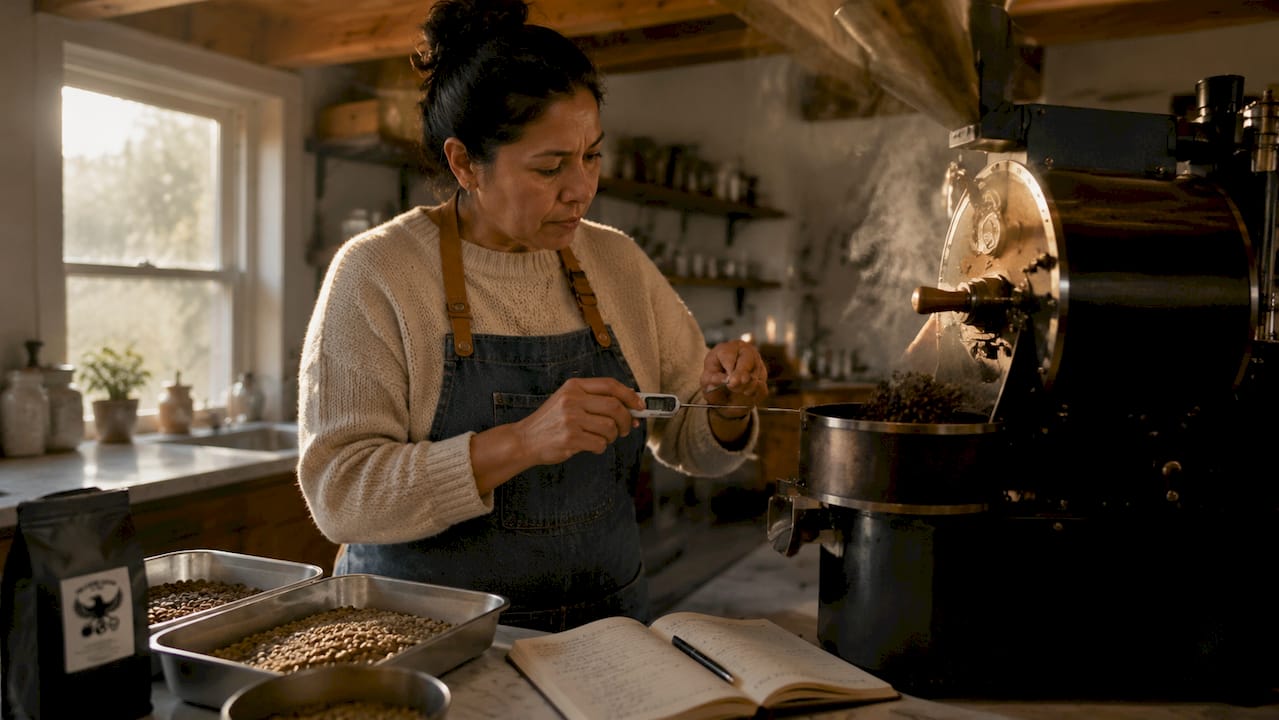
Once the roast begins, the roaster tracks a time-temperature curve called a roast profile. Manually monitored roasting times generally run 10–15 minutes, with the roaster adjusting heat and airflow at key development stages. The most critical moment is “first crack,” an audible pop that signals the beans have reached a light roast level. What happens after first crack determines whether the coffee develops into a light, medium, or dark roast.
Every bean origin responds differently to heat. An Ethiopian Yirgacheffe needs a lighter touch to preserve its floral and citrus notes. A Brazilian Santos benefits from a slightly longer development time to bring out its natural cocoa character. Artisan roasters build separate profiles for each origin rather than applying one universal setting.
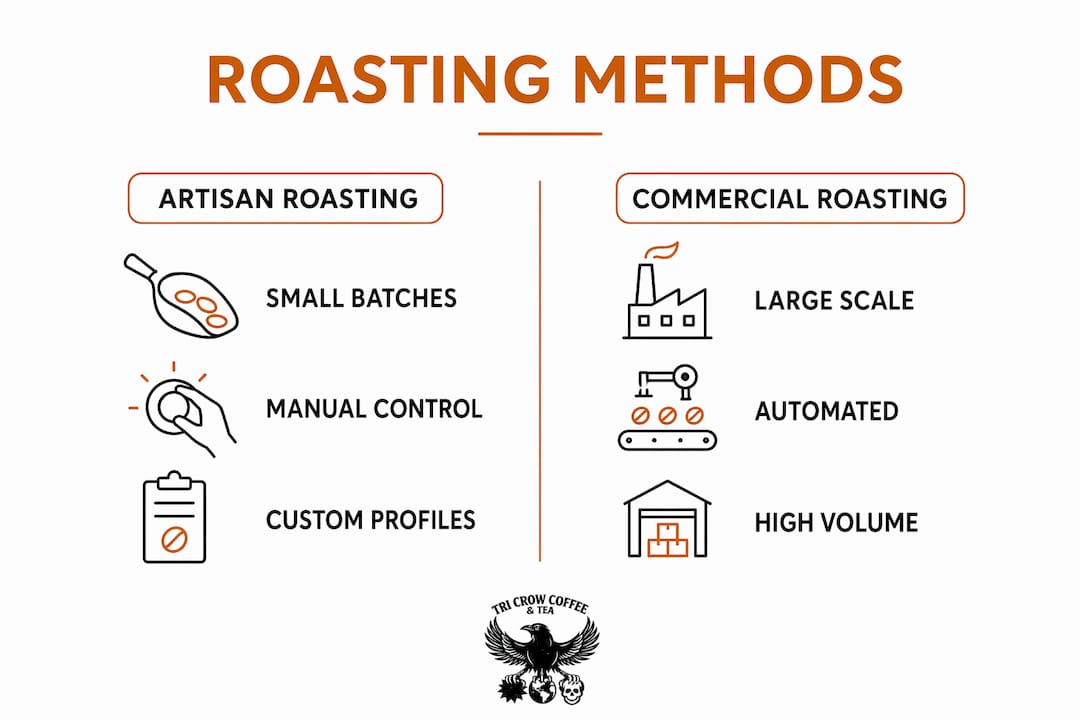
| Parameter | Artisan roasting | Commercial roasting |
|---|---|---|
| Batch size | 1–50 lbs | Hundreds to thousands of lbs |
| Roast duration | 10–15 minutes, manually monitored | 2–5 minutes, automated |
| Temperature control | Adjusted in real time by the roaster | Pre-set automated program |
| Bean selection | Specialty grade, 80+ SCA score | Commodity grade, mixed origins |
| Roast profile | Customized per origin | Standardized across blends |
| Freshness labeling | Roast date printed on bag | Often absent or vague |
Pro Tip: Ask your roaster which machine they use. Drum roasters and fluid-bed roasters produce noticeably different cups from the same bean. Knowing the equipment helps you predict the flavor before you brew.
What are the benefits of artisan roasted coffee?
The benefits of artisan coffee go well beyond taste, though taste is the most immediate reward. Slow, controlled roasting reduces bitterness and preserves delicate aromatics, producing a smoother, cleaner finish than fast commercial roasting methods. That smoothness is not a marketing claim. It is a direct result of avoiding the burnt notes that appear when beans are rushed through high heat.
Here are the core benefits artisan roasting delivers:
- Reduced bitterness. Controlled heat development avoids scorching the bean’s surface, which is the primary source of harsh, bitter flavors in low-quality coffee.
- Preserved aromatics. Slower roasting retains the volatile aromatic oils that give coffee its complexity. These oils are what you smell before the first sip, and they define the experience.
- Distinct tasting notes. Artisan roasting highlights origin-specific flavors: fruity brightness in African beans, chocolatey depth in South American lots, and earthy richness in Indonesian varieties.
- Freshness advantage. Short batch cycles and roast-date labeling mean the coffee reaches you closer to peak flavor. Aromatic compounds degrade quickly after roasting, so freshness is not optional.
- Digestive comfort. Lighter and medium artisan roasts tend to be gentler on the stomach than heavily automated dark roasts, because the slower process preserves more of the bean’s natural compounds without introducing harsh byproducts.
- Ethical transparency. Artisan producers typically disclose origin, farm, and processing method. That transparency lets you make informed choices about what you drink and who you support.
The coffee cupping process that specialty roasters use to evaluate beans before purchase is the same framework that ensures these benefits reach your cup consistently.
How does artisan coffee fit into the specialty and third-wave coffee movement?
Artisan roasted coffee did not emerge in a vacuum. It is the practical expression of what the specialty coffee world calls “third-wave coffee,” a movement that treats coffee as an agricultural product worth understanding deeply rather than a commodity worth consuming cheaply.
The Specialty Coffee Association’s Coffee Value Assessment goes beyond a simple cupping score. It evaluates sensory quality, physical bean characteristics, and extrinsic factors like sustainability and supply chain fairness. That multi-layered framework is exactly what artisan roasters apply when they select and develop their beans. The SCA grading tiers make the standard concrete: 80–84.99 is “Very Good,” 85–89.99 is “Excellent,” and 90+ is “Outstanding.”
Third-wave coffee culture places the roaster in the same conversation as the farmer and the barista. Each person in that chain contributes to the final cup, and artisan roasting is the link that connects field quality to what lands in your mug. The growing demand for artisan approaches reflects a broader consumer shift toward quality and intentionality in daily rituals.
Artisan coffee’s role in the specialty movement includes:
- Supporting direct trade and fair pricing for coffee farmers
- Reducing environmental impact through smaller, more controlled production runs
- Creating transparency around origin, processing method, and roast date
- Building relationships between roasters and specific farms or cooperatives
- Educating consumers about flavor, terroir, and the value of craft
Understanding coffee grading systems helps you read those relationships on the bag. A roaster who lists the farm name, altitude, and processing method is not padding the label. They are showing you the chain of custody behind every gram.
How to choose and appreciate artisan roasted coffee
Choosing artisan coffee well starts with reading the bag before you smell the beans. A credible artisan roaster prints the roast date, the bean origin, and often the farm or cooperative name. Those details signal that the roaster values transparency and has nothing to hide about sourcing or freshness.
Brewing method matters as much as bean selection. Pour-over methods like the V60 or Chemex highlight the clarity and brightness of light and medium artisan roasts. A French press suits medium to dark roasts, pulling out body and texture. Espresso works across the range but rewards a well-developed medium-dark roast with the most balanced extraction. Matching your brew method to the roast level is the fastest way to get more from the beans you already have.
Tips for getting the most from artisan roasted coffee:
- Buy beans with a roast date within the past two to four weeks for peak flavor
- Store coffee in an airtight container away from light, heat, and moisture
- Grind just before brewing to preserve aromatic oils
- Start with the roaster’s recommended brew ratio and adjust from there
- Take note of tasting descriptors on the bag and try to identify them in the cup
- Explore selecting coffee beans by origin to build your flavor vocabulary
Pro Tip: Buy a small bag from a new roaster before committing to a larger quantity. Artisan roasters often rotate single-origin offerings seasonally, so what you love in spring may not be available in fall.
Key Takeaways
Artisan roasted coffee is defined by small-batch production, specialty-grade beans scoring 80+ on the SCA scale, and manual roasting control that preserves flavor complexity and freshness.
| Point | Details |
|---|---|
| Artisan coffee definition | Small-batch, manually controlled roasting of specialty-grade beans scoring 80+ on the SCA scale. |
| Roasting process | Drum or fluid-bed roasters run 10–15 minute profiles customized per bean origin. |
| Flavor benefits | Slower roasting reduces bitterness, preserves aromatics, and highlights origin-specific tasting notes. |
| Specialty movement | Artisan roasting connects third-wave coffee values: transparency, ethical sourcing, and craft. |
| Consumer selection | Look for roast date, origin disclosure, and batch labeling when choosing artisan coffee. |
Why artisan coffee changed the way I think about my morning cup
I spent years drinking whatever was on sale, convinced that coffee was coffee. The shift happened when I tried a light-roasted Ethiopian natural processed through a pour-over for the first time. It tasted like blueberries and dark chocolate. No additives, no flavoring. Just a bean roasted carefully enough to let its actual character come through.
That experience is what artisan roasting makes possible. The craft is not about exclusivity or price. It is about giving a bean the conditions it needs to express what it actually is. When a roaster builds a custom profile for a specific lot from a specific farm, they are doing something closer to cooking than manufacturing.
What I find most underappreciated is the ethical dimension. Artisan roasters who support local coffee roasters and work directly with farms are not just making better coffee. They are creating economic stability for the farmers who grow it. The quality in your cup and the fairness in the supply chain are the same story told from two ends.
My practical advice: do not start with the most expensive single-origin you can find. Start with a well-sourced medium roast from a transparent roaster, brew it simply, and pay attention. The flavor vocabulary builds quickly once you know what you are looking for.
— David
Tri Crow Coffee and the artisan roasting difference
Tri Crow Coffee roasts every batch in small quantities, applying the same manual attention to each lot that defines true artisan craft. The Italian Roast Dark blends Arabica and Robusta for a bold, full-bodied cup, while the Italian Roast Extra Dark pushes Central American beans into deep, heavy flavor territory for those who want intensity without bitterness. For a smoother entry point, the Brazil Santos Medium Roast delivers a clean, cocoa-forward cup that shows what careful roasting does for a naturally sweet bean.
Each Tri Crow Coffee roast carries the brand’s commitment to ritual and intentionality. These are not convenience products. They are coffees designed for people who want their daily cup to mean something.
FAQ
What is the artisan coffee definition in simple terms?
Artisan coffee is coffee roasted in small batches with manual control to highlight the unique flavors of specialty-grade beans. It prioritizes quality and freshness over volume and price.
How does artisan coffee vs regular coffee differ in taste?
Artisan coffee delivers more complex, origin-specific flavors like fruit, chocolate, or floral notes, while regular commercial coffee tends toward a flat, generic bitterness from automated high-heat roasting.
What SCA score qualifies a bean as specialty grade?
The Specialty Coffee Association defines specialty coffee as beans scoring 80 or above on its 100-point scale, with scores above 90 classified as “Outstanding.”
How is artisan coffee made differently from mass-produced coffee?
Artisan roasters use small batches of 1–50 lbs, custom roast profiles, and manual monitoring over 10–15 minutes. Mass producers use automated systems, large volumes, and standardized settings across all beans.
How should I store artisan roasted coffee to keep it fresh?
Store artisan coffee in an airtight container away from light, heat, and moisture. Grind just before brewing and use the beans within two to four weeks of the roast date for best flavor.