
TL;DR:
- Luxury coffee is defined by traceable heritage, small-batch craft, and visible roast dates, surpassing specialty standards. Verifiable origin, artisan production, and unique branding justify premium pricing, especially when supported by detailed labeling and proper storage. Achieving the best flavor relies on calibration, matching processing methods to brewing techniques, and approaching each bag as a ritual.
The best luxury coffee beans share verifiable qualities including traceable heritage from a named farm or lot, artisan small-batch production, and a roast date stamped on the bag. Tri Crow Coffee checks all three. For enthusiasts who treat their morning brew as a ritual rather than a caffeine transaction, that combination matters more than any marketing claim. The Specialty Coffee Association’s specialty-grade 80+ standard sets the quality floor; genuine luxury builds above it with rarity, craft processing, and provenance you can confirm before you buy.
Before you commit to a full bag, run these four checks:
- Roast date: printed on the bag, not a “best by” estimate
- Single-farm or lot traceability: a named origin, not just a country
- Processing method listed: washed, natural, or honey
- Small-batch disclosure: batch size or roaster notes on the label
Pro Tip: Grind size is the highest-leverage variable once you have quality beans. A quality burr grinder delivers more consistent particle size than any blade grinder, and that consistency is what lets a luxury lot perform as intended.
Table of Contents
- What separates luxury coffee from specialty or premium?
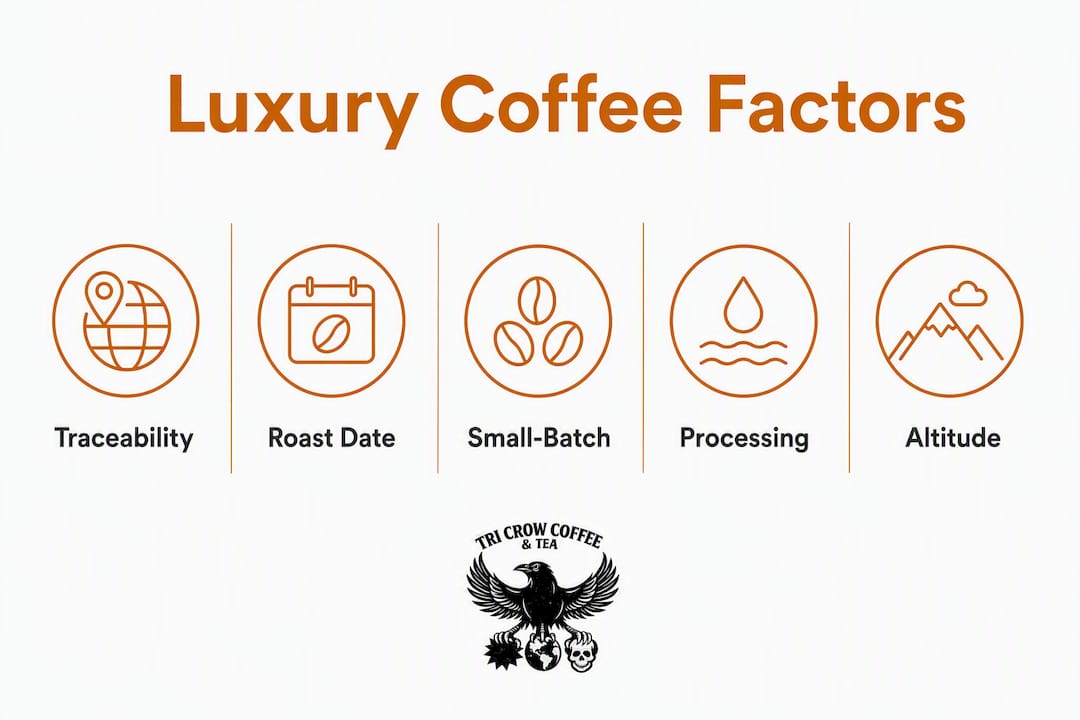
- Five measurable factors that tell you a bean is genuinely high-end
- Does your brew method match your beans’ processing?
- What you’re actually paying for in a luxury bag
- How to buy and store luxury beans so they taste as intended
- Why Tri Crow Coffee fits the luxury and ritual brief
- Key Takeaways
- The ritual mindset is the missing variable
- Tri Crow Coffee: small-batch beans worth tasting
- FAQ
What separates luxury coffee from specialty or premium?
“Specialty” has a definition: 80 or above on the SCA’s 100-point scale, with zero Category 1 defects in green grading. “Premium” is an unregulated marketing word. Luxury sits above both, defined by three pillars that no grading rubric fully captures.
- Verifiable heritage: You know the farm, the farmer, and often the specific lot. Single-farm coffee origin transparency is what separates a traceable luxury bean from a well-scored anonymous bag.
- Artisan production: Hand-picked cherries at peak ripeness, controlled fermentation, small-batch roasting calibrated to the specific bean. Luxury coffees often come from rare cultivars like Geisha or Bourbon that require selective harvesting and cannot be scaled.
- Independent brand identity: A cultural weight and story that mass-market roasters cannot replicate. This includes the unboxing experience, ritual framing, and the sourcing narrative on the bag.
Common luxury origins and their altitude ranges illustrate why they command premiums. Ethiopia’s Yirgacheffe grows at high altitudes; Panama’s Geisha is grown at mountainous elevations; Yemen’s Mocha is cultivated in varied highlands. Altitude forces the plant to develop more concentrated sugars, producing the brighter acidity, florals, and layered sweetness that lower-grown beans simply don’t reach. Local sourcing practices and supply chain transparency reinforce the ethical side of that story.
Five measurable factors that tell you a bean is genuinely high-end
Quality is not equivalent to price. Five factors actually determine what ends up in your cup.
- Origin and altitude: Higher-grown beans from named regions produce more complex flavor. Look for a specific farm, cooperative, or lot, not just a country.
- Processing method: Washed, natural, or honey. Each method shapes flavor in a measurable way. The label should state it plainly.
- Roast precision: A roast profile tailored to the specific bean, not a house style applied to everything. Look for tasting notes that match the origin’s known characteristics.
- Freshness: A roast date on the bag is non-negotiable. The optimal flavor window opens a few days after roast and holds for several weeks when stored correctly.
- Storage and packaging: Protective packaging that minimizes oxygen and light exposure. Valve-sealed bags are the standard for quality roasters.
You can learn how each of these factors connects to what ends up in the cup through Tri Crow Coffee’s guide to selecting beans for home brewing.
Pro Tip: A quality burr grinder is the single highest-impact home investment for luxury beans. Inconsistent particle size from a blade grinder undermines even a 90-point lot.
Does your brew method match your beans’ processing?
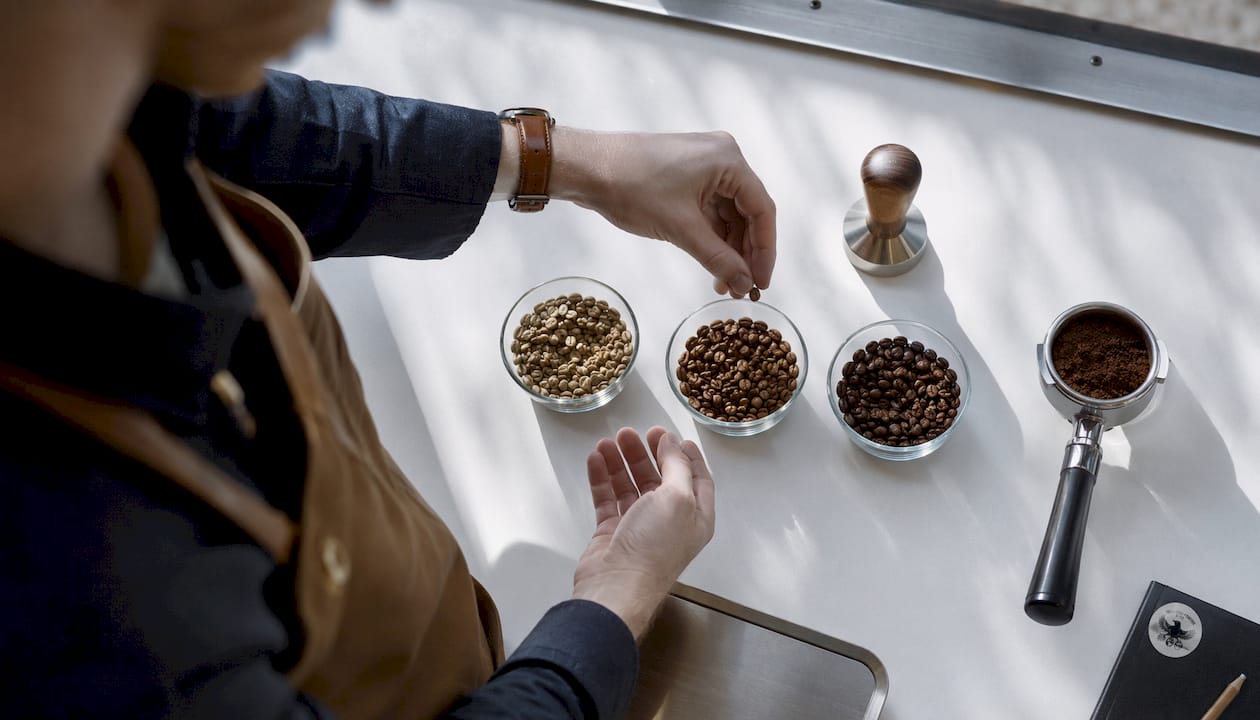
Choose beans whose processing and roast were designed for your brew method. The chemistry is straightforward: processing determines how much fruit character and body survive into the cup, and different brew methods amplify those traits differently.
| Processing method | Dominant flavor traits | Best brew methods |
|---|---|---|
| Washed | Clean, bright, floral, high clarity | Pour-over, drip, AeroPress |
| Natural | Fruity, full-bodied, wine-like sweetness | French press, espresso, cold brew |
| Honey | Balanced sweetness and acidity | Espresso, pour-over, Moka pot |
Washed single-origin beans highlight clarity and delicate notes in pour-over; natural or honey-processed beans deliver fuller body and stable crema for espresso or French press. Understanding how processing shapes flavor helps you pick the right bag the first time rather than troubleshooting a mismatch.
Pro Tip: Dialing in grind size and water temperature for each new lot takes about five cups. Don’t judge a luxury bean on the first brew.
What you’re actually paying for in a luxury bag
Price alone is not a reliable quality signal. A $35 bag of freshly roasted, traceable 87-point single-origin coffee is a better value than a $40 bag of over-marketed commercial blend. What justifies a genuine premium comes down to specific cost drivers.
- Sourcing cost: Rare cultivars and limited harvests from high-altitude farms cost more at origin. Yemeni heirloom varietals or Panama Geisha lots are genuinely scarce.
- Small-batch roasting: Lower throughput means higher cost per pound, but it also means the roaster can calibrate each batch to the bean rather than running a production line.
- Traceability infrastructure: Farm-level documentation, direct trade relationships, and lot tracking all add cost. That cost is what makes the provenance claim verifiable.
- Protective packaging and ritual presentation: Valve-sealed bags, precise label information, and thoughtful unboxing design preserve quality and signal the brand’s commitment to the experience.
When a premium price is justified: roast date is visible, origin goes to farm or lot level, and processing method is stated. When it’s likely marketing: no roast date, vague “single origin” with only a country name, and packaging that leads with lifestyle imagery over sourcing facts. Verify authenticity through certifications, detailed product descriptions, and transparent sourcing before you pay a luxury price.
How to buy and store luxury beans so they taste as intended
Buying checklist:
- Buy whole bean, not pre-ground
- Check the roast date: a few days to a few weeks post-roast is the target window
- Start with a sample pack to audition profiles before committing to a full bag
- Confirm origin goes to farm or lot level, not just a region
- Verify the processing method is listed
Sampler sets are useful for tasting multiple origins, but smaller sample sizes can make it harder to dial in espresso. Once you know the profile you love, a full bag gives you enough volume to calibrate properly.
Storage: Keep whole beans in a cool, dark place, sealed against oxygen and light. Grind immediately before brewing to preserve volatile aromatics. The flavor window opens a few days after roast and holds for several weeks with proper storage. Whole-bean purchases preserve those aromatics far longer than pre-ground.
For authenticity, a legitimate luxury product page should show: farm or lot name, processing method, roast date, tasting notes, and ideally a cupping score or SCA reference.
Why Tri Crow Coffee fits the luxury and ritual brief
Tri Crow Coffee roasts in small batches, lists origin and processing details on every product, and frames each blend as a deliberate ritual rather than a commodity. That combination of craft production and provenance transparency is exactly what separates genuine luxury from expensive branding.
Three products cover the main brewing preferences:
6 Bean Dark Roast Coffee • Small-Batch House Blend: A full-bodied, crema-forward blend built for espresso, Moka pot, and French press. Six origins in one small-batch roast means complexity without unpredictability. Best for drinkers who want a bold, consistent ritual cup.
Tanzania Medium-Light Coffee • Small-Batch Single Origin: Single-origin, medium-light roast designed for pour-over and drip. Tanzania’s high-altitude growing conditions produce the floral clarity and clean finish that washed processing highlights. The right choice if you want to taste a specific place.
Best Sellers Coffee Sample Pack • 6 Varieties • 2oz Each: Six profiles in one order. This is the practical starting point for any enthusiast who wants to calibrate preferences before committing to a full bag.
Luxury coffee rewards patience. Early brews help calibrate grind and temperature to reveal the full experience the roaster intended.
Beyond coffee, Tri Crow’s assortment includes English Breakfast Tea, Sweet Hibiscus Berry Tea, and Earl Grey Tea for ritual moments that don’t involve a grinder.
Pro Tip: With the sample pack, brew each variety the same way for the first cup. Then adjust grind and temperature for the second. The contrast tells you more about each bean than any tasting note.
Key Takeaways
True luxury coffee is defined by farm-level traceability, a visible roast date, small-batch production, and processing matched to your brew method — price alone tells you nothing reliable.
| Point | Details |
|---|---|
| Roast date is non-negotiable | Buy only bags with a printed roast date; the flavor window opens days after roast. |
| Match processing to brew | Washed beans suit pour-over clarity; natural and honey suit espresso and French press body. |
| Price ≠ quality | Verify farm traceability and roast date before paying a luxury premium. |
| Start with a sample pack | Tri Crow Coffee’s Best Sellers Sample Pack lets you audition six profiles before committing. |
| Tri Crow Coffee | Small-batch roasting, named origins, and ritual-first branding make it a strong luxury-bean choice. |
The ritual mindset is the missing variable
Most luxury coffee advice focuses on what to buy. The harder part is how you approach it. Luxury beans are designed to perform consistently, not to surprise you on the first cup. A balanced cup with stable crema, smooth mouthfeel, and a clean finish is the goal for high-end lots. That consistency only shows up once grind, temperature, and dose are calibrated to the specific bean.
The practical implication: treat each new bag as a five-cup calibration exercise. Brew the first cup at your default settings, note what’s off (too bright, too flat, thin body), and adjust one variable at a time. By cup five, you’re tasting what the roaster built. That process is the ritual. It’s also what separates enthusiasts who get real value from luxury beans from those who pay the premium and wonder why it tastes like their grocery store bag.
The coffee tasting process is a skill that compounds. The more deliberately you taste, the faster you calibrate new lots.
Tri Crow Coffee: small-batch beans worth tasting
For enthusiasts who want luxury beans without hunting through a dozen roasters, Tri Crow Coffee offers a direct path: small-batch roasting, named origins, and a sample pack that lets you taste six profiles before you commit.
The Best Sellers Coffee Sample Pack is the lowest-friction way to start. Six 2oz varieties, enough to run a proper calibration on each. If you already know you want a bold espresso ritual, the 6 Bean Dark Roast is the direct pick. Pour-over drinkers who want single-origin clarity should go straight to the Tanzania Medium-Light. Browse the full range at Tri Crow Coffee and order the sample pack to find your ritual bean.
FAQ
What makes coffee “luxury” versus just specialty?
Specialty coffee scores 80 or above on the SCA’s 100-point scale. Luxury coffee builds on that with single-farm traceability, rare cultivars, small-batch harvests, and a craft production standard that goes beyond what any grading rubric measures.
How do I know if a roast date is recent enough?
The optimal flavor window opens a few days after roast and holds for several weeks with proper storage. A bag without a printed roast date is a red flag regardless of price.
Which processing method should I choose for espresso?
Natural or honey-processed beans produce the fuller body and stable crema that espresso rewards. Washed beans work in espresso but tend toward brightness rather than body.
Is a sample pack worth it before buying a full bag?
Yes, especially for espresso. Sample sizes are useful for tasting multiple profiles, but once you find the one you want, a full bag gives you enough volume to properly dial in grind and temperature.
Does Tri Crow Coffee list roast dates and origin details?
Tri Crow Coffee provides origin and processing information on its product pages, consistent with the small-batch, traceability-first approach that defines genuine luxury beans.