
TL;DR:
- A tea latte combines a strong tea concentrate with steamed milk at a 1:2 ratio for a balanced, flavorful drink. Success depends on brewing a concentrated tea, steaming milk to 140°F–160°F, and dissolving sweeteners before assembly. Proper sequencing and ingredient selection are more important than expensive equipment or ingredients.
A tea latte is defined as a beverage made by combining a strong tea concentrate with steamed milk at a 1:2 tea-to-milk ratio, producing a creamy, balanced drink that holds flavor even against dairy or plant-based milk. The tea latte workflow is the sequence of decisions and actions that separates a flat, watery cup from something worth drinking twice. Get the ratio wrong, steam the milk too hot, or add sweetener at the wrong stage, and the whole thing falls apart. This guide covers the full tea latte making process, from ingredient selection through assembly, for both home brewers and café workers who want consistent, barista-grade results.
What does a good tea latte workflow actually require?
The core of any effective tea latte workflow is a concentrated tea base. You brew with double the usual amount of tea leaves or bags in roughly 4 oz of water, then combine that concentrate with 8 oz of steamed milk. That ratio gives you enough tea character to survive the milk without tasting thin. Milk steaming temperature is the second critical variable. Milk steamed above 165°F scorches the proteins, kills the natural sweetness, and produces a flat, slightly sulfurous flavor. The target window is 140°F to 160°F, and hitting it consistently is what separates a practiced workflow from a guessing game.
The third variable is sequence. Adding sweetener to finished milk or a completed drink causes uneven texture and graininess. Dissolving it into the hot concentrate first produces a smooth, integrated result every time. These three elements, ratio, temperature, and sequence, form the foundation of every good tea latte preparation guide.
What ingredients and equipment do you need?
Ingredients that hold up to milk
Bold, strong teas are the correct choice for milk-based beverages. Delicate teas like white or light green varieties lose their character entirely once milk enters the cup. Tea sommeliers consistently recommend black teas, robust herbal blends, and spiced chai as the best performers. Tri Crow Coffee’s English Breakfast Tea is a strong, smooth black tea built specifically for milk pairing, making it a natural fit for this workflow.
For sweeteners, honey, maple syrup, and plain sugar all work. The choice affects flavor but not technique. What matters is when you add them, not which one you pick.
Equipment by skill level
- Tea kettle or stovetop pot: Required for any home setup. A gooseneck kettle gives better pour control.
- Frothing pitcher: Needed for steam wand work. A 12 oz pitcher works for single servings.
- Thermometer: Non-negotiable for hitting the 140°F to 160°F window without guessing.
- Handheld frother: The entry-level option. It produces lighter foam than a steam wand but works well for home use.
- Espresso machine with steam wand: The café-grade tool. It produces true microfoam with consistent texture.
- Cups: A 12 oz ceramic mug retains heat better than glass during assembly.
Milk selection matters more than most people realize
Barista edition plant-based milks are necessary for stable microfoam. Standard oat or almond milk lacks the fat and lipid content needed to hold foam structure. Barista blend versions are formulated to froth properly and hold texture long enough to pour. Dairy whole milk remains the easiest to work with because its fat content is naturally suited to steaming. Two percent milk works but produces slightly less body.
| Milk type | Frothing performance | Flavor impact |
|---|---|---|
| Whole dairy milk | Excellent | Neutral, slightly sweet |
| Barista oat milk | Very good | Mild, slightly oaty |
| Barista almond milk | Good | Light, slightly nutty |
| Standard plant milk | Poor | Variable |
How do you make a tea latte step by step?
The full hot tea latte process
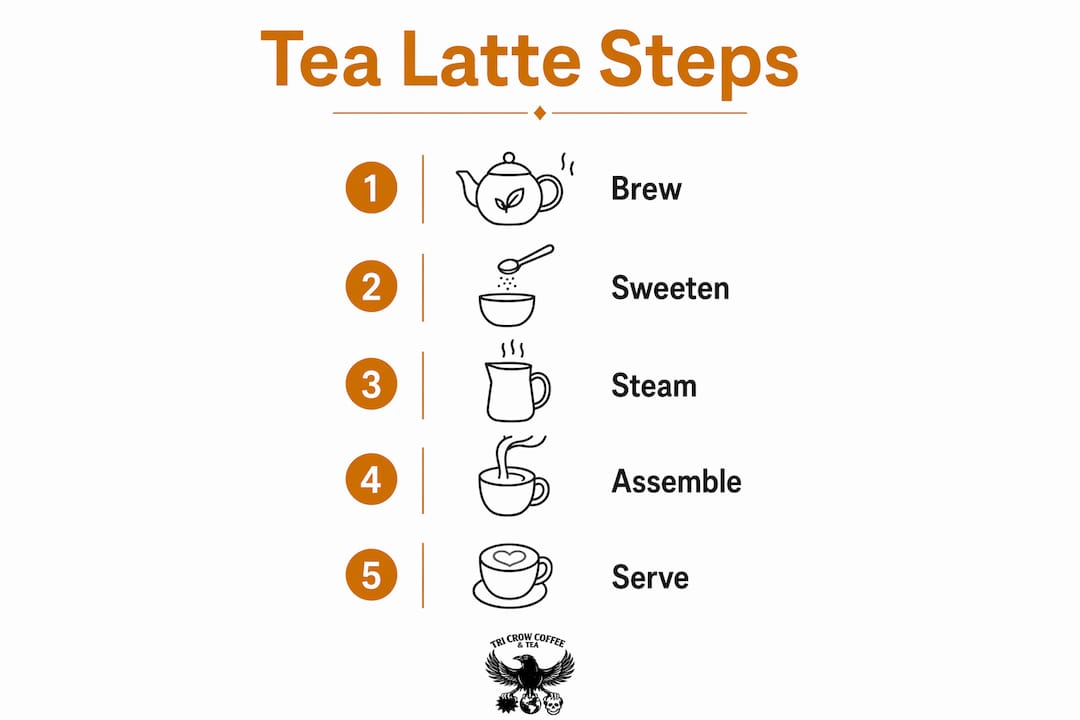
Step 1: Brew the concentrate. Use 4 oz of near-boiling water and double your normal amount of tea. For black tea, steep 3–4 minutes. For herbal blends, 5–7 minutes. Cover the mug or steeping vessel with a lid or small saucer while steeping. Covering the tea during steeping traps volatile oils that would otherwise evaporate, keeping the flavor intensity in the cup where it belongs.
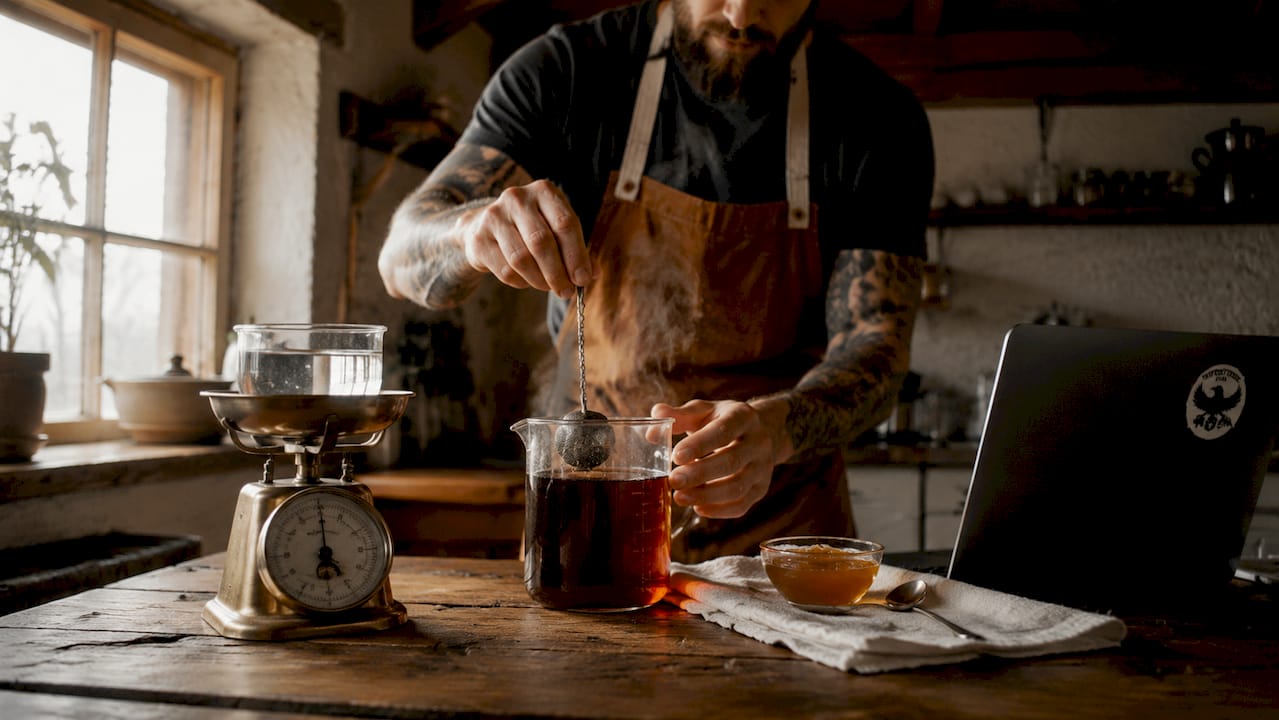
Step 2: Sweeten the concentrate. Add honey, maple syrup, or sugar directly to the hot concentrate and stir until fully dissolved. Sweetener added to hot concentrate integrates completely, while sweetener added later sits unevenly in the finished drink.
Step 3: Steam the milk. Pour cold milk into a frothing pitcher. Submerge the steam wand just below the surface and open the valve. Tilt the pitcher slightly to create a whirlpool. The first phase, called stretching, introduces air and increases volume. The second phase, called texturing, spins the milk to break up large bubbles and create microfoam. Pull the pitcher off the wand at 150°F and tap it on the counter to pop any surface bubbles.
Step 4: Assemble the latte. Pour the tea concentrate into your cup first. Then pour steamed milk gently over the concentrate. Pour milk gently and use a spoon to hold back foam until the cup is nearly full, then spoon the foam on top. This creates a layered look and keeps the foam intact.
Pro Tip: If you use a handheld frother, heat the milk separately to 150°F in a small saucepan, then froth it in a tall jar. The jar contains the splatter and gives the frother room to work.
Troubleshooting common mistakes
A watery latte almost always means the concentrate was too weak. Double your tea and reduce your water volume. Scorched milk means you overshot 165°F. Use a thermometer every time until temperature control becomes instinctive. Grainy texture in the finished drink means sweetener was added too late. Always sweeten the concentrate, not the assembled cup.
How do you adapt the workflow for iced tea lattes?
Iced tea lattes require a few specific adjustments. Ice dilutes the drink as it melts, which flattens flavor and sweetness over time. The fix is to increase your sweetener or concentrate strength before adding ice.
Iced versions commonly use one extra pump of syrup compared to their hot equivalents to offset ice dilution. That principle applies whether you are measuring pumps or teaspoons. A Venti-sized iced chai, for example, typically uses 6 pumps of syrup versus 5 for the hot version. The same logic applies at home: add slightly more sweetener to your concentrate when you know ice is going in.
Key adjustments for iced preparation:
- Chill the concentrate first. Pour hot concentrate over ice immediately and you dilute it before the milk even arrives. Brew the concentrate, let it cool to room temperature, then refrigerate it for at least 30 minutes.
- Use cold milk, not steamed. Iced tea lattes use cold milk poured directly over ice. No steaming required.
- Choose your mixing method. Shaking aerates the drink and creates a lighter, slightly frothy texture. Stirring produces a smoother, denser result. Both are correct. The choice is personal.
- Add ice last. Fill the glass with ice after the concentrate and milk are combined. This gives you better control over the final volume and dilution rate.
Pro Tip: Freeze leftover tea concentrate into ice cubes. Use them in place of regular ice so the drink never dilutes as it melts.
What advanced techniques take a tea latte further?
Layering and latte art
Layering requires density differences between liquids. Tea concentrate is denser than steamed milk, so pouring milk slowly over the back of a spoon keeps the two liquids visually separate before they blend. For latte art, the foam needs to be smooth and glossy, with no visible bubbles. Tri Crow Coffee’s guide on latte art at home covers the pouring angles and pitcher movements that make basic patterns achievable without a barista certificate.
Blending teas for custom flavor
Single tea varieties are a starting point, not a ceiling. Blending black tea with a small amount of spiced herbal tea adds complexity without overwhelming the milk. The key is keeping the dominant tea bold enough to survive the milk ratio. Tri Crow Coffee’s approach to custom tea blending treats blending as a ritual, not a recipe, which is the right mindset for developing a signature house latte.
Flavor additions and toppings
- Spices: Cinnamon, cardamom, and ginger integrate best when added to the concentrate during steeping, not sprinkled on top.
- Vanilla: A small amount of vanilla extract stirred into the concentrate adds depth without competing with the tea.
- Foam toppings: Dust cinnamon or matcha powder over the foam for visual contrast and a subtle aromatic layer.
- Syrups: Lavender, rose, and brown sugar syrups pair well with black tea bases and dissolve cleanly into hot concentrate.
Temperature control remains the most important advanced variable. The steam wand technique involves stretching milk first, then texturing it to around 150°F with a controlled whirlpool. Rushing either phase produces large bubbles that ruin the pour and the mouthfeel. Slow down, watch the thermometer, and the texture takes care of itself.
Key Takeaways
A well-executed tea latte workflow depends on three non-negotiable variables: a strong concentrate at a 1:2 ratio, milk steamed to 140°F to 160°F, and sweetener dissolved before milk is added.
| Point | Details |
|---|---|
| Use a 1:2 concentrate ratio | Brew 4 oz of strong tea concentrate and combine with 8 oz of steamed milk for balance. |
| Steam milk to 140°F–160°F | Temperatures above 165°F scorch milk and destroy its natural sweetness. |
| Sweeten the concentrate first | Dissolve sweetener in hot concentrate before adding milk to avoid graininess. |
| Cover tea while steeping | A lid traps volatile oils and keeps flavor intensity in the concentrate. |
| Adjust for iced versions | Increase sweetener and chill the concentrate before adding cold milk and ice. |
Why I think most people overcomplicate the tea latte
The most common mistake I see is treating the tea latte making process as a recipe problem when it is actually a sequencing problem. People spend time sourcing expensive teas and specialty milks, then add the sweetener at the wrong stage and wonder why the drink tastes off. The sequence matters more than the ingredients. Get the order right first, then upgrade the ingredients.
The second misconception is that a steam wand is required for good results. A handheld frother and a thermometer get you 85% of the way there. The gap between handheld and steam wand is real but smaller than most people think. I spent two years making tea lattes with a $12 frother before I ever touched a steam wand, and the drinks were genuinely good.
What actually changed my results was understanding the concentrate. Once I started brewing at double strength and covering the mug during steeping, the flavor held up against milk in a way it never had before. That one adjustment, covering the tea, is the least discussed and most impactful step in the entire process. The science is simple: volatile aromatic compounds evaporate with steam. A lid sends them back into the liquid. The result is a concentrate that tastes like tea, not like warm water with color.
Experiment with milk types before you experiment with tea varieties. Barista oat milk and whole dairy milk behave very differently under heat. Knowing how each one responds to your frother gives you control over texture before you ever change a single ingredient.
— David
Tri Crow Coffee teas worth building your workflow around
Tri Crow Coffee sources and crafts teas specifically suited to milk-based preparation. The English Breakfast Tea is a strong, smooth black tea that holds its character at the 1:2 concentrate ratio without turning bitter. The Earl Grey adds bergamot oil and blue cornflower notes that pair well with oat milk foam. For herbal options, the Sweet Hibiscus Berry Tea produces a vivid, fruit-forward concentrate that works beautifully over cold milk and ice.
Each tea is produced in small batches to maintain consistency across every steep. Browse the full artisan tea collection to find the right base for your next latte.
FAQ
What is the correct tea-to-milk ratio for a tea latte?
The standard ratio is 4 oz of tea concentrate to 8 oz of steamed milk. This 1:2 ratio produces a balanced, creamy drink without diluting the tea flavor.
What temperature should milk be steamed to for a tea latte?
Steam milk to between 140°F and 160°F. Temperatures above 165°F scorch the milk proteins and eliminate the natural sweetness.
Can you make a tea latte without an espresso machine?
Yes. A handheld frother and a stovetop or kettle produce good results. Heat milk to 150°F separately, then froth it in a tall container for best texture.
How do you prevent an iced tea latte from tasting watered down?
Chill the concentrate before adding ice and increase your sweetener slightly to compensate for dilution. Freezing leftover concentrate into ice cubes also prevents flavor loss as the ice melts.
Which teas work best in a tea latte?
Bold black teas, spiced chai, and robust herbal blends hold flavor against milk. Delicate teas like white or light green varieties lose their character once milk is added.