
TL;DR:
- Drinking 1–2 cups of herbal infusions or true teas daily can improve sleep and help reduce stress. The effectiveness depends on the type of tea, with caffeine-free herbal infusions supporting relaxation and true teas with L-theanine promoting calm alertness during the day. Consistent practice and proper brewing rituals enhance these benefits beyond just the biochemical effects.
Many teas and herbal infusions reliably support relaxation. For sleep, chamomile, lavender, and passionflower are your best options. For daytime calm without losing focus, green tea and jasmine deliver a steady, alert ease. For digestion and quick de-stress, peppermint and ginger are the practical picks. A systematic review of 33 publications found that 1–2 cups daily can improve sleep and reduce psychological stress. The short version: reach for caffeine-free herbal infusions at night, and true teas with L-theanine when you need calm alertness during the day.
- Sleep: chamomile, lavender, passionflower, valerian
- Daytime calm and focus: green tea, jasmine, lemon balm
- Digestion and nausea: peppermint, ginger
- Quick de-stress: rose, lemon balm, chamomile
Tri Crow Coffee’s small-batch herbal and tea blends are crafted with this kind of intentional use in mind, making them a natural fit for anyone building a mindful daily ritual.
Table of Contents
- True teas vs. herbal infusions: what’s the difference?
- How tea promotes relaxation: the science behind the calm
- What the clinical research actually shows
- Which tea fits your goal? A decision guide
- How to brew and time your tea for the best results
- Who should be careful: safety, side effects, and drug interactions
- What clinicians and researchers emphasize most
- Key Takeaways
- The ritual is doing more work than you think
- Tri Crow Coffee’s calming blends are worth trying
- Useful sources
- FAQ
True teas vs. herbal infusions: what’s the difference?
Not all teas work the same way, and the category matters when you’re choosing for relaxation. True teas come from Camellia sinensis — that covers green, black, white, and oolong. They all contain caffeine and L-theanine, the amino acid responsible for calm alertness. Herbal infusions (sometimes called tisanes) are made from flowers, roots, leaves, and bark of other plants. Most are caffeine-free, which is why they’re the go-to for bedtime.
| Tea Category | Examples | Caffeine Level | Primary Relaxing Compound |
|---|---|---|---|
| Green tea | Sencha, matcha, jasmine green | Low (25–35 mg/cup) | L-theanine |
| Black tea | Assam, Darjeeling, English Breakfast | — | L-theanine, polyphenols |
| White tea | Silver needle, white peony | Low (8–30 mg/cup) | L-theanine |
| Oolong | Tie Guan Yin, Dong Ding | Low–moderate | L-theanine, polyphenols |
| Chamomile | German, Roman | None | Apigenin |
| Lavender | Lavandula angustifolia | None | Linalool (volatile aromatic) |
| Passionflower | Passiflora incarnata | None | Chrysin, flavonoids |
| Valerian | Valeriana officinalis | None | Valerenic acids |
| Lemon balm | Melissa officinalis | None | Rosmarinic acid |
| Peppermint | Mentha piperita | None | Menthol, essential oils |
Hybrid blends mix categories. A chamomile-rooibos blend, for example, stays caffeine-free while adding earthy depth. Jasmine green tea is a true tea scented with jasmine flowers — it carries L-theanine and a small caffeine load, making it a daytime blend rather than a bedtime one.
How tea promotes relaxation: the science behind the calm
Tea relaxes you through several overlapping pathways: L-theanine raises alpha brain waves, polyphenols modulate stress chemistry, and the ritual of brewing itself signals your nervous system to slow down.
L-theanine and the calm-alert state
L-theanine is absorbed in the small intestine and crosses the blood-brain barrier. EEG studies show that it increases alpha brain waves in the 8–13 Hz range, a pattern associated with relaxed wakefulness rather than drowsiness. You stay sharp; you just stop feeling wired. Tea leaves contain roughly 1.0%–2.5% L-theanine by dry weight, and a properly brewed 250 mL cup of green tea yields approximately 8–30 mg. That’s well below the 200–400 mg doses used in most clinical trials, so a single cup produces a gentler effect than a supplement.

The caffeine-L-theanine balance
Caffeine on its own can spike anxiety and cause jitters. L-theanine blunts that peak. Research on their interaction shows the combination supports calm alertness better than either compound alone, which is why stress-prone people often tolerate green tea far better than coffee. The ratio matters: green tea’s lower caffeine load relative to its L-theanine content makes it a better daytime relaxation option than black tea.
Polyphenols, apigenin, and valerenic acids
Chamomile’s primary active compound, apigenin, binds to GABA receptors in the brain, producing mild sedation without the dependency risk of pharmaceutical sedatives. Valerian’s valerenic acids work through a similar GABA-related pathway, which is why valerian is one of the stronger herbal options for sleep. Polyphenols in true teas support mood through antioxidant and anti-inflammatory effects, though the mechanisms are less direct.
The ritual effect
Researchers note that aroma inhalation during steeping can reduce stress markers after demanding tasks. The act of brewing — measuring, waiting, inhaling steam — functions as a brief mindfulness practice. That psychological component is not a placebo footnote; it’s an active part of why tea works.
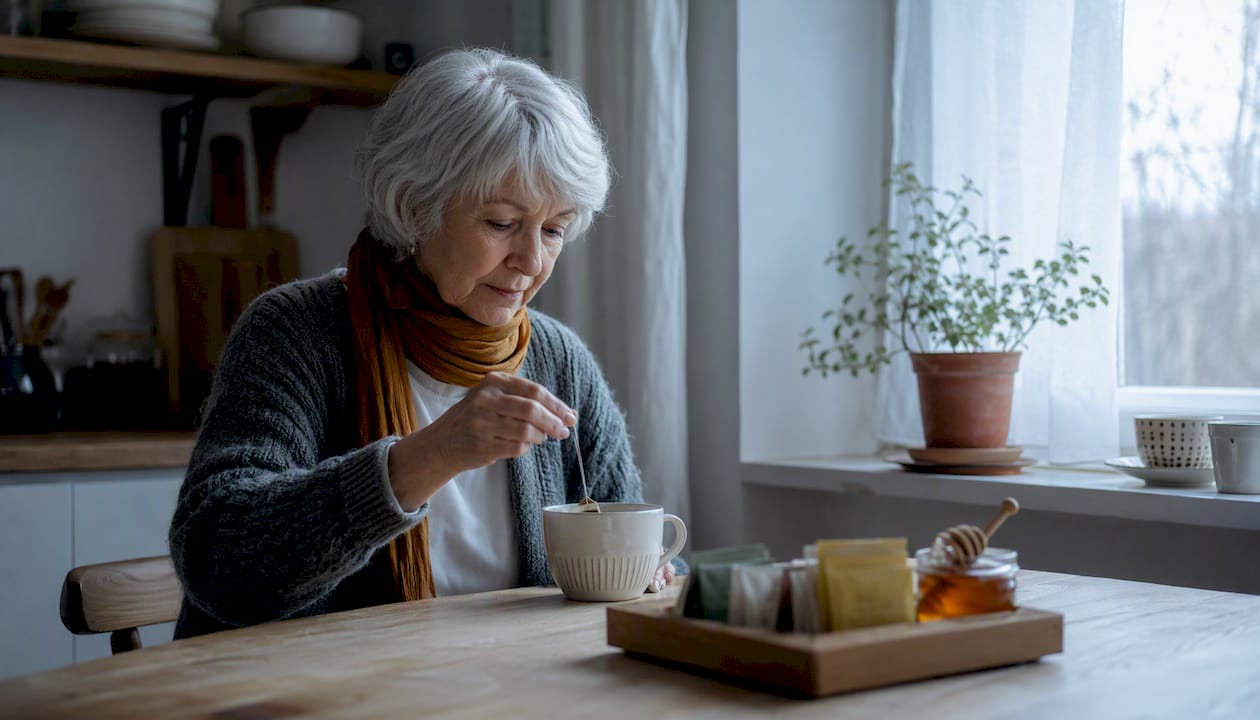
Pro Tip: Brew chamomile and lavender at 200°F (not boiling) for 5–7 minutes with the cup covered. Covering the cup traps volatile aromatic compounds that would otherwise escape with the steam, preserving the linalool and apigenin that drive the calming effect.
What the clinical research actually shows
The evidence base for tea and relaxation is real but uneven. Systematic reviews support modest, consistent benefits; individual trials vary in quality and dose.
The most cited RCT in this space is a randomized double-blind trial in which six weeks of regular black tea consumption produced measurably lower post-stress cortisol (P = 0.032) and greater subjective relaxation during recovery (P = 0.036) compared to placebo. Six weeks of daily tea, not a single cup.
For L-theanine specifically, a meta-analysis of 31 randomized trials (n = 1,168) found consistent short-term attention improvements and modest acute stress reduction with single 200 mg doses. Anxiety outcomes were mixed across studies. A separate systematic review confirmed that 200–400 mg/day is linked to stress and anxiety reductions, but dietary green tea delivers only 8–30 mg per cup. The gap between supplement doses and what you get from a cup is significant.
One important nuance: researchers caution that L-theanine’s effects are most consistent in people with higher baseline anxiety or under moderate stress. For someone already calm, the effect may be subtle.
Research takeaways:
- Consistent daily use (1–2 cups) produces better outcomes than occasional drinking.
- Black tea has the strongest RCT evidence for cortisol reduction over weeks.
- L-theanine’s attention and stress benefits are well-supported at supplement doses; dietary tea delivers a gentler version.
- Herbal infusions (chamomile, passionflower, lavender) show promising signals in human trials but need larger, higher-quality studies.
- Ritual and aroma contribute independently to relaxation, separate from biochemistry.
Which tea fits your goal? A decision guide
The right tea depends on what you’re trying to do. Sleep support calls for different chemistry than staying calm during a work presentation.
- Sleep: chamomile, lavender, passionflower, valerian
- Daytime calm and focus: green tea, jasmine green tea, lemon balm
- Digestion and nausea: peppermint, ginger
- Quick de-stress: rose, lemon balm, chamomile
| Tea / Herb | Best For | Caffeine Level | Primary Active Compound | Evidence Strength | Timing / Dose |
|---|---|---|---|---|---|
| Chamomile | Sleep, general calm | None | Apigenin | RCTs + systematic review | 1 cup, 30–60 min before bed |
| Lavender | Sleep, mood | None | Linalool | Observational, some RCTs | 1 cup, 30–60 min before bed |
| Passionflower | Sleep, anxiety | None | Chrysin, flavonoids | Small RCTs | 1 cup, 30–60 min before bed |
| Valerian | Sleep (stronger) | None | Valerenic acids | Mixed RCTs | 1 cup, 30–60 min before bed |
| Green tea | Calm alertness, focus | Low | L-theanine | Strong RCTs (L-theanine) | 1–2 cups, morning or midday |
| Jasmine green | Calm alertness, mood | Low | L-theanine, linalool | Observational + mechanistic | 1–2 cups, morning or midday |
| Lemon balm | Anxiety, mood | None | Rosmarinic acid | Small RCTs | 1–2 cups, anytime |
| Peppermint | Digestion, alertness | None | Menthol, essential oils | Traditional + some RCTs | 1 cup after meals |
| Ginger | Nausea, digestion | None | Gingerols, shogaols | RCTs (nausea) | 1 cup after meals |
| Rose | Mild de-stress, mood | None | Polyphenols, aromatics | Observational | 1 cup, anytime |
A note on combining teas for custom blends: pairing chamomile with lavender or lemon balm stacks complementary calming compounds without adding caffeine. For daytime use, jasmine green tea gives you L-theanine plus floral aromatics in one cup. Systematic review data specifically highlights chamomile, lavender, rose, jasmine, and passionflower as the herbal infusions with the most promising human trial results.
How to brew and time your tea for the best results
Timing and technique shape how much relaxation you actually get. The aroma hits first; the biochemical effects build over days and weeks.
Brewing steps:
- Choose filtered water. Tap water with high mineral content can flatten delicate aromatics in chamomile and jasmine.
- Match temperature to tea type. Green and white teas: 160–175°F. Herbal infusions: 200°F (just off boiling). Black tea: full boil (212°F).
- Steep covered. Cover the cup or pot to retain volatile aromatic compounds, especially for lavender and chamomile.
- Time it right. Herbal infusions: 5–7 minutes. Green tea: 2–3 minutes. Black tea: 3–4 minutes. Jasmine green: 2 minutes per steep, up to 3–4 steeps.
- Sip slowly. Drinking quickly bypasses the aroma inhalation that contributes to the relaxation response.
Timing by goal:
- Sleep support: drink 20–60 minutes before bed, giving apigenin or valerenic acids time to act.
- Daytime calm: mid-morning or mid-afternoon works well, away from meals for better absorption.
- Digestion: peppermint or ginger right after eating.
The systematic review recommends 1–2 cups daily for sleep and stress benefits. More isn’t necessarily better, and for true teas, stacking cups adds caffeine that can undercut the calm you’re after.
Pro Tip: Before your first sip, pause for three slow breaths while holding the warm cup. Inhale the steam deliberately. This 30-second ritual activates the relaxation response through aroma and breath before the tea chemistry even begins. It sounds small, but the research on aroma inhalation supports it as a real, independent contributor to stress reduction.
Sweetening with a small amount of honey is fine. Avoid adding milk to herbal infusions — it can bind polyphenols and reduce their bioavailability. Serving temperature matters less than you’d think for chemistry, but a warm cup amplifies the aroma experience.
Who should be careful: safety, side effects, and drug interactions
Most teas are safe for healthy adults, but a few real risks deserve attention.
- Pregnancy and nursing: Avoid valerian, high-dose chamomile, and any tea with significant caffeine. Peppermint in moderate amounts is generally considered safe, but confirm with your OB or midwife.
- Children: Herbal infusions are not automatically safe for children. Valerian, passionflower, and high-caffeine teas should be avoided. Chamomile is widely used but can cause allergic reactions in children sensitive to ragweed or other Asteraceae plants.
- Sedative medications: Valerian and passionflower have additive sedative effects. Combining them with benzodiazepines, sleep aids, or antihistamines can increase drowsiness beyond what’s safe. Talk to your pharmacist before mixing.
- Anticoagulants (warfarin): Some herbal components, including chamomile and green tea at high doses, may affect clotting. If you’re on warfarin or similar blood thinners, keep your tea intake consistent and flag any changes to your clinician.
- Caffeine sensitivity: If caffeine triggers anxiety, palpitations, or insomnia, stick to caffeine-free herbal infusions entirely. Even the low caffeine in green tea (25–35 mg/cup) can be enough to disrupt sleep in sensitive people.
- Ragweed allergy: Chamomile is in the Asteraceae family. People with ragweed, chrysanthemum, or daisy allergies have a higher risk of cross-reactivity.
- L-theanine supplements vs. tea: The doses used in clinical trials (200–400 mg) are 7–50 times what a cup of green tea provides. If you’re considering L-theanine supplements for sleep, reviewing a supplement stack guide alongside your clinician’s input is worth the time.
This article is general information, not medical advice. Confirm current guidance with your pharmacist or a qualified healthcare provider, especially if you take prescription medications or have a chronic health condition.
What clinicians and researchers emphasize most
The strongest evidence supports modest, consistent relaxation benefits from tea and herbal infusions, with the clearest mechanistic support for L-theanine’s role in calm attention and the best RCT evidence for black tea’s cortisol-lowering effect over weeks.
Two findings are worth keeping as practical anchors. First, the systematic review covering 33 publications found that 1–2 cups daily is associated with improved sleep and reduced stress. Second, the six-week black tea RCT showed statistically significant cortisol reduction (P = 0.032) and improved subjective relaxation (P = 0.036). Both point to the same conclusion: consistency matters more than quantity.
The meta-analysis of 31 L-theanine RCTs is useful for setting expectations. Attention benefits are reliable. Acute stress reduction at 200 mg is real. But anxiety outcomes vary by population, and dietary tea delivers a fraction of that dose. A cup of green tea is not a clinical intervention; it’s a daily practice that compounds over time.
- After one cup: aroma and ritual effects are immediate; biochemical effects are mild.
- After 1–2 weeks of daily use: subjective relaxation improvements become more noticeable.
- After 4–6 weeks: cortisol and stress-response changes are measurable in RCTs.
- Research gaps: most herbal infusion trials are small and short; long-term safety data for high-dose valerian is limited; more tea-beverage trials (vs. isolated supplement trials) are needed.
Key Takeaways
Consistent daily tea drinking at 1–2 cups produces measurable relaxation and sleep benefits, with the strongest evidence for black tea’s cortisol reduction and L-theanine’s calm-alertness effect in true teas.
| Point | Details |
|---|---|
| Match tea to your goal | Chamomile and passionflower for sleep; green or jasmine for daytime calm; peppermint for digestion. |
| Consistency beats quantity | 1–2 cups daily over weeks produces the cortisol and sleep benefits seen in RCTs. |
| L-theanine dose gap | A cup of green tea yields 8–30 mg L-theanine; clinical trials use 200–400 mg, so expect gentler effects from tea. |
| Safety check first | Valerian and passionflower interact with sedatives; chamomile may cross-react with ragweed allergies. |
| Tri Crow Coffee blends | Tri Crow Coffee’s small-batch herbal and jasmine teas are crafted for mindful, ritual-focused relaxation. |
The ritual is doing more work than you think
There’s a tendency in evidence-based wellness writing to treat the ritual as a soft, unscientific add-on to the “real” chemistry. The research doesn’t support that framing. Aroma inhalation, the pause before the first sip, the warmth in your hands — these are active contributors to the relaxation response, not decoration.
What I find most interesting about the tea-and-relaxation literature is that it keeps pointing back to consistency and intention. The six-week black tea trial didn’t work because of one exceptional cup. It worked because people drank tea every day, in a predictable pattern, and their stress-response systems adapted. That’s not a biochemistry story alone. It’s a habit story.
The practical implication: the specific tea matters less than the practice of making tea a deliberate, daily moment. A small-batch chamomile blend brewed with attention will outperform an expensive supplement taken mindlessly. Tri Crow Coffee’s approach to crafting calming blends, grounded in ritual and limited-batch quality, fits that model well. If you want to go deeper on building a tea ritual that actually holds, the tea blend varieties guide is a good next step.
Tri Crow Coffee’s calming blends are worth trying
Small-batch tea made for intentional moments is a different experience from mass-market bags. Tri Crow Coffee crafts each blend in limited quantities, which means better flavor control and fresher aromatics — the exact compounds that drive the aroma-inhalation relaxation effect the research supports.
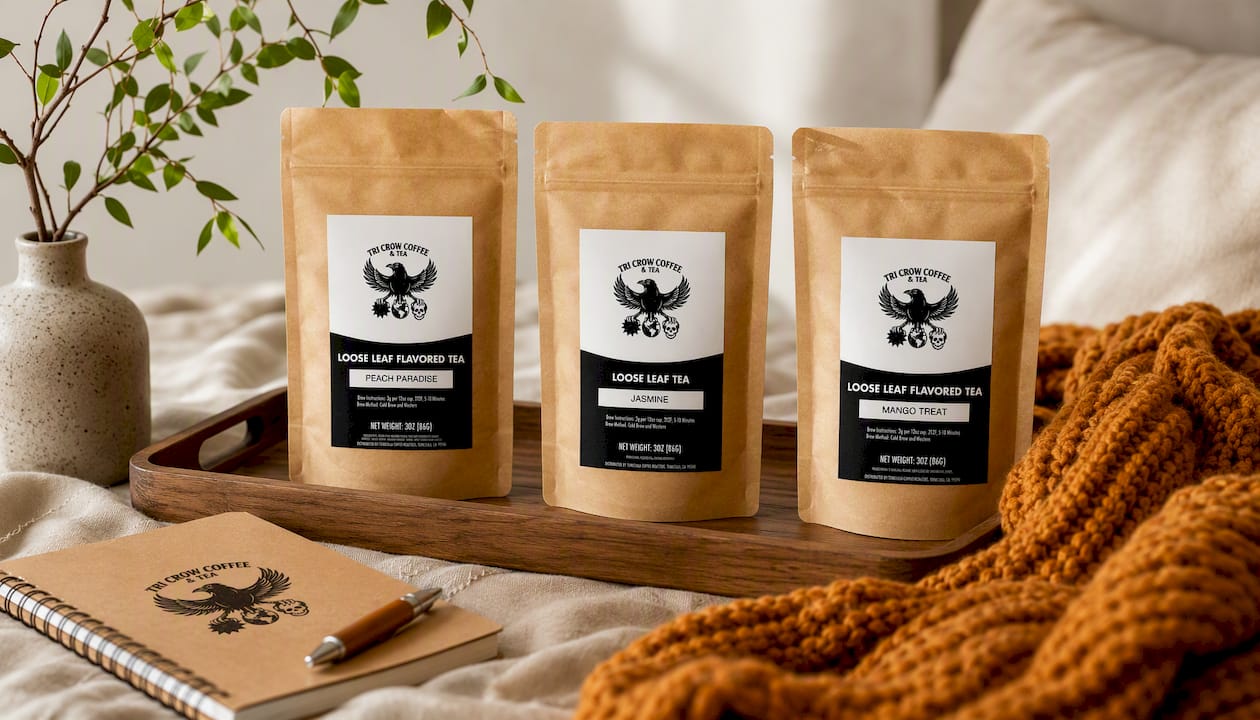
Three blends stand out for relaxation goals. The Peach Paradise Herbal Tea is caffeine-free, fruity, and aromatic — the right choice for an evening wind-down, hot or iced. The Jasmine Green Tea is a floral, silky true tea with L-theanine for calm alertness during the day; it steeps beautifully multiple times, so one serving goes further. The Mango Treat Herbal Tea is sweet, smooth, and caffeine-free, a refreshing option for post-meal digestion or a light afternoon reset, especially iced.
All three come in eco-friendly packaging. If you’re not sure where to start, a calming sample pack lets you try each blend before committing to a full order. Visit Tri Crow Coffee to browse current options.
Useful sources
The claims in this article draw from peer-reviewed trials, systematic reviews, and meta-analyses. Here are the core sources:
- Randomized double-blind black tea trial (PubMed) — six-week RCT showing lower cortisol (P = 0.032) and greater subjective relaxation (P = 0.036).
- L-theanine: science vs. hype review (PMC) — cautions on dose-dependence and population variability.
- Effects of Tea or its Bioactive Compounds on Cognition, Sleep, and Mood: Systematic Review and Meta-Analysis (PMC) — broad meta-analysis covering theanine plus caffeine and mood outcomes.
FAQ
What tea helps you relax the most?
Chamomile has the strongest evidence for relaxation and sleep support, thanks to apigenin’s GABA-receptor activity. For daytime calm without drowsiness, jasmine green tea delivers L-theanine alongside floral aromatics.
What drink calms anxiety naturally?
Lemon balm tea and chamomile are the most studied options for anxiety reduction. Green tea’s L-theanine also shows consistent short-term stress reduction in clinical trials, particularly in people with higher baseline anxiety.
What is the strongest calming herb in tea?
Valerian is pharmacologically the most potent, with valerenic acids acting on GABA pathways similarly to some sedative medications. Because of this, it also carries the most interaction risk with prescription sedatives.
What tea calms you down without making you sleepy?
Green tea and jasmine green tea are the best options here. L-theanine increases alpha brain waves (8–13 Hz), producing relaxed wakefulness rather than drowsiness, while the low caffeine load keeps you alert. Tri Crow Coffee’s Jasmine Green Tea is a good small-batch option for exactly this effect.