
Coffee processing is the single most consequential decision made after a cherry leaves the tree. Before roasting, before brewing, the method used to remove the fruit from the seed determines which chemical compounds develop inside the bean — and those compounds become the sweetness, acidity, body, and aroma you taste in your cup.
The four primary methods each leave a distinct fingerprint:
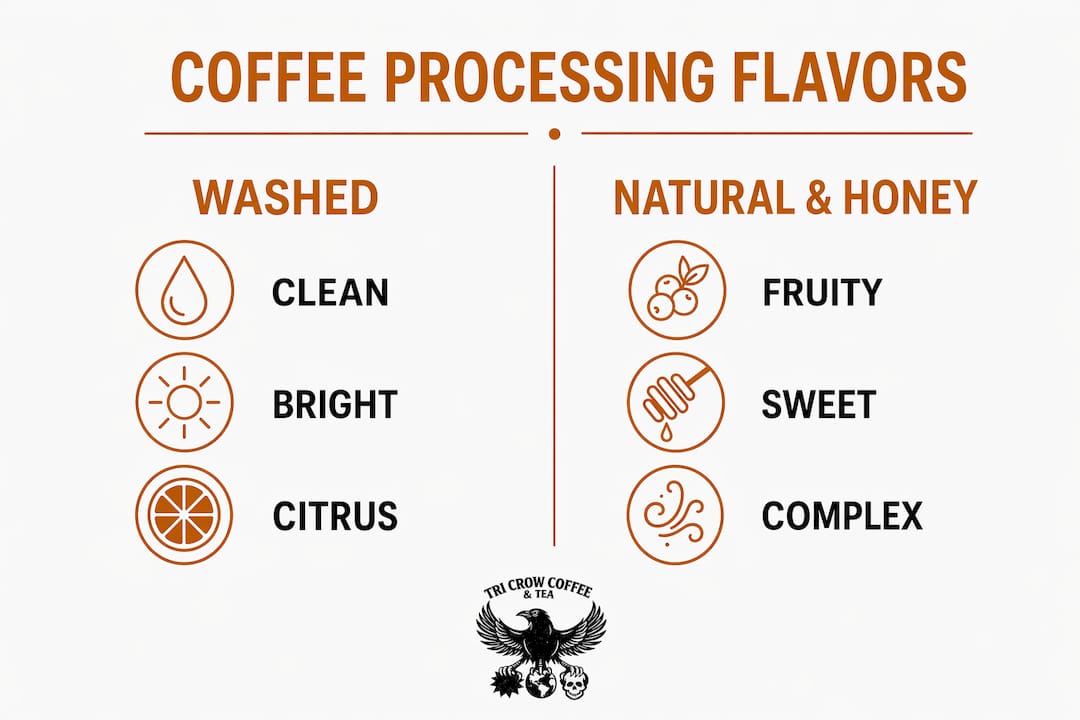
- Washed (wet): Clean, bright, origin-transparent; the fruit is removed early, letting terroir speak
- Natural (dry): Fruity, jammy, full-bodied; the whole cherry dries around the bean for weeks
- Honey: Sweet, rounded, stone-fruit character; partial mucilage is left on during drying
- Anaerobic: Tropical, intense, complex; oxygen is excluded to redirect microbial metabolism
Processing doesn’t work in isolation. Origin sets the raw material, processing builds the precursors, roasting reveals or masks them, and brewing extracts what’s there. Change any one variable and the cup shifts. But processing’s impact on flavor is often the most dramatic lever of the four.
Pro Tip: If you want to taste a coffee’s terroir, reach for washed. If you want bold fruit and sweetness, go natural or honey. If you want something genuinely unusual, anaerobic is where producers are pushing hardest right now.
Table of Contents
- How each processing method builds a different flavor profile
- Why the chemistry of processing matters to your cup
- How to taste processing-driven flavors at home
- Emerging and experimental processing techniques
- Taste the difference with Tri Crow Coffee
- FAQ
- Key Takeaways
How each processing method builds a different flavor profile
Understanding the mechanics behind each method explains why the flavor differences are so pronounced, not just stylistically different but chemically distinct.
Washed processing
The cherry’s skin and pulp are removed within hours of harvest. The remaining mucilage is broken down through fermentation in water tanks, typically for several hours, then the beans are washed clean and dried for 5–10 days. Because sugars from the fruit have minimal contact time with the seed, washed coffees show the weakest process-specific flavor signatures but allow terroir and variety to come through clearly. You get brightness, clarity, and whatever the soil and altitude put into that bean.
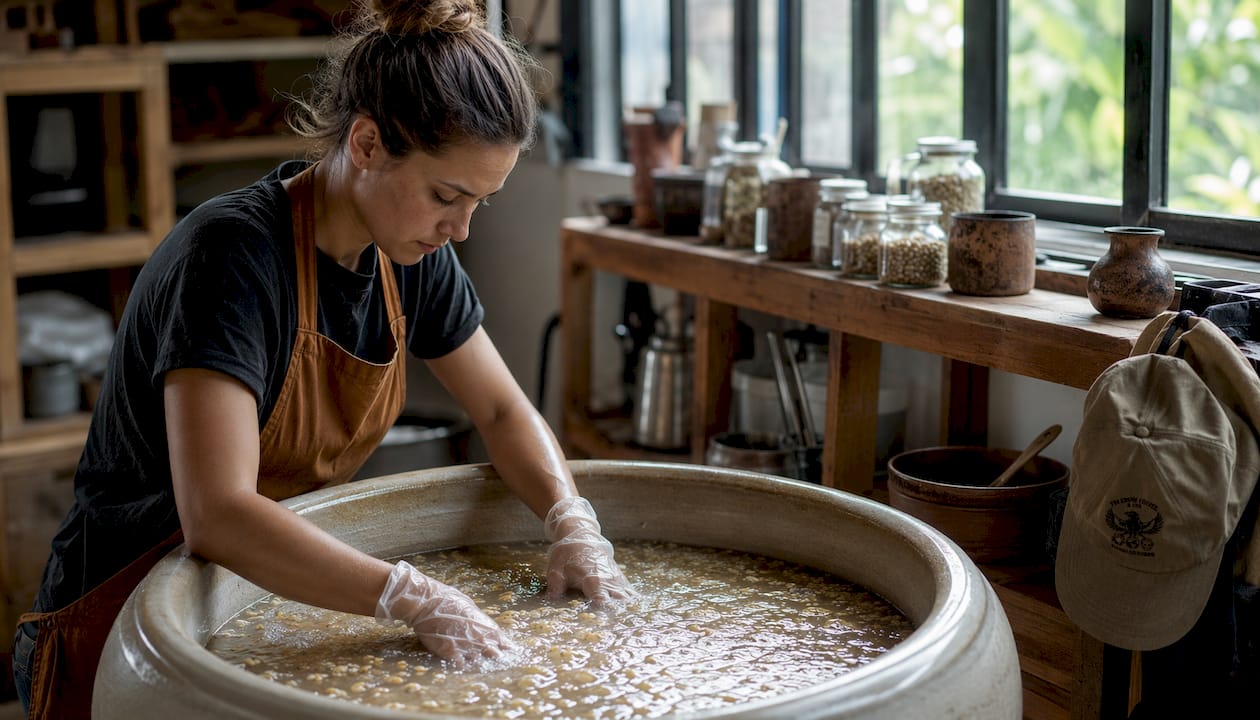
Ethiopia Yirgacheffe washed is the textbook example: floral, citrus-forward, almost tea-like. That delicacy would be buried under fruit fermentation notes in a natural process.
Natural processing
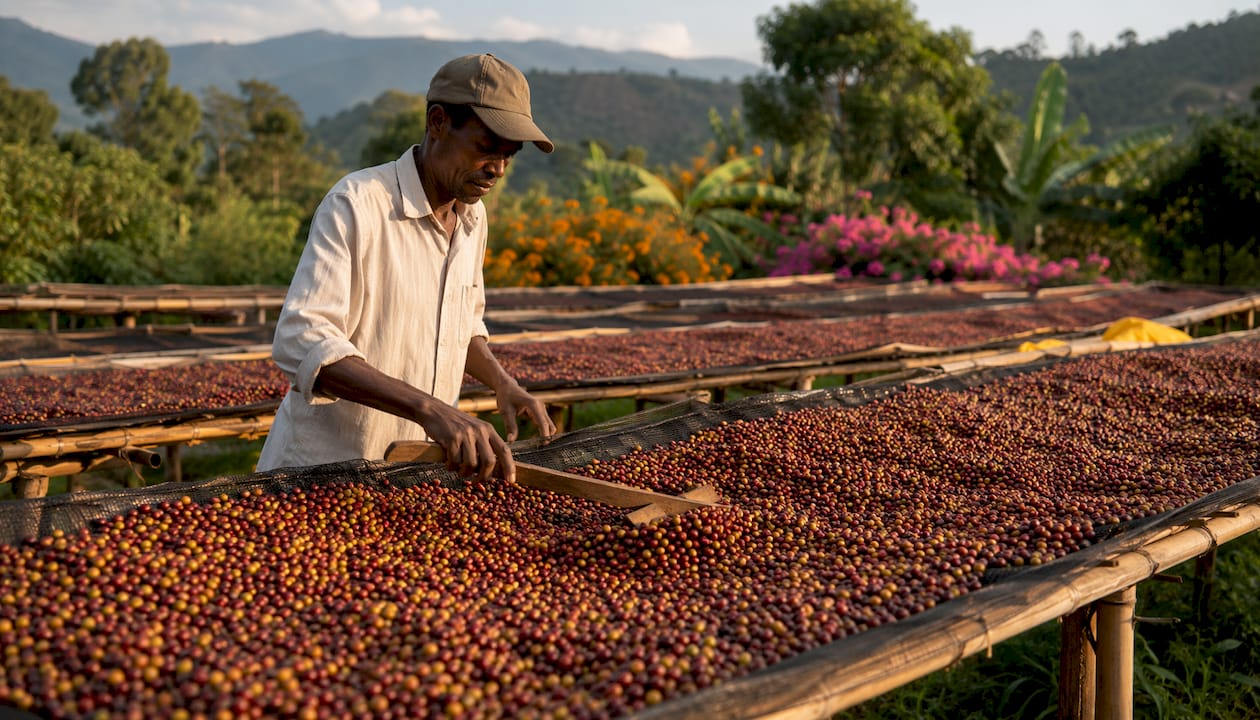
Whole cherries dry on raised beds or patios for roughly 10–25 days, sometimes longer. The fruit sugars and microbial activity during that extended contact time migrate into the bean. Natural processing imparts fruity and jammy notes such as strawberry and blueberry with a heavier body. Ethiopian naturals and Brazilian naturals are the most common examples North American roasters carry, and the difference in body between a Brazilian natural and a Colombian washed from similar altitudes is immediately obvious.
Honey processing
The cherry is depulped but not washed, leaving varying amounts of mucilage (the sticky, sugar-rich layer) on the bean during drying. Yellow honey retains the least; black honey retains the most and behaves almost like a natural. The result sits between washed and natural: more sweetness and body than washed, less fruit intensity than natural, with stone-fruit notes like peach and apricot. Honey processed coffees from Costa Rica and El Salvador are particularly well-regarded for this balance.
Anaerobic fermentation
Depulped or whole cherries are sealed in oxygen-free tanks, often with CO₂ introduced to maintain anaerobic conditions. Anaerobic fermentation excludes oxygen, steering microbial metabolism toward ester and lactic acid production, resulting in tropical, creamy, and intense sensory profiles. Think passion fruit, pineapple, or a yogurt-like creaminess that has no parallel in conventional processing. The flavor lift is the highest of any method, which is why anaerobic lots command premium prices at auction.
Drying duration and fermentation time
These two variables are the fine-tuning knobs within any method. Longer drying means more time for microbial activity and oxidation, which deepens body and fruit character but raises the risk of defects. Fermentation time in washed processing directly controls mucilage degradation and organic acid development, with shorter and longer fermentations producing measurably different cups.
Post-processing: milling
After drying, beans go through milling to remove the parchment layer. Done well, it’s flavor-neutral. Done poorly, excessive heat or mechanical damage during hulling can introduce grassy or papery notes. It’s a step most enthusiasts never think about, but it can undo careful processing upstream.
Pro Tip: When buying single-origin coffee, look for producers who list fermentation time and drying method on the bag. That level of transparency usually signals the same care went into execution.
Why the chemistry of processing matters to your cup
The flavor you taste isn’t magic. It’s the result of specific chemical transformations that happen during fermentation and drying, then get amplified or altered by roasting.
During fermentation, yeasts and bacteria metabolize the sugars in the coffee cherry’s mucilage. They produce esters (fruity, floral aromas), organic acids (acidity, brightness), and alcohols. The microbial community present, which varies by region, altitude, and processing environment, determines which of these compounds dominate. Chemical changes during fermentation include production of alcohols, acids, and esters that directly influence cup aroma and taste.
Moisture control during drying is equally critical. Oxidation and microbial stability during drying critically affect volatile compound profiles. Too much moisture and mold develops; too little and the bean dries unevenly, trapping undesirable compounds. Producers targeting specific flavor outcomes manage moisture content precisely, often using raised beds with shade cloth to slow drying and extend the window for desirable microbial activity.
Roasting then acts on the precursors processing created. Roasting conditions mediate aroma by transforming processing-derived chemicals underlying floral and fruity notes. A light roast on a natural-processed bean preserves the fruit esters; a dark roast on the same bean buries them under roast-derived compounds like pyrazines and furans. Processing sets the table; roasting decides what gets served.
Metabolomics research on Arabica beans confirms that anaerobic fermentation outperforms conventionally processed coffee in dry and wet aroma, flavor, aftertaste, acidity, body, and balance when evaluated by Q-grade certified panels. That’s not a small margin. It reflects how dramatically altered the precursor chemistry becomes when fermentation conditions are controlled at this level.
Pro Tip: A light-to-medium roast is almost always the right choice for naturally processed or anaerobic coffees. Heavy roasting overwrites the very compounds that make those processing methods worth the extra cost.
How to taste processing-driven flavors at home
Identifying what processing contributed to a cup requires isolating it from origin and roast variables. The most practical approach: taste two coffees from the same country, same variety, same roast level, processed differently. Ethiopia offers this most readily since both washed and natural versions are widely available in North America.
Sensory clues by method:
- Washed: Clean finish, no lingering fruit, bright acidity, flavors that feel “precise”
- Natural: Fruit notes that persist into the aftertaste, heavier mouthfeel, sometimes a slight fermented edge
- Honey: Sweetness that arrives mid-palate, softer acidity, stone-fruit in the aroma
- Anaerobic: Unusual tropical or dairy notes, long aftertaste, sometimes almost effervescent
A structured tasting sequence for home baristas:
- Smell the dry grounds before brewing. Processing-derived aromatics are most volatile and easiest to detect here.
- Taste the coffee black at two temperatures: hot (around 160°F) and warm (around 120°F). Fruit and floral notes from natural and anaerobic processing open up as the cup cools.
- Evaluate acidity: is it sharp and citric (washed) or soft and malic (honey/natural)?
- Note body: does the coffee feel light and clean or thick and coating?
- Check the aftertaste: does it linger with fruit or fade cleanly?
Sensory guides aligned with processing signatures help you build a mental map that makes these differences recognizable across different origins and roasters.
Processing defects and what they taste like: Over-fermentation produces vinegar or nail-polish notes (ethyl acetate in excess). Poor drying creates musty or moldy flavors. Typical defects include vinegar, musty, or moldy notes linked to poor fermentation or drying control. If a natural-processed coffee tastes “off” rather than fruity, that’s almost always a drying or fermentation defect, not a characteristic of the method itself.
Pro Tip: Keep a simple tasting journal. Note the processing method, origin, roast level, and three flavor words per cup. After 20 entries, patterns emerge fast.
Emerging and experimental processing techniques
The frontier of coffee processing has moved well beyond the three traditional methods. Producers and researchers are now engineering fermentation environments with the same precision a winemaker applies to a barrel program.
Carbonic maceration borrows directly from Burgundy winemaking. Whole cherries ferment in CO₂-saturated tanks, which triggers intracellular fermentation inside the fruit itself. The result is unusually clean fruit character with a wine-like complexity that’s distinct from standard anaerobic lots.
Yeast inoculation involves introducing specific commercial or wild yeast strains to the fermentation tank to steer flavor development predictably. Producers in Colombia and Panama have used this to produce lots with consistent tropical or floral profiles across multiple harvests, addressing one of the biggest criticisms of experimental processing: batch-to-batch inconsistency.
Extended cold fermentation slows microbial activity by lowering tank temperature, extending fermentation over several days rather than hours. The slower process produces more nuanced ester development without the aggressive intensity of standard anaerobic lots.
Thermal shock processing and double anaerobic methods layer fermentation stages to build complexity. These are still niche, appearing mainly in competition-grade lots and high-end specialty auctions.
The practical concern with all experimental methods is consistency. Advanced processing methods standardize flavor development by controlling microbial pathways, achieving consistent sensory profiles beyond novelty effects, but this requires infrastructure and expertise most small farms don’t yet have. The best experimental lots are extraordinary; the worst are expensive mistakes. As a buyer, traceability and producer reputation matter more here than anywhere else in specialty coffee.
Taste the difference with Tri Crow Coffee
Reading about processing methods is one thing. Tasting them side by side is where the understanding actually lands.
Tri Crow Coffee roasts in small batches specifically to preserve the flavor signatures that processing creates. The Best Sellers Coffee Sample Pack puts six distinct coffees in your hands at once, spanning different origins and roast profiles, giving you exactly the comparative tasting experience this article describes. If you want to feel the difference between a clean washed profile and a fuller-bodied roast, that’s the most direct path. For something at the darker end, the Italian Roast Extra Dark shows how deep Central American roasting transforms the base material processing created. And if you’re after the clarity of a single-origin washed coffee, the Tanzania Medium-Light is a straightforward example of what origin-forward processing looks like in the cup. Every batch ships fresh from a roaster that treats processing as the foundation, not an afterthought.
FAQ
How does coffee processing affect flavor?
Processing determines which chemical compounds develop in the bean before roasting. Washed coffees show higher cleanliness and lower sweetness, while natural and anaerobic methods produce more sweetness, body, and fruit complexity through extended fermentation and fruit contact.
What is the processing process of coffee?
Coffee processing refers to the post-harvest steps that remove the fruit from the seed and prepare the green bean for roasting. The main stages are depulping or drying the cherry, fermentation to break down mucilage, washing (in washed processing), and controlled drying to reach stable moisture levels before milling.
How do you identify processing-driven flavors when tasting?
Focus on sweetness, body, and aftertaste. Washed coffees taste clean and bright; naturals linger with fruit; honey-processed cups feel sweet and rounded mid-palate; anaerobic lots often show tropical or dairy-like notes. Tasting the same origin in two different processing methods side by side makes the differences immediately clear.
What are the 4 steps of coffee tasting?
A standard cupping sequence evaluates dry aroma (grounds before water), wet aroma (after hot water is added), flavor and acidity (first sips), and body plus aftertaste (how the cup feels and lingers). Each stage reveals different processing-derived compounds, with aroma being the most direct window into fermentation character.
Key Takeaways
Coffee processing is the primary driver of flavor development before roasting, with each method producing chemically distinct precursors that determine sweetness, acidity, body, and aroma in the final cup.
| Point | Details |
|---|---|
| Processing sets flavor precursors | Fermentation and drying create the alcohols, acids, and esters that roasting later transforms into final cup flavors. |
| Washed vs. natural contrast | Washed coffees deliver cleanliness and origin clarity; natural processing adds sweetness, body, and fruit complexity. |
| Anaerobic produces the highest flavor lift | Oxygen exclusion shifts microbial metabolism toward ester and lactic acid production, creating tropical and creamy profiles. |
| Defects signal process failures | Vinegar, musty, or moldy notes indicate over-fermentation or poor drying control, not the method itself. |
| Tri Crow Coffee for tasting comparison | The Best Sellers Sample Pack offers six coffees across origins and roast profiles for direct processing comparison at home. |