
Higher growing altitude tends to produce Arabica beans with more pronounced aroma, cleaner sweetness, and brighter acidity. The mechanism is straightforward: temperatures drop roughly 0.5–0.6°C for every 100 meters of elevation gained, slowing cherry maturation and giving the bean more time to accumulate sugars, volatile precursors, and other compounds that translate directly into cup complexity. That slower ripening is the core of the role of altitude in coffee quality, and it shows up reliably in controlled studies across multiple growing regions.
The caveat matters, though. Altitude is a strong predictor, not a guarantee. Variety, shade cover, post-harvest processing, soil composition, and microclimate orientation can all shift or even reverse what elevation alone would suggest. A naturally processed bean from 900 meters can taste sweeter and more complex than a poorly sorted washed lot from 1,800 meters. Keep that in mind every time you read an altitude claim on a bag.
Quick tasting cues by elevation:
- Low altitude (below 900 m): Fuller body, flatter or earthier acidity, milder aroma, higher risk of coffee berry borer (CBB) damage affecting bean integrity
- Medium altitude (900–1,200 m): Balanced body and acidity, moderate aromatic complexity, more consistent density
- High altitude (1,200–1,500 m): Brighter acidity, cleaner sweetness, more aromatic clarity, denser beans that hold up well to a range of roast profiles
- Super-high altitude (above 1,500 m): Floral and fruit-forward aromatics, tea-like acidity in some East African varieties, highest bean density, slower and more demanding farm management
- Bean density cue: Denser beans (a hallmark of high-altitude lots) crack later in the roast and often require slightly longer development time to avoid underdevelopment
Specialty Coffee Association (SCA) cupping protocols are the standard reference for comparing these attributes consistently across elevation-labeled lots. At Tri Crow Coffee, roast decisions on high-elevation lots start with exactly that kind of controlled tasting.
Key Takeaways
Altitude shapes coffee quality primarily through temperature-driven slower cherry maturation, which alters volatile precursors, sugars, and acids in ways that show up most clearly in aroma and aromatic sweetness rather than in any single metric.
| Point | Details |
|---|---|
| Altitude predicts aroma, not everything | Higher elevation reliably increases aromatic complexity and clean sweetness; acidity and body depend heavily on roast and processing. |
| Temperature drives the mechanism | A lapse of 0.5–0.6°C per 100 m slows cherry ripening, extending the window for volatile precursor and sugar accumulation. |
| Processing and variety interact | Shade, post-harvest method, and genotype can override altitude signals; always ask for all three alongside elevation data. |
| Roast lighter for high-altitude lots | Light to medium roast preserves the volatile aldehydes and aromatic clarity that high-elevation growing produces; darker roasting flattens them. |
| Tri Crow Coffee’s Tanzania lot | The Tanzania Medium-Light single-origin illustrates highland East African flavor: floral, citrus-adjacent, tea-like acidity at a medium-light roast. |
Table of Contents
- How does altitude actually change coffee bean chemistry?
- What does elevation tend to change in the cup?
- What altitude ranges actually mean for bean quality and yield
- Why altitude alone doesn’t guarantee better coffee
- Agronomic trade-offs at different elevations
- How to use altitude information when buying or roasting
- Tri Crow Coffee’s approach to altitude in the roast room
- A roaster’s perspective on sourcing by elevation
- Taste altitude differences for yourself
- Sources
- FAQ
How does altitude actually change coffee bean chemistry?
The short answer: cooler temperatures at elevation slow the cherry’s metabolic clock, and that extended ripening window reshapes the bean’s chemical makeup in ways that matter to flavor.
Every 100 meters of altitude gained corresponds to a temperature drop of approximately 0.5–0.6°C. That may sound small, but across a growing season it compounds into weeks of additional ripening time. The cherry stays on the tree longer, photosynthate allocation shifts, and the bean accumulates a different ratio of sugars, acids, and volatile precursors than it would at lower, warmer elevations.
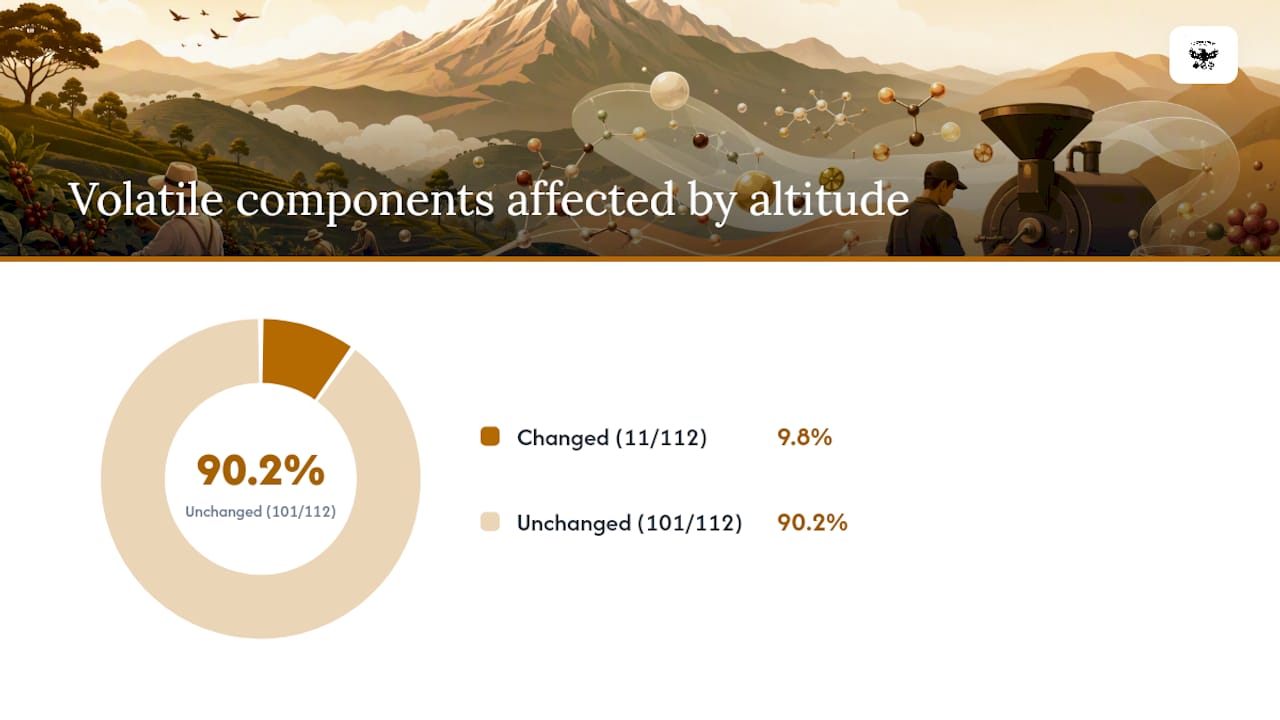
A controlled study on Pu’er coffee grown at 930–1,530 meters found that 11 of 112 measured volatile components changed significantly with altitude. Pyrazines and alcohols decreased at higher elevations while aldehydes increased, and aroma scores peaked near the 1,530-meter samples. That pattern aligns with what roasters observe: high-altitude lots tend to carry more delicate, floral, or fruit-forward aromatics rather than the heavier, roasty notes that dominate lower-grown beans.
The same Pu’er dataset, published in Food Chemistry, reported that fatty acid content increased with elevation while alkaloids and chlorogenic acids (CGAs) generally decreased. Fatty acids contribute to mouthfeel and aroma precursor formation during roasting. Lower CGA levels at high altitude are notable because CGAs are primary contributors to perceived bitterness and astringency in the cup.
Compound classes affected by altitude and why they matter:
- Sucrose and reducing sugars: Higher sucrose at elevation feeds Maillard and caramelization reactions during roasting, producing sweetness and brown-sugar notes
- Chlorogenic acids (CGAs): Tend to decrease with altitude in some studies; lower CGAs correlate with reduced bitterness and astringency
- Fatty acids: Increase with altitude; contribute to body, mouthfeel, and volatile aroma precursor formation
- Volatile aldehydes: Increase at higher elevations; associated with fruity and floral aromatic impressions
- Caffeine: Multiple regional studies show caffeine tends to decrease with increasing altitude, while total phenolic content often increases, pointing to complex, compound-specific shifts rather than a single directional trend
An Ethiopian study quantified the caffeine and CGA decline more precisely: caffeine dropped approximately 0.12 g·kg⁻¹ per 100 m gained, and CGAs fell roughly 1.23 g·kg⁻¹ per 100 m. Those are meaningful shifts across a 600-meter elevation range. Sucrose increases were also observed, but they were more pronounced in wet-processed beans than in naturally processed ones, which is an early signal that processing method interacts with altitude rather than simply adding to it.
What does elevation tend to change in the cup?
Elevation most reliably shifts aroma and aromatic clarity. Acidity and body do change, but they respond more to roast degree and processing method than altitude alone, so those attributes are less predictable from elevation data by itself.
Altitude bands and typical sensory profiles
| Altitude band | Typical sensory notes | Bean density / yield tendency | Common agronomic issues |
|---|---|---|---|
| Low (below 900 m) | Earthy, mild, flat acidity, fuller body | Lower density, higher yield | High CBB pressure, higher defect rates |
| Medium (900–1,200 m) | Balanced, mild fruit, moderate sweetness | Medium density, good yield | Moderate CBB, manageable defect rates |
| High (1,200–1,500 m) | Bright acidity, caramel-sweet, aromatic clarity | Higher density, moderate yield | Lower CBB, slower ripening, sorting demands |
| Super-high (above 1,500 m) | Floral, citrus, tea-like, complex aromatics | Highest density, lower yield | Minimal CBB, variety adaptation required, frost risk |
Note: these are tendencies, not rules. Processing method, variety, and microclimate regularly produce exceptions.
High-elevation East African lots, particularly from Tanzania’s southern highlands, often show floral and citrus aromatics with a tea-like, clean acidity. High-elevation Central American beans from Guatemala or Honduras tend toward caramel sweetness and bright but rounder acidity. Both patterns reflect the same underlying chemistry: slower maturation, more volatile aldehyde accumulation, and lower CGA levels. The regional character on top of that comes from variety and soil.
Pro Tip: For high-altitude lots, target a light to medium roast (first crack development, not much beyond). Darker roasting drives off the volatile aldehydes responsible for floral and fruit aromatics and flattens the altitude-driven acidity into a generic bitterness. If you want to taste what elevation actually did to that bean, keep the roast restrained.
When comparing altitude-labeled coffees, SCA cupping protocols are the standard for reducing tasting variability. Water temperature, grind consistency, and timed evaluation windows all affect perceived acidity and aroma. Without consistent mechanics, you may be measuring your cupping technique rather than the bean’s altitude character. Tri Crow Coffee’s flavor profile guide maps these descriptors to tasting vocabulary if you want a reference while you cup.
What altitude ranges actually mean for bean quality and yield
The bands used in the trade are not universal. They shift by region and variety. A 1,200-meter lot in Ethiopia sits in a different climatic context than a 1,200-meter lot in Colombia, because latitude, humidity, and cloud cover all modify the effective temperature at a given elevation. That said, the following cutoffs reflect common usage in the specialty trade and research literature:
- Below 900 m: Low altitude. Warmer temperatures, faster maturation, higher pest pressure, typically lower cup complexity.
- 900–1,200 m: Medium altitude. A practical sweet spot for yield and quality in many regions. Moderate CBB pressure, consistent ripening.
- 1,200–1,500 m: High altitude. Where specialty-grade character starts to emerge reliably. Slower ripening, denser beans, lower CBB incidence.
- Above 1,500 m: Super-high altitude. Specialty grades become more achievable, but farm management complexity rises. Variety adaptation matters significantly here.
An inter-Andean Peru study found that exportable yields and sensory attributes tended to improve at higher elevations, with specialty-grade scores commonly achieved at higher altitudes for Typica varieties. That is a meaningful data point for buyers: elevation above 1,800 m in the appropriate variety and region is a reasonable signal for specialty potential, not a guarantee.
Altitude labeling on retail bags and green coffee offers is increasingly used as a shorthand for expected cup character. “Grown above 1,500 m” signals denser beans, more aromatic complexity, and brighter acidity to buyers who know the code. Roasters use it as a first-pass filter before cupping. It is a useful signal, but it works best when paired with variety and processing information.
Why altitude alone doesn’t guarantee better coffee
Altitude is one axis in a matrix. Variety, shade, post-harvest processing, soil nutrients, and microclimate orientation all interact with elevation to produce the final cup. A 2025 metabolomics study analyzing 176 global green Arabica samples found that continent of origin had the largest effect on metabolite profiles, followed by processing method, altitude, and variety. Altitude was measurable and identifiable, but it was not the dominant driver globally.
The main modifiers that interact with altitude:
- Variety/genotype: Some varieties express altitude-driven complexity more than others. Typica and Gesha tend to show clearer altitude responses than some hybrid varieties bred for yield and disease resistance. Understanding coffee varietals helps you read these interactions.
- Shade vs. full sun: Shade slows maturation independently of altitude and modifies CGA and caffeine accumulation. The Ethiopian study cited above found that shade and processing together moderated altitude’s biochemical effects significantly.
- Post-harvest processing: Natural (dry) processing adds fermentation-derived compounds that can dominate or mask altitude-driven volatile profiles. A naturally processed bean from medium altitude can taste more complex than a washed bean from the same altitude. How processing shapes flavor is worth understanding before you attribute everything to elevation.
- Soil nutrients: Nitrogen and phosphorus availability affect protein and amino acid content in the bean, which feeds Maillard reactions during roasting. Two farms at the same altitude with different soil profiles can produce meaningfully different cups.
- Microclimate orientation: Morning sun vs. afternoon sun, valley fog, and wind exposure all modify effective temperature and ripening speed at the same nominal elevation.
A concrete illustration: two lots from the same 1,400-meter farm, one washed and one naturally processed, can produce cups so different that a blind taster might guess a 400-meter elevation difference between them. Processing, in that case, outweighed altitude as a flavor driver. This is not a reason to ignore elevation data. It is a reason to ask for variety and processing information alongside it.
One methodological note: studies that draw altitude conclusions from a single harvest season or a narrow elevation range may be capturing seasonal variation rather than true altitude effects. Multi-year, multi-site trials with controlled variety and processing are more reliable, and they are still relatively rare in the published literature.
Agronomic trade-offs at different elevations
Higher altitude often reduces coffee berry borer (CBB) pressure because the pest’s reproductive cycle slows in cooler temperatures. That is a real agronomic advantage. But the trade-offs accumulate as elevation rises.
At super-high altitudes, slower ripening extends the harvest window, which increases labor costs and the risk of overripe or underripe cherries in the same picking pass. Bean shrinkage during drying can be more pronounced in cooler, drier highland air. Frost risk, while rare in most traditional coffee belts, becomes a factor above 2,000 meters in some Andean regions.
The inter-Andean Peru study showed that higher altitudes reduced pest damage and improved sensory attributes for Typica above 1,800 meters, but exportable yield performance varied by variety. Not every cultivar handles the physiological stress of high-altitude growing equally well. Varieties bred for disease resistance at lower elevations may not express the same quality potential when moved upslope.
Gayo Highland research in Indonesia found that medium altitudes sometimes deliver the best yield-to-quality ratio, particularly for farmers who need consistent exportable volume alongside cup quality. Very high altitudes can push specialty scores higher but require careful variety selection and more intensive post-harvest sorting to maintain consistent exportable grades.
The temperature lapse rate of 0.5–0.6°C per 100 m is the underlying driver of all of this. A farm moving from 1,000 to 1,600 meters experiences roughly 3–3.6°C of effective cooling across the growing season. That changes pest biology, ripening speed, water stress patterns, and the economics of harvest labor simultaneously.
Practical farm tactics that help manage altitude-related risks include shade-tree integration (which moderates temperature swings and extends ripening time at medium altitudes), careful cherry sorting at harvest, and targeted fertilization to compensate for nutrient leaching in high-rainfall highland soils.
How to use altitude information when buying or roasting
Use altitude as one of several screening signals, not the only one. A lot labeled “grown at 1,800 m” tells you something useful, but it tells you more when paired with variety, processing method, and a cupping score.
Checklist for evaluating altitude-labeled lots:
- Exact elevation in meters — “high altitude” without a number is marketing; ask for the specific range or farm elevation
- Variety or cultivar — Typica, Gesha, Bourbon, and hybrid varieties respond differently to the same elevation
- Processing method — washed, natural, or honey; each interacts with altitude-driven chemistry in distinct ways
- Lot size and traceability — micro-lots from a single farm are more reliable altitude signals than blended regional lots
- Harvest date and drying notes — fermentation time and drying curve affect volatile retention and can amplify or suppress altitude-driven aromatics
- Previous cupping scores — SCA-style scores above 80 are a useful confirmation that altitude-driven quality is actually present in the cup, not just on the label
Roast guidance by altitude:
- High-altitude lots (above 1,200 m): Target light to medium roast. Stop at or shortly after first crack to preserve volatile aldehydes and aromatic clarity. These beans are denser and may need slightly longer pre-crack development.
- Low-altitude lots (below 900 m): Medium to medium-dark roasts work well. The lower aromatic complexity means darker development adds character rather than destroying it.
- Blended lots with mixed altitudes: Aim for a medium roast that balances the density differences; uneven development is a real risk when bean density varies within a blend.
For side-by-side altitude comparisons, SCA cupping mechanics are the standard: 93°C water, 8.25 g per 150 mL, four-minute steep, consistent grind. Evaluate aroma dry, wet, and after the break before tasting. Tasting temperature matters — evaluate between 70°C and 55°C for the clearest read on acidity and aromatic character. Anything hotter masks nuance; anything cooler exaggerates bitterness.
Tri Crow Coffee’s approach to altitude in the roast room
At Tri Crow Coffee, the pattern the research describes shows up consistently in practice: high-elevation lots arrive with more aromatic lift and a cleaner sweetness that responds well to lighter roast development. The roast curve stays conservative on those beans, with a focus on preserving the volatile compounds that slower highland maturation built into the cherry.
Tri Crow’s tasting methodology follows controlled small-batch conditions: same roast curve applied across comparable lots, SCA-style cupping mechanics for evaluation, and side-by-side comparisons when assessing new origins. That consistency is what makes altitude signals readable rather than noise.
Two examples from the current catalog illustrate the altitude-driven differences:
The Tanzania Medium-Light single-origin comes from Tanzania’s southern highlands, a growing region where elevation and volcanic soil combine to produce the floral and citrus-adjacent aromatics the Pu’er research associates with higher-altitude volatile profiles. Roasted to a medium-light, it shows the kind of tea-like acidity and clean finish that a darker roast would flatten entirely.
The Best Sellers Coffee Sample Pack puts several roast styles and origins side by side in 2-oz portions, which makes it a practical tool for tasting altitude-driven differences without committing to a full bag of each. The range across the six varieties reflects different elevation and processing contexts, and the contrast is noticeable once you know what to look for.
A roaster’s perspective on sourcing by elevation
Altitude information earns its place in sourcing decisions because it narrows the range of what a lot is likely to taste like before the first cupping. When a supplier can confirm exact elevation alongside variety and processing method, the pre-roast picture gets sharper. That matters when you are working in small batches where every roast decision carries more weight.
That said, altitude is never the only question. Farm relationships, processing transparency, and harvest traceability carry equal weight in Tri Crow Coffee’s sourcing approach. A well-documented 1,000-meter lot from a farmer with consistent post-harvest practices often outperforms a vaguely labeled “high-altitude” lot with no processing notes. The checklist in the buyer’s section above reflects exactly how those conversations go.
If you are working through a Tri Crow sample pack or choosing between single-origin options, use that same checklist as a tasting guide. Ask what elevation the lot came from, how it was processed, and what variety it is. The answers will tell you what to look for in the cup before you even grind.
Taste altitude differences for yourself
The Tanzania Medium-Light single-origin is the clearest altitude example in Tri Crow Coffee’s current lineup. It is sourced from Tanzania’s southern highlands and roasted to a medium-light specifically to preserve the floral and citrus aromatics that highland maturation produces. If you have only ever tasted darker-roasted East African coffee, this one reads differently.
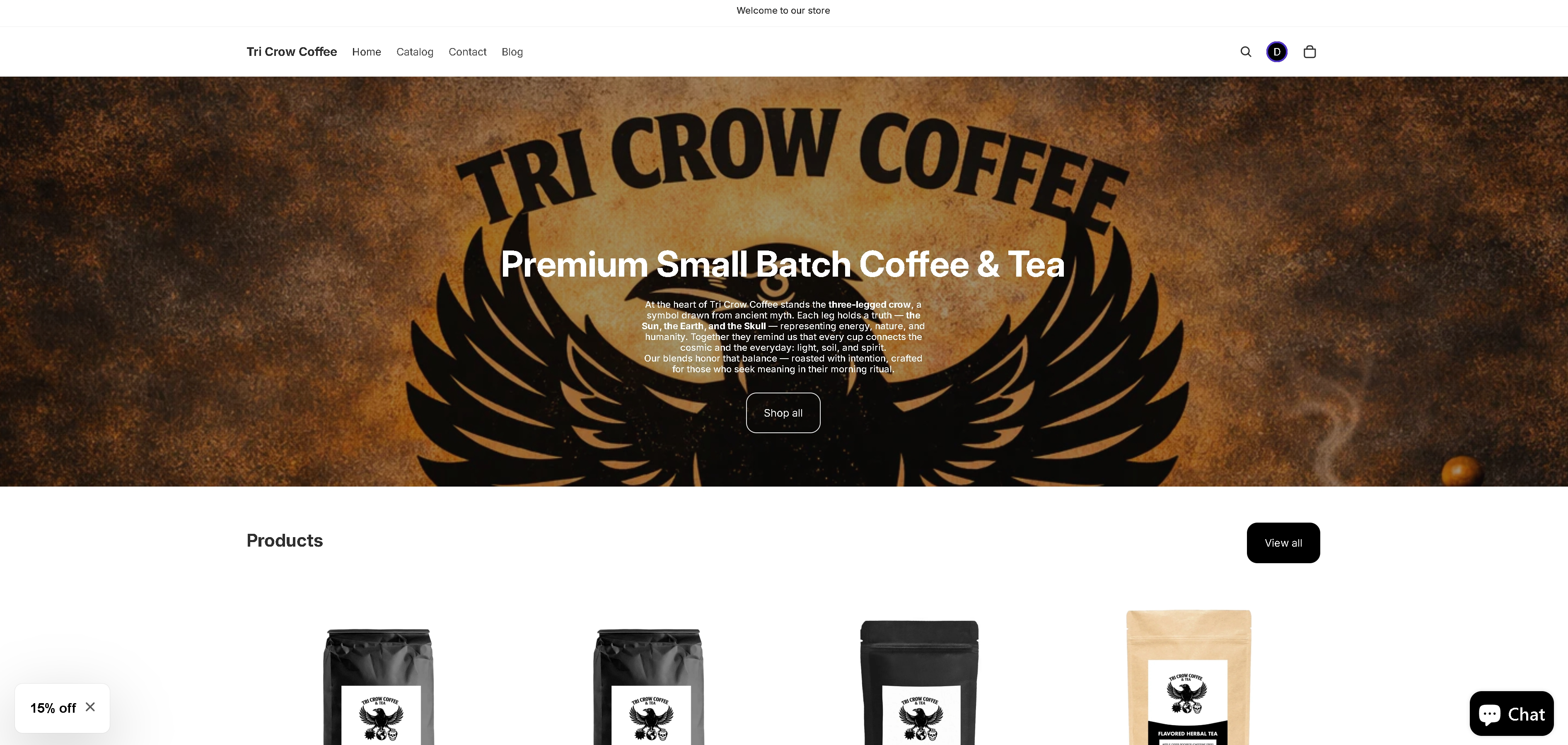
For a broader comparison, the Best Sellers Coffee Sample Pack includes six varieties at 2 oz each, covering different roast levels and origins. It is the most direct way to taste how roast degree and origin interact with altitude-driven flavor. The 6 Bean Dark Roast sits at the opposite end of the roast spectrum and shows what happens when development time overrides altitude cues entirely. For something in between, the Medium Roast Cold Brew offers chocolate and floral notes that reflect a more moderate roast approach. If caffeine content is part of your interest after reading about altitude’s effect on alkaloids, the Max Caf Blend blends Tanzania Arabica with India Robusta for a noticeably higher-caffeine cup. The Cold Brew Dark French Roast rounds out the range for those who prefer a bold, low-acidity profile. And if you want something outside coffee entirely, Tri Crow’s English Breakfast Tea is a strong, smooth option that pairs well with a morning ritual. Start with the sample pack, cup them side by side using the SCA mechanics described above, and the altitude differences become tangible rather than theoretical.
Sources
- The Growing Altitude Influences the Flavor Precursors, Sensory Characteristics and Cupping Quality of the Pu’er Coffee Bean - PMC
- The Growing Altitude Influences the Flavor Precursors, Sensory Characteristics and Cupping Quality of the Pu’er Coffee Bean
- Effect of altitude on biochemical composition and quality of green arabica coffee beans can be affected by shade and postharvest processing method
- Instrumental and chemical analyses linking altitude to biological and aromatic parameters in Typica Arabica (Nature/Scientific Reports summary)
FAQ
How does altitude affect coffee flavor?
Higher altitude slows cherry maturation through cooler temperatures, which increases volatile aldehyde accumulation and alters sugar and acid ratios in the bean. The result in the cup is typically more aromatic complexity and cleaner sweetness, most noticeable in aroma rather than acidity alone.
What is the best altitude for growing specialty coffee?
Most specialty-grade Arabica performs well above 1,200 meters, with the strongest results often above 1,500 meters in regions like East Africa and the Andes. A Peru inter-Andean study found specialty scores above 80 were commonly achieved above 1,800 meters for Typica, though variety and processing method matter equally.
Does higher altitude always mean better coffee?
No. Altitude is a reliable predictor for some attributes, particularly aroma and aromatic sweetness, but variety, shade, processing, and soil can override elevation effects. A well-processed medium-altitude lot often outperforms a poorly handled high-altitude one.
How does roast level interact with altitude-driven flavors?
Darker roasting drives off the volatile aldehydes responsible for the floral and fruit aromatics that high-altitude growing produces. Light to medium roast preserves those altitude-driven characteristics; medium-dark to dark roast tends to flatten them into more generic roasty notes.
Does altitude change caffeine content in coffee?
Research suggests caffeine tends to decrease with increasing altitude. One Ethiopian study measured a decline of approximately 0.12 g·kg⁻¹ per 100 meters gained, while total phenolic content often increases with elevation, reflecting compound-specific shifts rather than a single directional trend.