
Micro roast coffee is specialty coffee roasted in intentionally small batches to maximize flavor, freshness, and traceability. The industry term you’ll see most often is “micro-roasting,” and it describes an operational philosophy, not a legal category. What separates it from commercial roasting isn’t just volume. It’s the level of control a roaster can apply when every batch is small enough to monitor closely, adjust in real time, and ship within days of roasting.
Here’s what defines micro-roasted coffee at a glance:
- Batch size: typically 1–5 kg per roast, compared to hundreds of kilograms in commercial operations
- Annual volume: commonly cited threshold is a relatively low annual volume
- Sourcing focus: single-origin beans, micro-lots, and traceable supply chains
- Roast control: tight temperature curves and hands-on profiling for each lot
- Freshness priority: beans reach customers days, not months, after roasting
Key Takeaways
Micro-roasting is an operational philosophy built on small batches, tight roast control, and fast delivery, and those three factors together produce a measurably fresher, more traceable cup than commercial roasting can match.
| Point | Details |
|---|---|
| Definition and scale | Micro roasters typically use 1–5 kg batch machines and produce under 100,000 lbs per year; no single legal definition exists. |
| Freshness standard | The 15-15-15 rule expresses freshness guidelines: green coffee within a year or so, roasted beans within a couple of weeks, brewed coffee soon after grinding. |
| Sustainability gains | Electric, ventless shop roasters can substantially reduce roasting emissions compared to gas-powered equipment. |
| Buying tip | Always check the roast date on the bag; a sample pack lets you compare profiles and freshness across multiple lots before committing. |
| Tri Crow Coffee | Tri Crow’s small-batch lineup, including the Best Sellers Sample Pack and Tanzania Single Origin, applies micro-roasting principles across roast levels. |
Table of Contents
- What does “micro roast coffee” actually mean?
- How is micro roasting done, and what equipment does it take?
- Why does micro-roasted coffee taste better and stay fresher?
- How do electric and ventless roasters change sustainability?
- How do you start a micro-roastery or add in-store roasting?
- How to buy and evaluate micro-roasted coffee at home
- What is the Fourth Wave, and where do micro roasters fit?
- How Tri Crow Coffee practices small-batch roasting
- Why micro-roasting matters more than most enthusiasts realize
- Tri Crow Coffee’s small-batch selections are worth trying
- Sources
- FAQ
What does “micro roast coffee” actually mean?
The phrase gets used loosely, so the definitions matter. Industry sources commonly define micro roasters by two overlapping measures: batch machine capacity (often 1–5 kg) and annual output, with examples including thresholds under 100,000 lbs, or roughly 45,300 kg, per year. There is no single legal definition. The Roaster of the Year competition has used the 100,000 lbs annual figure as a working threshold, but regional trade bodies and award programs vary.
Nano roasters sit below micro on the scale, often using smaller machines and producing lower annual volumes. They’re typically one step above home roasting and succeed almost entirely on storytelling and premium positioning. Commercial roasters, by contrast, operate continuous drum systems measured in thousands of kilograms per hour.
The more useful distinction isn’t the number. It’s the philosophy. A micro roaster prioritizes quality and traceability over throughput. That means sourcing narrow lots, profiling each one individually, and labeling batches with enough information that a customer can trace the coffee back to a specific farm or cooperative.
How is micro roasting done, and what equipment does it take?
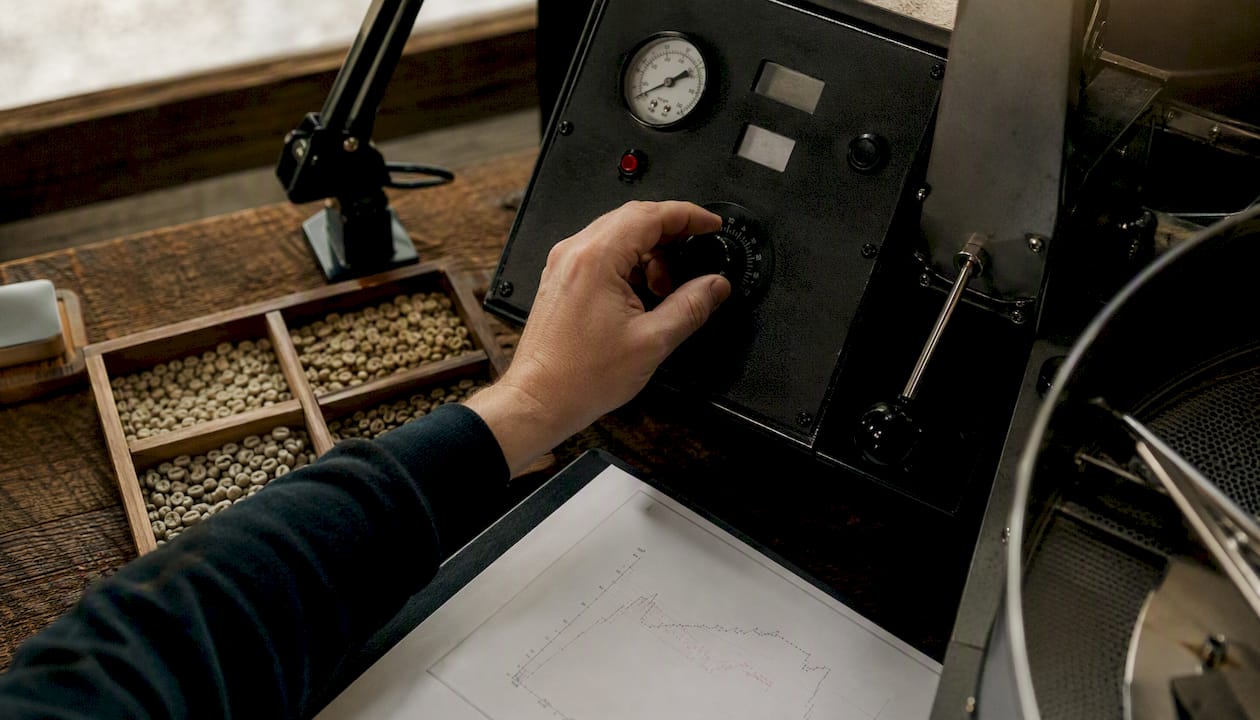
Every roast, regardless of scale, moves through four stages: drying (removing moisture from the green bean), browning (Maillard reactions building flavor compounds), first crack (the bean’s internal pressure releases with an audible pop), and development (the window after first crack where the roaster locks in the final flavor profile). Small batches let the roaster respond to each stage faster and with more precision than a 100 kg drum allows.
The variables that matter most:
- Temperature curve (ROR): rate-of-rise tells the roaster how fast the bean temperature is climbing; a dropping ROR before first crack often signals a stalled roast
- Airflow: controls how quickly moisture and chaff leave the drum; too little airflow bakes the bean, too much strips delicate aromatics
- Drum speed or heat source: drum speed affects conductive heat transfer; electric roasters replace gas burners with electric heating elements, changing how heat is applied
- Roast duration: total time from charge to drop; shorter development times preserve bright, acidic notes; longer ones build body and sweetness
- Cooling time: fast cooling stops the roast precisely; slow cooling continues development and can muddy the profile
For equipment, micro roasters typically use drum roasters in the 1–5 kg range from manufacturers like Probat, Giesen, or Mill City Roasters. Shop roasters designed for in-store use, including electric and ventless models, handle 1.5–20 kg batches and are built to fit a retail footprint without requiring gas lines or external ventilation systems.
Pro Tip: When dialing a new lot on a small batch roaster, log your rate-of-rise at 30-second intervals from charge to drop. A single batch’s ROR curve tells you more about where the roast went wrong than any tasting note will — and on a 3 kg drum, you can run three profile experiments in an afternoon.
Why does micro-roasted coffee taste better and stay fresher?
Small batches mean faster turnover. A micro roaster producing 50 kg per week ships beans that were roasted days ago, not weeks. That gap matters because roasted coffee degrades through oxidation and CO2 off-gassing, and the flavor compounds responsible for brightness and complexity are the first to go.
Practical benefits for the cup:
- Tighter roast consistency: a 3 kg batch is easier to roast evenly than a 60 kg batch; heat penetrates more uniformly, reducing the risk of underdeveloped centers or scorched surfaces
- Single-origin and micro-lot capability: small volumes make it economically viable to source a 50 kg lot from a single farm and roast it separately, preserving its distinct flavor profile
- Traceability: micro roasters can label each bag with farm name, processing method, and harvest date, giving consumers the full story behind their cup
- Faster roast-to-cup timeline: beans reach customers within days of roasting rather than sitting in a warehouse for months
The 15-15-15 freshness rule puts numbers to what micro roasters practice intuitively: green coffee should be used within 15 months of harvest, roasted beans consumed within 15 days of roasting, and brewed coffee enjoyed within 15 minutes of grinding or preparation. Micro-roasting’s short production cycles make hitting those windows realistic in a way that commercial supply chains rarely allow.
Freshness window: the 15-15-15 rule sets the standard — 15 months for green coffee, 15 days for roasted beans, 15 minutes for brewed coffee after grinding.
How do electric and ventless roasters change sustainability?
The environmental case for small-batch roasting got sharper with the arrival of electric, ventless shop roasters. Industry reporting indicates these systems can reduce roasting emissions by an estimated 87–90% compared with traditional gas-powered machines. For a café or small roastery, that’s a meaningful shift, and it removes two of the biggest barriers to in-store roasting: gas infrastructure and external ventilation.
Emissions reduction: electric, ventless shop roasters can cut roasting-related carbon emissions by roughly 87–90% versus gas-powered equipment.
The tradeoffs are real, though. Electric roasters typically carry higher upfront equipment costs than comparable gas drum roasters. Profile precision on electric systems has improved significantly, but roasters accustomed to gas-fired drums often note a learning curve in how heat is applied and how quickly the roaster responds to adjustments. Ongoing energy costs depend heavily on local electricity rates, which vary across North America.
For operators weighing the decision, the sustainability angle also feeds directly into brand storytelling. Cafés that roast in-store with electric equipment can point to lower emissions as part of their customer experience, and that narrative has real value in a market where sustainability in food service is increasingly a purchase driver.
| Factor | Gas Drum Roaster | Electric/Ventless Shop Roaster |
|---|---|---|
| Estimated emissions | Baseline | ~87–90% lower |
| Ventilation required | Yes (external) | No (ventless models) |
| Upfront cost | Moderate | Higher |
| Fuel/energy cost | Gas rates | Electricity rates (varies by region) |
| Profile control | Established, precise | Improving; slight learning curve |
How do you start a micro-roastery or add in-store roasting?
The operational roadmap runs in four phases: research and sourcing, equipment and site selection, permits and ventilation, then launch and iteration. Each phase has real costs and timelines worth planning around.
Numbered checklist for North American operators:
- Research local permits. Contact your city or county health department and fire marshal. Most North American jurisdictions require a food handler’s license, a business license, and a fire inspection for any roasting operation. Some municipalities add air quality permits for roasting emissions, even for electric systems.
- Choose your equipment scale. Countertop sample roasters (under 1 kg) work for profiling and home use. Shop roasters in the 1–5 kg range suit a café or small retail operation. Larger micro-roastery setups run 5–15 kg drums.
- Budget for upfront costs. A quality 1–3 kg drum roaster runs roughly $5,000–$15,000 new. Electric shop roasters with ventless systems can run $20,000–$50,000 depending on capacity. Add green coffee inventory ($3–$10+ per lb for specialty lots), packaging, and a roast logging system.
- Plan ventilation early. Gas roasters need external ducting and often a catalytic afterburner. Ventless electric models eliminate that requirement but still need adequate electrical service (often 240V commercial circuits).
- Source green coffee. Work with a green coffee importer or direct-trade broker. Minimum order quantities for specialty micro-lots can be as low as one 60 kg bag, which suits a micro operation well.
- Train on roast profiling. Invest in at least one formal roasting course (the Specialty Coffee Association offers structured curriculum) and plan for several weeks of profiling before selling commercially.
Timeline expectations:
- Planning and permitting: 4–12 weeks depending on jurisdiction
- Equipment lead time: 4–16 weeks for new roasters (longer for imported equipment)
- Profile development and soft launch: 4–8 weeks of test roasting
- Scaling from micro to larger volume: typically 12–24 months before outgrowing a 3 kg drum
Industry commentary notes that thin margins are a real challenge for micro roasters pursuing traceable, limited lots. A strong brand story and premium pricing are what make the economics work, not volume alone.
How to buy and evaluate micro-roasted coffee at home
Start with the label. A genuinely micro-roasted coffee tells you when it was roasted, where the beans came from, and often how they were processed. If the bag shows only a “best by” date with no roast date, that’s a signal the roaster isn’t prioritizing freshness transparency.
Key signals to look for when buying:
- Roast date: should be within the past 15 days for peak flavor; avoid bags with only a “best by” date
- Origin information: farm name, region, country, and processing method (washed, natural, honey) indicate a traceable supply chain
- Batch or lot notes: micro-lot numbers or harvest season references confirm small-batch sourcing
- Roast profile description: light, medium, or dark with tasting notes tied to the specific bean, not generic descriptors
The 15-15-15 rule applies directly to your buying decisions. If you’re ordering online, factor in shipping time. A bag roasted on Monday and shipped Tuesday should reach you by Thursday or Friday, still well within the 15-day window. Buying in smaller quantities more frequently beats buying a large bag that sits for weeks.
For storage, keep whole beans in an airtight, opaque container away from heat and light. Avoid the freezer for beans you’ll use within two weeks. Grind immediately before brewing. Coffee storage science consistently shows that pre-ground coffee loses volatile aromatics within minutes of grinding, which is why the 15-minute brewing window in the 15-15-15 rule exists.
Pro Tip: Buy a small sample pack before committing to a full bag from any new roaster. Comparing two or three roast dates side by side, even from the same origin, tells you more about a roaster’s consistency than any tasting note on the bag.
What is the Fourth Wave, and where do micro roasters fit?
The Fourth Wave in coffee is shorthand for the current emphasis on sustainability, ritual, and radical transparency. Third Wave coffee (roughly the 2000s–2010s) made single-origin and specialty grading mainstream. The Fourth Wave pushes further: it asks how the coffee was grown, how it was roasted, what the roaster’s carbon footprint looks like, and whether the supply chain is genuinely equitable.
Micro and nano roasters are central to that shift. Smaller, automated shop roasters have lowered the barrier to in-store roasting, letting cafés roast fresh coffee on site and show customers exactly what they’re drinking. That visibility is the Fourth Wave’s core promise.
Current trends worth watching:
- In-store roasting growth: cafés are adding compact shop roasters to control freshness, reduce wholesale costs, and create a theater of craft that draws customers
- Traceability as a purchase driver: consumers increasingly expect farm-level information, not just country of origin; coffee origin transparency is becoming a baseline expectation
- Micro-roaster proliferation in producing regions: specialty demand is driving new micro-roasteries and farmer-led brands in origin countries; reporting from producing regions documents rapid growth in markets like Minas Gerais, Brazil
- Ritual and intentionality: consumers are choosing coffee that fits a deliberate morning practice, not just a caffeine delivery mechanism; 2026 coffee trends point to ritual as a key differentiator for premium brands
For small roasters and cafés, this means the market is moving toward them, not away. The demand for freshness, story, and sustainability is exactly what a well-run micro operation delivers by default.
How Tri Crow Coffee practices small-batch roasting
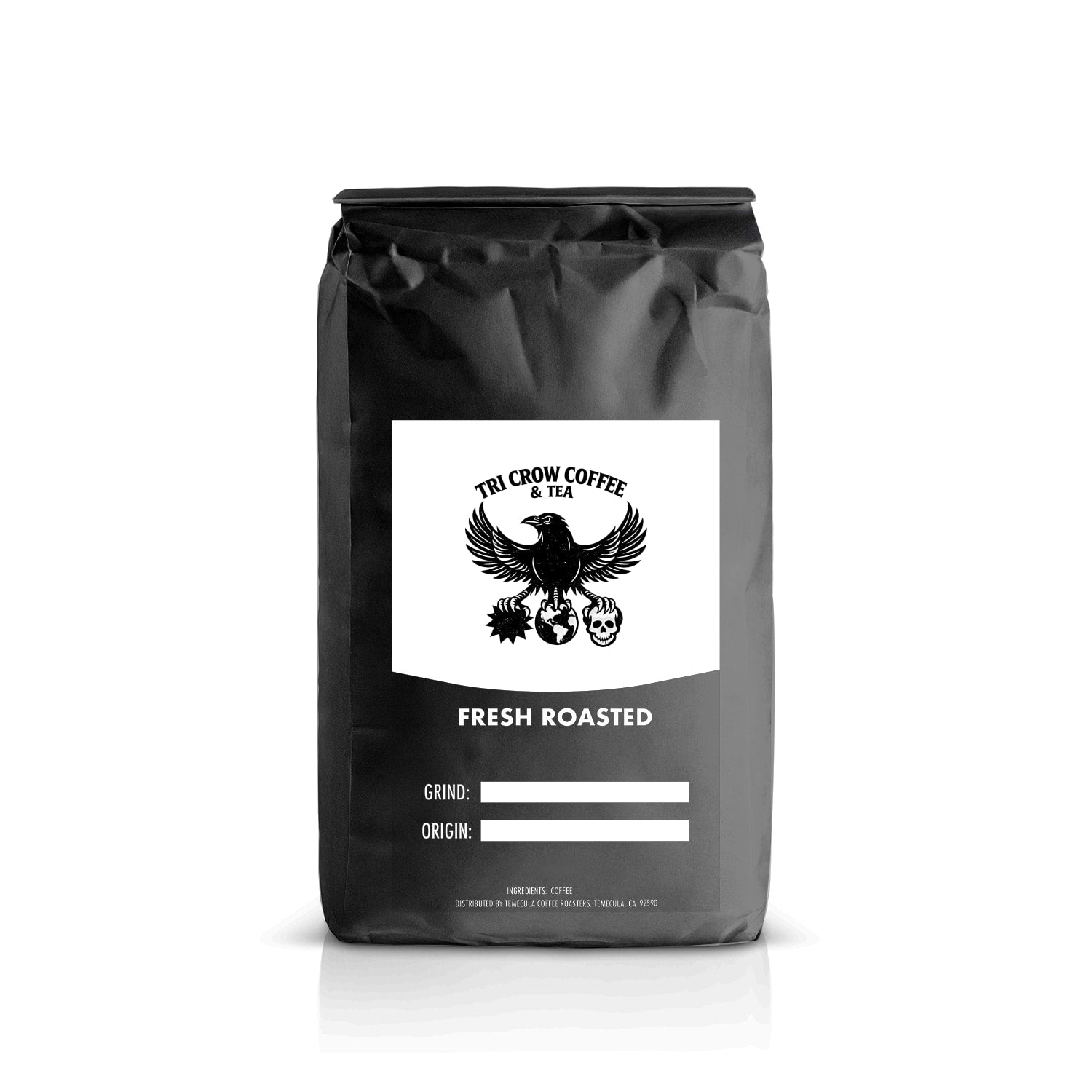
Tri Crow Coffee roasts in limited batches, prioritizing flavor control and freshness over volume. Every product in the lineup reflects the core principles of micro-roasting: small runs, traceable sourcing, and roast profiles matched to the specific character of each bean.
A few examples from the current offerings:
- Tanzania Medium-Light Coffee: a small-batch single-origin roasted to highlight the bean’s natural brightness and origin character, with roast-date labeling so you know exactly when it was made
- 6 Bean Dark Roast: a small-batch house blend that shows how micro-roasting applies across roast levels, not just light and medium profiles
- French Roast Coffee: a bold Central American blend roasted dark in small batches for consistent flavor without the bitterness that comes from over-roasting large commercial drums
- Italian Roast Dark: the darkest roast in the lineup, an Arabica/Robusta blend where small-batch control keeps the profile from tipping into char
- Medium Roast Cold Brew Coffee: roasted specifically for cold-brew extraction, with chocolate and floral notes that hold up through the long steep
Tri Crow also carries the Best Sellers Coffee Sample Pack, six varieties at 2 oz each, which is the most direct way to compare roast profiles and freshness across the lineup. Beyond coffee, the English Breakfast Tea and Apple Cider Rooibos round out the ritual-focused offering for non-coffee moments.
Pro Tip: Order the sample pack first. Six roast profiles at 2 oz each lets you run the 15-15-15 freshness check on each one and identify which roast level fits your brewing method before committing to a full bag.
Why micro-roasting matters more than most enthusiasts realize
Most coffee coverage focuses on the bean: origin, variety, processing method. Micro-roasting gets less attention, which is a mistake, because the roast is where most of the flavor is actually made or lost.
A green bean from an exceptional Ethiopian farm can be ruined by a careless roast. The same bean, roasted in a 3 kg drum by someone who has profiled it a dozen times, can be extraordinary. The difference isn’t the bean. It’s the control that small-batch roasting allows.
What I find underappreciated is how much the freshness gap matters in practice. Most commercially roasted coffee reaches a consumer 30–90 days after roasting. A micro-roasted bag, ordered directly from the roaster, can arrive within a week of leaving the drum. That’s not a marginal improvement. The aromatics in a freshly roasted bag are genuinely different from a month-old one, and once you’ve tasted that difference, buying stale coffee feels like a real loss.
The ritual angle matters too. Brewing a bag with a roast date, an origin story, and a specific flavor profile turns a daily habit into something more deliberate. That’s not marketing. It’s what actually happens when you slow down and pay attention to what’s in the cup.
Try a sample pack. Compare two roast dates from the same origin. The difference will be obvious.
Tri Crow Coffee’s small-batch selections are worth trying
Tri Crow Coffee offers a range of small-batch micro-roasted coffees for enthusiasts who want freshness and flavor without the guesswork of sourcing from large commercial roasters. Every batch is produced in limited quantities, roast-date labeled, and built around a specific flavor intention.
The Best Sellers Coffee Sample Pack is the clearest entry point: six varieties at 2 oz each, covering light through dark roast profiles, all from the same small-batch operation. It’s the fastest way to apply the 15-15-15 freshness check across multiple roast levels and find your preferred profile. For a single-origin experience, the Tanzania Medium-Light is the most direct example of what traceable, small-batch roasting produces in the cup. And for those who prefer bold dark roasts, the 6 Bean Dark Roast shows that small-batch control applies just as well at the darker end of the spectrum.
Browse the full lineup and check current roast dates at Tri Crow Coffee.
Sources
- 15-15-15 coffee rule - Roastopedia
- How micro roasters paved the way for in-store coffee roasting - Perfect Daily Grind
- What is the definition of a micro coffee roaster? - Perfect Daily Grind
- Specialty coffee demand fuels boom in micro-roasters
FAQ
What is micro-roasted coffee?
Micro-roasted coffee is specialty coffee produced in small batches, typically 1–5 kg at a time, by a roaster that prioritizes roast control, freshness, and traceability over volume. There is no single legal definition; the term describes an operational philosophy rather than a statutory category.
What are the four types of coffee roasts?
The four standard roast levels are light, medium, medium-dark, and dark. Each corresponds to a different development time after first crack, with lighter roasts preserving more origin character and darker roasts emphasizing body and bittersweet notes.
What is the 15-15-15 coffee rule?
The 15-15-15 rule is a freshness guideline: use green coffee within 15 months of harvest, consume roasted beans within 15 days of roasting, and drink brewed coffee within 15 minutes of grinding or preparation. Micro-roasters are well positioned to help customers hit the 15-day roasted-bean window because of their short production-to-shipment cycles.
What is the difference between micro and nano roasters?
Nano roasters are smaller than micro, often using machines under 5 kg and producing even lower annual volumes. Both emphasize quality and storytelling over throughput, but nano operations typically serve a hyper-local or direct-to-consumer audience and rely almost entirely on premium positioning to sustain margins.