
Add a small amount of ground cinnamon per cup directly to your dry coffee grounds before brewing, or correspondingly more for a full pot, then brew as usual. That single step gets you a warm, spiced cup with almost no cleanup or special equipment. If you want more control over flavor or a grit-free finish, steeping a whole cinnamon stick or stirring in a cinnamon syrup after brewing both work well too, and each one is covered in detail below.
TL;DR:
- Mixing ground cinnamon into dry coffee grounds before brewing produces a well-integrated, grit-free flavor in drip and pour-over machines.
- Steeping a whole cinnamon stick in brewed or cold coffee offers a clean taste with minimal sediment, ideal for those sensitive to grit.
- Use Ceylon cinnamon for daily consumption due to its lower coumarin content and sweeter flavor, especially when adding cinnamon regularly.
- Water temperature between 195°F and 205°F maximizes the extraction of cinnamon oils and flavor during brewing.
- Pre-flavored coffees like Tri Crow’s Cinnamon Hazelnut blend remove the need for measuring or prep, providing a convenient cinnamon-infused option.
Table of Contents
- How to Make Cinnamon Coffee at Home With a Basic Recipe
- Which Cinnamon Coffee Method Works Best for You?
- Adjusting Cinnamon Coffee for Your Brew Method
- Ceylon or Cassia: Which Cinnamon Should You Use?
- Easy Ways to Dress Up Your Cinnamon Coffee
- Why Tri Crow Coffee Takes Cinnamon Seriously
- Try Cinnamon Coffee Without the Recipe Prep
- Sources
- FAQ
How to Make Cinnamon Coffee at Home With a Basic Recipe
The fastest route to a good cup starts before you ever hit brew. Mixing cinnamon into your dry grounds means the water pulls the spice’s oils out at the same time it extracts the coffee, so the flavor ends up woven through the whole cup instead of floating on top.
Here’s what you need for one cup:
- 2 tablespoons (about 10 to 12 grams) of ground coffee
- ⅛ to ¼ teaspoon ground cinnamon (Ceylon preferred, more on that later)
- 6 to 8 ounces of filtered water, heated to 195°F to 205°F
For a full pot (10 to 12 cups), scale up to roughly 6 tablespoons of coffee and ½ to 1 teaspoon of cinnamon, adjusting by a pinch until it tastes right to you.
Steps for drip machines or pour-over:
- Add your ground coffee to the filter first.
- Sprinkle the cinnamon evenly over the grounds rather than dumping it in one spot.
- Give it a quick stir with a spoon so the cinnamon doesn’t clump against the paper filter.
- Brew as normal, letting the water pass through at 195°F to 205°F for the cleanest extraction.
- Taste before adding more spice. Cinnamon strengthens slightly as coffee cools.
A paper filter catches nearly all of the fine cinnamon particles, so you get flavor without sediment in the bottom of your mug. That’s the trick most people miss when their homemade cinnamon coffee recipe turns out gritty.
Which Cinnamon Coffee Method Works Best for You?
There isn’t one right way to brew cinnamon coffee. Which method wins depends on your equipment, how much cleanup you’re willing to do, and whether you want a subtle warmth or something bolder.
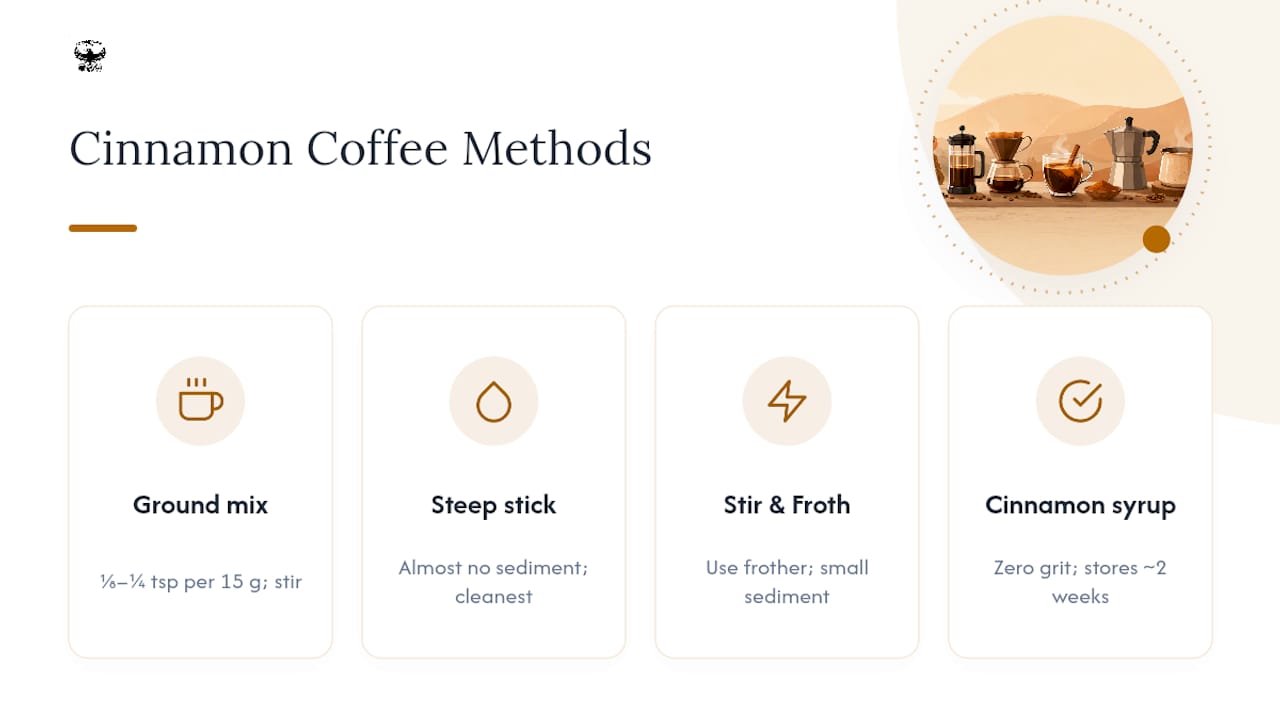
Method 1: Ground cinnamon mixed into the grounds. This is the approach above, and it’s the best fit for drip machines and pour-over setups with paper filters. Use about ⅛ to ¼ teaspoon per 15 grams of coffee, and always stir it into the grounds before adding water. Skipping the stir is the most common reason people end up with clumps that never fully dissolve.
Method 2: Steeping a whole cinnamon stick. Drop a cinnamon stick into a hot brewed cup and let it steep for a few minutes, stirring occasionally, then pull it out once the flavor hits where you want it. For cold brew, use one stick per a moderate volume of water during the full steep, since the longer infusion pulls flavor without any bitterness that heat sometimes causes. This method leaves almost no sediment, which makes it the cleanest option if grit bothers you.
Method 3: Stirring cinnamon into a finished cup. Simplest of the three, but also the one most prone to floating clumps. A handheld milk frother solves this. Whipping the cup for a few seconds after adding cinnamon suspends the powder evenly instead of letting it sit on top or sink to the bottom. Expect a small amount of fine sediment at the very bottom of the mug. That’s normal and not a sign you did anything wrong.
Cinnamon syrup, for lattes and iced drinks: Combine equal parts water and sugar with several cinnamon sticks in a saucepan, simmer for some minutes to make cinnamon syrup, then strain and store in the fridge for up to two weeks. A tablespoon or two stirred into milk-based or iced coffee gives you consistent flavor with zero grit, ever.
Pro Tip: If you’re steeping a stick in a pour-over, drop it into the carafe rather than the filter basket. It infuses the finished coffee without slowing down your brew time.
Adjusting Cinnamon Coffee for Your Brew Method
Cinnamon behaves differently depending on how your coffee is made, mostly because of how each method filters or holds onto fine particles.
- Drip and pour-over: Stick with a paper filter and the standard 1:16 coffee-to-water ratio. A quick 30-second bloom before the main pour helps both the coffee and the cinnamon oils release more evenly.
- French press: Skip the ground cinnamon here, since the metal mesh filter lets fine powder straight through into your cup. Use a whole stick instead, or stir ground cinnamon into your cup after pressing rather than before. A coarser grind also helps limit sediment overall.
- Espresso: Never add cinnamon to the portafilter. It clogs the puck and throws off extraction. Stir it into steamed milk or the finished shot instead.
- Cold brew: Use one stick per 4 cups (32 ounces) of water during a 12 to 18 hour steep, then strain thoroughly through a fine mesh or paper filter.
Water temperature matters more than most people assume. Cinnamon’s aromatic oils extract best between 195°F and 205°F, which happens to be the same range that pulls the best flavor from coffee itself. A variable-temperature kettle makes this far easier to hit consistently than eyeballing it off the stove, especially for pour-over. For more on nailing ratios and technique across brew styles, this home brewing guide breaks down the fundamentals worth knowing regardless of what spice you’re adding.
Ceylon or Cassia: Which Cinnamon Should You Use?
Not all cinnamon is the same, and the difference matters more than most recipes let on. Ceylon cinnamon has a lighter, sweeter flavor and noticeably lower coumarin content than cassia, the darker, more common variety sold in most grocery stores. Coumarin can stress the liver in large amounts, so if you’re drinking cinnamon coffee daily, Ceylon is the safer long-term choice.
That doesn’t mean cassia is dangerous in a normal cup or two. It just means moderation matters more with it. Starting at ¼ teaspoon per cup and staying there, rather than working your way up to a full teaspoon every morning, keeps intake reasonable either way. Reviews of cinnamon’s chemistry point to real antioxidant compounds like cinnamaldehyde and various polyphenols, but also flag how much the safety profile varies by species, which is exactly why the Ceylon versus cassia distinction isn’t just a flavor preference.
A few practical notes:
- Medium and medium-dark roasts with chocolate or nut undertones pair best with cinnamon’s warmth.
- Store ground cinnamon in an airtight container away from light. It loses potency within a few months.
- Whole sticks hold their flavor far longer, often a year or more, if kept sealed and dry.
Easy Ways to Dress Up Your Cinnamon Coffee
Once you’ve got the base method down, small additions turn a basic cup into something closer to a café order.
A quick cinnamon brown sugar creamer takes minutes: whisk ½ cup brown sugar, 1 teaspoon ground cinnamon, and 1 cup half-and-half or milk until the sugar dissolves, then refrigerate for up to a week.
- Honey tends to carry cinnamon flavor through milk better than granulated sugar, since the fat in milk helps disperse cinnamon’s oils and honey blends into that fat more smoothly.
- For iced versions, brew your coffee slightly stronger than usual, since ice will dilute it, then pour over a full glass of ice rather than a few cubes.
- A light dusting of cinnamon or a cinnamon stick garnish on top finishes the presentation without adding much extra spice.
- Brew coffee normally with your preferred cinnamon method.
- Stir in creamer, honey, or syrup while the coffee is still hot for the smoothest blend.
- Pour over ice if serving cold, adjusting sweetness slightly upward since cold drinks taste less sweet.
Why Tri Crow Coffee Takes Cinnamon Seriously
At Tri Crow Coffee, we roast in small batches specifically because spice-forward blends need close attention. Too much heat or an off ratio can cause cinnamon flavor to disappear or become too strong in the cup. Our Cinnamon Hazelnut blend suits the daily-drinker who wants gentle warmth without extra prep, while Cinnabun leans into a bolder, dessert-style cup for weekend mornings.
— David P.
Try Cinnamon Coffee Without the Recipe Prep
If measuring cinnamon into your grounds every morning sounds like one more chore before caffeine, Tri Crow Coffee already did that work for you. Our Cinnamon Hazelnut coffee is roasted in small batches for a mild, everyday cinnamon warmth, no stirring, straining, or syrup required.
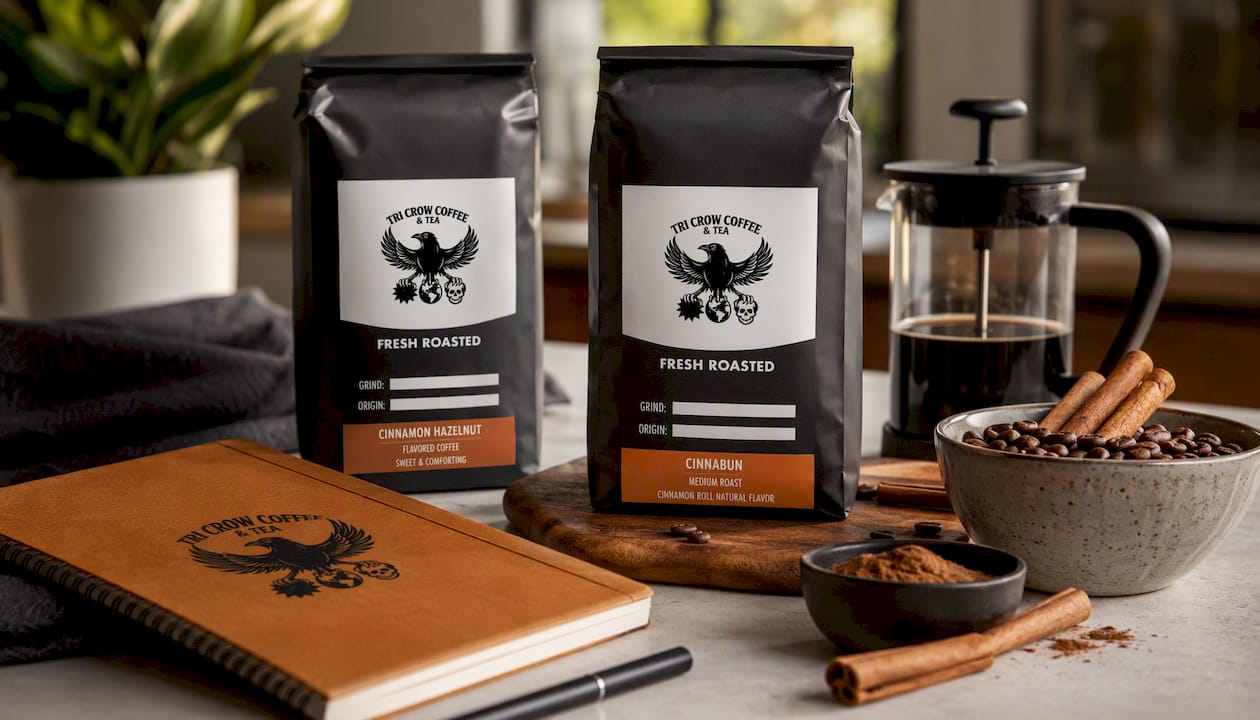
If you’re after something closer to a treat than a daily cup, Cinnabun delivers a cinnamon roll flavor on a medium roast base, the kind of cup that works as dessert as easily as breakfast. Because we roast in limited batches, both blends sell out and get replaced rather than mass-produced, so availability shifts throughout the year. Head to the Cinnamon Hazelnut product page or the Cinnabun listing to check current stock and place an order before the current batch runs out.
Sources
- Cinnamon Coffee Guide: Brew spicy, flavor-packed cups | Coffee Bumper
- Your definitive guide to coffee with cinnamon sticks | Flavor365
- Cinnamon in coffee? Here’s why it’s worth trying - The Manual
- Scientific review on cinnamon phytochemistry and safety | ScienceDirect
FAQ
How do I make cinnamon coffee?
Add ⅛ to ¼ teaspoon of ground cinnamon to your dry coffee grounds before brewing, using more for a full pot, or steep a whole cinnamon stick in a finished cup for 3 to 5 minutes.
What’s the best way to add cinnamon to coffee?
Mixing ground cinnamon into the dry grounds before brewing gives the most integrated flavor with a paper filter, while steeping a whole stick produces a cleaner cup with almost no sediment.
Does adding cinnamon to coffee lower blood sugar?
Some cinnamon compounds show blood sugar effects in research settings, but the amount used to flavor a cup of coffee is small, and coffee itself isn’t a treatment for blood sugar management.
What is the cinnamon coffee trick for weight loss?
There’s no verified trick where cinnamon coffee causes weight loss on its own. Cinnamon adds flavor without added sugar, which can help if it replaces a sweetened coffee drink, but that’s a calorie swap, not a metabolic shortcut.
Which coffee should I use for a cinnamon coffee recipe?
Medium and medium-dark roasts with chocolate or nut notes pair best with cinnamon’s warmth, and a ready-made option like Cinnamon Hazelnut skips the measuring step entirely.