
TL;DR:
- Black coffee includes brewed drinks served without milk, cream, or sugar, such as espresso, pour-over, or cold brew. Brewing variables like water temperature, grind size, and brew ratio significantly influence flavor, and bean selection impacts taste based on roast level and origin. Understanding these differences helps enthusiasts craft tailored black coffee styles to suit their preferences and equipment.
Black coffee is any coffee brewed and served without milk, cream, or sugar, and the most popular examples include espresso, Americano, French press, pour-over, cold brew, nitro cold brew, and Turkish coffee. Each style is defined by its brewing method and bean selection, not just the absence of additives. The Specialty Coffee Association (SCA) recognizes that brewing variables like grind size, water temperature, and brew ratio shape flavor more than any other factor. Understanding these variables is what separates a flat, forgettable cup from one worth savoring. This guide covers the most important examples of black coffees, organized by brewing method family, so you can build your repertoire with purpose.
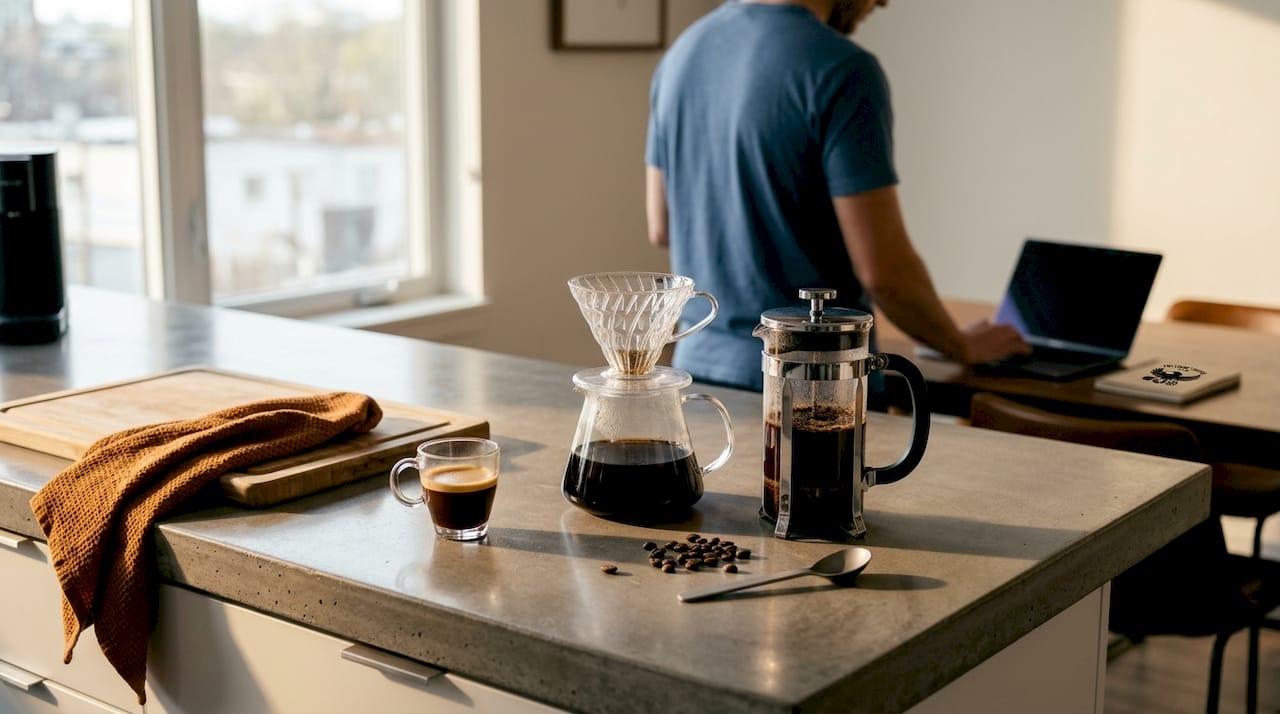
1. What are the best examples of black coffees by brewing method?
Black coffee flavor changes dramatically depending on brewing method. Espresso uses pressure and short extraction time. Filter and pour-over rely on pass-through extraction. Immersion methods like French press and cold brew steep grounds directly in water. Each family produces a distinct body, clarity, and flavor profile from the same bean. Knowing which family you prefer is the fastest way to narrow down your next brewing experiment.
2. Espresso and espresso-based black coffee styles
Espresso is concentrated black coffee brewed under pressure, typically at 9 bars, using a brew ratio near 1:2 by weight. An 18g dose produces roughly 36g of extracted liquid in 25–30 seconds. That concentration creates a bold, syrupy cup with a layer of crema on top.
Three espresso-based black coffee styles stand out for enthusiasts:
- Espresso: The baseline. Intense, short, and full of dissolved solids. Best with medium-dark to dark roast Arabica beans.
- Americano: Espresso diluted with hot water, usually in a 1:3 or 1:4 ratio. The result is closer to drip coffee in volume but retains espresso’s depth.
- Ristretto: A shorter pull using a 1:1 to 1:1.5 ratio, producing a sweeter, more concentrated shot with less bitterness.
- Lungo: A longer pull at a 1:3 to 1:4 ratio. More bitter and diluted than a standard espresso, with a thinner body.
Pro Tip: Grind finer for ristretto and coarser for lungo. Grind size controls extraction speed, and even a small adjustment changes the flavor significantly.
Bean selection matters as much as technique for espresso. Ethiopian beans bring fruity, floral notes. Brazilian beans add chocolate and nut. A single-origin Ethiopian shot tastes completely different from a Brazilian blend, even at the same brew ratio.
3. Filter brewed black coffees: pour-over, drip, and their variables
Filter coffee is brewed by passing hot water through grounds held in a filter, producing a clean, bright cup with high clarity. The SCA recommends a golden ratio of 55g per liter of water, roughly 1:18, for filter brewing. Most home brewers work in the 1:15 to 1:17 range for a stronger result.
| Method | Brew Ratio | Grind Size | Flavor Notes |
|---|---|---|---|
| Chemex | 1:15 to 1:17 | Medium-coarse | Clean, bright, mild body |
| Hario V60 | 1:15 to 1:16 | Medium-fine | Crisp, complex, high clarity |
| Kalita Wave | 1:15 to 1:17 | Medium | Balanced, even extraction |
| Drip machine | 1:16 to 1:18 | Medium | Consistent, approachable |
The Chemex uses a thick paper filter that removes most oils, producing one of the cleanest cups in black coffee brewing. The Hario V60 rewards precise pouring technique and suits light roasts with fruit-forward or floral notes. The Kalita Wave’s flat-bottom design promotes even extraction and forgives minor pouring inconsistencies.
Water temperature sits between 195°F and 205°F for most filter methods. Going lower under-extracts the grounds and produces a sour, thin cup. Going higher risks bitterness. A quality gooseneck kettle with a built-in thermometer removes the guesswork entirely.
Pro Tip: Always bloom your grounds first. Pour twice the weight of water to coffee, wait 30 seconds, then continue. Blooming releases CO2 and allows even extraction throughout the brew.
Light and medium-light roasts shine in filter brewing. Their higher density and complex origin flavors survive the gentle extraction process without turning bitter. A Tanzania single origin, for example, delivers bright acidity and stone fruit notes through a V60 that a dark roast would mask entirely.
4. Immersion black coffee styles: French press, cold brew, nitro cold brew, and Turkish coffee
Immersion brewing steeps grounds directly in water for the full brew time, producing a heavier body and more oils in the cup compared to filter methods.
- French press: Uses coarse grounds steeped for 4–5 minutes in hot water. The metal mesh filter allows oils and fine particles into the cup, creating a rich, full-bodied black coffee. Equipment needed: a French press carafe and a coarse grinder.
- Cold brew: Steeped 12–24 hours in cold or room-temperature water, then strained. The result is smooth, low-acid black coffee with a heavy body. Equipment needed: a large jar or dedicated cold brew maker, coarse grinder, and fine mesh strainer or filter.
- Nitro cold brew: Cold brew infused with nitrogen gas under pressure. Nitrogen creates a cascading effect and a silky, creamy mouthfeel without any dairy. Equipment needed: a nitrogen keg system, which makes this style primarily a cafe offering.
- Turkish coffee: Finely ground coffee boiled directly in a cezve, served unfiltered with grounds settling at the bottom. The cup is thick, strong, and often accompanied by cardamom or sugar culturally. Equipment needed: a cezve and an extremely fine grind, finer than espresso.
One detail most enthusiasts miss about nitro cold brew: mouthfeel and bitterness perception vary significantly between cafes depending on nitrogen pressure and keg setup. The same cold brew base can taste dramatically different depending on the nitrogen infusion equipment used.
Cold brew suits medium to dark roasts best. Long cold extraction mutes delicate origin flavors, so a light roast loses its brightness without gaining anything in return. A dark French roast or a medium roast with chocolate notes holds up and often improves through the cold brew process.
5. How do bean selection and roast level shape black coffee flavor?
Bean variety and roast level are the two variables that most enthusiasts underestimate. Arabica beans dominate specialty black coffee for their complexity and lower bitterness. Robusta beans carry higher caffeine and a harsher, more bitter profile, often used in espresso blends for added body and crema.
Roast level changes bean density and extraction behavior. Light roasts are less dense and extract differently from dark roasts, which means brew ratios need adjustment when you switch. A ratio that works perfectly for a medium roast may produce a weak or sour cup with a light roast.
Key considerations for choosing beans by black coffee style:
- Pour-over and filter: Light to medium roast, single origin. Ethiopian (fruity, floral), Kenyan (bright, berry), or Tanzanian (stone fruit, citrus) beans reward the clean extraction.
- Espresso and Americano: Medium-dark to dark roast blends. Brazilian (chocolate, nut) or Sumatran (earthy, full body) beans provide the intensity espresso needs.
- Cold brew: Medium to dark roast. Chocolate, caramel, and nutty notes translate well through cold extraction. Avoid delicate light roasts.
- French press: Medium to dark roast. The immersion process amplifies body and oils, so a bean with natural richness performs best.
- Turkish coffee: Dark roast, very fine grind. The boiling process extracts aggressively, so a robust, full-flavored bean holds up without turning unpleasant.
Understanding bean types and origins before buying saves you from pairing a delicate light roast with a method that will flatten its best qualities.
6. Choosing the right black coffee style for your setup and taste
The right black coffee style depends on three things: your flavor preference, your available equipment, and how much time you want to spend brewing.
| Style | Brew Time | Equipment Needed | Flavor Profile | Caffeine Level |
|---|---|---|---|---|
| Espresso | 25–30 seconds | Espresso machine, grinder | Bold, concentrated, rich | High |
| Americano | 2–3 minutes | Espresso machine, grinder | Smooth, deep, less intense | High |
| Pour-over (V60) | 3–4 minutes | Dripper, gooseneck kettle, scale | Bright, clean, complex | Moderate |
| French press | 5–6 minutes | French press, coarse grinder | Full-bodied, rich, oily | Moderate |
| Cold brew | 12–24 hours | Jar, strainer, coarse grinder | Smooth, low-acid, sweet | High |
| Turkish coffee | 5–7 minutes | Cezve, fine grinder | Thick, strong, unfiltered | Very high |
Beginners do well starting with a French press or drip machine. Both methods are forgiving and require minimal equipment investment. Home baristas ready to refine their craft get the most from pour-over methods, where small adjustments to grind size, pour rate, and water temperature produce measurable flavor changes.
Pro Tip: Measure by weight, not volume. Brewing by weight removes the inconsistency caused by different grind sizes and roast densities. A kitchen scale that reads to 0.1g is the single best upgrade for any home brewer.
If you want quick and intense, espresso wins. If you want smooth and low-acid with no morning rush, cold brew prepared the night before is the answer. The 7 ways to brew coffee at home guide covers equipment options across every budget if you are still deciding on a method.
Key takeaways
Black coffee is defined entirely by its brewing method and bean selection, making those two variables the foundation of every style worth knowing.
| Point | Details |
|---|---|
| Brewing method defines flavor | Espresso, filter, and immersion methods each produce distinct body, clarity, and taste from the same bean. |
| SCA golden ratio guides filter brewing | Use 55g of coffee per liter of water as a starting point, then adjust to 1:15–1:17 for stronger results. |
| Roast level affects extraction | Switch roasts and adjust your brew ratio. Light roasts extract differently from dark roasts at the same settings. |
| Cold brew needs medium to dark roast | Cold extraction mutes delicate flavors, so light roasts lose their best qualities in cold brew. |
| Weight beats volume every time | Measuring coffee and water by weight produces consistent, repeatable results across all black coffee styles. |
What I have learned from years of brewing black coffee
My honest take on black coffee is that most enthusiasts spend too much time chasing the perfect bean and not enough time understanding their brewing method. I made that mistake for years. I bought exceptional Ethiopian single origins and ran them through a French press at the wrong grind size, wondering why the cup tasted muddy and flat. The bean was not the problem. My method was.
The shift that changed everything for me was learning to treat each brewing method as its own discipline. Pour-over is not just drip coffee with a fancier funnel. It rewards patience, consistent pouring, and a good scale. Cold brew is not just iced coffee made slowly. It is a fundamentally different extraction that favors different roast profiles entirely.
My starting recommendation for anyone expanding their black coffee repertoire: pick one method, learn it deeply for a month, then move to the next. Trying to master espresso, pour-over, and cold brew simultaneously produces mediocre results across all three. Depth beats breadth here. Once you understand coffee extraction fundamentals, the logic behind every brewing variable clicks into place and you stop guessing.
The cultural dimension of black coffee also deserves more attention. Turkish coffee is not just a brewing method. It is a ritual with centuries of history behind it. Nitro cold brew is a product of modern cafe culture and nitrogen technology. Understanding where each style comes from adds meaning to the cup.
— David
Tri Crow Coffee blends built for black coffee brewing
Tri Crow Coffee roasts in small batches specifically to give you control over flavor at every brewing stage.
The 6 Bean Dark Roast blend is built for espresso and cold brew, delivering the bold, full body that both methods demand. For filter and pour-over brewing, the Tanzania single origin brings bright stone fruit and citrus notes that shine through clean extraction. If you want to explore multiple styles before committing to a full bag, the Best Sellers Sample Pack includes six varieties at 2oz each, giving you enough to test each bean across different brewing methods. Tri Crow Coffee also offers a dedicated cold brew blend crafted for smooth, chocolate-forward cold extraction at home.
FAQ
What is black coffee exactly?
Black coffee is brewed coffee served without milk, cream, or sugar. The term covers a wide range of styles, from espresso to cold brew, all defined by their brewing method and bean selection.
What are the most common types of black coffee?
The most common types include espresso, Americano, drip coffee, pour-over, French press, cold brew, nitro cold brew, and Turkish coffee. Each uses a different brewing method that produces a distinct flavor and body.
What is the best brew ratio for black coffee?
The SCA recommends 55g of coffee per liter of water for filter brewing, roughly a 1:18 ratio. Espresso uses a much tighter 1:2 ratio by weight, while cold brew typically runs 1:8 to 1:10 for a concentrate.
Does roast level change how you brew black coffee?
Yes. Light roasts are less dense than dark roasts and extract differently, so brew ratios and grind settings need adjustment when you switch roast levels. Using the same settings across roasts produces inconsistent results.
Is cold brew the same as iced black coffee?
Cold brew and iced black coffee are different. Cold brew steeps coarse grounds in cold water for 12–24 hours, producing a smooth, low-acid concentrate. Iced coffee is hot-brewed coffee poured over ice, which retains more acidity and a lighter body.