
Ethically sourced coffee means the beans were grown, traded, and roasted under conditions that protect the environment, pay farmers fairly, and give you enough information to verify those claims yourself. Before reading further, run these three checks on any bag you’re considering:
- Named origin: Does the packaging or website name a specific farm, cooperative, or region beyond a generic country? Named traceability is the single fastest credibility signal.
- Published pricing or premiums: Does the roaster disclose what they paid above commodity price, or mention long-term purchase agreements? Vague “fair price” language without numbers is a yellow flag.
- Environmental evidence: Look for USDA Organic, Rainforest Alliance, Bird Friendly, or shade-grown claims backed by a certifier link, not just a marketing line.
Consumers show measurable willingness to pay a premium for certified or ethically marketed coffee, which is why the market for ethical coffee beans has grown steadily in North America. The challenge is that not every claim on a bag carries equal weight.
Key Takeaways
Transparency disclosures, specifically named farms, published pricing, and contract details, are consistently more informative than certification labels alone when evaluating ethical coffee sourcing.
| Point | Details |
|---|---|
| Named origin is the first check | Look for a farm or cooperative name, not just a country, on the packaging or sourcing page. |
| Certifications cover narrow claims | Each seal audits one slice of the picture; a label without pricing or origin detail is a floor, not a full verification. |
| Certified volumes can exceed demand | The 2026 Coffee Barometer documents cases where certified beans sold as conventional, meaning the premium never reached the farmer. |
| Ask the roaster directly | A 6-question email covering farm name, contract length, premium paid, and environmental verification takes two minutes and reveals a lot. |
| Tri Crow Coffee’s sample pack | The 6-variety sample pack lets you taste and evaluate sourcing claims across multiple origins before buying a full bag. |
Table of Contents
- What does ethical coffee sourcing actually mean?
- What do certifications and labels actually guarantee?
- How do you read a roaster’s sourcing page?
- What environmental practices should you look for?
- What social and economic practices signal fair treatment of farmers?
- How do you shop for ethically sourced coffee?
- What are the real limits of certifications and common greenwashing patterns?
- Why transparency often beats labels: a scoring rubric for roaster pages
- What ethical sourcing looks like from a small-batch roaster’s perspective
- Tri Crow Coffee’s approach to small-batch sourcing
- Sources
- FAQ
What does ethical coffee sourcing actually mean?
The phrase “ethically sourced” covers three distinct pillars, and a roaster needs to perform on all three before the label means much.
Environmental stewardship is about how the coffee is grown. Shade-grown and agroforestry systems preserve bird habitat and soil health. Organic farming, as defined by USDA Organic standards, prohibits synthetic pesticides and fertilizers. Deforestation-free sourcing means the farm has not cleared primary forest to expand production.
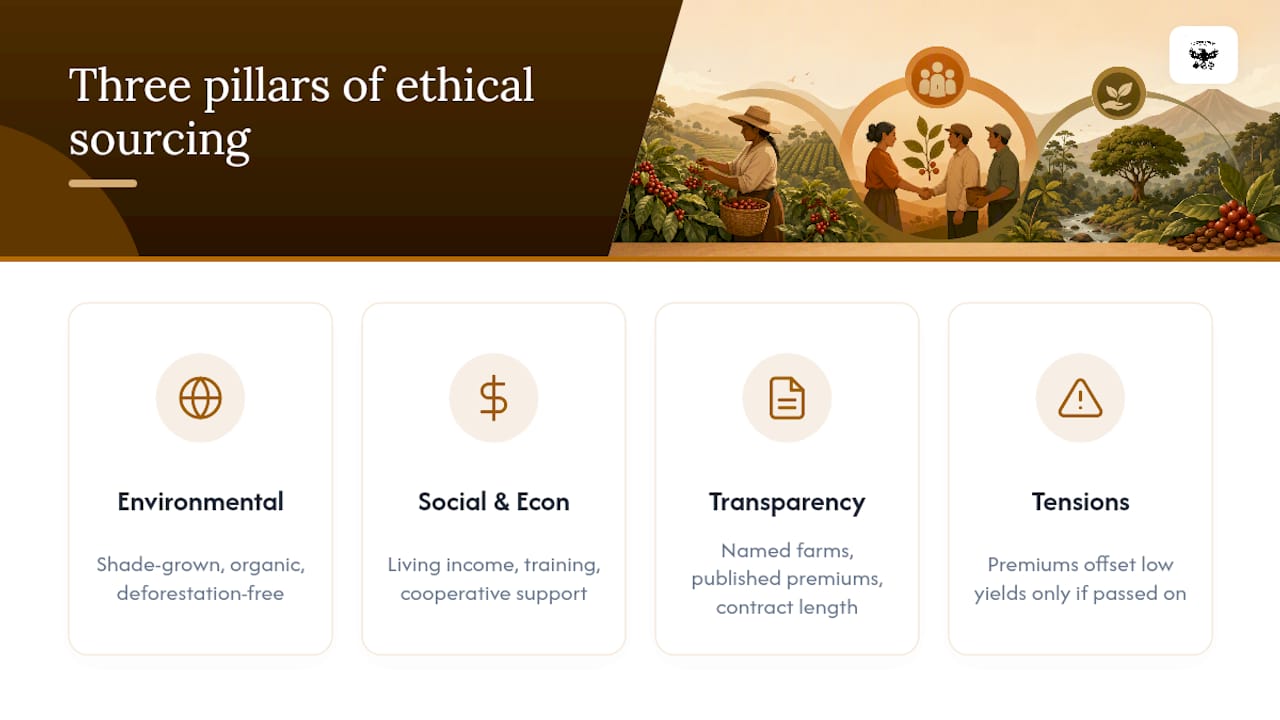
Social and economic fairness covers what farmers and workers actually receive. A living income is not the same as a Fairtrade minimum price, and neither is the same as the commodity market floor. Pre-harvest financing, training, and cooperative governance support are the kinds of non-price benefits that can make a real difference to a farming family’s stability.
Transparency and traceability is the connective tissue. Without it, you cannot verify the first two pillars at all. Named farms, published premiums, and contract-length disclosures are what separate a credible sourcing claim from a marketing line.
These pillars interact in ways that create real tension. Higher quality premiums can offset lower yields from shade-grown or organic farming, but only if the roaster actually passes that premium to the farmer rather than absorbing it as margin. A 2025 mixed-methods study found important mismatches between what farmers, rural workers, roasters, and consumers each prioritize, which is a reminder that sustainability initiatives designed without input from origin actors often miss the mark.
Understanding why coffee origin matters for both flavor and ethics is a useful starting point for any buyer who wants to go deeper.
What do certifications and labels actually guarantee?
Certifications are third-party audits of specific claims. They are useful, but each one covers a narrow slice of the full ethical picture.
- Fairtrade (Fair Trade USA / Fairtrade International): Guarantees a minimum floor price and a social premium paid to certified cooperatives. It does not guarantee a living income, and it applies to cooperatives, not all farm structures. Read more in this Fairtrade primer.
- Rainforest Alliance: Focuses on environmental and social standards across a farm’s full operation. The 2020 standard tightened requirements, but critics note that the “seal” can appear on products where only a portion of the content is certified.
- USDA Organic: Prohibits synthetic pesticides and requires certified handlers to use the seal correctly. Strong on environmental inputs; says nothing about farmer pay or contract terms.
- Bird Friendly (Smithsonian): The most rigorous shade-grown standard. Requires USDA Organic as a baseline plus canopy cover requirements. Relatively rare on North American retail shelves, which makes it a meaningful signal when you do see it.
- Fair for Life (IMO): Covers fair trade principles across a broader range of farm structures than Fairtrade, including estates. Less widely known but audited by a credible third party.
- C.A.F.E. Practices (Starbucks): A proprietary second-party verification system. It covers economic, social, and environmental criteria but is audited against Starbucks’ own metrics, which limits independent comparability.
- Direct Trade: Not a certification at all. It is a sourcing model where a roaster buys directly from a farm or cooperative, often at above-market prices. Standards vary by roaster. Learn what direct trade actually means before treating it as equivalent to a third-party audit.
The 2026 Coffee Barometer documents a structural problem: certified volumes have in some cases exceeded certified-market demand, meaning certified beans get sold as conventional coffee. When that happens, the premium never reaches the farmer, and the seal on your bag reflects a system that worked at origin but broke down in the supply chain.
Pro Tip: Certifications add the most value when a roaster also publishes origin names and pricing. A seal alone, without any transparency about where the coffee came from or what was paid, is the minimum floor, not the ceiling.
How do you read a roaster’s sourcing page?
Traceability exists on a spectrum. At the weak end: “sourced from Central America.” At the strong end: a named cooperative, a GPS-located farm, a disclosed purchase price, and a contract length. Most roasters land somewhere in the middle, and knowing how to read that middle ground is where buyers gain real leverage.
Green flags on a sourcing page:
- Farm or cooperative name and country of origin (not just a region)
- Published FOB price, premium above commodity, or a statement that the roaster pays above Fairtrade minimums
- Mention of multi-year purchase agreements or relationship length
- Pre-harvest financing or technical assistance programs
- Cupping notes tied to a specific lot, not a generic flavor profile
Red flags:
- “Sustainably sourced” with no certifier link or origin name
- Country-only origin with no farm or cooperative detail
- “Fair price paid” with no figure or comparison point
- A single certification used as an umbrella claim across an entire product line
A credible sourcing disclosure names the farm or cooperative, states the country and growing region, and gives at least one piece of economic information: what was paid, for how long, or what non-price support was provided. Anything less is a starting point for a follow-up question, not a verified claim.
Research analyzing blockchain use in the coffee sector found that blockchain platforms can increase the visibility of fairness-relevant information, but their practical effectiveness for ensuring fairness is not yet fully demonstrated. A QR code linking to a blockchain record is only as useful as the data entered into it. If the underlying pricing and contract terms are not disclosed, the technology adds visibility without adding accountability.
For a deeper look at why traceability matters as a consumer signal, Tri Crow Coffee’s sourcing blog covers the practical side in detail.
What environmental practices should you look for?
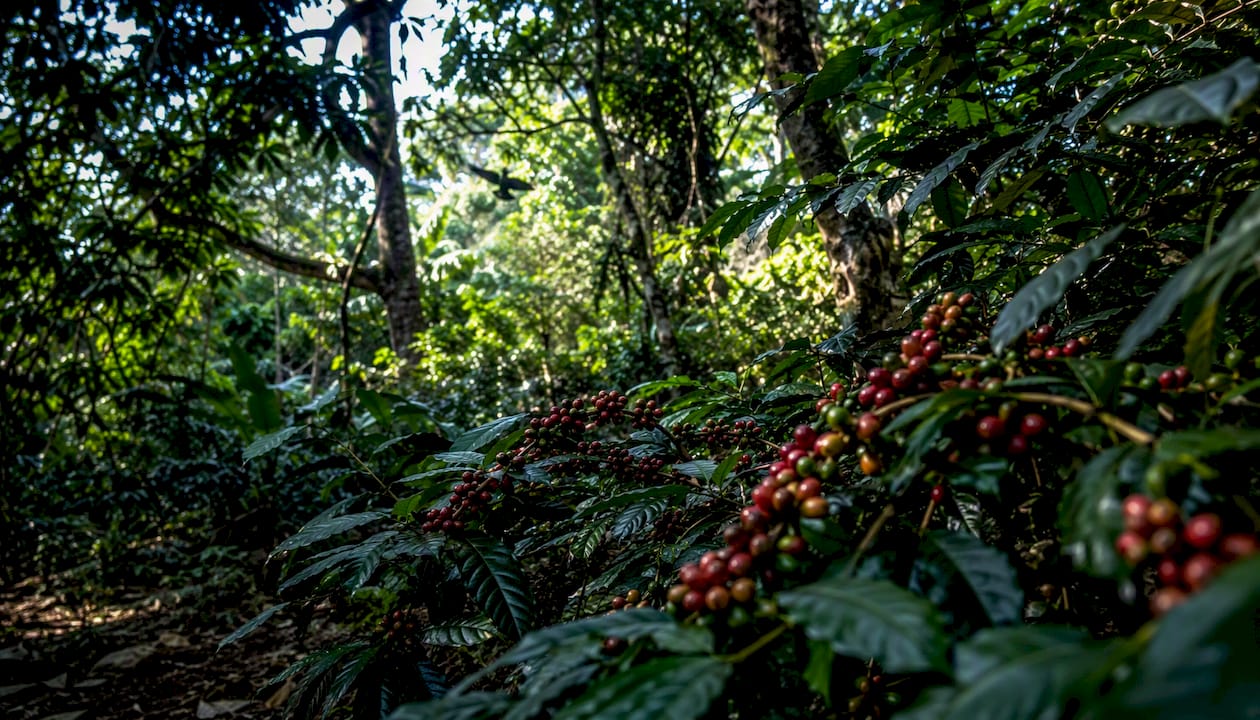
Shade-grown and agroforestry systems are among the most ecologically meaningful practices in coffee farming. Growing coffee under a canopy of native trees supports bird populations, maintains soil structure, and reduces the need for synthetic inputs. The Smithsonian’s Bird Friendly certification is the most rigorous standard for this, requiring both organic certification and specific canopy cover thresholds.
USDA Organic, as noted above, prohibits synthetic pesticides and fertilizers. It supports biodiversity by default, since farms cannot rely on chemical shortcuts. The trade-off is real: organic yields are often lower, and the certification process carries administrative costs that fall disproportionately on smallholders. That cost is one reason choosing organic coffee often means paying a modest premium at retail.
Deforestation-free sourcing is becoming a regulatory baseline rather than a differentiator. The EU Deforestation Regulation (EUDR) requires companies selling into the EU to verify that coffee was not grown on land deforested after December 31, 2020. While EUDR is an EU rule, its effects reach North American buyers: roasters who export to Europe or source from compliant supply chains will increasingly carry geolocation and land-use data that benefits all buyers, regardless of where they live.
Key environmental signals to look for:
- Bird Friendly or Rainforest Alliance certification (canopy and biodiversity criteria)
- USDA Organic seal with a certifier link (not just “organic practices”)
- Deforestation-free claim with a verification method named (satellite monitoring, EUDR compliance, or equivalent)
- Agroforestry or intercropping mentioned with farm-level detail
The overlap between certifications and traceability matters here. An organic claim without a named farm is harder to verify than an organic claim tied to a specific cooperative with a published audit date.
What social and economic practices signal fair treatment of farmers?
The gap between a Fairtrade minimum price and a living income is wider than most consumers realize. Fairtrade’s minimum price for washed Arabica has historically sat below what researchers estimate a farming family needs to cover basic costs in most producing countries. A living income benchmark, by contrast, is calculated from actual household expenditure data in a specific region. Roasters who reference living income benchmarks by name and explain how their pricing relates to them are doing something meaningfully different from those who simply say “fair price.”
Non-price support often matters as much as the per-pound payment:
- Long-term purchase agreements reduce the planning uncertainty that pushes farmers toward lower-risk, lower-quality crops.
- Pre-harvest financing lets farmers invest in processing equipment or cover household costs before the harvest is sold, without resorting to predatory local credit.
- Training and technical assistance in processing, soil management, or quality grading can raise a farm’s output quality and its negotiating position with buyers.
- Cooperative governance support helps farmer-owned organizations manage finances, negotiate contracts, and access export markets independently.
Industry reporting in 2026 found that many companies do not disclose pricing structures or contract terms, even when they make broad sustainability claims. That gap is where transparency disclosures become the more reliable consumer signal. A roaster who publishes what they paid, for how long, and what non-price support they provide is giving you evidence. One who says “we care about farmers” without specifics is giving you a brand position.
How do you shop for ethically sourced coffee?
At-a-glance packaging checklist:
- Named farm or cooperative (not just a country)
- At least one third-party certification with a certifier link
- Roast date (freshness signals small-batch production)
- Environmental claim with a named standard (not just “eco-friendly”)
On the roaster’s website:
- A dedicated sourcing or origin page with farm-level detail
- Published pricing, premiums, or relationship length
- Cupping notes tied to a specific lot or harvest
- A contact email or sourcing inquiry option
Questions to send a roaster by email:
- Can you name the farm or cooperative this coffee comes from?
- How long have you been buying from this origin?
- What did you pay above the commodity price or Fairtrade minimum?
- Do you offer pre-harvest financing or any non-price support to your producers?
- Is this coffee certified? If so, by which body, and can you share the audit report?
- How do you verify environmental claims (organic, shade-grown, deforestation-free)?
Consumers show a consistent willingness to pay a premium for certified or ethically marketed coffee, and North American specialty coffee buyers tend to expect that premium to reflect something real. A plausible ethical premium at retail typically runs a few dollars per pound above commodity-grade coffee, though the exact figure varies by origin, certification, and roaster margin. If a bag claims ethical sourcing but is priced at commodity levels, that is worth questioning.
Pro Tip: Sample packs are one of the most practical tools for verifying sourcing claims. A roaster willing to sell you six origins in small quantities is usually confident enough in their sourcing story to let the coffee speak for itself.
What are the real limits of certifications and common greenwashing patterns?
Certifications are not fraudulent, but they are not complete either. Understanding where they stop is as important as knowing what they cover.
Common greenwashing patterns:
- Using a single certification (e.g., Rainforest Alliance) as an umbrella claim across an entire product line when only some SKUs are certified
- “Sustainably sourced” with no certifier, no origin name, and no audit reference
- Proprietary “sustainability programs” that replace third-party audits with in-house metrics and self-reported data
- Highlighting environmental credentials while saying nothing about farmer pay or contract terms
Structural trade-offs buyers should understand:
- Certification costs fall on smallholders, who pay audit fees and compliance costs that can run hundreds to thousands of dollars annually. For a small farm, that is a meaningful barrier.
- Certified volumes sometimes exceed certified-market demand, as the 2026 Coffee Barometer documents, meaning certified beans get sold as conventional and the premium never materializes.
- Many large companies have shifted toward proprietary second-party verification systems that let them define their own metrics, which weakens independent auditing.
Not every “sustainable” claim on a coffee bag reflects a verified commitment. The strongest signal is a roaster who names their farms, publishes what they paid, and invites you to ask questions. A label without that context is a floor, not a ceiling.
On the regulatory side: the EU’s EUDR and Corporate Sustainability Reporting Directive (CSRD) are tightening due-diligence requirements for companies operating in or selling into the EU. For North American buyers, the practical effect is that supply chains serving European markets will carry better geolocation and deforestation data, which raises the baseline for what “verified” looks like across the industry.
Why transparency often beats labels: a scoring rubric for roaster pages
Industry reporting in 2026 makes a consistent case: transparency disclosures, specifically named farms, pricing, and contract details, are often more informative than labels alone. A roaster can hold a Rainforest Alliance seal and disclose nothing about what they paid. A roaster without any certification can publish a farm name, a purchase price, a relationship length, and a cupping note tied to a specific lot. The second roaster is giving you more evidence.
Use this five-point rubric when evaluating a roaster’s sourcing page:
- Named origin (farm or cooperative name, not just country): 1 point
- Pricing or premium disclosed (FOB price, premium above Fairtrade, or living-income reference): 1 point
- Relationship evidence (contract length, repeat purchases, or pre-harvest support mentioned): 1 point
- Third-party audit reported (certification with certifier link and audit date): 1 point
- Digital traceability (blockchain record, lot tracking, or geolocation data with a named verification method): 1 point
A score of 3 or above is a meaningful signal. A score of 1 (certification only, no other disclosure) is a starting point for questions, not a verified claim.
Consumers show willingness to pay a premium for ethically marketed coffee, and that premium is better spent when you can verify the claim behind it. Small-batch roasters are often better positioned to score higher on this rubric because they handle lower volumes and can build direct relationships, publish farm names, and sometimes disclose price arrangements, as 2026 sector reporting notes.
Pro Tip: When a roaster links to a blockchain traceability record, check whether it includes pricing and contract data, not just origin coordinates. Blockchain increases visibility, but its practical impact on fairness depends on what companies choose to disclose. Technology alone is not a guarantee.
What ethical sourcing looks like from a small-batch roaster’s perspective
Small-batch roasting changes the math on transparency. When you are buying in small lots, you are almost always buying from a specific farm, cooperative, or exporter you know by name. There is no blending across anonymous supply chains to hit a volume target. That constraint is actually an advantage: it forces the kind of direct relationship that makes meaningful disclosure possible.
A conscientious small-batch roaster can realistically commit to publishing the farm or cooperative name on every product page, tying cupping notes to a specific lot and harvest year, disclosing whether they pay above commodity price or Fairtrade minimums, maintaining multi-year relationships with producers rather than spot-buying, and being reachable by email when a customer wants to ask a sourcing question.
What small-batch roasters cannot always do: fund large-scale pre-harvest financing programs, carry the administrative overhead of every major certification, or guarantee living-income compliance across an entire supply chain. Honesty about those limits is itself a form of transparency.
The sustainability in food services conversation in 2026 reflects a broader shift: buyers across hospitality and retail are asking for the same thing, verifiable sourcing claims, not just labels. Small-batch roasters who have built direct relationships are often better positioned to answer those questions than large commercial roasters working through multi-tier supply chains.
Tri Crow Coffee’s approach to small-batch sourcing
Tri Crow Coffee roasts in limited quantities, which means every product on the shelf traces back to a specific origin decision, not a blended commodity lot. That small-batch discipline is what makes meaningful sourcing disclosure possible.
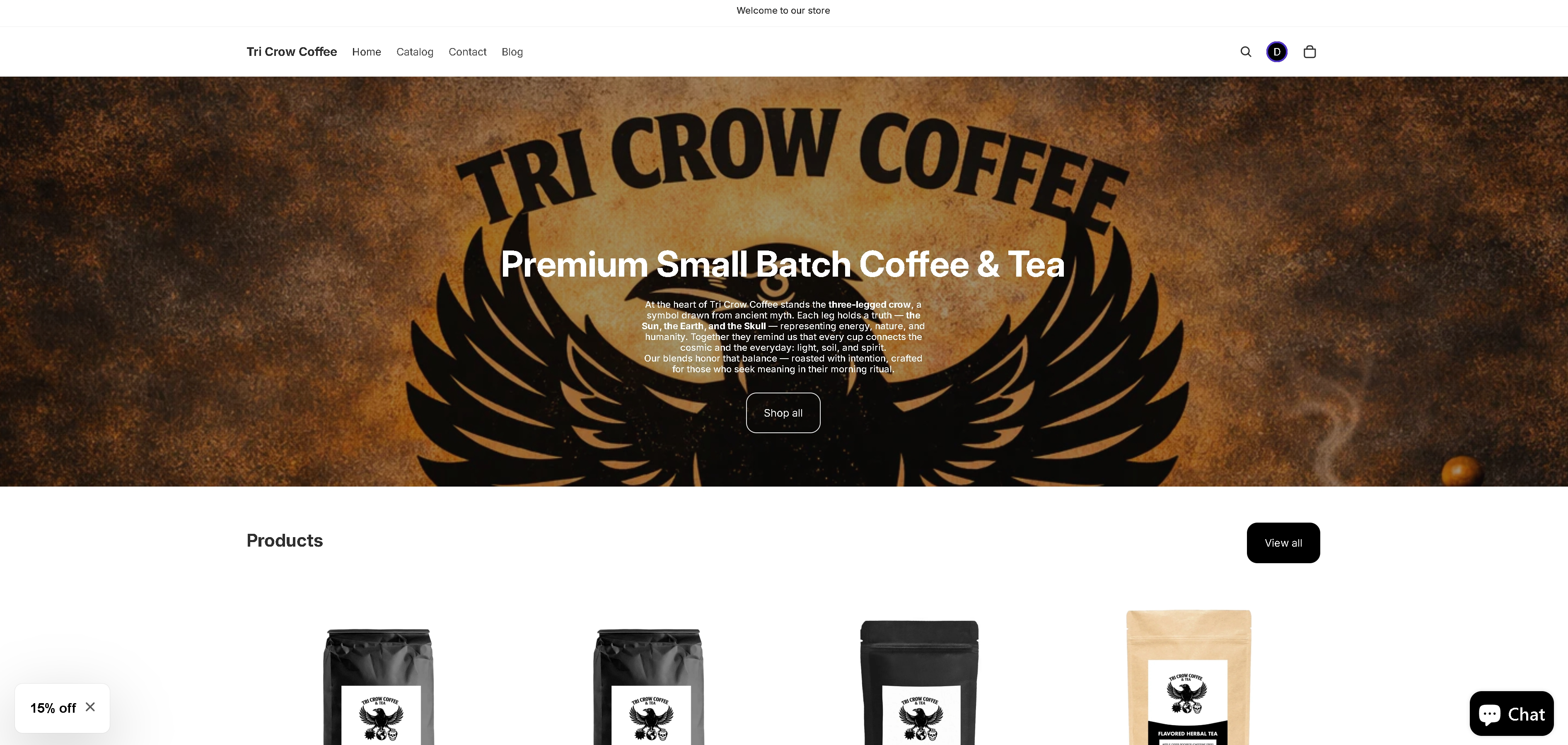
Four products worth knowing:
- 6 Bean Dark Roast Coffee, Small-Batch House Blend: A multi-origin dark roast built for consistency and depth. The blend format lets Tri Crow balance flavor across origins while maintaining small-lot sourcing for each component.
- Tanzania Medium-Light Coffee, Small-Batch Single Origin: Single-origin means one farm or cooperative, one harvest, one traceable story. This is the format that scores highest on the transparency rubric above.
- Italian Roast Extra Dark, Central American Coffee: A deep, heavy-bodied roast from Central American origins. Full-roast profiles like this one suit buyers who want bold flavor with a named regional provenance.
- Best Sellers Coffee Sample Pack, 6 Varieties, 2oz Each: The most practical starting point for any buyer who wants to verify sourcing claims through taste before committing to a full bag. Six origins, small quantities, one order.
If you want to taste the difference that intentional sourcing makes, the sample pack is the right first step. Browse the full range and read origin notes at Tricrowcoffee.
Sources
- Inside the 2026 Coffee Barometer, Part 2: What Companies Are Not Saying
- Coffee-Barometer-2026.pdf
- Mismatches in the coffee value chain: from basic needs to hedonistic lifestyles—experiences from Brazil, the Democratic Republic of Congo, and Switzerland
- Usda
FAQ
What is the most reliable signal of ethical coffee sourcing?
A roaster who discloses both is giving you verifiable evidence rather than a brand position.
What is the difference between fair trade and direct trade?
Fairtrade is a third-party certification that guarantees a minimum floor price and social premium for certified cooperatives. Direct trade is a sourcing model, not a certification, where a roaster buys directly from a producer, often at above-market prices, but with no universal standard or independent audit.
Do USDA Organic and Bird Friendly certifications cover farmer pay?
No. USDA Organic prohibits synthetic pesticides and requires certified handling, but says nothing about what farmers are paid or contract terms. Bird Friendly adds canopy cover requirements on top of organic standards, focusing on biodiversity. Neither certification addresses economic fairness directly.
How do I know if a blockchain traceability claim is meaningful?
Check whether the blockchain record includes pricing and contract data, not just origin coordinates. Research analyzing blockchain in the coffee sector found it can increase visibility of fairness-relevant information, but its practical effectiveness for ensuring fairness depends on what companies choose to disclose.
Where can I start if I want to try ethically sourced small-batch coffee?
A sample pack from a transparent small-batch roaster is the most practical first step. Tri Crow Coffee’s Best Sellers Sample Pack covers six origins in 2oz quantities, letting you evaluate sourcing claims and flavor before committing to a full bag.
Recommended
- Why coffee origin matters: flavor, ethics, and sustainability – Tri Crow Coffee
- Why trace your coffee? The real benefits of transparency – Tri Crow Coffee
- What Is Fair Trade Coffee? Benefits and Sourcing Explained – Tri Crow Coffee
- What Is Direct Trade Coffee? Sourcing, Ethics, and Quality – Tri Crow Coffee