
TL;DR:
- Most true teas originate from Camellia sinensis and vary only by oxidation level, affecting flavor from delicate white to earthy dark teas. Herbal tisanes and rooibos are infusions of other plants, usually caffeine-free, with distinct active compounds and flavors. The flavor profile in tea varies by origin, processing, and brewing, with small-batch loose leaf offering the richest experience and taste nuance.
Most teas fall into six true-tea families, each with a characteristic flavor range, plus a far wider world of herbal tisanes and flavored blends. White tea runs delicate and sweet. Green tea is fresh and vegetal. Yellow tea is mellow and lightly grassy. Oolong spans floral to roasted depending on how far oxidation goes. Black tea is bold and malty. Dark tea, including pu-erh, turns earthy and complex through microbial aging. Beyond those six, herbal tisanes and rooibos open up an entirely separate flavor universe, caffeine-free and botanically driven.
Two things separate true teas from everything else:
-
True teas all come from Camellia sinensis. Their flavor differences come entirely from how the leaf is processed after harvest, specifically how much oxidation the maker allows before stopping it. Camellia sinensis is the single botanical source for white, green, yellow, oolong, black, and dark teas. True teas contain L-theanine and caffeine; the amounts vary by type and brew strength.
-
Herbal tisanes and rooibos are not true teas at all. They are infusions of herbs, flowers, roots, fruit, or bark. They carry different active compounds such as gingerols in ginger tea or menthol in peppermint, and most are naturally caffeine-free.
Oxidation at a glance: Green and yellow teas sit at roughly 0–5% oxidation. White tea runs 5–20%. Oolong covers the widest band, 15–80% oxidation. Black tea reaches 80–100%. Dark/pu-erh skips the oxidation scale entirely and relies on post-fermentation microbial activity instead.
Tri Crow Coffee sources and blends across these families, from single-origin loose-leaf to herbal and flavored options, so the map below connects directly to teas you can actually try.
Table of Contents
- How the six true-tea types differ in flavor
- How to describe what you taste in a cup
- Herbal tisanes and rooibos: a different kind of flavor
- Flavored and scented teas: what creates their signature tastes
- How origin and processing shape the flavor you get
- How to taste tea: a practical, flavor-first method
- Brewing tips that bring out each tea’s best flavors
- Pairing tea with food and the best times to enjoy certain flavors
- Storage and freshness: how to keep tea flavorful
- Key Takeaways
- Why ritual and small-batch teas reveal more flavor
- Tri Crow Coffee teas worth trying by flavor family
- Further reading and useful sources
- FAQ
How the six true-tea types differ in flavor
All six true-tea types start from the same leaf. What the tea maker does in the hours and days after harvest determines whether you end up with something grassy and bright or dark and earthy. Here is how each type lands on the palate.
| Tea Type | Oxidation Level | Post-Fermentation | Flavor Profile | Brewing Temp |
|---|---|---|---|---|
| White | Low to moderate | No | Delicate, sweet, honeyed, light floral | Warm temperatures |
| Green | Very low | No | Vegetal, grassy, fresh, sometimes umami | Warm temperatures |
| Yellow | Very low | No | Mellow, lightly grassy, smooth, slightly sweet | Warm temperatures |
| Oolong | Variable, broad range | No | Floral to roasted, fruity, creamy, complex | Moderately hot |
| Black | High | No | Bold, malty, rich, sometimes brisk or astringent | Near boiling |
| Dark/Pu-erh | Variable | Yes | Earthy, woody, mellow, aged complexity | Near boiling |
White tea is the least processed. The leaf is simply withered and dried, which keeps flavors gentle: think honeysuckle, melon, and a faint sweetness with almost no bitterness. Silver Needle and White Peony are the two most recognizable styles.
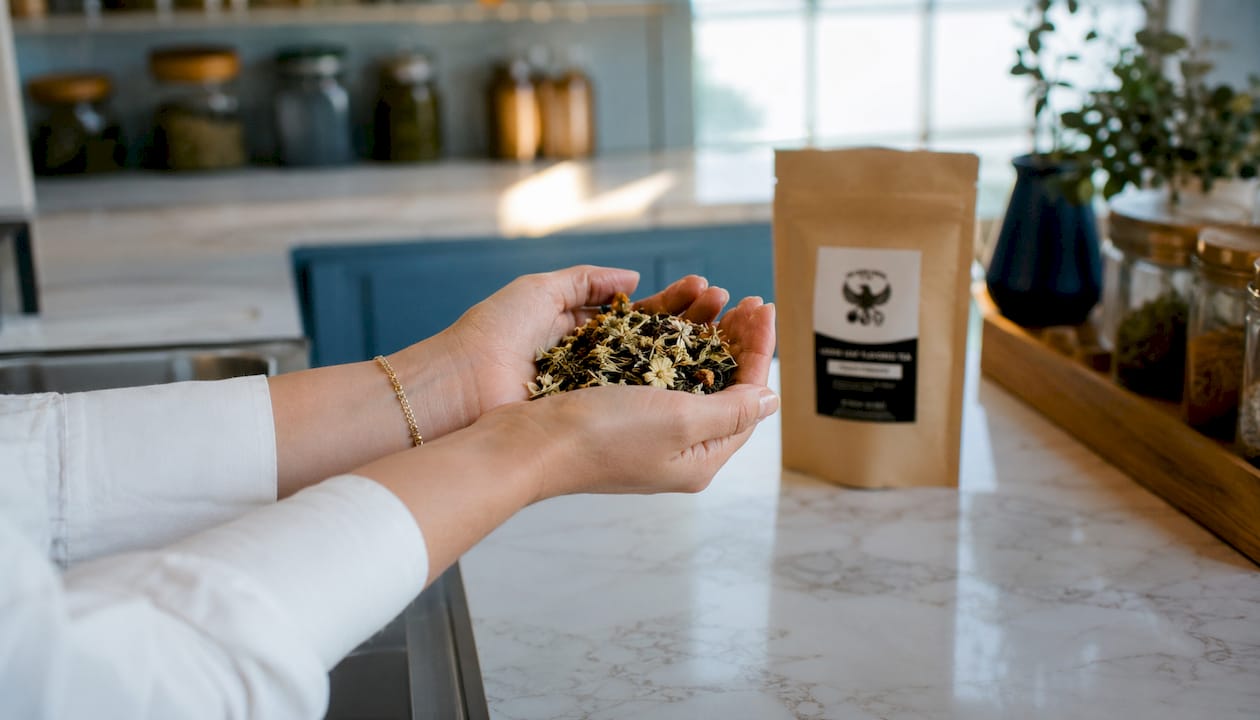
Green tea is fixed immediately after harvest, either by pan-firing or steaming, to stop oxidation before it starts. The result is fresh and plant-forward. Japanese steamed greens like Gyokuro lean toward seaweed and umami; Chinese pan-fired styles like Longjing read more like toasted chestnuts and fresh grass.
Yellow tea is rare and often overlooked. It goes through a slow-wrapping step called men huan that mutes the sharp vegetal edge of green tea and produces something noticeably smoother and more rounded. If you find green tea too grassy, yellow tea is worth trying.
Oolong is where things get genuinely interesting. Its 15–80% oxidation range makes it the most flavor-diverse category in the true-tea world. A lightly oxidized Taiwanese High Mountain oolong tastes floral and creamy, almost like orchid and butter. A heavily roasted Wuyi Rock oolong tastes like dark chocolate and charcoal. Same category, completely different cup.

Black tea is fully oxidized, which converts the leaf’s chlorophyll and tannins into the compounds that produce its characteristic malt, depth, and briskness. Assam blacks are thick and bold; Darjeeling first-flush blacks are lighter, with a muscatel grape note that surprises most first-time drinkers.
Dark tea and pu-erh are in a class of their own. Time and microbial activity are the actual flavoring agents here. A young raw pu-erh (sheng) can taste sharp and astringent; an aged or ripe pu-erh (shou) turns earthy, woody, and almost mushroom-like. Some collectors age pu-erh cakes for decades.
How to describe what you taste in a cup
Most people know when they like a tea but struggle to say why. A short tasting vocabulary fixes that, and it makes choosing your next tea much easier.
The main flavor families you will encounter across tea tasting charts are:
- Floral: rose, jasmine, orchid, lilac (common in white teas and light oolongs)
- Fruity: peach, apricot, muscatel, berry, citrus (Darjeeling, fruit-blended teas)
- Grassy/Vegetal: fresh-cut grass, spinach, seaweed, pea shoots (green teas)
- Roasted: toasted grain, charcoal, dark chocolate, coffee (dark oolongs, hojicha)
- Nutty: chestnut, almond, walnut (pan-fired greens, some black teas)
- Malty: bread crust, caramel, biscuit (Assam, Keemun black teas)
- Smoky: campfire, lapsang souchong pine smoke (smoked black teas)
- Earthy: forest floor, mushroom, wet stone (pu-erh, aged teas)
- Sweet: honey, vanilla, dried fruit (white teas, rooibos, flavored blends)
Here is how those descriptors actually read on a tasting note:
Aroma carries about 80% of what you perceive as flavor, so always smell the dry leaf and the wet cup before you sip. Body refers to how the tea feels in your mouth, thin and watery versus thick and coating. Sweetness is often a finish note rather than upfront. The finish is what lingers after you swallow, and a long, pleasant finish is usually the mark of a quality leaf.
Herbal tisanes and rooibos: a different kind of flavor
Herbal tisanes are not tea in the botanical sense. They share the cup and the ritual, but they come from a completely different set of plants. That distinction matters for flavor and for caffeine.
True teas carry L-theanine and caffeine. Herbal infusions carry whatever compounds their source plants contain: menthol from peppermint, gingerols from ginger, chamomile’s apigenin, hibiscus’s anthocyanins. Most tisanes are naturally caffeine-free, which makes them the obvious choice for evening cups or anyone managing caffeine intake.
The main herbal flavor families:
- Minty: peppermint, spearmint. Cooling, sharp, refreshing. Great iced.
- Citrusy: lemon verbena, lemongrass, hibiscus with lemon. Bright and tart.
- Floral: chamomile, lavender, rose hip. Gentle, slightly sweet, calming.
- Spicy: ginger, cinnamon, cardamom, clove. Warming, good for cold days.
- Root-based: licorice root, dandelion root, burdock. Earthy, sometimes sweet.
- Fruity: hibiscus, rosehip, dried peach, mango pieces. Tart to sweet.
Rooibos deserves its own mention. It comes from the South African Aspalathus linearis shrub, not Camellia sinensis, and it is naturally caffeine-free. Red rooibos tastes sweet, slightly nutty, and vanilla-adjacent. Green rooibos is lighter and more grassy. Both work beautifully iced.
When to reach for a tisane instead of a true tea:
- Evening wind-down: chamomile, lavender, or lemon balm blends.
- Iced summer drinks: hibiscus, peach, or mango-based tisanes chill and sweeten naturally.
- Digestive support: ginger, peppermint, or fennel after a heavy meal.
- Caffeine-free mornings: rooibos with a splash of oat milk is a solid breakfast option.
Flavored and scented teas: what creates their signature tastes
Flavored and scented teas sit in a different category from pure single-origin teas. They are built for mood and occasion rather than terroir exploration, and the best ones use quality base teas with real botanical additions.
The classics and what makes them taste the way they do:
- Earl Grey: Black tea (usually Ceylon or Darjeeling) scented with bergamot oil, a citrus fruit from southern Italy. The bergamot gives it that distinctive floral-citrus lift. Blue cornflowers are often added for visual appeal and a mild floral note.
- Chai: Black tea blended with warming spices: cardamom, cinnamon, ginger, clove, and black pepper. The spice ratio varies by region and maker. Masala chai from India is bolder and spicier than most Western versions.
- Jasmine tea: Green or white tea that is scented by layering fresh jasmine blossoms over the leaves overnight, then removing the flowers. The best jasmine teas go through this process multiple times. The result is floral without being perfumed.
- Lapsang Souchong: Black tea dried over pine wood fires. The smoke is the flavor, and it is polarizing. Fans describe it as campfire and dried fruit; skeptics call it ashtray. Worth trying once.
- Fruit blends: Fruit-forward additions like peach, mango, berry, and citrus are among the most popular flavored tea choices. They work in both hot and iced formats and pair naturally with herbal bases.
The difference between scented teas (jasmine, bergamot) and blended flavored teas (fruit, dessert notes) is meaningful. Scented teas absorb aroma from a natural source and then that source is removed. Blended teas mix dried fruit, petals, or flavor extracts directly into the leaf. Both can be excellent; quality shows in whether the base tea is worth drinking on its own.
Pro Tip: When evaluating a flavored tea, steep a small amount without milk or sweetener first. If the base tea tastes thin, papery, or harsh underneath the flavoring, the blend is masking a low-quality leaf. A good flavored tea holds up even when the added flavors are subtle.
How origin and processing shape the flavor you get
Where a tea is grown and how it is processed after harvest are the two biggest predictors of what ends up in your cup. Neither factor works in isolation.
Terroir and altitude affect the leaf’s chemistry before the tea maker touches it. High-altitude gardens, like those in Darjeeling at 6,000–7,000 feet, produce leaves with more aromatic compounds and a lighter, more complex character. Lower-altitude Assam gardens, grown in a hot river valley, produce thick, malty leaves built for a strong breakfast brew. Same country, same tea type, completely different flavor logic.
Cultivar matters too. The Yabukita cultivar dominates Japanese green tea production and contributes the grassy, umami-forward character most people associate with Japanese greens. The Da Hong Pao cultivar from Wuyi produces the mineral, roasted complexity that defines Rock Oolong. Choosing a tea by cultivar is a level of specificity most casual drinkers skip, but it explains why two “green teas” from different countries taste nothing alike.
Firing method is the clearest processing variable in green tea. Pan-firing versus steaming produces measurably different flavor outcomes. Pan-fired Chinese greens like Longjing develop chestnut and toasted grain notes from the dry heat. Japanese steamed greens like Sencha and Gyokuro retain more chlorophyll and amino acids, which pushes them toward bright grass and deep umami.
Darjeeling first-flush teas are harvested in March and April, when the plant’s first new growth produces the famous muscatel note. The same garden’s second-flush harvest in May and June produces a darker, more full-bodied cup. Origin, season, and processing all stack on top of each other.
How to taste tea: a practical, flavor-first method
Tasting tea deliberately, rather than just drinking it, reveals details that a distracted sip misses entirely. This method works for any tea type and takes about ten minutes.
- Prepare simply. Use filtered water. Weigh your leaf: roughly 2–3 grams per 6 oz of water for most teas. Use the temperature appropriate to the type (see the brewing table below).
- Smell the dry leaf. Hold the dry leaves close and inhale slowly. Note the first word that comes to mind: grassy, floral, roasted, fruity. That is your aroma baseline.
- Steep and smell the wet leaf. After steeping, lift the lid or remove the infuser and smell the wet leaves before you sip. Aroma opens up dramatically with heat.
- Take a small first sip. Let it sit on the front of your tongue for a moment, then move it across the palate. Notice sweetness, bitterness, and body.
- Note the mid-palate and finish. What changes as the tea moves toward the back of your mouth? Does it get more astringent? Does a floral note appear? How long does the flavor linger after you swallow?
- Write three descriptors. Keep a simple tasting template: cup, leaf weight, water temp, steep time, and three flavor words. Over time, patterns emerge and your vocabulary sharpens.
- Re-steep and compare. Most quality loose-leaf teas reward a second or third infusion. The flavor often shifts: a grassy first steep becomes sweeter and more floral on the second.
Tasting template (copy and use):
| Field | Your Notes |
|---|---|
| Leaf weight | grams |
| Water temperature | °F |
| Steep time | minutes |
Pro Tip: Small-batch loose-leaf tea reveals flavor nuance that most tea bags physically cannot. A tea bag restricts the leaf from fully unfurling, which limits how much of the volatile aromatic oils actually reach the water. Loose leaf in a roomy infuser or gaiwan is not just a preference; it is a different sensory experience.
Brewing tips that bring out each tea’s best flavors
Temperature and steep time are the two variables most drinkers get wrong, and both errors push tea toward bitterness or flatness. Here is a type-by-type reference.
| Tea Type | Water Temp | Leaf-to-Water Ratio | Steep Time |
|---|---|---|---|
| White | — | 2–3g per 6 oz | 2–4 min |
| Green | — | 2g per 6 oz | 1–3 min |
| Yellow | 170°F | 2–3g per 6 oz | 2–3 min |
| Oolong (light) | — | 3–4g per 6 oz | 2–3 min |
| Oolong (roasted) | — | 3–5g per 6 oz | 3–5 min |
| Black | 212°F | 2–3g per 6 oz | 3–5 min |
| Dark/Pu-erh | 212°F | 4–6g per 6 oz | 3–5 min |
| Herbal/Tisane | 212°F | 2–4g per 6 oz | 5–7 min |
Common problems and quick fixes:
- Bitter green tea: Water was too hot or steep time too long. Drop the temperature to 170°F and cut steep time to 90 seconds. Green tea is the most temperature-sensitive type.
- Flat black tea: Water was not hot enough, or the leaf is stale. Use a full boil (212°F) and check that the tea was stored airtight.
- Muddy pu-erh: Rinse the leaves with a 10-second hot-water pour before the actual steep. This is called a “rinse” or “awakening” steep and it removes any storage dust and opens the compressed leaf.
- Weak herbal tisane: Herbal ingredients need more time and hotter water than most true teas. Five to seven minutes at a near-boil extracts the full flavor from dried roots, bark, and fruit.
Vessel choice matters more than most guides admit. Porcelain and glass are neutral and show the tea’s true flavor. A cast-iron tetsubin holds heat well for black teas and pu-erh but can add a faint iron note over time. A gaiwan gives you control over every variable and is the best tool for tasting multiple infusions of the same leaf. For brewing loose-leaf teas, a gaiwan or a wide-mouthed infuser basket is worth the small investment.
Pairing tea with food and the best times to enjoy certain flavors
Tea and food pairing follows the same logic as wine pairing: match weight with weight, and use contrast or complement to make both better.
General rules of thumb:
- Malty, full-bodied black teas hold up to rich, fatty foods. They cut through cream and butter the way a strong coffee does.
- Floral, lightly oxidized oolongs work with delicate flavors. They get lost next to anything heavily spiced.
- Vegetal green teas complement savory, umami-forward dishes. The grassy notes echo the flavors in the food rather than fighting them.
- Sweet herbal teas and rooibos pair naturally with desserts and fruit-forward dishes without adding caffeine.
Six concrete pairings worth trying:
- Assam black tea + full English breakfast. The malt and briskness cut through eggs, sausage, and toast. Add milk if you want; Assam handles it.
- Darjeeling first-flush + shortbread or plain scones. The muscatel note and light body complement buttery, simple baked goods without overpowering them.
- Gyokuro + sushi or sashimi. The deep umami in the tea mirrors the savory quality of raw fish. One of the more surprising pairings.
- Jasmine green tea + steamed dumplings. The floral lift brightens the savory filling and cleanses the palate between bites.
- Wuyi Rock Oolong + dark chocolate. Both have roasted, mineral depth. They reinforce each other rather than competing.
- Chamomile tisane + honey cake or shortbread. Chamomile’s apple-floral sweetness pairs naturally with honey-based desserts.
For food and tea pairings beyond these six, the general principle is to match the tea’s dominant flavor note to a complementary element in the food. A smoky tea with smoked salmon, a fruity herbal with a fruit tart, a malty black with a chocolate brownie.
Time of day is worth considering too. Caffeinated true teas fit mornings and early afternoons. Light oolongs and white teas work mid-afternoon when you want something gentle. Herbal tisanes and rooibos are the natural evening choice, especially if you are sensitive to caffeine.
Storage and freshness: how to keep tea flavorful
Tea goes stale faster than most people expect, and the enemies are always the same: light, heat, moisture, and strong odors. A tea stored badly for two months tastes worse than a fresh tea stored well for a year.
Core storage rules:
- Airtight container: Tin, ceramic, or opaque glass with a tight lid. Avoid clear glass on open shelves.
- Cool and dark: A pantry or cabinet away from the stove. Never above the kettle.
- Away from strong odors: Tea absorbs surrounding smells. Keep it away from coffee, spices, and anything pungent.
- No refrigerator for most teas: The humidity and odor transfer in a fridge damage most teas. The exception is some Japanese greens, which can be vacuum-sealed and refrigerated.
Expected freshness windows by type:
- Green and yellow teas: 6–12 months after opening. These are the most volatile and degrade fastest.
- White tea: 1–2 years. Slower to stale, and some white teas actually improve slightly with careful aging.
- Oolong: 1–2 years for unroasted; roasted oolongs can last 2–3 years and sometimes benefit from re-roasting.
- Black tea: 2–3 years. The full oxidation makes it more stable.
- Dark/Pu-erh: The exception to every rule. Pu-erh improves with aging under the right conditions (cool, humid, good airflow, no odors) and can be stored for decades.
- Herbal tisanes: 1–2 years. Dried flowers and fruit degrade faster than leaf; roots and bark last longer.
Storage checklist when you buy a sample pack or small-batch tea:
- Transfer to an airtight tin immediately if the original packaging is not resealable.
- Label with the purchase date.
- Store away from light and heat sources.
- Check the aroma every few weeks: if it smells flat or papery, the tea is past its peak.
- Finish green and yellow teas within six months of opening.
Key Takeaways
The fastest path to finding teas you love is to start with flavor families, not tea types, then use brewing parameters and tasting notes to narrow down your preferences.
| Point | Details |
|---|---|
| Six true-tea families | White, green, yellow, oolong, black, and dark/pu-erh differ by oxidation level and processing, not by plant species. |
| Oolong is the most diverse | Its 15–80% oxidation range produces flavors from light floral to heavily roasted in a single category. |
| Herbal tisanes are caffeine-free | Tisanes use herbs, roots, and fruit rather than Camellia sinensis, making them the natural evening or caffeine-free choice. |
| Brewing temperature is critical | Green tea brewed too hot turns bitter; black and pu-erh need a full boil to extract properly. |
| Tri Crow Coffee sample packs | Curated small-batch blends let you map flavor families without committing to a full tin of each. |
Why ritual and small-batch teas reveal more flavor
Most people have never tasted what a tea is actually capable of. Mass-market tea bags are engineered for consistency and speed, not nuance. The leaf is often broken or fannings-grade, which extracts fast but loses the volatile aromatic oils that carry the most interesting flavor. Loose-leaf tea, especially in small batches where freshness is controlled, gives you something genuinely different.
The ritual matters too, and not in a vague, lifestyle-branding way. Slowing down to smell the dry leaf, note the color of the liquor, and track how the flavor shifts across two or three infusions is how you actually learn what you like. It is also how you notice that the same tea tastes different on a Tuesday morning versus a Sunday afternoon, which tells you something real about how attention shapes perception.
Small-batch sourcing means the tea was not sitting in a warehouse for eighteen months before it reached you. Freshness is not a premium feature; it is the baseline for tasting anything accurately. That is the argument for buying from producers who work in limited quantities and can tell you when the batch was packed.
Tri Crow Coffee teas worth trying by flavor family
If you have read this far, you have a working map of the tea world. The next step is tasting, not reading. Tri Crow Coffee produces small-batch blends designed to give you a clear, honest experience of each flavor family, without the filler or artificial intensity that plagues mass-market flavored teas.
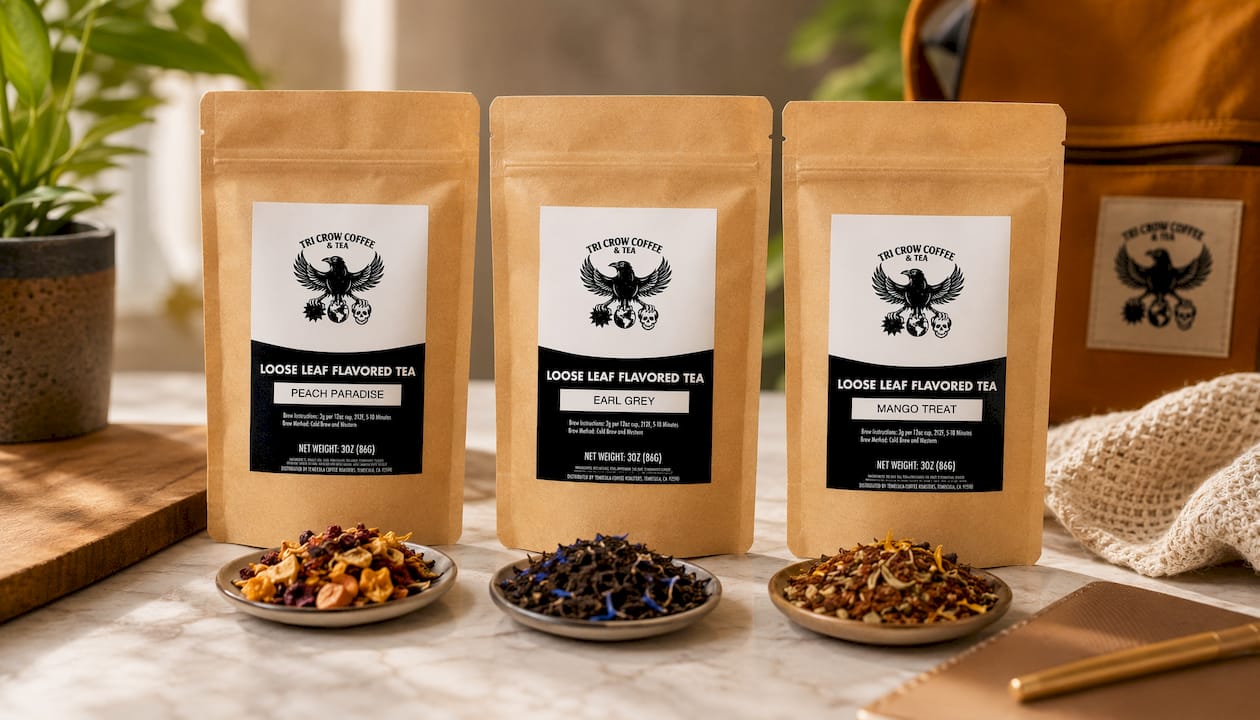
Three starting points based on the flavor families covered above:
Peach Paradise Herbal Tea is a fruity, sweet, and aromatic herbal blend that works hot or iced. It maps directly to the fruity-sweet herbal family: no caffeine, naturally sweet, and clean enough to show what a well-made fruit tisane actually tastes like. A good first choice if you are exploring caffeine-free options.
Earl Grey Tea, Ceylon OP uses a Ceylon OP base scented with bergamot oil and finished with blue cornflowers. It is the clearest example of a quality scented black tea: the bergamot is present but not overwhelming, and the Ceylon base is bright enough to hold up without milk. If you want to understand what separates a good Earl Grey from a generic one, this is the comparison point.
Mango Treat Herbal Tea is sweet, smooth, and built for iced preparation. It sits in the tropical-fruity herbal family and delivers the kind of refreshing, caffeine-free cup that works as an afternoon iced drink or a warm evening option. The mango flavor is genuine rather than synthetic-sweet.
Browse the full range or start with a sample pack at Tri Crow Coffee to taste across flavor families before committing to a full tin.
Further reading and useful sources
A short list of authoritative resources for going deeper on tea types, flavor science, and brewing methods.
- Tea Council industry guide: The foundational reference for true-tea classification, oxidation taxonomy, and processing terminology. Start here for definitions.
- Steep Atlas: six types of tea: A well-organized overview of all six true-tea types with processing details and flavor notes. Good for cross-referencing the data table above.
- Chayanso fermentation guide: Covers oxidation percentage ranges and the distinction between oxidation and post-fermentation. Useful for understanding pu-erh and dark teas.
- Chili Cravings tea flavor chart: A practical flavor wheel and tasting vocabulary reference. Print it and use it alongside the tasting template above.
- Vocal Leaf tea flavors guide: Covers popular flavored tea additions and common consumer preferences. Helpful for navigating flavored and blended options.
- PMC: true teas vs. herbal infusions: Scientific review of the biochemical differences between Camellia sinensis teas and herbal tisanes, including caffeine and active compound distinctions.
- Tri Crow Coffee: how to select tea: A flavor-first selection framework that extends the approach in this article into a practical buying guide.
- Tri Crow Coffee: tea blend varieties guide: Covers blend varieties and seasonal picks for readers who want to go further into flavored and blended options.
FAQ
What are the different flavors of tea?
Tea flavors range from fresh and vegetal (green teas) to bold and malty (black teas), floral to roasted (oolongs), delicate and sweet (white teas), and earthy and complex (dark/pu-erh). Herbal tisanes add an entirely separate range: minty, fruity, spicy, and floral, all caffeine-free.
What are the most popular tea flavors?
Fruit-forward flavors like peach, mango, and berry consistently rank among the most popular flavored tea additions, alongside citrus, vanilla, and bergamot (Earl Grey). Among pure teas, black tea remains the most widely consumed type in North America.
What are the 12 types of tea?
The six primary true-tea types are white, green, yellow, oolong, black, and dark/pu-erh, all from Camellia sinensis. Beyond those, common categories include rooibos, herbal tisanes (chamomile, peppermint, ginger), flavored teas (Earl Grey, chai, jasmine), and blended fruit teas. The exact count varies by how finely you split subcategories.
How does oxidation affect tea flavor?
Oxidation is the primary driver of flavor in true teas. Low oxidation (0–5% in green tea) preserves fresh, vegetal, and grassy notes. High oxidation (80–100% in black tea) converts those compounds into the malty, rich, and sometimes brisk flavors most people associate with a strong breakfast tea. Oolong’s wide 15–80% range is why it covers such a broad flavor spectrum.
Which tea is best for someone new to loose-leaf?
A medium-oxidized oolong or a quality Earl Grey like Tri Crow Coffee’s Ceylon OP Earl Grey are both accessible starting points. Oolongs show a wide flavor range without the sharp astringency that can put new drinkers off green tea, and a bergamot-scented black tea is familiar enough to feel approachable while still showing what a well-made loose-leaf tea can do.