
Loose leaf usually delivers fuller flavor and more brewing control; tea bags deliver faster, cleaner convenience. The difference between loose leaf tea and tea bags comes down to leaf size, how much room the leaves have to expand, and how much precision you’re willing to trade for speed. Good tea exists in both formats. What follows breaks down brewing, exact measurements, bag material safety, and how to pick the right one for your morning.
TL;DR:
- Loose leaf tea generally offers a richer, more layered flavor due to larger leaf size and gradual surface exposure during steeping.
- Re-steeping loose leaves can reduce cost and waste, with multiple infusions often tasting different and more complex than a single bag brew.
- Certain plastic-based tea bags can release microplastics when steeped at brewing temperature, though plain paper bags pose less risk.
- For quick, on-the-go use, tea bags are more convenient, but they usually contain lower-grade fannings or dust compared to specialty loose leaf options.
- Whole leaves stay fresher longer when stored properly and are less prone to flavor degradation over time, unlike ground or broken tea leaves.
Table of Contents
- What Is the Real Difference Between Loose Leaf Tea and Tea Bags?
- Why Do Whole Leaves Taste Fuller Than Bagged Tea?
- How Much Loose Leaf Tea Equals One Tea Bag?
- Is Loose Leaf Worth the Extra Effort, or Are Tea Bags Just Easier?
- Are Tea Bags Safe? What the Microplastic Research Actually Shows
- Does Loose Leaf Actually Stay Fresher Longer?
- How Do You Decide Between Loose Leaf and Tea Bags?
- Why Tri Crow Coffee Bets on Loose Leaf
- What the Data Doesn’t Tell You (and What Actually Matters)
- Ready to Taste the Difference Yourself?
- Sources
- FAQ
What Is the Real Difference Between Loose Leaf Tea and Tea Bags?
Here’s the quick version, side by side, before you commit to reading the whole thing.
- Flavor: Loose leaf tends to taste more layered and aromatic; bagged tea is blended for a consistent, predictable cup.
- Brewing control: Loose leaf lets you adjust grams, temperature, and steep time independently; bags are pre-portioned and mostly fixed.
- Convenience: Tea bags win outright, no scale, no infuser, no cleanup.
- Cost per cup: Loose leaf often costs less per cup long term because you can re-steep it two or three times.
- Sustainability: Loose leaf paired with a reusable infuser produces less packaging waste than individually wrapped bags.
If you’re traveling or rushing out the door, grab a bag. If you’re tasting a new tea or want a second infusion out of the same leaves, loose leaf earns its extra ten minutes. One thing worth flagging before you decide: a lab study found that steeping certain plastic teabags released micro- and nanoplastic particles into the tea. That’s covered in detail further down, with real context on what it does and doesn’t mean for your daily cup.
Why Do Whole Leaves Taste Fuller Than Bagged Tea?
Tea leaves get graded by size after processing. Whole leaf grades keep the leaf mostly intact. Broken leaf, fannings, and dust, the stuff that fills most standard tea bags, are smaller fragments left over from that sorting process. Smaller pieces have more surface area exposed relative to their volume, so they release flavor compounds fast, sometimes too fast.
Consumer Reports found that loose leaf generally offers more breadth and depth of flavor because larger leaves unfurl and expose more surface area gradually as they steep, drawing out layered aromatic notes over time rather than dumping everything at once. Bagged teas get blended specifically to taste the same cup after cup, which some drinkers actually prefer.
The tradeoff with fine particles: they extract quickly, which means bitterness and astringency show up faster if you oversteep even by a minute. That’s part of why:
- Standard flat bags often taste flat or slightly bitter if left in too long.
- Pyramid-style and larger mesh bags reduce this problem by giving the leaf more room to expand.
- Whole leaf tolerates a wider steeping window before turning harsh.
Leaf size isn’t the whole story on quality, but it’s the biggest lever behind why one cup tastes “fuller” than another.
How Much Loose Leaf Tea Equals One Tea Bag?
A standard tea bag holds roughly 2 to 2.5 grams of tea, designed for about 8 fluid ounces of water. A teaspoon of loose leaf usually weighs 2 to 3 grams depending on how airy or dense the leaf is, so one bag is close to one loosely packed teaspoon for most black teas. Bulkier leaves like whole-leaf oolong or fluffy white tea need slightly more volume to hit the same weight.
Steep guidelines vary by tea type, and leaf size shifts them further:
- Black tea: 200°F to 212°F, 3 to 5 minutes; broken leaf needs the shorter end.
- Green tea: 160°F to 180°F, 1 to 3 minutes; too hot or too long turns it grassy and bitter.
- White tea: 175°F to 185°F, 2 to 4 minutes.
- Oolong: 185°F to 205°F, 2 to 5 minutes, often re-steeped multiple times.
- Herbal/tisane: 208°F to 212°F, 5 to 7 minutes since there’s no tea leaf to scorch.
Re-steeping loose leaf works because whole leaves release flavor in layers. The second infusion often tastes different from the first, sometimes sweeter, sometimes more floral, rather than just weaker. Add 30 to 60 seconds to the steep time on each subsequent infusion to compensate for less compound left in the leaf.
Pro Tip: If your cup tastes weak, add more leaf instead of steeping longer. Extra steep time mostly pulls out bitter tannins, not more flavor.
Is Loose Leaf Worth the Extra Effort, or Are Tea Bags Just Easier?
Tea bags win on pure convenience. Drop it in a mug, pour water, toss it when you’re done. No scale, no infuser, no rinsing leaves out of a strainer at your desk.
Loose leaf asks more of you upfront but pays it back in ways bags can’t:
- One serving of good loose leaf often survives two or three re-steeps, dropping your real cost per cup below what the price tag suggests.
- An infuser basket or teapot is a one-time purchase, not an ongoing cost like buying boxes of bags.
- Loose leaf packaging, especially paper or tin, is easier to recycle or reuse than individually wrapped sachets; you can learn more about the environmental tradeoffs between paper and plastic materials at Bulk Price.
- Office and travel situations still favor bags; nobody wants to pack a strainer for a hotel room.
Many tea experts note the taste gap is fairly minor for casual drinkers, and that convenience often decides the format more than flavor does. If you drink tea occasionally, that’s a fair tradeoff. If you drink it daily and care about the ritual, the math tips toward loose leaf.
Are Tea Bags Safe? What the Microplastic Research Actually Shows
Here’s where the science gets specific. A lab study by Hernandez and colleagues found that steeping certain plastic teabags at brewing temperature released billions of micro- and nanoplastic particles into the tea over a five-minute steep. That study used bags made specifically with plastic components, not the plain paper bags most grocery-store teas still use, and it measured particle release under lab conditions rather than long-term health outcomes in people.
Bag materials vary more than most drinkers realize:
- Plain paper bags are the most biodegradable option and carry the lowest plastic-leaching risk.
- Paper bags heat-sealed with polypropylene look like paper but contain a thin plastic layer.
- Nylon and PET “silky” pyramid bags look premium but are essentially woven plastic mesh.
- PLA (plant-based plastic) bags are compostable in industrial facilities but behave differently under home compost conditions.
Go Ask Alice notes that brewing without tea bags may reduce exposure to these particles, though research on downstream health effects and antioxidant differences remains limited. If this concerns you, loose leaf in a reusable infuser sidesteps the question entirely, and it also cuts down on individually wrapped packaging waste.
Does Loose Leaf Actually Stay Fresher Longer?
Whole leaves hold their aroma longer than broken leaf or dust because there’s less exposed surface for oxygen, light, and moisture to degrade. That’s why a bag of pre-ground tea can taste flat after a few months while whole-leaf tea of the same age still smells vivid when you open the tin.
- Store loose leaf in an airtight, opaque container away from heat and light. A cabinet works better than a shelf near the stove.
- Keep boxed tea bags sealed and away from humidity; the paper wrapper alone isn’t much of a barrier.
- Buy only what you’ll drink in two to three months if you want peak flavor, rather than stockpiling.
How Do You Decide Between Loose Leaf and Tea Bags?
Run through this short checklist before you buy:
- Rank your priority: flavor and ritual, or speed and zero cleanup?
- Check your environment: desk at work versus kitchen at home changes the calculus fast.
- Consider your equipment: do you already own an infuser or teapot, or would you need to buy one?
- Look at your budget: loose leaf costs more upfront per package but often less per actual cup once you factor in re-steeps.
- Read the bag ingredients if you’re buying bagged tea: “fannings” or “dust” on the label usually signals a lower grade than whole leaf.
For your commute or office, tea bags are the practical call. For weekend tastings, hosting guests, or a slow morning ritual, loose leaf gives you more to work with, and more room to actually taste what you paid for.
Pro Tip: If a bagged tea’s ingredient list only says “black tea” with no leaf grade mentioned, assume it’s fannings or dust. Brands proud of whole-leaf quality usually say so.
Why Tri Crow Coffee Bets on Loose Leaf
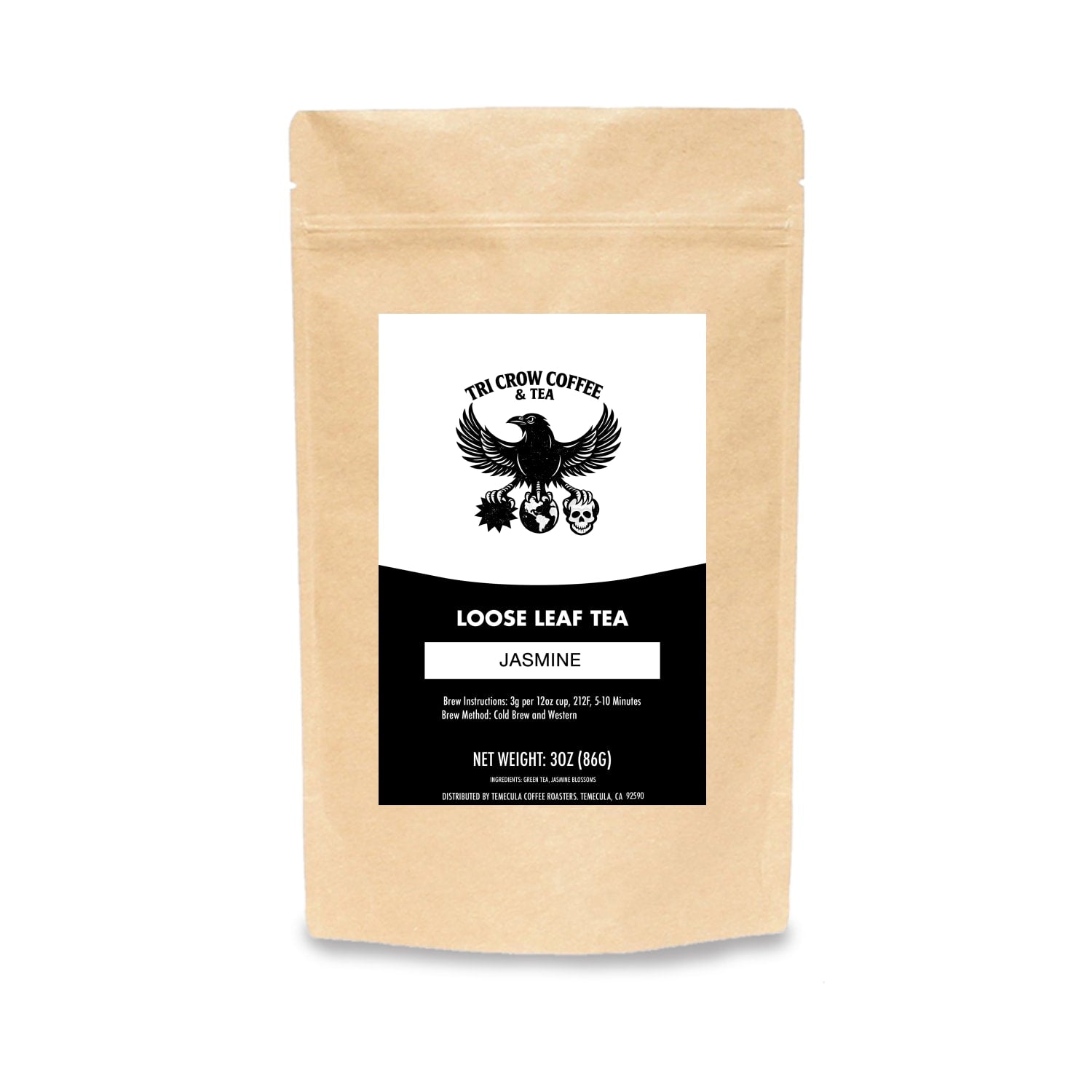
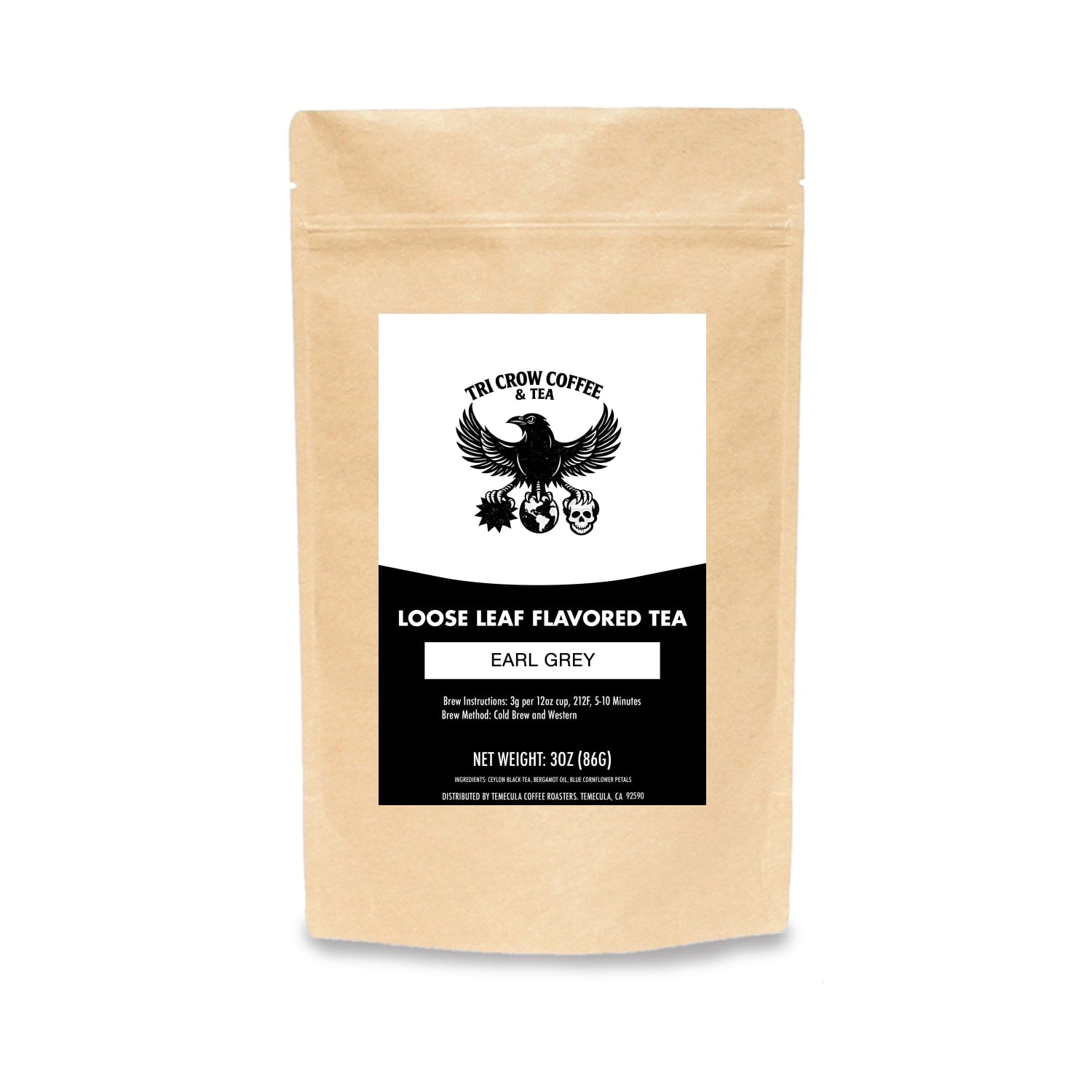
We built Tri Crow Coffee around small batches because leaf quality is the one variable you can’t fix after the fact. Our Matcha Green Tea is stone-ground for concentrated, whisked preparations where texture matters as much as taste. Our Earl Grey uses Ceylon OP leaf scented with real bergamot oil and blue cornflower petals, not artificial flavoring sprayed onto dust. Our Jasmine Green Tea is layer-scented over multiple rounds, which is exactly why it holds up across two or three steeps instead of fading after one. If you want to taste the difference leaf grade makes, our flavor-first tea selection guide walks through picking a starting point.
What the Data Doesn’t Tell You (and What Actually Matters)
Most tea comparisons treat this as a quality argument: loose leaf good, bags bad. That framing misses the point. The real question is whether the format matches how you actually drink tea, and the honest answer is that plenty of people are perfectly served by a well-made bag.
Where conventional advice falls short is the microplastic conversation. Headlines turned one lab study into a blanket warning, when the actual finding was narrower: certain plastic-component bags release particles under specific brewing conditions, and the long-term health implications are still unclear. That nuance gets lost, and it shouldn’t drive a purchase decision on its own, though it’s a reasonable tiebreaker if you’re already leaning toward loose leaf for flavor reasons.
If you’re prioritizing one thing, prioritize leaf size over brand name or price. A whole-leaf tea in a basic infuser will usually beat a premium-branded bag of fannings. Convenience is a legitimate reason to choose bags. Just don’t confuse convenience with quality, they’re separate decisions, and conflating them is how people end up disappointed by tea they paid too much for.
— David
Ready to Taste the Difference Yourself?
If the flavor argument above convinced you, the easiest next step is trying a whole-leaf tea against whatever bagged version you’re used to.
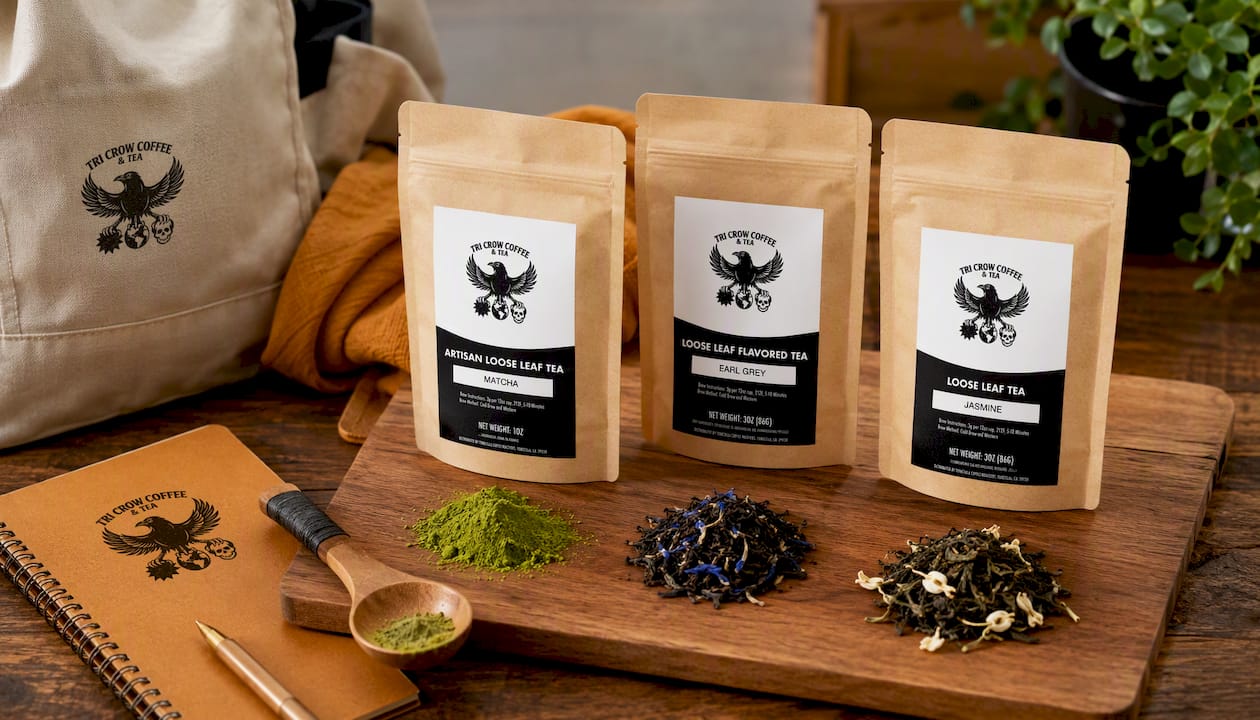
Tri Crow Coffee roasts and blends in small batches specifically so leaf quality doesn’t get lost in mass production, the same principle that separates a fuller-tasting cup from a flat one. Start with the Jasmine Green Tea if you want a tea built for multiple steeps, or the Earl Grey if you’re used to bagged black tea and want to feel the upgrade immediately. For a concentrated, ritual-style cup, our Matcha Green Tea is whisked rather than steeped. Pick one, brew it side by side with your usual bag, and see which cup you reach for tomorrow.
Sources
- Is Loose Tea Better Than Bagged? - Consumer Reports
- Plastic teabags release billions of micro- and nanoparticles into tea
- Loose leaf versus tea bags - Real Simple
- Is drinking tea without tea bags better for you? | Go Ask Alice!
FAQ
Is It Better to Drink Loose Leaf Tea or Tea Bags?
Loose leaf generally delivers fuller flavor and more brewing control, while tea bags win on speed and convenience; neither is objectively “better” for every drinker.
Which Is Better, Tea Bags or Loose Leaf Tea?
It depends on your priority: Consumer Reports found loose leaf typically offers more breadth and depth of flavor, but quality bagged teas can still taste good if convenience matters more to you.
How Much Loose Leaf Tea Is Equivalent to a Tea Bag?
One standard tea bag holds about 2 to 2.5 grams, roughly equal to one loosely packed teaspoon of loose leaf tea for most black teas.
Why Do They Say Not to Use Tea Bags?
Some tea bags contain plastic components, and one lab study found that steeping them released micro- and nanoplastic particles into the tea; choosing unlined paper bags or loose leaf avoids that concern entirely.