
TL;DR:
- Using small-batch beans roasted within two to three weeks produces rich dark chocolate notes in coffee. Proper brewing at 94°C, a 1:15 to 1:17 ratio, and mindful tasting rituals reveal these cocoa characteristics effectively.
Small-batch beans with a City to Full City roast is your fastest path to genuine dark-chocolate notes in the cup. Start here: pour-over, 1:16 ratio, 94°C water, medium-fine grind, 2:30–3:00 total brew time. That single recipe will reveal cocoa sweetness in most well-sourced medium-dark roasts. Check the roast date before anything else — beans past three weeks off-roast lose the volatile compounds that carry chocolate character. Tri Crow Coffee’s small-batch roasts are a strong starting point, with transparent roast dates and tasting notes that tell you exactly what to expect before you grind.
Table of Contents
- What do “dark chocolate” tasting notes actually mean?
- How do you pick small-batch beans that taste like dark chocolate?
- Brew recipes that bring out dark-chocolate notes
- A short mindful brewing ritual to notice chocolate notes
- How to store small-batch beans so chocolate notes stay vibrant
- Tri Crow Coffee picks for dark-chocolate lovers
- Natural vs. added chocolate coatings: what’s the difference?
- Allergens and dietary considerations
- How to pair dark-chocolate coffee notes with food and drinks
- Key Takeaways
- Why ritual reveals what the recipe alone can’t
- Tri Crow Coffee small-batch roasts: built for this
- Sources and further reading
- FAQ
What do “dark chocolate” tasting notes actually mean?
The phrase gets used loosely, so it helps to know what you’re actually tasting for. True dark-chocolate character in coffee shows up as a deep cocoa aroma when you first open the bag, a rounded mid-palate sweetness that lingers without turning sharp, and a body that feels full rather than thin. The finish is slightly dry but not astringent.
The chemistry behind it is specific. Pyrazines, furans, and aldehydes form during Maillard reactions as the bean heats, and these compounds are responsible for nutty, roasted, and cocoa-like aromas. Roasting also degrades chlorogenic acids into quinic and caffeic acids. Quinic acid is the main bitterness driver — useful in small amounts, harsh when it dominates. Darker roasts push phenylindane levels higher, which intensifies bitterness and can bury the cocoa sweetness entirely. The goal is a roast that develops those Maillard products without tipping into phenylindane territory.
Signs you’re tasting true dark-chocolate notes:
- Cocoa or dark cocoa aroma before the first sip
- Mid-palate sweetness that arrives after the initial hit
- Rounded, full body with low perceived acidity
- A dry but clean finish, not harsh or astringent
Signs something’s off:
- Flat, sharp bitterness with no sweetness behind it (over-extraction or too-dark roast)
- Thin, sour cup with no body (under-extraction)
- Smoky or ashy aftertaste (roast went too far)
Pro Tip: A small grind adjustment moves the needle faster than any other variable. Grind slightly coarser if the cup tastes bitter with no sweetness; slightly finer if it tastes sour and thin. You’re chasing the extraction point where sugar compounds and cocoa volatiles both show up.
How do you pick small-batch beans that taste like dark chocolate?
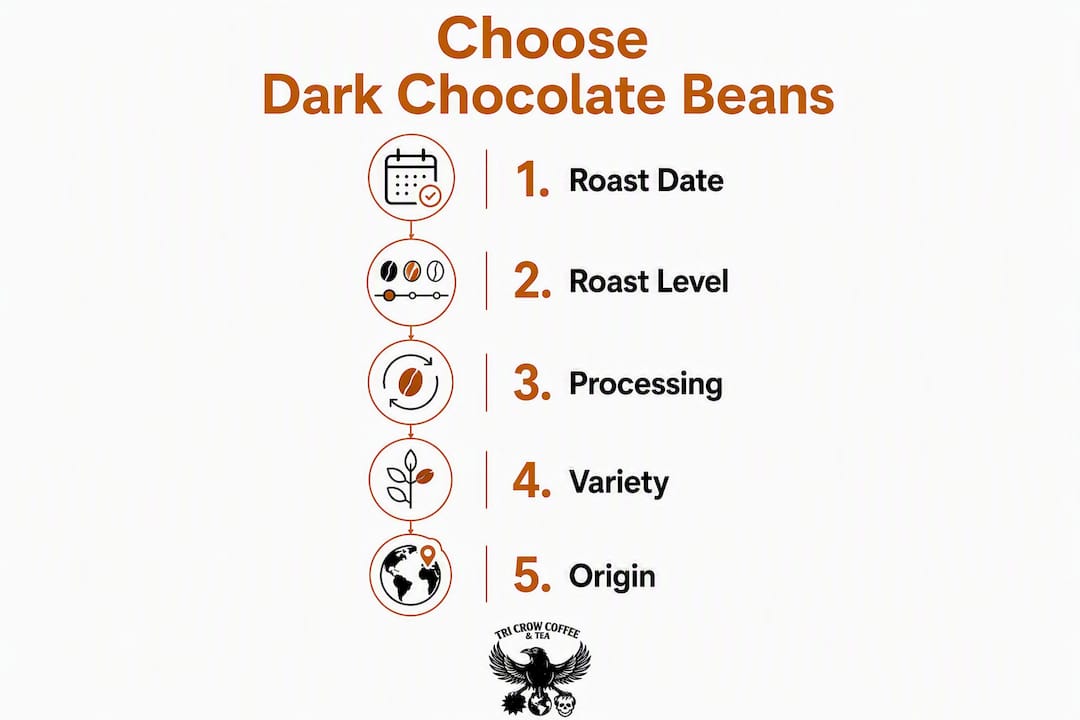
The label tells you most of what you need before you buy. Look for these in order:
Roast date first. A bag without one is a red flag. For chocolate notes, you want beans roasted within the past two to three weeks. Beyond that, the volatile compounds that carry cocoa aroma begin to fade.
Roast level descriptors. City to Full City (medium to medium-dark) is the sweet spot. Medium to medium-dark roasts balance origin sweetness with roast-developed cocoa compounds; darker roasts shift toward bitterness and smoke. If the bag says “dark” without specifying further, ask the roaster.
Processing method. Natural and pulped-natural processed lots dry inside the cherry, concentrating sugars and promoting fermentation that pushes cups toward chocolate and fruit sweetness. Washed coffees can still show chocolate notes, but natural processing stacks the odds in your favor. Tri Crow Coffee’s processing guide explains exactly how these methods alter flavor if you want the full picture.
Variety signals. Heritage varieties like Bourbon and Typica have a genetic tendency toward chocolate baseline notes. Newer disease-resistant cultivars often prioritize yield over flavor complexity. When a roaster lists the variety, Bourbon or Typica is a good sign.
Origin cues. Central American lots (Guatemala, Honduras), Brazilian Cerrado, and select Colombian regions consistently produce chocolate-leaning profiles. Higher-altitude growing regions tend to develop greater phenolic complexity, which supports layered cocoa character. More on how origin shapes flavor at Tri Crow Coffee’s bean types and origins guide.
Pro Tip: When reading a product page, look for tasting notes that include “cocoa,” “dark chocolate,” “caramel,” or “brown sugar” — not just “rich” or “bold,” which are marketing words that tell you nothing about the actual flavor.
Brew recipes that bring out dark-chocolate notes
| Method | Ratio | Grind | Temp | Brew Time | Roast Level |
|---|---|---|---|---|---|
| Pour-over | 1:15–1:17 | Medium-fine | 94°C | 2:30–3:00 | Medium-dark |
| French press | 1:12–1:15 | Coarse | — | 4–5 min | Medium-dark |
| Espresso | 1:2 | Fine | 92–96°C | 30 sec | Medium-dark to dark |
| Cold brew | 1:4 (concentrate) | Coarse | Cold/room temp | 12–18 hr | Medium-dark |
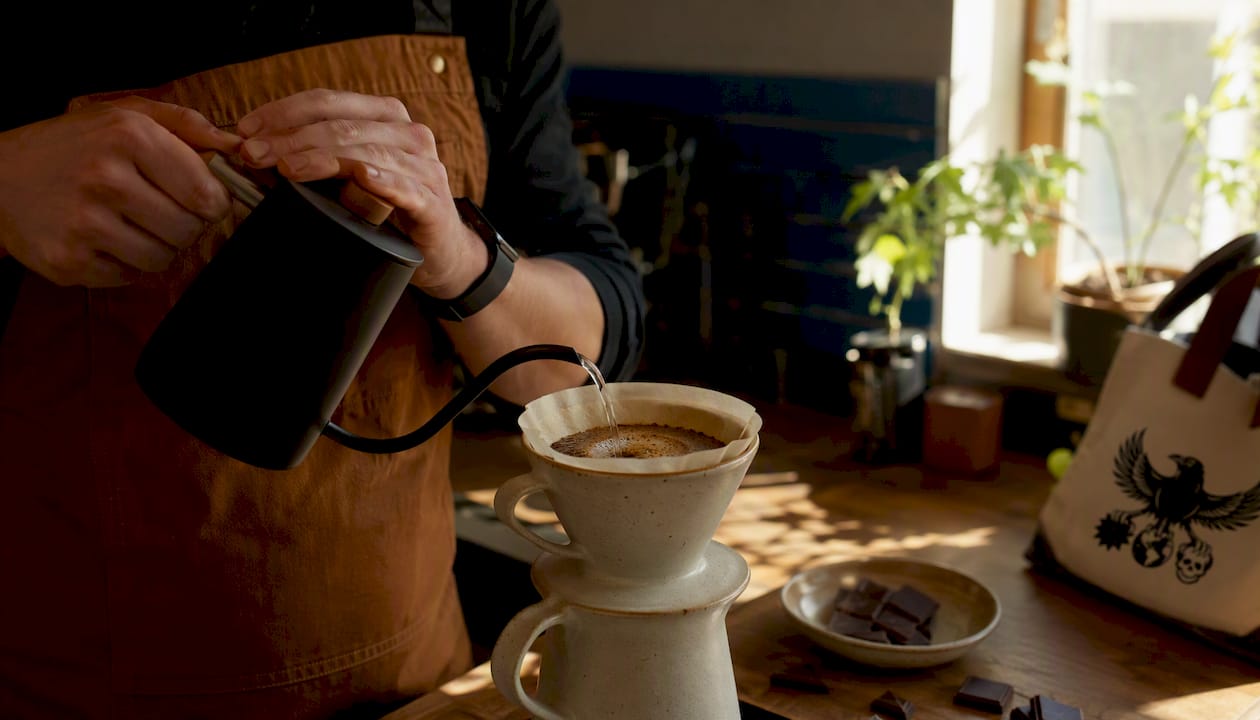
Pour-over at 1:15–1:17 with 94°C water preserves cocoa sweetness while keeping acidity in check. A 30-second bloom with twice the coffee weight in water lets CO2 escape and primes even extraction.
French press suits readers who want body over clarity. The coarse grind and 4–5 minute steep pull oils and heavier compounds that reinforce chocolate texture. Press slowly and pour immediately.
Espresso concentrates everything, so roast quality matters more here than in any other method. Aim for a syrupy pull at 92–96°C. A slightly longer pre-infusion (3–5 seconds) helps even extraction and reduces harsh bitterness.
Cold brew at a 1:4 concentrate ratio steeped 12–18 hours produces a naturally sweet, low-acid base where cocoa sweetness dominates. Dilute 1:1 with cold water to drink, or use straight over ice. Tri Crow Coffee’s Cold Brew is built for exactly this method.
Troubleshooting:
- Bitter with no sweetness: grind coarser, lower temp by 1–2°C, or reduce steep time
- Sour and thin: grind finer, raise temp slightly, or extend brew time
- Flat with no aroma: beans are stale — check roast date
Pro Tip: For espresso, drop the temperature to 92°C if you’re getting harsh bitterness. That small shift reduces quinic acid extraction and lets cocoa sweetness come forward.
A short mindful brewing ritual to notice chocolate notes
The ritual isn’t about slowing down for its own sake. It’s about giving your senses a moment to register what’s actually in the cup before habit takes over.
- Set up in silence. Grind fresh, weigh your dose, and heat water before anything else. No phone, no background noise for the next four minutes.
- Pause at the bloom. Pour just enough water to saturate the grounds and wait 30 seconds. Lean in and smell. Cocoa, dark fruit, or caramel in the bloom aroma is a reliable preview of what’s coming.
- Pour slowly and watch the color. A steady, even pour keeps extraction consistent. Notice the color of the brew as it drips — deep amber signals good extraction.
- First sip at 60°C. Too hot and you’ll miss sweetness entirely. Let the cup cool slightly, then take a small sip and hold it for two seconds before swallowing.
- Focus on the mid-palate. After swallowing, notice what arrives 2–3 seconds later. That delayed sweetness is where chocolate character lives.
- Note the finish. A clean, dry finish with a faint cocoa echo is the target. Harsh or sharp means over-extraction; nothing means under-extraction or stale beans.
Use Tri Crow Coffee’s taster’s guide to build your sensory vocabulary as you practice.
Pro Tip: Extend the bloom to 45 seconds on your next brew without changing anything else. The extra degassing time often brings cocoa sweetness forward noticeably, especially in freshly roasted beans.
How to store small-batch beans so chocolate notes stay vibrant
Freshness is the variable most people underestimate. Roast-developed cocoa compounds are volatile — they off-gas and oxidize quickly once the bag is open.
- Store in an airtight container, away from heat, light, and moisture
- Keep at room temperature; the fridge introduces condensation that accelerates staling
- Reseal the original bag tightly after each use if it has a one-way valve
- Buy in quantities you’ll finish within two to three weeks of the roast date
- Grind only what you need immediately before brewing — pre-ground beans lose chocolate aroma within hours
The first week after roast is actually not ideal for most methods. Beans need 5–10 days off-roast to degas fully; chocolate notes tend to peak between days 7 and 21. After three weeks, the cocoa volatiles fade and the cup flattens.
Tri Crow Coffee picks for dark-chocolate lovers
Tri Crow Coffee roasts in small batches with roast dates printed on every bag. That transparency matters because you can time your purchase to hit the flavor window. Their medium-dark roast profiles are designed around the City to Full City range that best develops cocoa and bittersweet chocolate character without pushing into smoke or ash.
The Whiskey Barrel Aged roast brings an additional layer of depth — barrel aging adds vanilla and caramel undertones that complement dark-chocolate notes in the cup. For immersion brewers, the Cold Brew offering is built for the 1:4 concentrate method and delivers the low-acid, cocoa-forward profile that cold extraction does best.
Sample packs are the practical first move if you’re new to Tri Crow’s lineup. You get to confirm the roast profile matches your palate before committing to a full bag, and you stay within the freshness window automatically.
Natural vs. added chocolate coatings: what’s the difference?
When coffee professionals describe a bean as having “dark chocolate notes,” they mean flavor compounds that developed naturally during growing, processing, and roasting. No coating is involved. These are intrinsic tasting notes, the same way a wine might be described as having cherry or tobacco character without containing either.
The distinction matters for brewing. Beans with natural chocolate character behave exactly like any other roasted coffee — grind them, brew them, and the flavor comes from extraction. Beans with an added coating (a confectionery product where roasted beans are literally dipped in chocolate) are a different product category entirely, and they don’t brew the same way. The coating doesn’t dissolve cleanly in water, and the resulting cup is muddier and less controlled than what you get from a clean, well-roasted bean.
For mindful brewing, natural chocolate notes are always the goal. They’re reproducible, adjustable through extraction, and a genuine reflection of the bean’s origin and roast.
Allergens and dietary considerations
Coffee beans with natural chocolate tasting notes contain no dairy, gluten, or added sugar — they’re just roasted coffee. That said, a few considerations apply depending on how you source and brew them.
Cross-contamination is worth checking if you have a tree nut or dairy allergy. Some small-batch roasters process flavored coffees (including chocolate-flavored varieties) on shared equipment. Ask the roaster directly or check their allergen statement. Tri Crow Coffee uses eco-friendly packaging and small-batch production, which limits cross-contamination risk, but confirm with them if you have a severe allergy.
Caffeine is the primary dietary consideration for most people. A medium-dark roast brewed at a 1:15 ratio delivers a meaningful caffeine dose per cup. If you’re sensitive, cold brew concentrate is higher in caffeine per ounce than drip, so dilute accordingly.
How to pair dark-chocolate coffee notes with food and drinks
Pairing works by either mirroring the chocolate character or contrasting it with something bright. Both approaches work; the choice depends on what you want the cup to do.
Mirror pairings amplify the cocoa note. A square of 70%+ dark chocolate eaten just before a sip makes the chocolate character in the coffee more pronounced — the shared bitter-sweet compounds reinforce each other. Toasted almonds and hazelnuts work the same way. For baked goods, a chocolate cake made with hot coffee in the batter (like this bakery-style chocolate cake) creates a natural bridge between cup and plate.
Contrast pairings use brightness to make the chocolate note pop. Fresh raspberries or a citrus tart alongside a medium-dark pour-over creates a contrast that makes the cocoa sweetness feel deeper by comparison. Aged cheese — particularly a sharp cheddar or manchego — works surprisingly well with cold brew for the same reason.
For a full pairing framework, Tri Crow Coffee’s coffee and food pairing guide covers the flavor logic in detail.
Key Takeaways
Small-batch beans at City to Full City roast, brewed at 1:15–1:17 and 94°C, reliably deliver dark-chocolate notes when sourced fresh and stored properly.
| Point | Details |
|---|---|
| Check roast date first | Buy beans roasted within two to three weeks; chocolate volatiles fade quickly after that. |
| Target City to Full City roast | Medium to medium-dark roasts develop cocoa compounds without pushing into harsh bitterness. |
| Natural processing amplifies sweetness | Natural and pulped-natural lots concentrate sugars during drying, pushing cups toward chocolate character. |
| Extraction controls the flavor | Grind coarser to reduce bitterness, finer to reduce sourness; 94°C pour-over at 1:16 is the reliable baseline. |
| Tri Crow Coffee | Small-batch roasts with printed roast dates and medium-dark profiles suited to chocolate-forward brewing. |
Why ritual reveals what the recipe alone can’t
Most people who say they can’t taste chocolate notes in their coffee aren’t brewing wrong. They’re just not paying attention at the right moment. The mid-palate sweetness that carries cocoa character arrives two to three seconds after swallowing, and if you’ve already moved on, you miss it entirely.
What the mindful ritual does is create a pause at exactly that moment. It’s not mystical. It’s just attention directed at the right part of the sensory sequence. Once you’ve noticed the delayed sweetness in a well-extracted medium-dark cup, you’ll recognize it every time — and you’ll also notice immediately when extraction is off, because that sweetness disappears first.
The reproducible part is the recipe. The ritual is what teaches you to read it.
Tri Crow Coffee small-batch roasts: built for this
If you’ve been chasing dark-chocolate notes and keep landing on bitter or flat cups, the problem is usually beans, not technique. Tri Crow Coffee’s small-batch roasts are produced in limited quantities specifically to maintain the roast consistency that chocolate-forward profiles require. Every bag carries a roast date, so you know exactly where you are in the flavor window before you brew.
The Cold Brew is the fastest way to confirm the profile — steep overnight at 1:4, dilute, and the cocoa sweetness is right there without any technique required. For pour-over and espresso drinkers, the medium-dark lineup delivers the same character with more control. Start with a sample pack, hit the 7–21 day freshness window, and brew at 94°C with a 1:16 ratio. That’s the whole setup.
Sources and further reading
Flavor chemistry and processing:
- Effect of climate, growing region, and post-harvest processing on CGAs and aromatic compounds — Scientific Reports: altitude, chlorogenic acid degradation, quinic acid, and phenylindane bitterness
Tri Crow Coffee further reading:
- How Coffee Processing Shapes Flavor — natural vs. washed processing and their effect on chocolate notes
- Coffee Flavor Profiles: A Taster’s Guide — sensory vocabulary and tasting checkpoints for building palate awareness
FAQ
What roast level gives the most chocolate flavor in coffee?
City to Full City (medium to medium-dark) roasts develop the most pronounced cocoa and bittersweet chocolate character. Darker roasts increase phenylindane-driven bitterness that masks those notes.
How do I know if my coffee has natural chocolate notes or added flavoring?
Check the ingredient list. Natural chocolate notes come from the bean’s origin, processing, and roast — no additives. Flavored coffees list natural or artificial flavoring as an ingredient.
What brew ratio works best for chocolate notes?
Pour-over at 1:15–1:17 with 94°C water is the most reliable starting point. Cold brew at 1:4 concentrate steeped 12–18 hours also emphasizes cocoa sweetness with minimal acidity.
Does Tri Crow Coffee offer roasts suited to dark-chocolate flavor profiles?
Yes. Tri Crow Coffee’s small-batch medium-dark roasts are produced with transparent roast dates and tasting notes that identify cocoa and chocolate character. The Cold Brew product is specifically suited to immersion methods that highlight those notes.
Why do my beans taste bitter instead of chocolatey?
Over-extraction is the most common cause — quinic acid and phenylindanes dominate when you extract too long or too hot. Try grinding coarser, lowering water temperature by 1–2°C, or shortening brew time.
Recommended
- How to select coffee beans for great home brewing flavor – Tri Crow Coffee
- Whole bean coffee: unlock flavor, freshness, and ritual – Tri Crow Coffee
- Discover Coffee Bean Types, Flavor Profiles, and Origins – Tri Crow Coffee
- Coffee blends explained: Unlock balanced flavors and rituals – Tri Crow Coffee