
TL;DR:
- A caffeine content list helps consumers compare beverages’ caffeine levels and track their daily intake. The amount of caffeine varies widely among drinks, with bean type and brewing method influencing content more than roasting level. Many labels underreport caffeine, especially in natural sources, making accurate tracking essential for safety.
A caffeine content list is an organized reference showing how much caffeine different beverages contain per serving. The U.S. FDA sets safe daily caffeine intake at up to 400 mg for healthy adults, roughly four to five 8-ounce cups of brewed coffee. Health Canada uses the same benchmark. Nearly half of Americans are unsure about safe caffeine amounts, which makes a clear, organized reference more useful than most people realize. Knowing where your drinks land on that scale is the fastest way to stay in control of your daily intake.
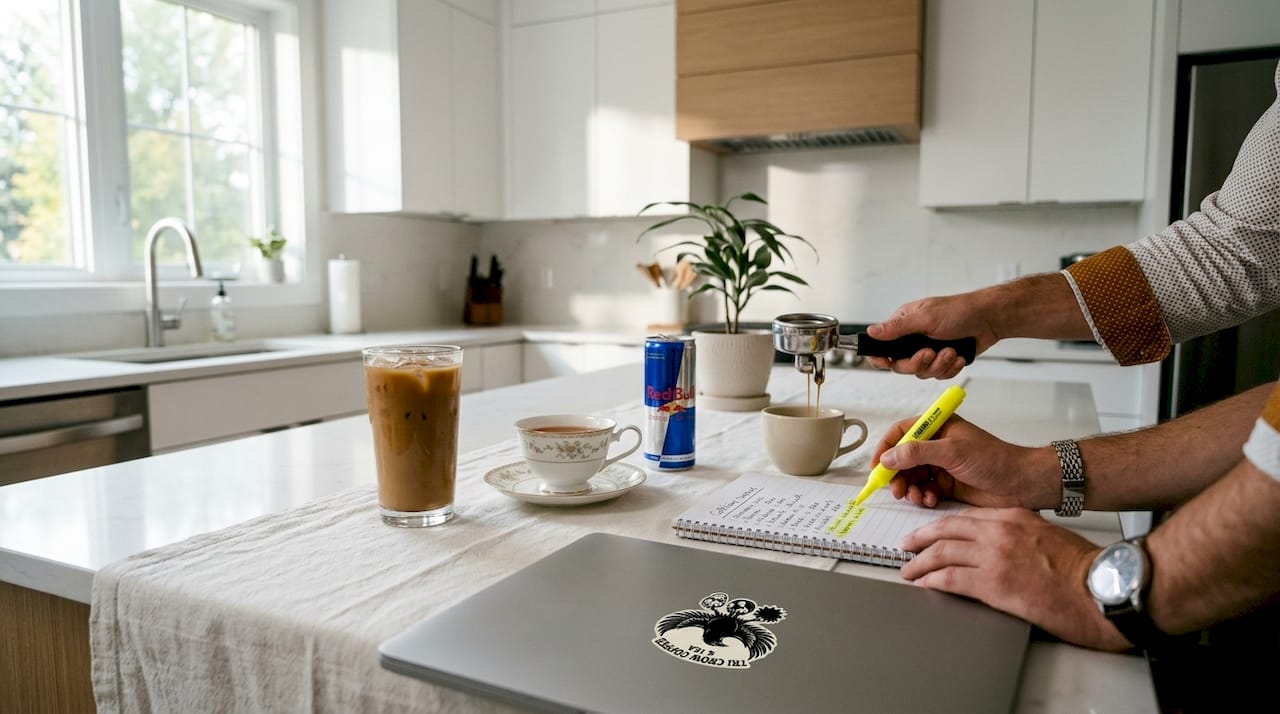
1. What’s on a caffeine content list by beverage type
Caffeine levels in drinks vary far more than most people expect. Per 8-ounce serving, brewed coffee delivers 95–247 mg, energy drinks range from 41–246 mg, black tea runs 47–71 mg, green tea sits at 28–37 mg, and soda falls between 23–83 mg. That spread means a strong brewed coffee and a high-end energy drink can hit nearly identical caffeine levels despite looking nothing alike.
Normalizing everything to an 8-ounce serving is the key move in any useful caffeine comparison chart. A single espresso shot is only about 1 ounce, so its 60–70 mg reads as modest. Scaled to 8 ounces, espresso would clock in well above 400 mg. That math explains why espresso-based drinks can push you past your daily limit faster than you think.
| Beverage | Caffeine per 8 oz |
|---|---|
| Brewed coffee | 95–247 mg |
| Energy drinks | 41–246 mg |
| Black tea | 47–71 mg |
| Green tea | 28–37 mg |
| Soda | 23–83 mg |
| Decaf coffee | 8–15 mg |
Pro Tip: When reading a caffeine comparison chart, always check whether the numbers reflect the actual serving size on the label or a standardized 8-ounce measure. The difference can be dramatic, especially for energy drinks sold in 16-ounce cans.
Cold brew and nitro coffees generally carry higher caffeine concentrations per serving than standard hot brewed coffee. That higher concentration makes unintentional overconsumption a real risk, particularly when the drink is served in a large format cup. Decaf is not caffeine-free either. A typical 8-ounce cup of decaf still contains 8–15 mg of caffeine, which matters for anyone medically advised to limit intake.
2. How brewing methods and ingredients shift caffeine levels
Coffee bean variety sets the starting point for caffeine content. Robusta beans contain roughly twice the caffeine of Arabica. Arabica green beans average 22.15 mg/g caffeine, and that level moderates only slightly through roasting. Choosing a Robusta-heavy blend is one of the most direct ways to increase caffeine per cup.
Roasting is widely misunderstood as a caffeine driver. The roast level, light or dark, does not dramatically change how much caffeine ends up in your cup. Caffeine remains relatively stable through roasting, even as other bioactive compounds like chlorogenic acids degrade significantly. A dark roast is not automatically stronger in caffeine than a light roast.
Several factors do move the needle on caffeine levels in drinks:
- Brew time: Longer contact between water and grounds pulls more caffeine into the cup.
- Water temperature: Hotter water extracts caffeine faster and more completely.
- Grind size: Finer grinds increase surface area, raising extraction efficiency.
- Coffee-to-water ratio: More coffee per ounce of water means more caffeine per ounce of drink.
- Bean origin: Beans grown at lower altitudes often carry higher caffeine as a natural pest deterrent.
Cold brew uses a long steep time (often 12–24 hours) with a high coffee-to-water ratio. That combination produces a concentrate with significantly more caffeine than a standard drip brew. Nitro coffee is typically cold brew infused with nitrogen gas, so it inherits the same elevated caffeine base. Neither product is regulated to a standard caffeine ceiling, so serving sizes matter enormously.
Tea preparation follows similar logic. Steeping black tea for five minutes extracts more caffeine than a two-minute steep. Water just below boiling pulls more caffeine from green tea than lukewarm water. The caffeine amount in tea is also influenced by the part of the plant used. Young leaves and buds carry more caffeine than older, lower leaves.
Energy drinks add another layer of complexity. Manufacturers are not required to disclose total caffeine on labels, only added caffeine must be listed. Natural caffeine from guarana or green tea extract can go unlisted. That gap means the label number may understate the actual caffeine content of beverages in this category.
3. What health guidelines say about safe caffeine consumption
The 400 mg daily limit for healthy adults is the most widely cited benchmark, but it is not universal. Pregnant women are advised to stay under 200 mg per day. People with heart conditions, anxiety disorders, or high caffeine sensitivity should consult a physician before treating 400 mg as their personal ceiling.
“Small doses of caffeine, around 75 mg, can enhance cognitive performance, but timing matters. Consuming caffeine too late in the day disrupts sleep, which erases the performance gains and creates a cycle of fatigue-driven overconsumption.” — IFIC
Concentrated caffeine products carry a different risk profile entirely. One teaspoon of caffeine powder equals the caffeine in roughly 28 cups of brewed coffee. That concentration is potentially lethal and has caused documented fatalities. Powdered and liquid caffeine concentrates are not comparable to beverages in any practical safety sense.
Key safety considerations for daily caffeine management:
- Track cumulative intake. A morning coffee, an afternoon tea, and a pre-workout drink can combine to push you well past 400 mg without any single source being the obvious culprit.
- Account for genetic sensitivity. ADORA2A receptor polymorphisms cause real differences in how individuals experience caffeine. Some people feel anxious at 150 mg; others feel nothing at 300 mg.
- Watch the clock. Caffeine has a half-life of roughly five to six hours in most adults. A 3:00 PM coffee still has half its caffeine active at 8:00 PM.
- Avoid concentrated forms. Powdered caffeine and liquid caffeine concentrates require precise measurement tools most consumers do not have.
- Read beyond the label. Natural caffeine from plant-based ingredients does not always appear in the listed caffeine count.
Understanding your personal response to caffeine is as important as knowing the numbers. The 400 mg guideline is a population-level average. Your actual threshold may be lower, and the only way to find it is to pay attention to how your body responds across different intake levels. Explore coffee benefits and safe rituals to build a routine that works with your biology, not against it.
4. How to monitor and manage your daily caffeine intake
Tracking caffeine intake starts with knowing where to find accurate numbers. Product labels are unreliable for total caffeine because natural sources go unlisted. The USDA FoodData Central database and official brand websites are the most reliable sources for actual caffeine content of beverages. Cross-referencing both gives you the most complete picture.
- Standardize your serving sizes. Measure your actual pour rather than assuming a “cup” equals 8 ounces. A large travel mug holds 16–20 ounces, which doubles or triples the caffeine math.
- Calculate caffeine per ounce. Divide the total caffeine by the ounces in the container. This single metric lets you compare any two drinks fairly, regardless of packaging.
- Log every source. Coffee, tea, soda, pre-workout supplements, chocolate, and some medications all contribute caffeine. A simple notes app or dedicated tracking app captures the full picture.
- Set a cutoff time. Most sleep researchers recommend stopping caffeine intake six hours before bed. For a 10:00 PM bedtime, that means no caffeine after 4:00 PM.
- Rotate lower-caffeine options. Green tea at 28–37 mg per 8 ounces gives you a gentle lift without stacking toward your daily limit. Mushroom coffee blends often contain less caffeine than standard brewed coffee and can serve as an afternoon alternative.
Pro Tip: Consumers often underestimate total caffeine intake by combining multiple beverage types across a day. Write down every caffeinated item you consume for three days. Most people are surprised by the total.
Standardizing caffeine measurements to an 8-ounce serving allows meaningful comparisons despite varying product sizes, from espresso shots to cold brew jugs. Once you think in caffeine per ounce rather than caffeine per container, the numbers become much easier to manage. Understanding coffee bean types also helps you predict caffeine levels before you brew, since bean variety is one of the strongest predictors of caffeine content.
Key takeaways
Caffeine content varies widely across beverages, and the 400 mg daily limit for healthy adults requires tracking every source, not just your morning coffee.
| Point | Details |
|---|---|
| Know your baseline numbers | Brewed coffee delivers 95–247 mg per 8 oz; energy drinks and cold brew can match or exceed that range. |
| Roast level does not equal caffeine level | Caffeine stays stable through roasting; bean type and brew ratio matter far more. |
| Labels underreport caffeine | Natural caffeine from guarana or green tea extract may not appear in the listed count. |
| Genetic sensitivity is real | ADORA2A receptor differences mean the 400 mg limit is a guideline, not a universal ceiling. |
| Track cumulative intake daily | Combining coffee, tea, soda, and supplements across a day adds up faster than most people expect. |
Why I think most people are reading caffeine labels wrong
The biggest mistake I see is treating caffeine as a per-drink problem instead of a daily math problem. Someone drinks a 16-ounce cold brew in the morning, a green tea at lunch, and a pre-workout before the gym. Each one feels moderate. Together, they can easily hit 500 mg before dinner.
The second issue is the decaf assumption. Decaf is not zero caffeine. At 8–15 mg per cup, it is low, but it is not nothing. For someone who drinks four cups of decaf a day because they think they have cut caffeine out, that is still 32–60 mg of daily intake. That matters for pregnant women and people with heart conditions.
What I find genuinely underappreciated is how much bean variety drives the outcome. Most people focus on roast level because it is visible and marketed heavily. But switching from an Arabica-only blend to a Robusta-forward blend can nearly double your caffeine per cup with no other change. Tri Crow Coffee’s approach of being transparent about blend composition is exactly what the category needs more of.
The trend toward informed caffeine choice is real and accelerating. People are reading labels, asking questions, and looking for brands that give them straight answers. That shift is healthy. The goal is not to avoid caffeine. The goal is to use it deliberately.
— David
Max Caf Blend: a high-caffeine coffee with full transparency

Tri Crow Coffee built the Max Caf Blend for people who want a potent, measurable caffeine source without guessing at the numbers. This small-batch blend combines Tanzania and India Robusta beans, two origins selected specifically for their elevated caffeine content. The result is a coffee that delivers a strong, consistent lift with the same craft attention Tri Crow Coffee applies to every roast. If you have been tracking your daily intake and want a high-caffeine option you can actually plan around, the Max Caf Blend gives you that clarity. Check out coffee trends in 2026 to see how transparency in caffeine content is shaping what serious coffee drinkers expect from their brands.
FAQ
What is a caffeine content list?
A caffeine content list is an organized reference showing the milligrams of caffeine in common beverages, typically normalized to an 8-ounce serving for fair comparison. It helps consumers track daily intake against the FDA’s 400 mg recommended limit for healthy adults.
How much caffeine is in a typical cup of coffee?
Brewed coffee contains 95–247 mg of caffeine per 8-ounce serving, depending on the bean type, grind, and brew method. Cold brew and nitro coffee typically run higher than that range.
Does decaf coffee have any caffeine?
Decaf coffee still contains approximately 8–15 mg of caffeine per 8-ounce cup. That amount is small but relevant for pregnant women or people with medical restrictions on caffeine.
Why do energy drink labels sometimes show less caffeine than expected?
Manufacturers must list added caffeine but are not required to disclose caffeine from natural sources like guarana or green tea extract. Consulting the USDA FoodData Central database gives a more complete picture of actual caffeine content.
Does a dark roast have more caffeine than a light roast?
No. Caffeine remains relatively stable through the roasting process regardless of roast level. Bean variety, particularly Robusta versus Arabica, has a far greater effect on caffeine content than roast darkness.
Recommended
- What is coffee cupping and why it matters for your palate – Tri Crow Coffee
- Explore coffee drink varieties for a richer daily ritual – Tri Crow Coffee
- Coffee Flavor Profiles: A Taster’s Guide to Every Cup – Tri Crow Coffee
- Maximize your energy: proven coffee benefits and smart rituals – Tri Crow Coffee